
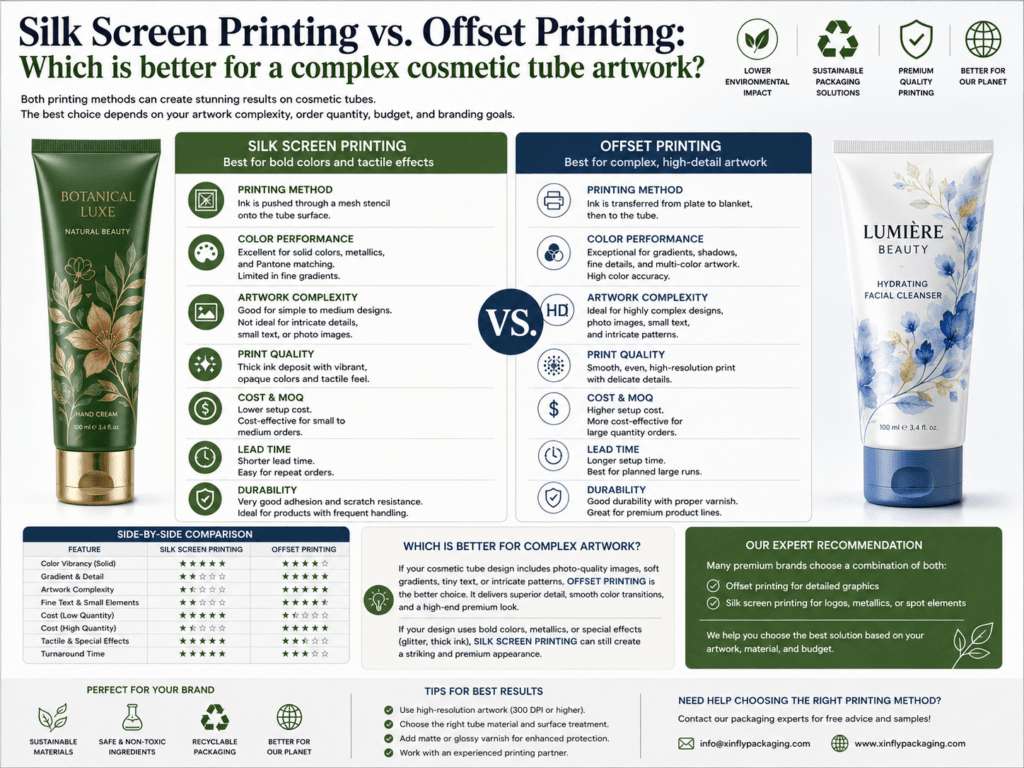
For complex cosmetic tube artwork, offset printing is usually the better choice. If your design includes gradients, photographic effects, fine details, multiple colors, soft shadows, or very small text, offset printing generally delivers a cleaner and more accurate result than silk screen printing.
Silk screen printing is still an excellent decoration method, but it is typically better for simple, bold, high-opacity artwork such as logos, solid color blocks, short text, or spot-color graphics. The best method depends on how detailed your artwork is, how many colors are involved, and whether the brand wants a clean technical look or a thicker tactile print effect.
Quick Answer: Which One Is Better?
| Artwork Type | Better Printing Method | Main Reason |
|---|---|---|
| Complex multi-color artwork | Offset printing | Handles gradients, detail, and color transitions better |
| Simple logo or bold spot-color design | Silk screen printing | Provides strong color coverage and tactile ink feel |
| Luxury minimalist artwork | Depends on design | Offset for subtle detail, silk screen for bold premium contrast |
Why Offset Printing Works Better for Complex Cosmetic Tube Artwork
- Better for gradients: Offset printing can reproduce soft color transitions much more smoothly.
- Higher image detail: Small graphics, fine lines, and intricate visual elements are usually clearer.
- More suitable for multi-color designs: It is easier to manage designs with many visual layers or photographic styling.
- Cleaner overall look: Offset often gives a more refined, commercial retail finish for detailed packaging.
Where Silk Screen Printing Is Stronger
| Silk Screen Advantage | Why Brands Choose It |
|---|---|
| High ink opacity | Excellent for bold whites, solid logos, and strong contrast on colored tubes |
| Tactile premium effect | Creates a slightly raised, more physical print feel |
| Strong spot-color performance | Ideal when the design uses only a few clean colors |
| Good for simple premium branding | Works well for minimal logo-forward packaging styles |
Comparison: Silk Screen vs. Offset for Complex Artwork
| Factor | Silk Screen Printing | Offset Printing |
|---|---|---|
| Gradients | Limited | Excellent |
| Fine details | Moderate | Better |
| Photographic effect | Not ideal | Much better |
| Solid bold colors | Excellent | Good |
| Tactile ink feel | Stronger | Lighter / flatter |
| Best for simple artwork | Yes | Also possible, but not always necessary |
| Best for complex artwork | No | Yes |
When to Choose Silk Screen Printing Instead
- Your tube artwork uses only 1–3 solid colors
- You want a bold logo with strong opacity
- You want a more tactile, premium print feel
- You are printing on a darker or textured tube where strong ink coverage matters more than fine gradients
Best Practical Solution for Many Premium Tubes
In many real cosmetic packaging projects, the best result is not choosing only one method. It is using a combined decoration strategy. For example, a tube may use offset printing for the complex full-color artwork and then add silk screen or hot stamping for the logo, key text, or metallic accent. This gives both technical detail and premium visual impact.
Summary
If your cosmetic tube artwork is complex, offset printing is usually the better choice because it handles gradients, fine detail, multiple colors, and cleaner visual transitions more effectively. Silk screen printing is better for simpler, bolder artwork with strong color coverage and tactile impact.
In short, offset printing wins for complexity, while silk screen printing wins for bold simplicity. For premium beauty packaging, combining both can often deliver the best commercial result.
Learn more: Silk Screen Printing vs Offset Printing, Offset Printing Tubes, Silk Screen Printing Tubes, Hot Stamping vs Silk Screen Printing, Printing Options, Tube Decoration.
Need the Right Printing Method for Your Tube Artwork?
Xinfly Packaging helps brands match artwork complexity, tube material, decoration budget, and premium visual goals with the most suitable printing solution for custom cosmetic tubes.