
Category Tube Materials

Learn about cosmetic tube materials including PE, PCR, ABL, PBL and aluminum. Understand structure, performance, sustainability and OEM packaging options.

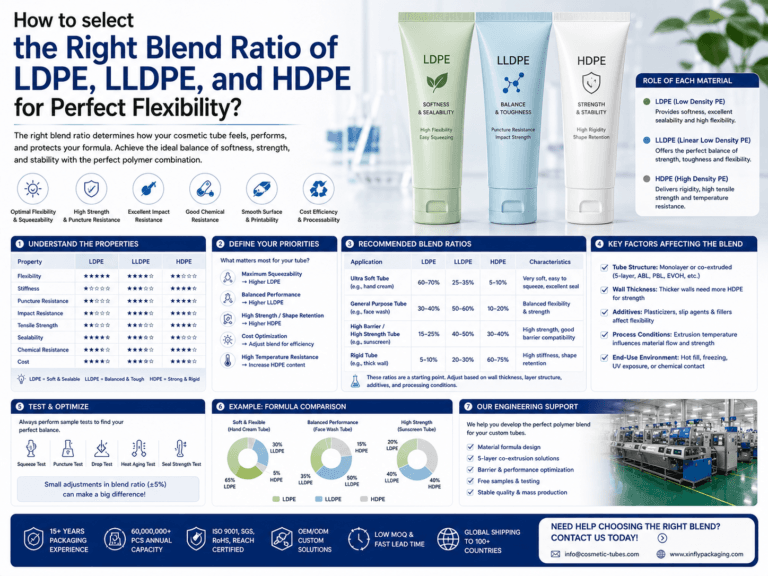
How to select the right blend ratio of LDPE, LLDPE, and HDPE for perfect flexibility?

How to select the right blend ratio of LDPE, LLDPE, and HDPE for perfect flexibility?

To select the right blend ratio of LDPE, LLDPE, and HDPE for perfect cosmetic tube flexibility, brands must balance softness, squeeze recovery, body strength, stress-crack resistance, standing stability, and formula dispensing behavior. There is no universal “best” ratio because a…
Read MoreHow to select the right blend ratio of LDPE, LLDPE, and HDPE for perfect flexibility?
Why do clear:transparent PE tubes turn cloudy or hazy when co-extruded with certain barrier materials

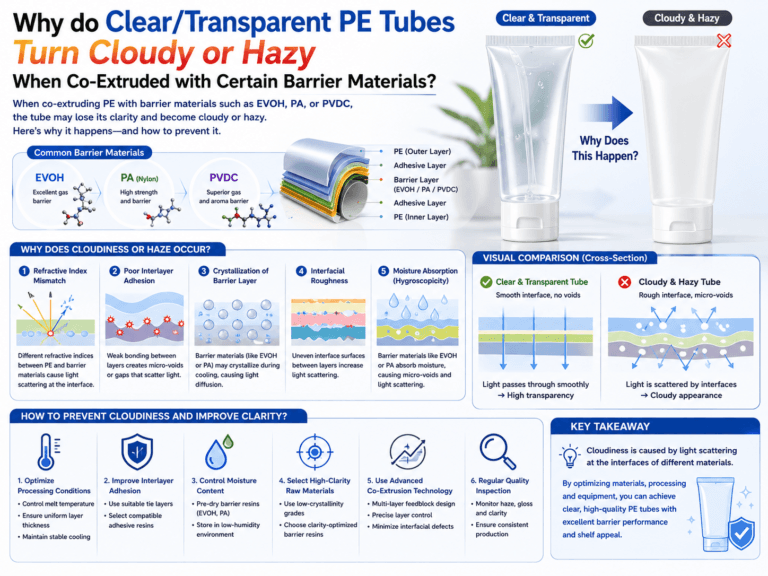
Why do clear/transparent PE tubes turn cloudy or hazy when co-extruded with certain barrier materials?

Clear or transparent PE tubes may turn cloudy or hazy when co-extruded with certain barrier materials because each layer has different optical properties, crystallinity, refractive index, melting behavior, and cooling shrinkage. Even if the outer PE layer looks transparent, the…

Read MoreWhy do clear/transparent PE tubes turn cloudy or hazy when co-extruded with certain barrier materials?
How to prevent essential oils from migrating through plastic tube walls (scalping effect)?

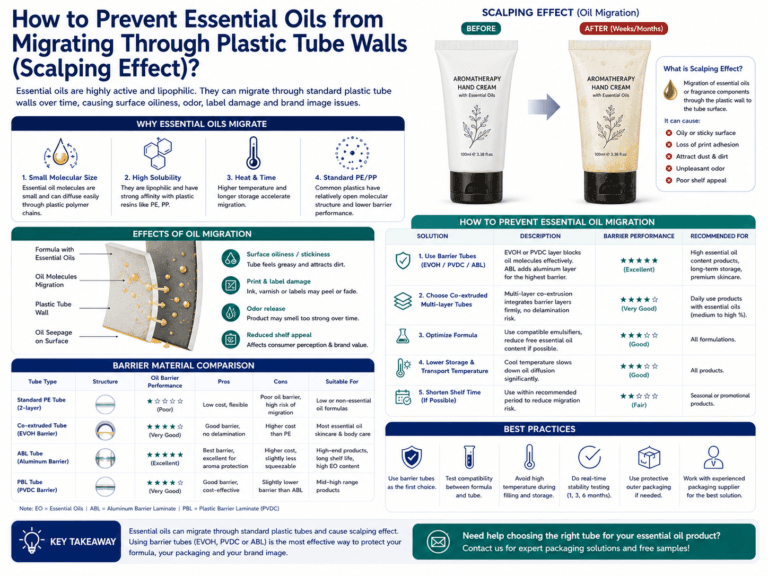
How to prevent essential oils from migrating through plastic tube walls (scalping effect)?

To prevent essential oils from migrating through plastic tube walls, brands should use a stronger barrier tube structure, choose the right inner contact layer, reduce direct interaction between volatile oil molecules and polyolefin plastics, and run real compatibility tests before…

Read MoreHow to prevent essential oils from migrating through plastic tube walls (scalping effect)?
Why do co-extruded tubes offer better flexibility and memory (shape retention) than laminated tubes

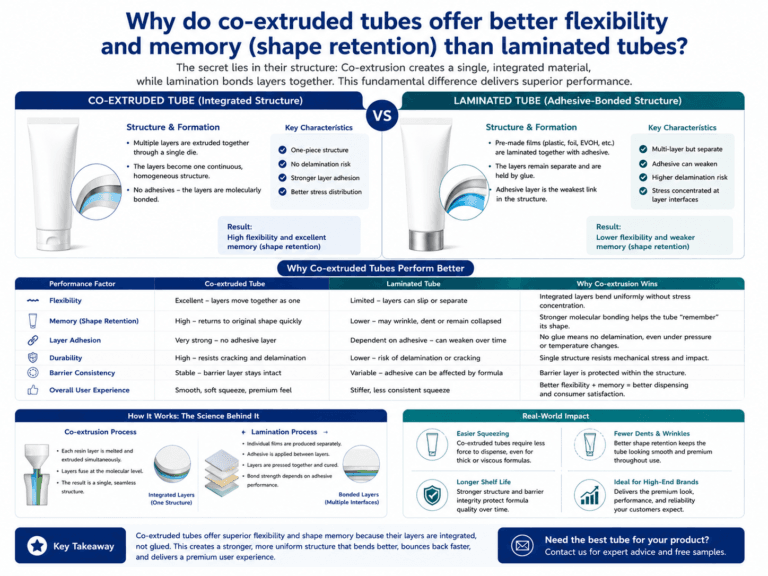
Why do co-extruded tubes offer better flexibility and memory (shape retention) than laminated tubes?

Co-extruded tubes often offer better flexibility and memory, or shape retention, because their tube body is made from continuous extruded plastic layers rather than a flat laminate sheet that is rolled and side-welded. This gives co-extruded tubes a more integrated…

Read MoreWhy do co-extruded tubes offer better flexibility and memory (shape retention) than laminated tubes?
What is the difference between an extruded tube and a laminated tube in terms of side seams and aesthetics

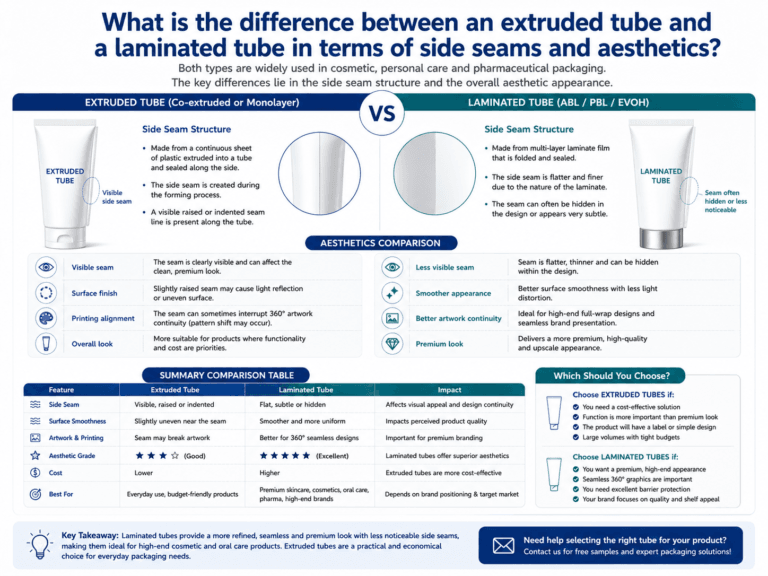
What is the difference between an extruded tube and a laminated tube in terms of side seams and aesthetics?

The main difference between an extruded tube and a laminated tube is that an extruded tube usually has a seamless tube body, while a laminated tube normally has a visible or semi-visible side seam. This structural difference affects the overall…

Read MoreWhat is the difference between an extruded tube and a laminated tube in terms of side seams and aesthetics?
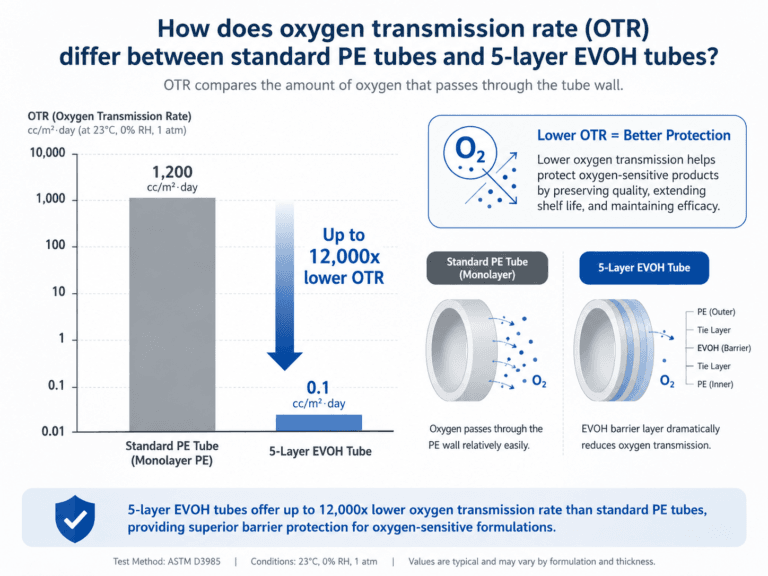
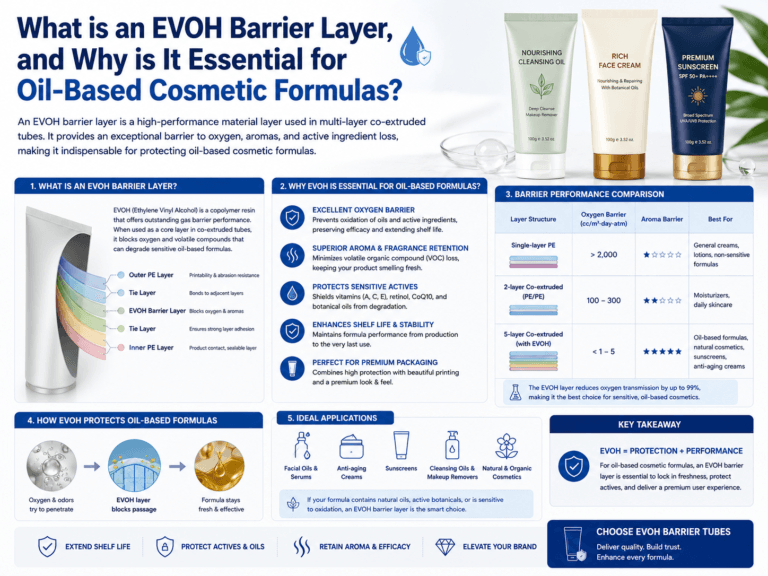
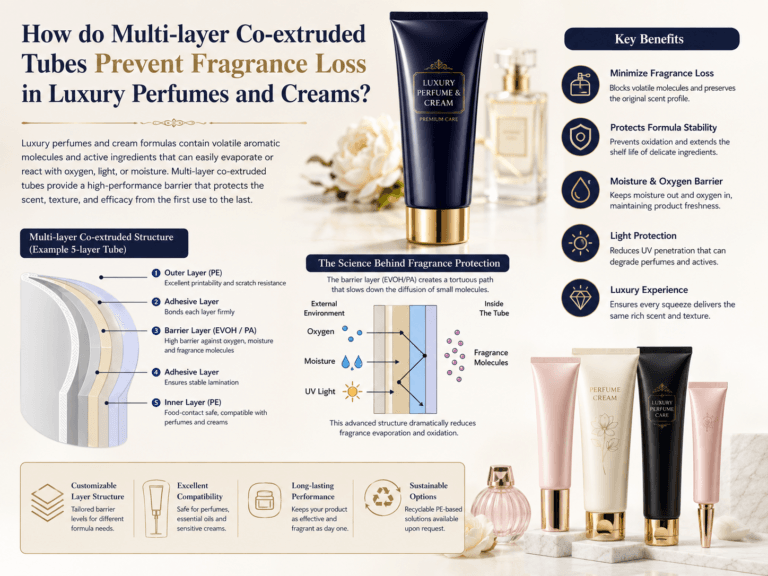
What is an EVOH barrier layer, and why is it essential for oil-based cosmetic formulas

What is an EVOH barrier layer, and why is it essential for oil-based cosmetic formulas?

An EVOH barrier layer is a thin high-barrier layer made from ethylene vinyl alcohol copolymer. In cosmetic tube packaging, it is usually placed inside a co-extruded multi-layer structure to reduce the transmission of oxygen, aroma, and some chemical substances. This…

Read MoreWhat is an EVOH barrier layer, and why is it essential for oil-based cosmetic formulas?
Why does hot stamping foil sometimes crack or flake around the crimping area of the tube

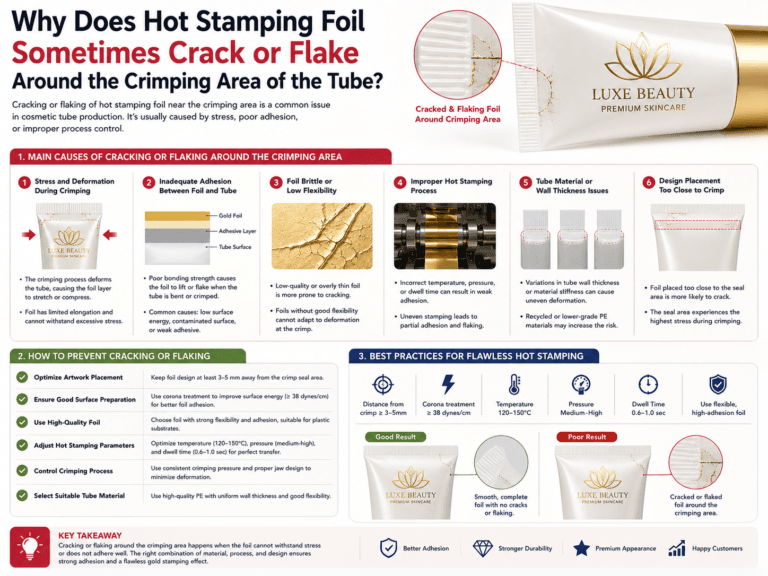
Why does hot stamping foil sometimes crack or flake around the crimping area of the tube?

Hot stamping foil sometimes cracks or flakes around the crimping area because that part of the tube experiences the highest mechanical stress during sealing, folding, and repeated squeezing. Even if the foil looks perfect right after decoration, the crimping zone…

Read MoreWhy does hot stamping foil sometimes crack or flake around the crimping area of the tube?
How do cosmetic tube manufacturers prevent color shifting (color variation) between production batches?

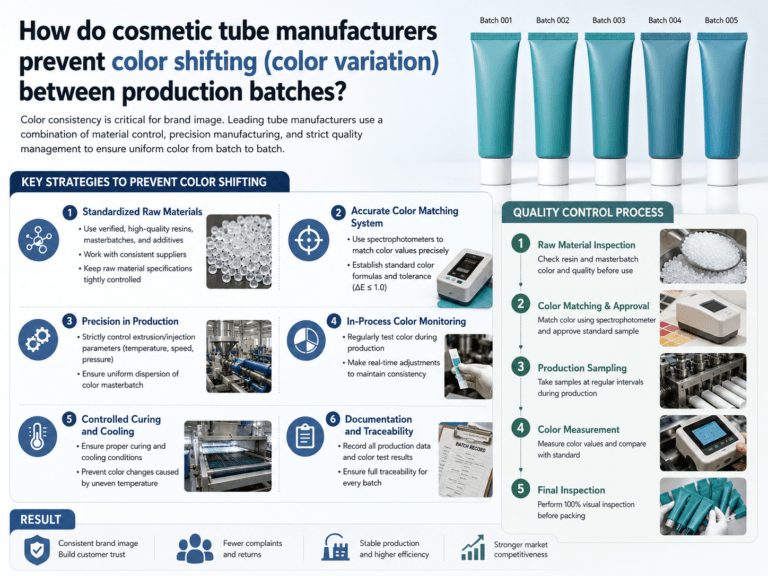
How do cosmetic tube manufacturers prevent color shifting (color variation) between production batches?

Cosmetic tube manufacturers prevent color shifting between production batches by controlling the full color system, not just the pigment itself. In practice, this means using a stable color masterbatch, keeping the same carrier resin and let-down ratio, measuring color with…

Read MoreHow do cosmetic tube manufacturers prevent color shifting (color variation) between production batches?
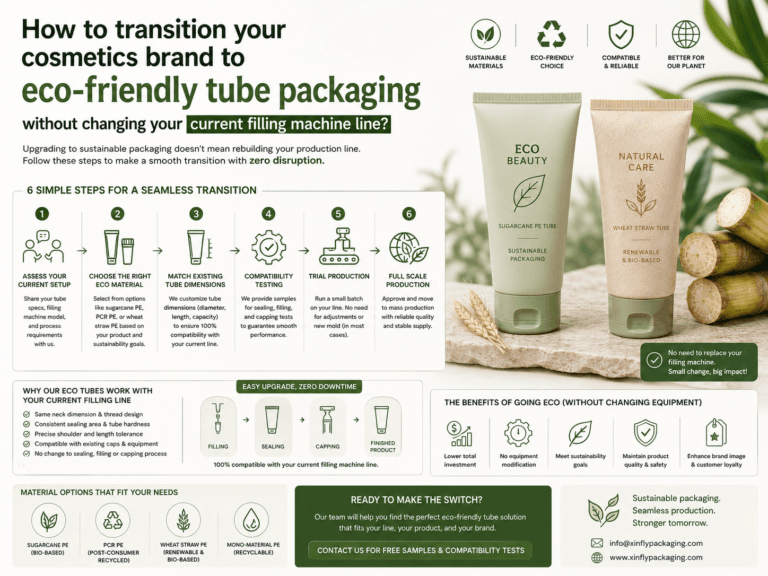
How to transition your cosmetics brand to eco-friendly tube packaging without changing your current filling machine line?

How to transition your cosmetics brand to eco-friendly tube packaging without changing your current filling machine line?

Yes, many cosmetics brands can transition to eco-friendly tube packaging without changing their current filling machine line, as long as the new tube structure is selected carefully. In most projects, the key is not the “eco” claim itself, but whether…

Read MoreHow to transition your cosmetics brand to eco-friendly tube packaging without changing your current filling machine line?