
Category Manufacturing

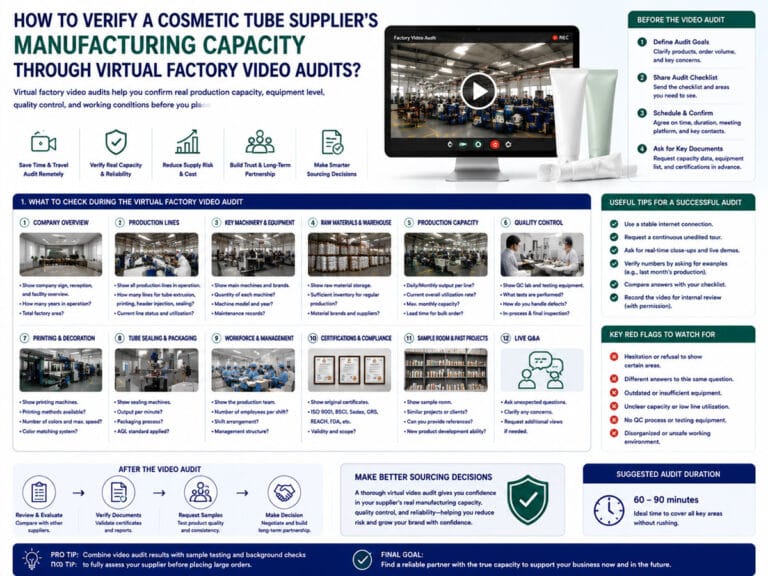
How to verify a cosmetic tube supplier's manufacturing capacity through virtual factory video audits?

How to verify a cosmetic tube supplier’s manufacturing capacity through virtual factory video audits?

Quick Answer A procurement manager can verify a cosmetic tube supplier’s manufacturing capacity through a virtual factory video audit by checking real production equipment, active production lines, raw material storage, quality control laboratories, warehouse operations and production records instead of…

Read MoreHow to verify a cosmetic tube supplier’s manufacturing capacity through virtual factory video audits?
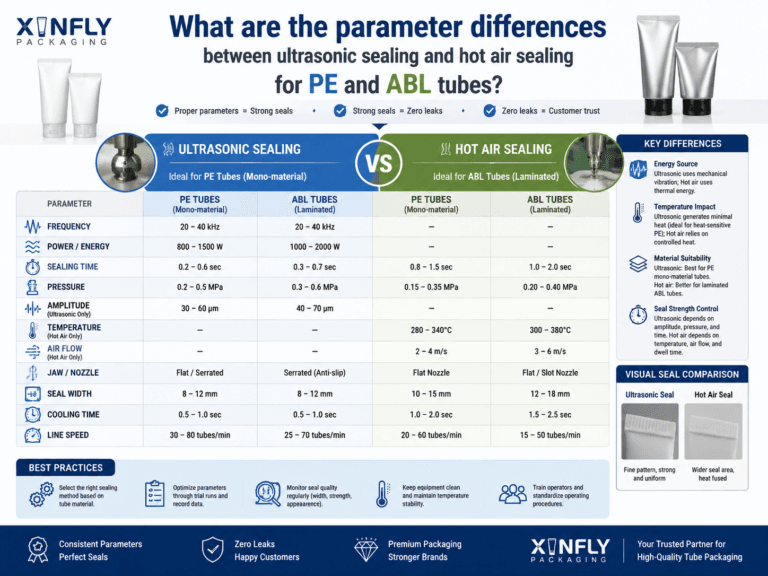
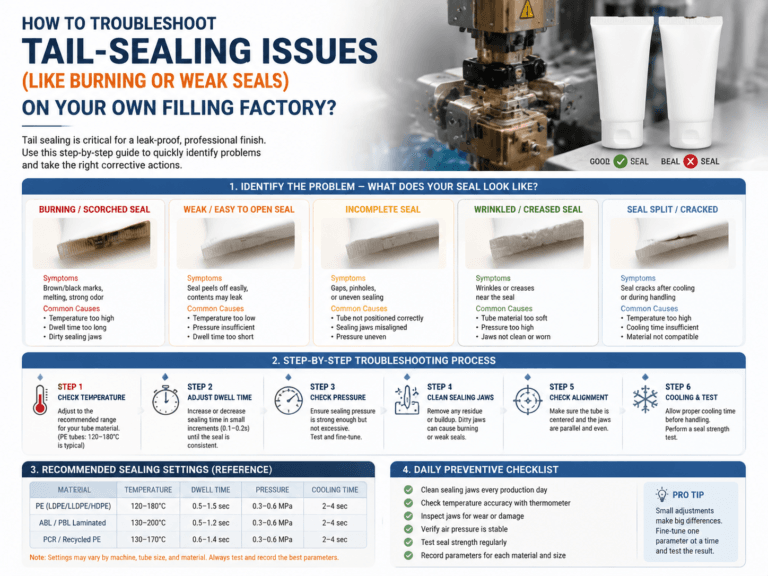
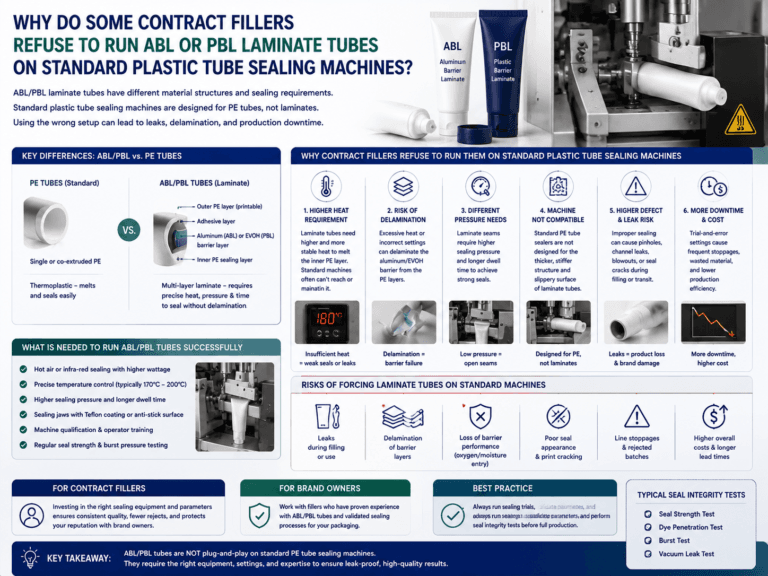
Why do some contract fillers refuse to run ABL or PBL laminate tubes on standard plastic tube sealing machines

Why do some contract fillers refuse to run ABL or PBL laminate tubes on standard plastic tube sealing machines?

Quick Answer Some contract fillers refuse to run ABL or PBL laminate tubes on standard plastic tube sealing machines because laminate tubes require different sealing temperatures, pressure settings, tooling designs and machine parameters compared with traditional PE extruded tubes. If…

Read MoreWhy do some contract fillers refuse to run ABL or PBL laminate tubes on standard plastic tube sealing machines?
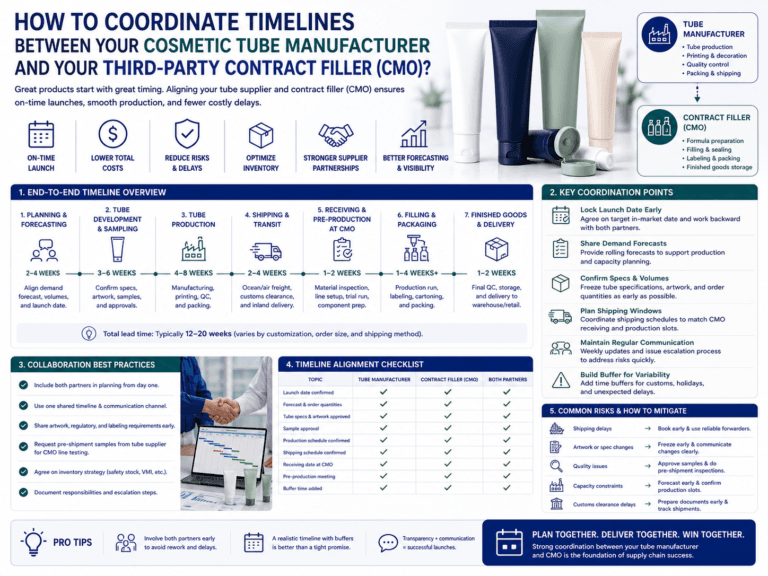
How to coordinate timelines between your cosmetic tube manufacturer and your third-party contract filler (CMO)

How to coordinate timelines between your cosmetic tube manufacturer and your third-party contract filler (CMO)?

To coordinate timelines between a cosmetic tube manufacturer and a third-party contract filler, or CMO, brands should create one shared project schedule that links packaging approval, formula readiness, filling-line trials, tube production, freight, incoming inspection, filling, stability release, and final…

Read MoreHow to coordinate timelines between your cosmetic tube manufacturer and your third-party contract filler (CMO)?
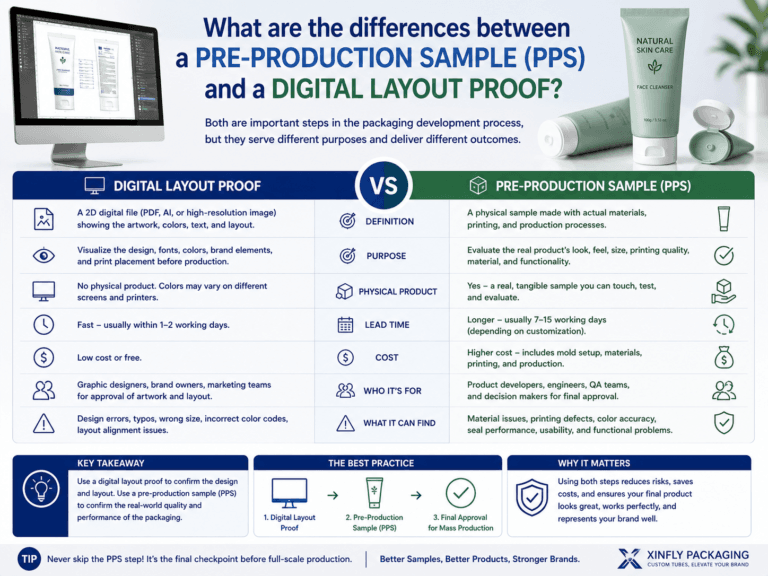
What are the differences between a pre-production sample (PPS) and a digital layout proof?

What are the differences between a pre-production sample (PPS) and a digital layout proof?

A digital layout proof is a visual artwork confirmation file, while a pre-production sample (PPS) is a physical sample made before bulk production using the approved materials, tube structure, cap, printing, and finish. In cosmetic tube manufacturing, these two approval…

Read MoreWhat are the differences between a pre-production sample (PPS) and a digital layout proof?
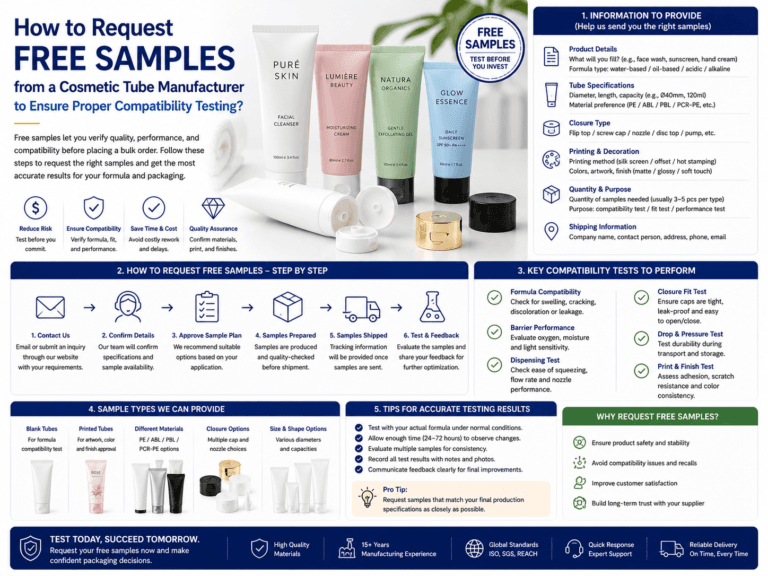
How to request free samples from a cosmetic tube manufacturer to ensure proper compatibility testing?

How to request free samples from a cosmetic tube manufacturer to ensure proper compatibility testing?

To request free samples from a cosmetic tube manufacturer for proper compatibility testing, buyers should provide clear formula information, target fill volume, tube material preference, cap type, decoration requirements, filling method, and testing purpose. A sample request should not only…

Read MoreHow to request free samples from a cosmetic tube manufacturer to ensure proper compatibility testing?
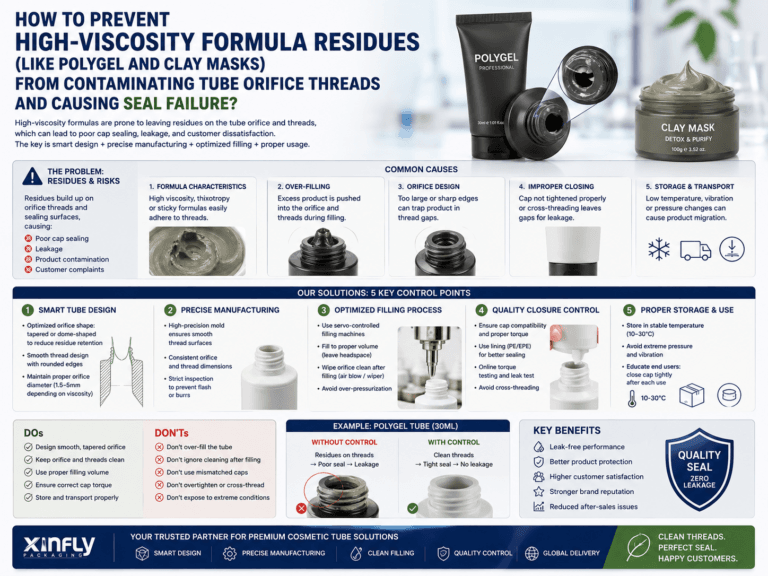
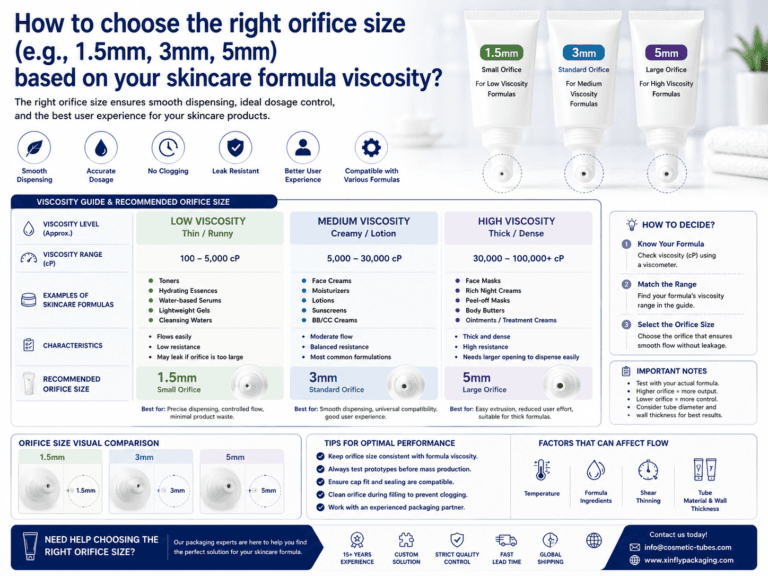
How to choose the right orifice size (e.g., 1.5mm, 3mm, 5mm) based on your skincare formula viscosity?

How to choose the right orifice size (e.g., 1.5mm, 3mm, 5mm) based on your skincare formula viscosity?

To choose the right orifice size for a skincare tube, start from the formula viscosity, then adjust based on tube softness, squeeze force, dosage control, cap seal, filling accuracy, and consumer application habit. A 1.5mm orifice is usually better for…

Read MoreHow to choose the right orifice size (e.g., 1.5mm, 3mm, 5mm) based on your skincare formula viscosity?
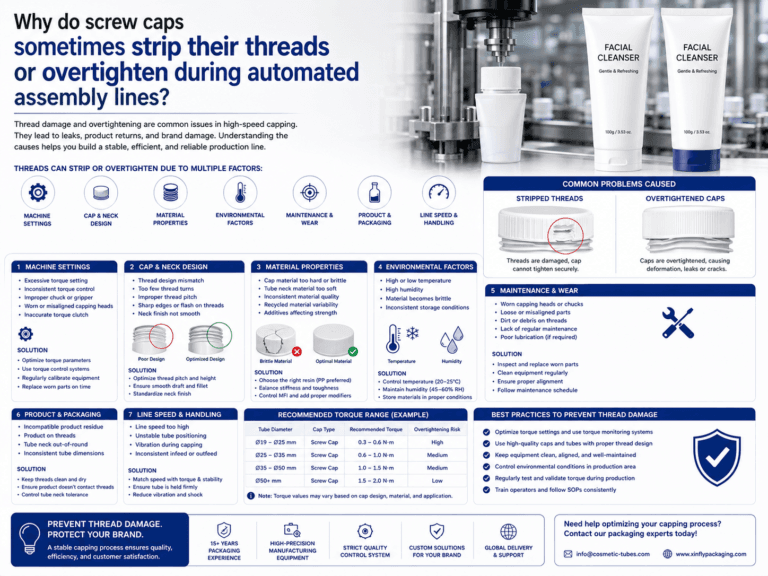
Why do screw caps sometimes strip their threads or overtighten during automated assembly lines?

Why do screw caps sometimes strip their threads or overtighten during automated assembly lines?

Screw caps can strip their threads or overtighten during automated cosmetic tube assembly when the capping torque, cap-thread design, tube-neck tolerance, material stiffness, alignment, and machine speed are not properly matched. The problem may appear as damaged threads, cracked caps,…

Read MoreWhy do screw caps sometimes strip their threads or overtighten during automated assembly lines?
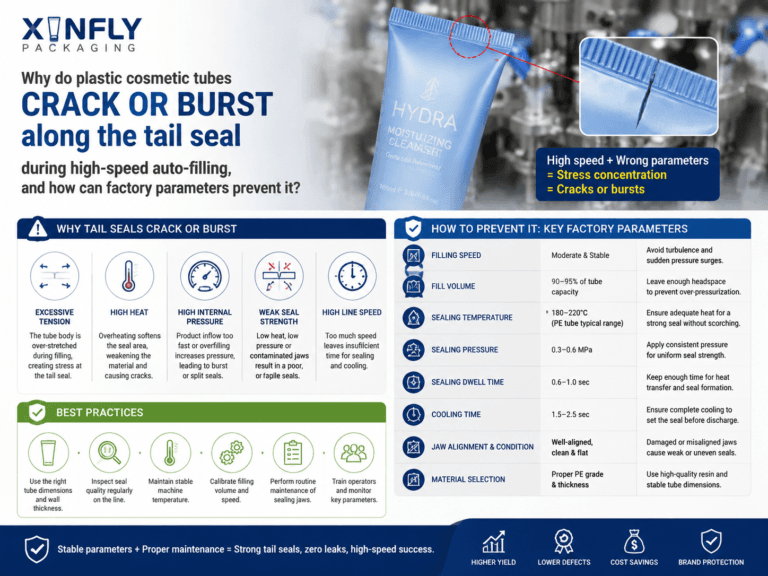
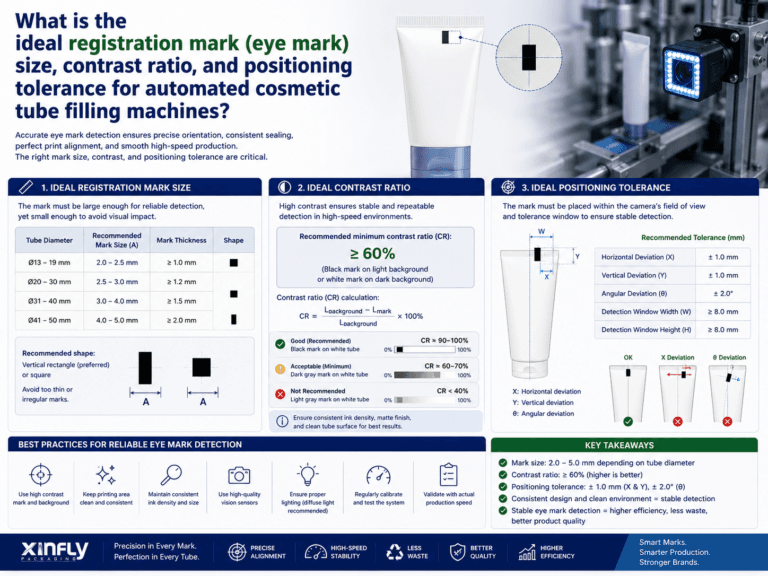
What are the technical parameters required to set up an automated cosmetic tube filling and sealing line?

What are the technical parameters required to set up an automated cosmetic tube filling and sealing line?

To set up an automated cosmetic tube filling and sealing line, the key technical parameters include tube diameter, tube length, fill volume, formula viscosity, filling temperature, filling accuracy, sealing method, tail-seal width, coding position, production speed, air pressure, power supply,…

Read MoreWhat are the technical parameters required to set up an automated cosmetic tube filling and sealing line?
Can custom textures (like ribs or geometric patterns) be molded directly onto the plastic tube body?

Can custom textures (like ribs or geometric patterns) be molded directly onto the plastic tube body?

Yes, custom textures such as ribs, grip lines, diamond patterns, geometric embossing, or tactile surface effects can be created on plastic cosmetic tube packaging, but the available method depends on where the texture is located and how deep the pattern…

Read MoreCan custom textures (like ribs or geometric patterns) be molded directly onto the plastic tube body?
What is the maximum filling temperature that a standard PE cosmetic tube can withstand without warping?

What is the maximum filling temperature that a standard PE cosmetic tube can withstand without warping?

For a standard PE cosmetic tube, the recommended filling temperature is usually below 45°C to 50°C to reduce the risk of warping, paneling, shoulder deformation, tail-seal stress, or print damage. Some PE tubes may tolerate slightly higher short-term temperatures, but…

Read MoreWhat is the maximum filling temperature that a standard PE cosmetic tube can withstand without warping?