
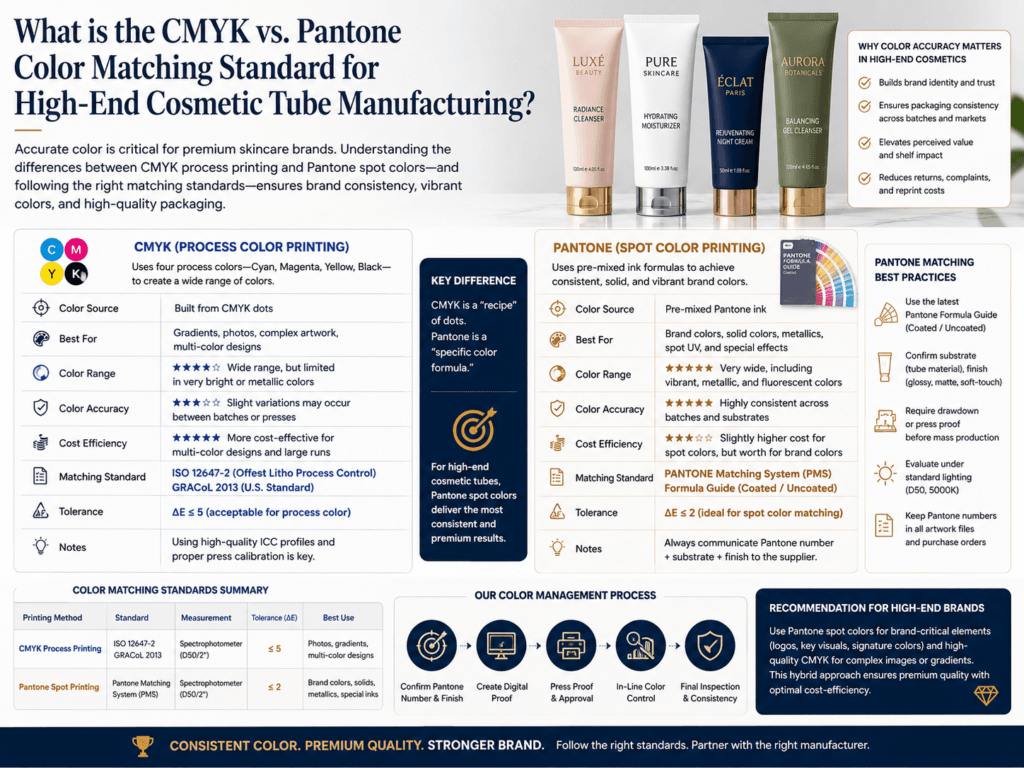
What is the CMYK vs. Pantone color matching standard for high-end cosmetic tube manufacturing?
In high-end cosmetic tube manufacturing, CMYK and Pantone are not competing “standards” in the sense that one replaces the other. They are…

In high-end cosmetic tube manufacturing, CMYK and Pantone are not competing “standards” in the sense that one replaces the other. They are…
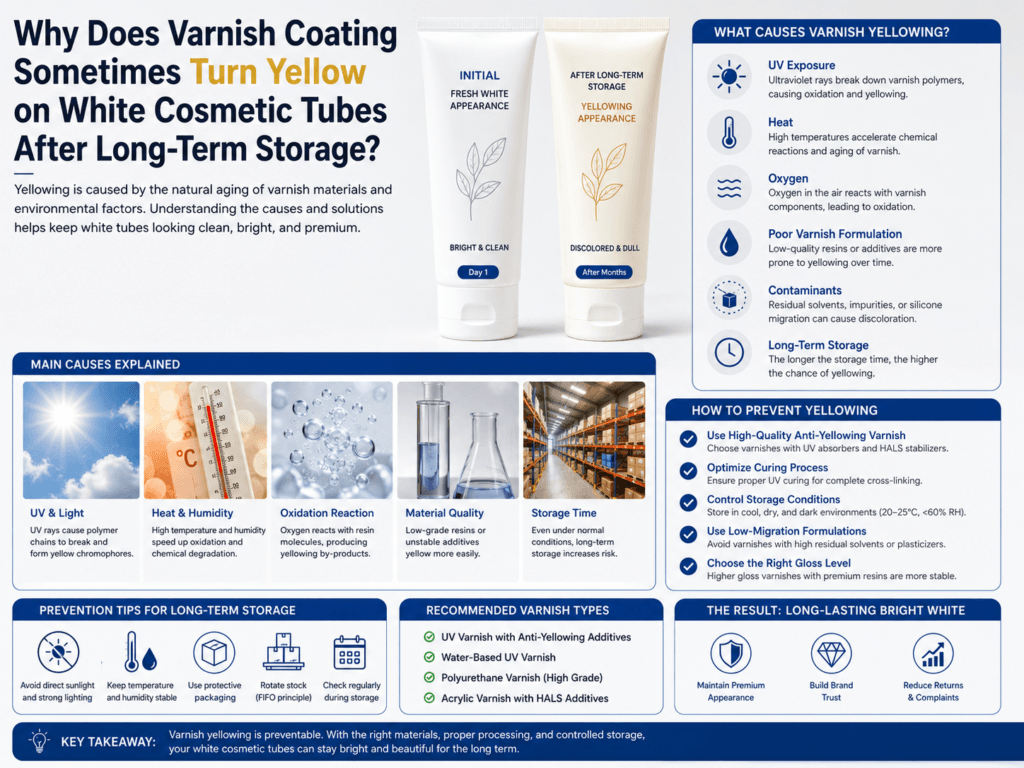
Varnish coating on white cosmetic tubes can turn yellow after long-term storage because the clear protective layer slowly ages under light, oxygen,…
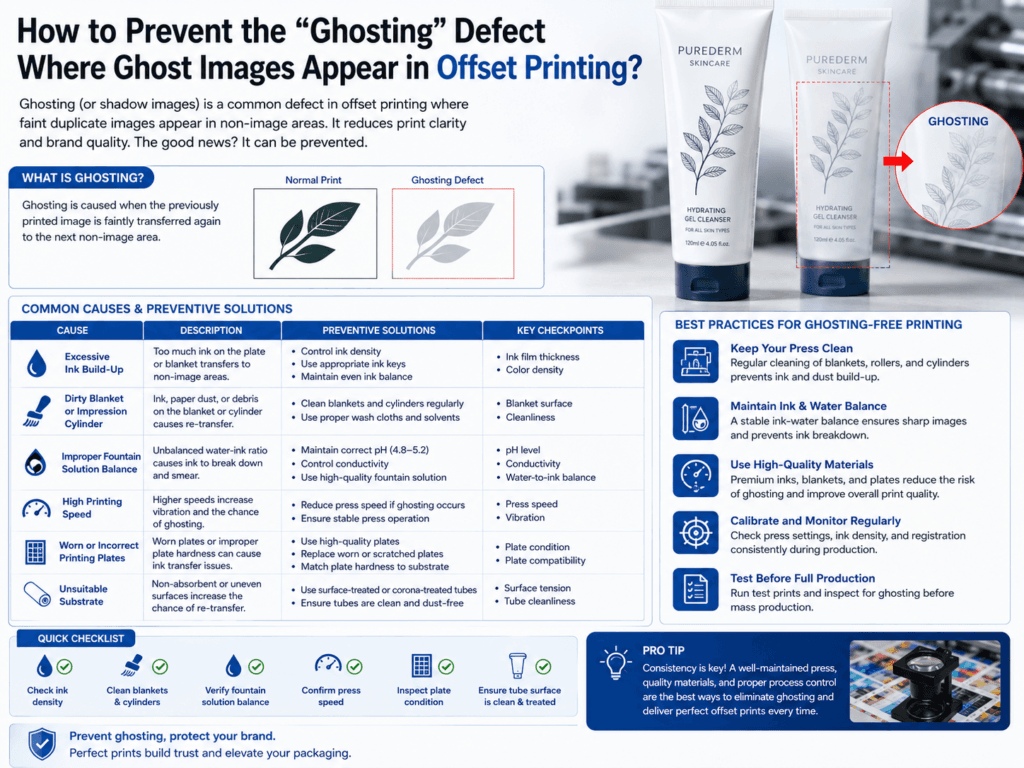
To prevent the “ghosting” defect in offset printing, factories usually focus on stabilizing ink supply, roller settings, and ink-water balance. Ghosting typically…
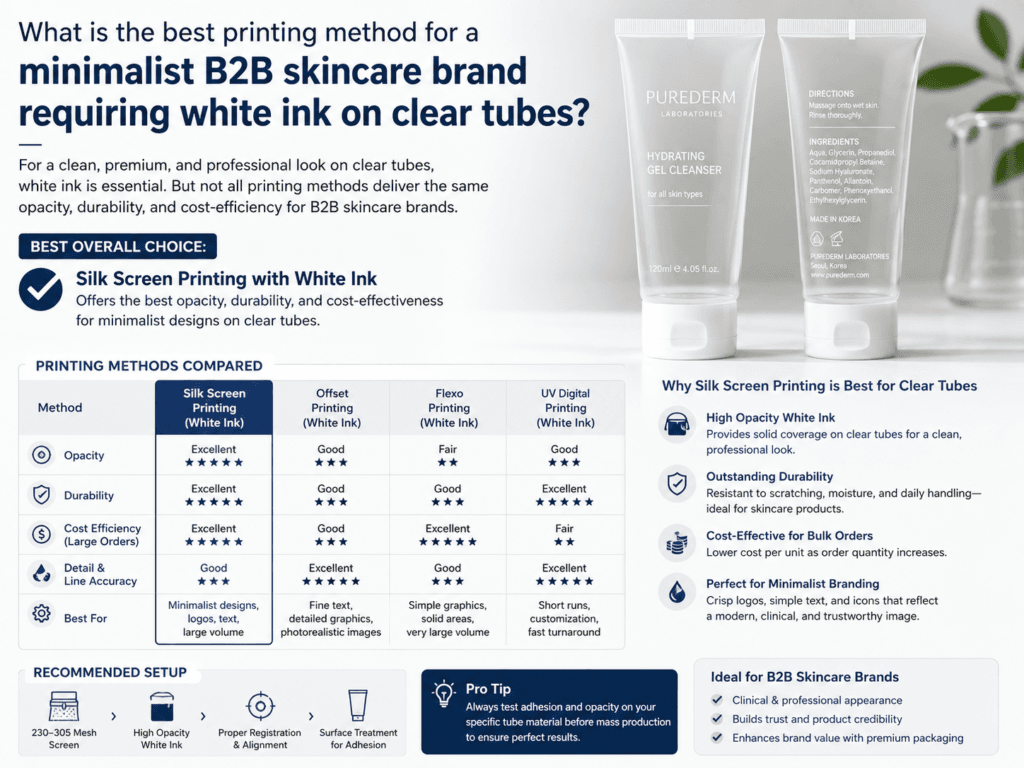
For a minimalist B2B skincare brand that needs white ink on clear cosmetic tubes, silk screen printing is usually the best printing…
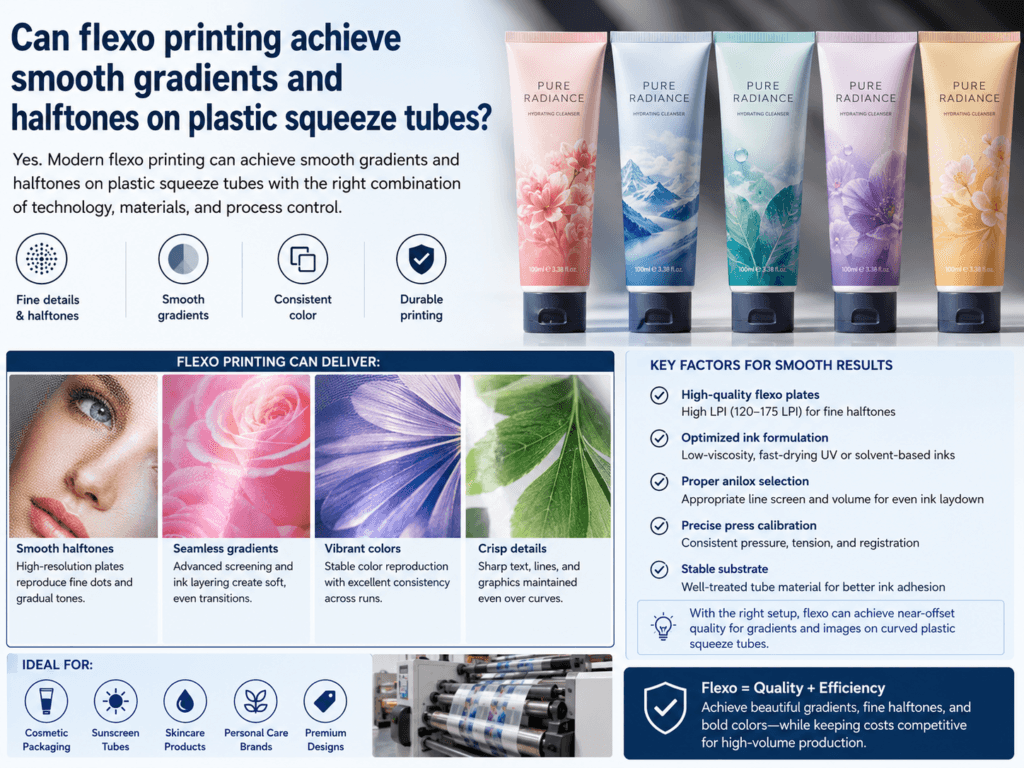
Yes, flexo printing can achieve gradients and halftones on plastic squeeze tubes, but the result is usually only as smooth as the…
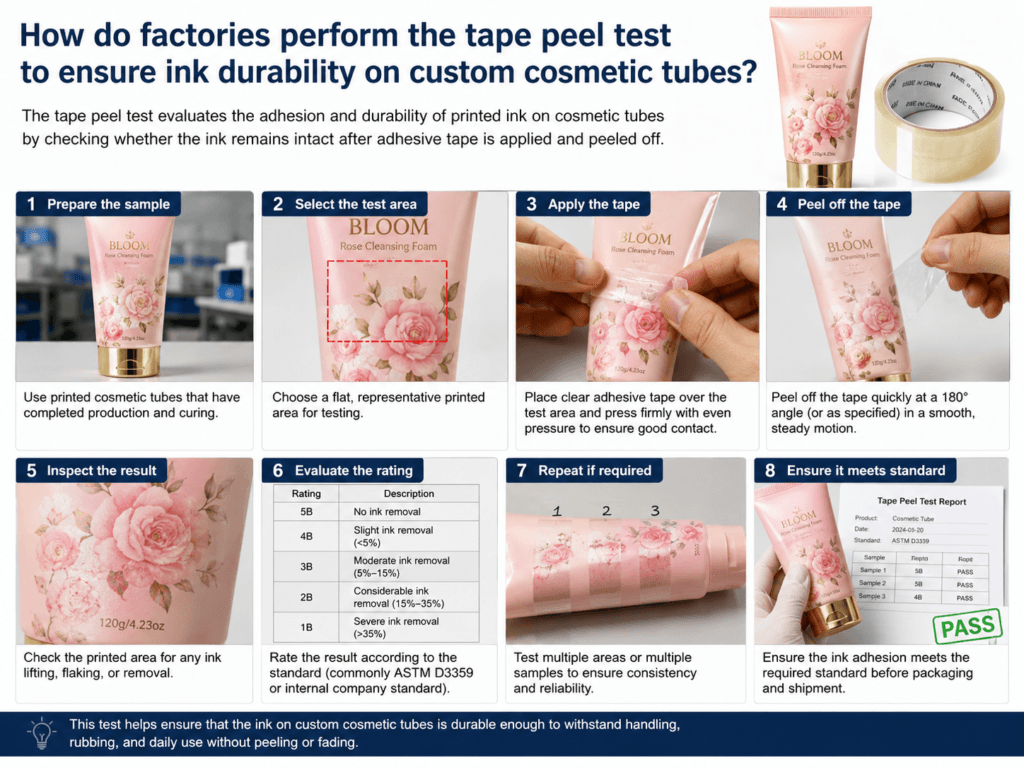
Factories usually perform the tape peel test on custom cosmetic tubes by applying standardized adhesive tape to a printed test area and…
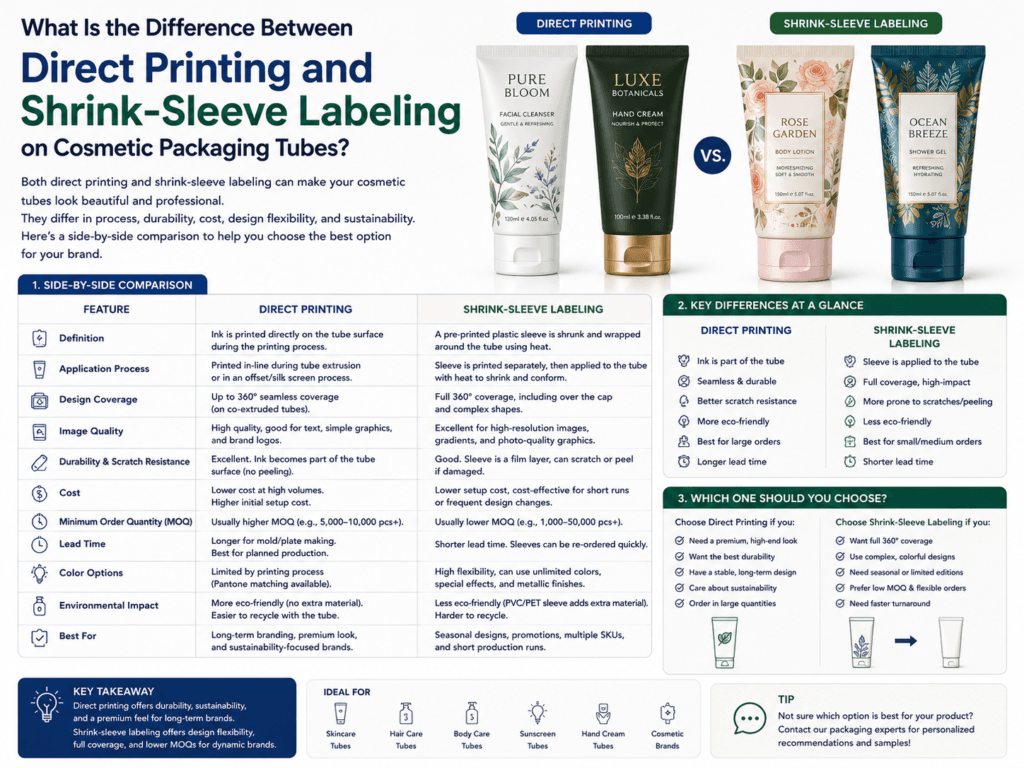
The main difference between direct printing and labeling on cosmetic packaging tubes is where the decoration is applied. Direct printing places the…
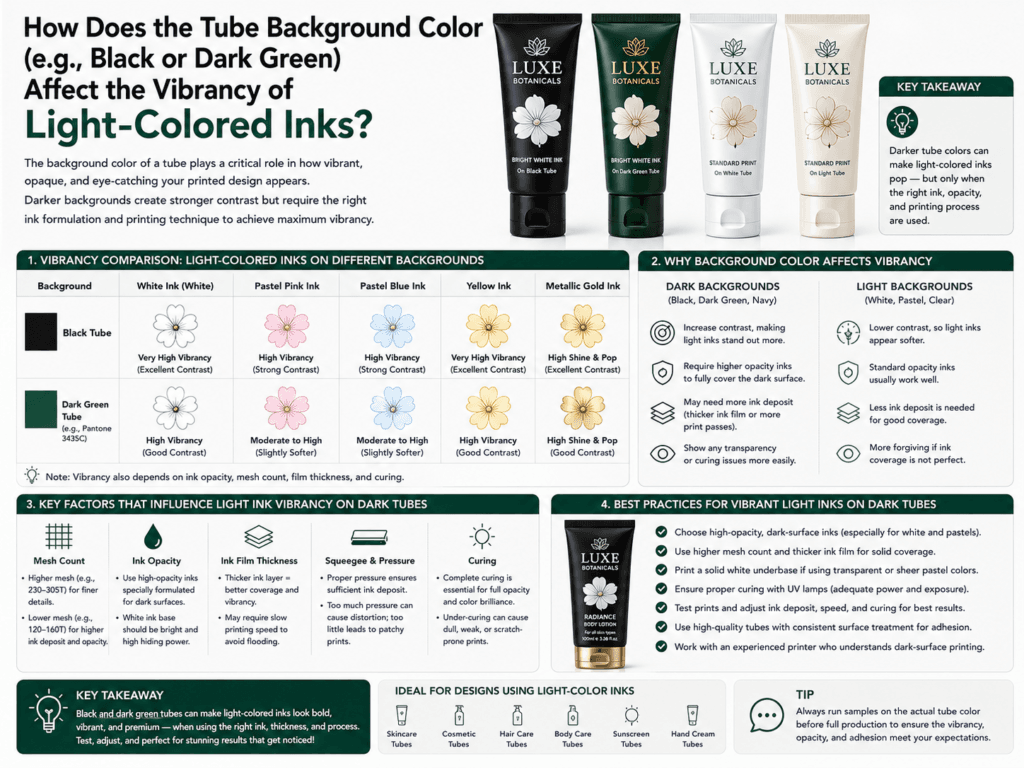
The background color of a cosmetic tube has a major impact on how vibrant light-colored inks appear. On black, dark green, navy,…
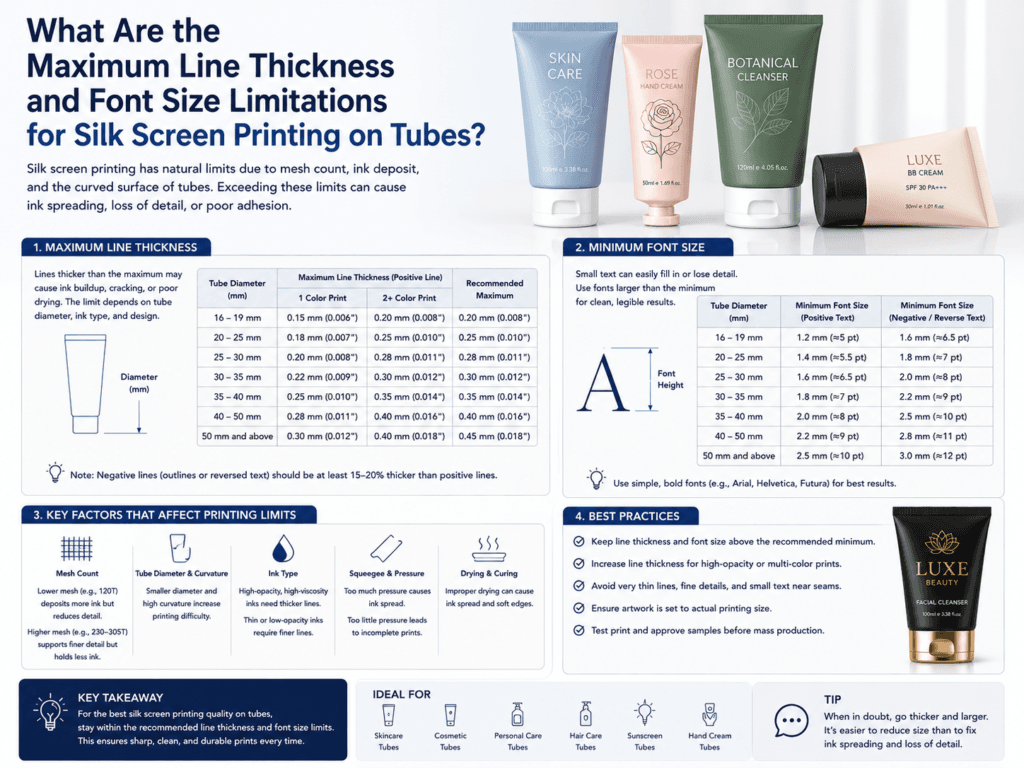
For silk screen printing on cosmetic tubes, there is usually no strict “maximum line thickness” limit in normal artwork. Thick lines and…
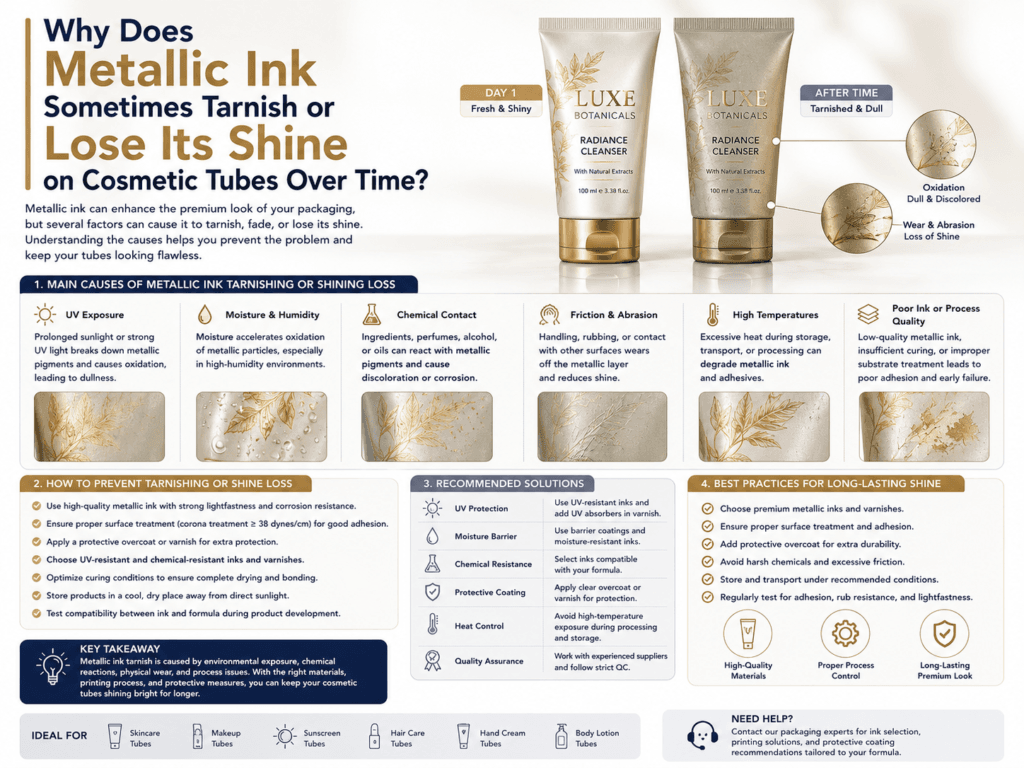
Metallic ink on cosmetic tubes can tarnish, look dull, or lose its shine over time because the metallic effect is highly sensitive…

Yes, a transparent window can be designed on a colored PE squeeze tube, but it must be planned from the tube structure…

Yes, spot UV coating can be applied on top of an offset-printed cosmetic tube, but the project must be engineered carefully. In…