
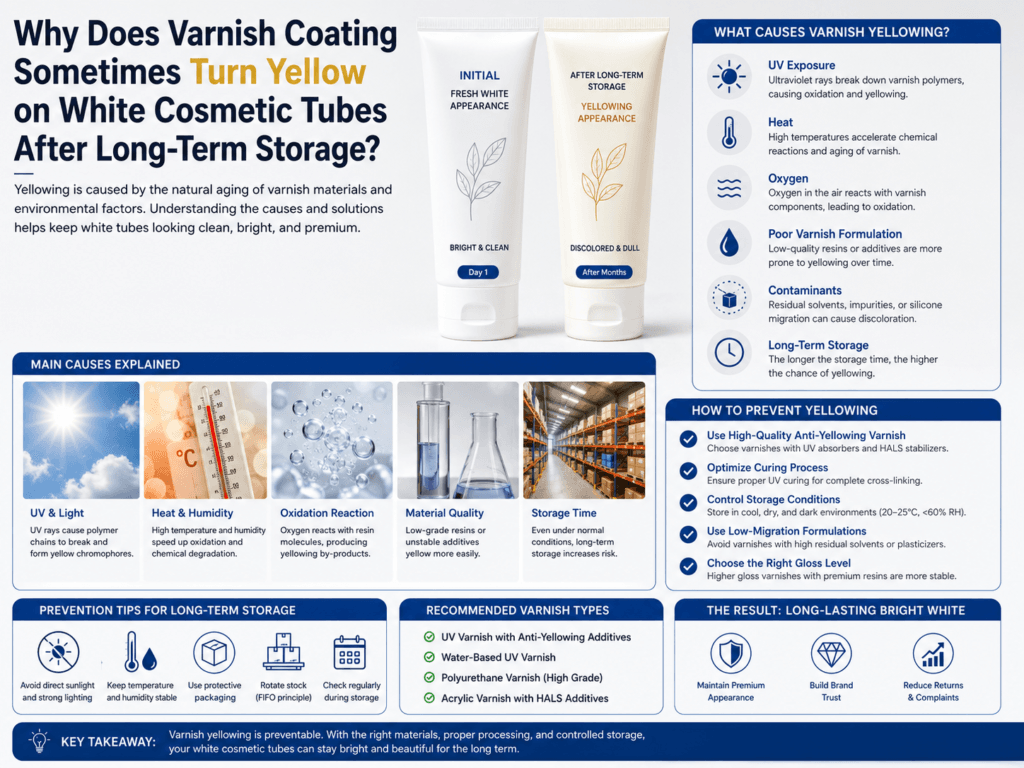
Varnish coating on white cosmetic tubes can turn yellow after long-term storage because the clear protective layer slowly ages under light, oxygen, heat, humidity, and chemical exposure. In many cases, the yellowing does not come from the white tube body first. It comes from the varnish or topcoat itself, especially when the coating chemistry has a natural tendency to discolor over time.
On white cosmetic tubes, even slight yellowing becomes very visible because the background is bright and clean. A varnish that looks perfectly transparent at the beginning may gradually develop a warm tone, cream tint, or uneven yellow cast after months of storage if the coating system, storage condition, or packaging environment is not properly controlled.
Main Causes of Varnish Yellowing on White Cosmetic Tubes
| Cause | What Happens | Visible Result |
|---|---|---|
| UV or light exposure | Light triggers oxidation and degradation in the coating layer | Clear varnish slowly becomes yellowish |
| Heat aging | High temperature speeds up coating degradation | Faster yellowing during storage |
| Oxygen exposure | Oxidation changes the chemical structure of the varnish film | White tube surface looks warmer or darker over time |
| Humidity and moisture | Can accelerate aging in some coating systems | Uneven discoloration or long-term yellow tone |
| Coating chemistry itself | Some varnish systems yellow more easily than others | More visible discoloration on white packaging |
Why White Tubes Show Yellowing More Easily
- High contrast background: Even a slight warm shift is obvious on a white tube.
- Premium visual expectation: White packaging is expected to stay clean, cool, and bright.
- Clear varnish sits on top of a light substrate: Any discoloration in the top layer becomes easier to notice.
- Long storage exposes slow-aging defects: What looks invisible at shipment may appear after months in warehousing.
Which Varnish Systems Are More Likely to Yellow?
| Coating Condition | Yellowing Risk | Comment |
|---|---|---|
| Lower light-stability varnish systems | Higher | More likely to discolor over time |
| Some aromatic resin-based clear coats | Higher | Can yellow faster than more light-stable systems |
| Better UV-stable clear coatings | Lower | Usually preferred for white and light cosmetic packaging |
Other Hidden Sources of Yellowing
- Packaging materials in storage: Some bags, films, foams, or carton conditions can contribute to discoloration risk.
- Air pollutants: Certain storage environments may accelerate yellowing reactions.
- Residual chemicals: Unstable additives or contamination in the coating or packaging system can affect color over time.
Common Yellowing Scenarios
| Failure Scenario | Likely Reason |
|---|---|
| Whole tube surface turns slightly cream-colored | General varnish aging from light, oxygen, or heat |
| Only outer exposed areas yellow | UV or light exposure during storage |
| Yellowing appears near packaging openings or edges | Environmental exposure or storage-material interaction |
| Some batches yellow faster than others | Coating chemistry variation or storage inconsistency |
How Manufacturers Reduce Yellowing Risk
- Select a more light-stable varnish system for white or light-colored cosmetic tubes.
- Test long-term aging performance under light, heat, and humidity before approving mass production.
- Control storage conditions by reducing direct sunlight, excessive heat, and unstable humidity.
- Check compatibility with bags, cartons, and packing materials used for finished tube storage.
- Use real accelerated aging validation instead of relying only on fresh sample appearance.
Best Practice for White Cosmetic Tubes
If the brand image depends on a clean white appearance, the safest strategy is to use a non-yellowing or lower-yellowing clear coating system and validate it specifically on the actual tube substrate. White cosmetic packaging is much less forgiving than darker packaging, so even a small shift in varnish tone can affect the premium feel of the final product.
Summary
Varnish coating sometimes turns yellow on white cosmetic tubes after long-term storage because the clear topcoat slowly degrades through light exposure, oxidation, heat, humidity, and coating chemistry instability. White tubes make this problem more visible because the background is bright and any warm shift stands out immediately.
To prevent yellowing, manufacturers should select more stable clear coatings, validate aging performance in advance, and control storage and packaging conditions carefully.
Learn more: Surface Finishing, White Cosmetic Tubes, Printing Options, Tube Decoration, Quality Assurance, Customize Cosmetic Tubes.
Need More Stable Surface Protection for White Cosmetic Tubes?
Xinfly Packaging helps brands evaluate coating durability, light stability, and long-term storage performance so white cosmetic tube finishes stay cleaner and more consistent over time.