
Category FAQs

Find answers to common questions about cosmetic tube packaging, materials, printing, MOQ, customization, production, shipping, and sustainable packaging solutions.

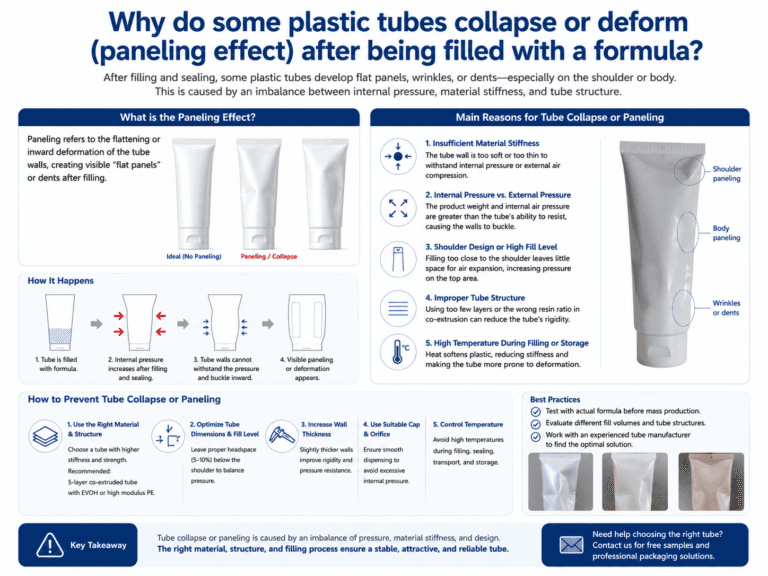
Why do some plastic tubes collapse or deform (paneling effect) after being filled with a formula?

Why do some plastic tubes collapse or deform (paneling effect) after being filled with a formula?

Plastic tubes can collapse or deform after filling because the pressure inside the tube becomes lower than the outside atmospheric pressure. This is often called the paneling effect. Instead of staying round and smooth, the tube body caves inward, forms…

Read MoreWhy do some plastic tubes collapse or deform (paneling effect) after being filled with a formula?
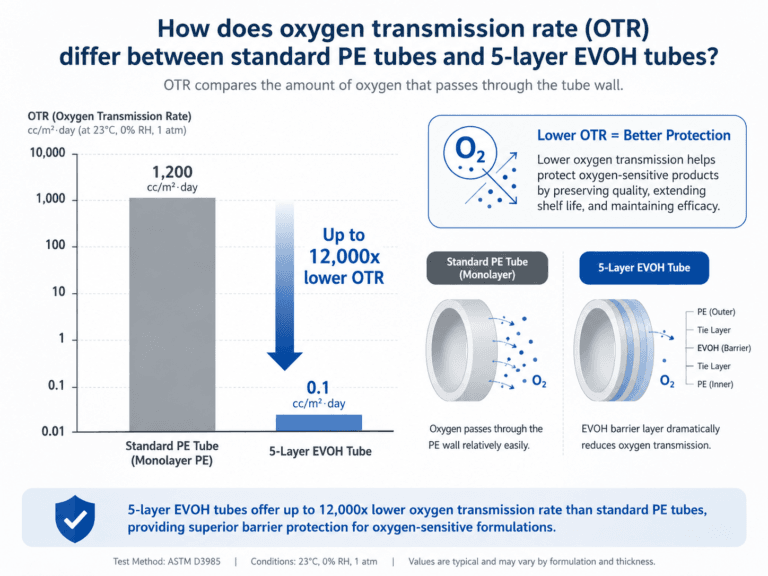
What is an EVOH barrier layer, and why is it essential for oil-based cosmetic formulas

What is an EVOH barrier layer, and why is it essential for oil-based cosmetic formulas?

An EVOH barrier layer is a thin high-barrier layer made from ethylene vinyl alcohol copolymer. In cosmetic tube packaging, it is usually placed inside a co-extruded multi-layer structure to reduce the transmission of oxygen, aroma, and some chemical substances. This…

Read MoreWhat is an EVOH barrier layer, and why is it essential for oil-based cosmetic formulas?
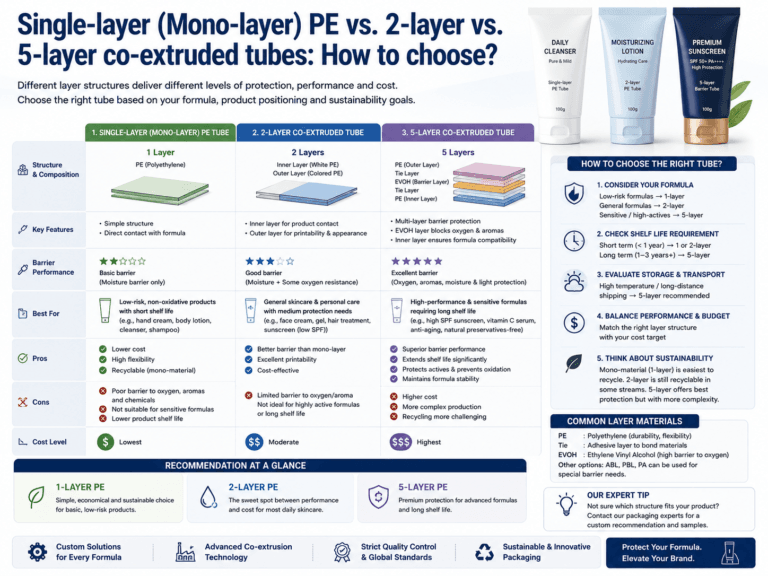
Single-layer (Mono-layer) PE vs. 2-layer vs. 5-layer co-extruded tubes: How to choose?

Single-layer (Mono-layer) PE vs. 2-layer vs. 5-layer co-extruded tubes: How to choose?

The right choice between single-layer (mono-layer) PE, 2-layer PE, and 5-layer co-extruded tubes depends on four things: your formula sensitivity, required shelf life, target cost, and recyclability goal. In simple terms, mono-layer PE is best for basic stable formulas and…

Read MoreSingle-layer (Mono-layer) PE vs. 2-layer vs. 5-layer co-extruded tubes: How to choose?
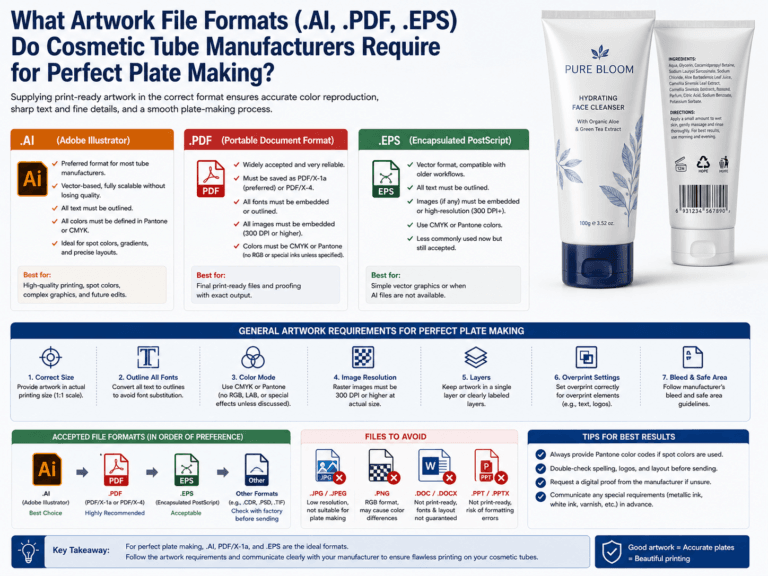
What artwork file formats (.AI, .PDF, .EPS) do cosmetic tube manufacturers require for perfect plate making?

What artwork file formats (.AI, .PDF, .EPS) do cosmetic tube manufacturers require for perfect plate making?

For perfect plate making, cosmetic tube manufacturers usually prefer vector artwork files such as .AI, press-ready .PDF, or .EPS. These formats are widely used in packaging prepress because they preserve clean vector paths, editable spot colors, and accurate line quality…

Read MoreWhat artwork file formats (.AI, .PDF, .EPS) do cosmetic tube manufacturers require for perfect plate making?
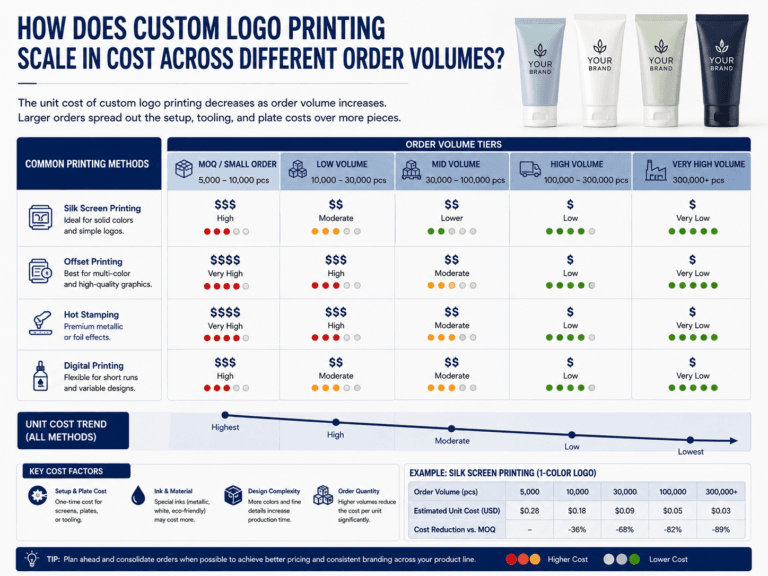
How does custom logo printing scale in cost across different order volumes (MOQ vs. High Volume)

How does custom logo printing scale in cost across different order volumes (MOQ vs. High Volume)?

Custom logo printing becomes more cost-efficient as order volume increases because fixed setup costs are spread across more tubes. At MOQ level, the unit price is usually the highest because the order still has to absorb artwork checking, screen or…

Read MoreHow does custom logo printing scale in cost across different order volumes (MOQ vs. High Volume)?
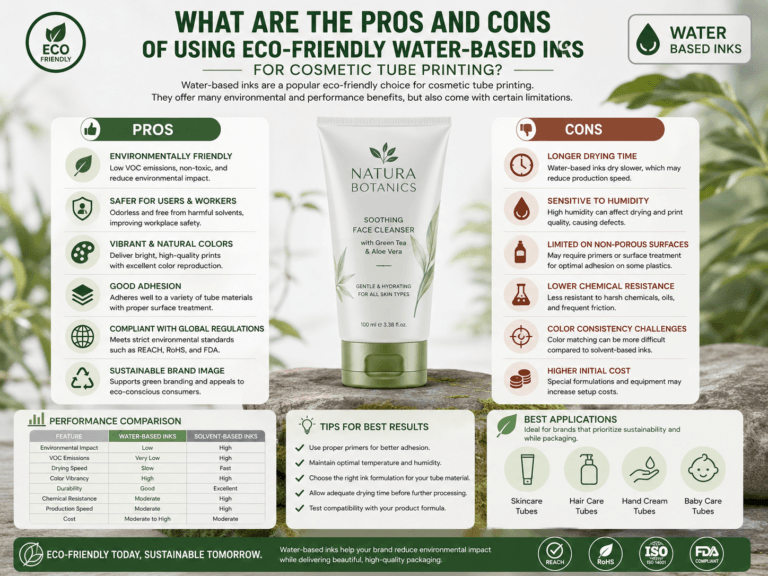
What are the pros and cons of using eco-friendly water-based inks for cosmetic tube printing

What are the pros and cons of using eco-friendly water-based inks for cosmetic tube printing?

Eco-friendly water-based inks can be a good option for cosmetic tube printing, but they are not automatically the best choice for every tube project. Their biggest advantages are usually lower VOC emissions, lower flammability, and a stronger sustainability story. Their…

Read MoreWhat are the pros and cons of using eco-friendly water-based inks for cosmetic tube printing?
How do surface treatments like soft-touch matte affect the overall recycling classification of the tube

How do surface treatments like soft-touch matte affect the overall recycling classification of the tube?

Surface treatments such as soft-touch matte do not automatically change the base recycling classification of a cosmetic tube, but they can affect the final recyclability assessment. In most cases, the tube is still classified first by its main body material,…

Read MoreHow do surface treatments like soft-touch matte affect the overall recycling classification of the tube?