
Category FAQs

Find answers to common questions about cosmetic tube packaging, materials, printing, MOQ, customization, production, shipping, and sustainable packaging solutions.

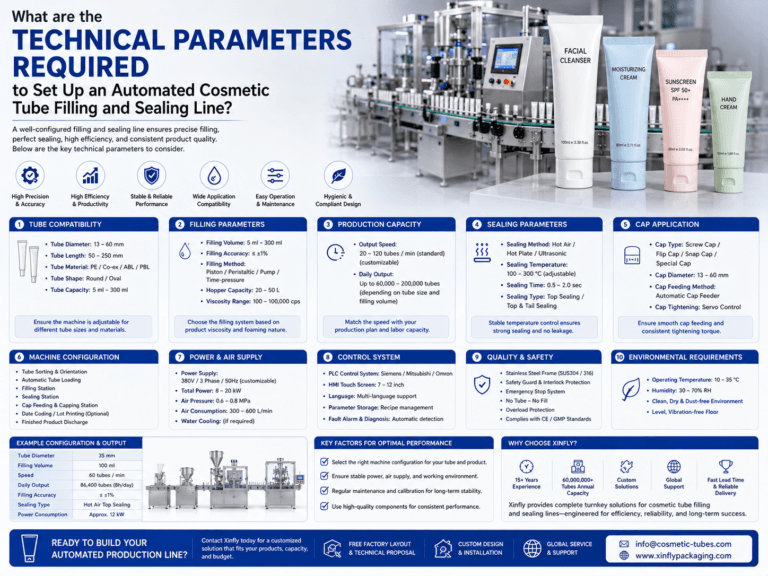
What are the technical parameters required to set up an automated cosmetic tube filling and sealing line?

What are the technical parameters required to set up an automated cosmetic tube filling and sealing line?

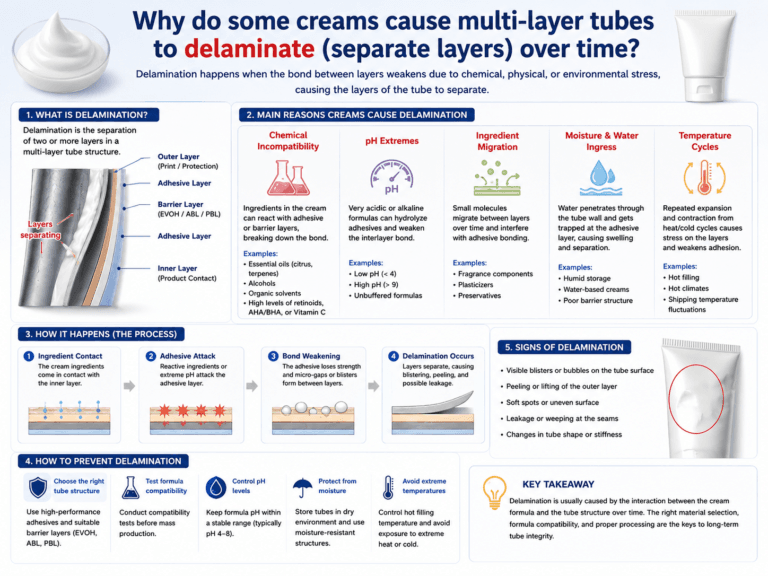
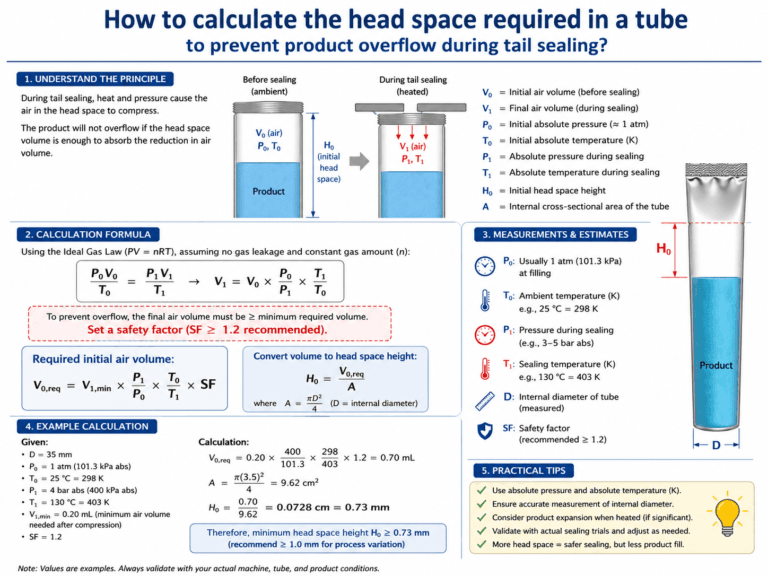
To set up an automated cosmetic tube filling and sealing line, the key technical parameters include tube diameter, tube length, fill volume, formula viscosity, filling temperature, filling accuracy, sealing method, tail-seal width, coding position, production speed, air pressure, power supply,…

Read MoreWhat are the technical parameters required to set up an automated cosmetic tube filling and sealing line?
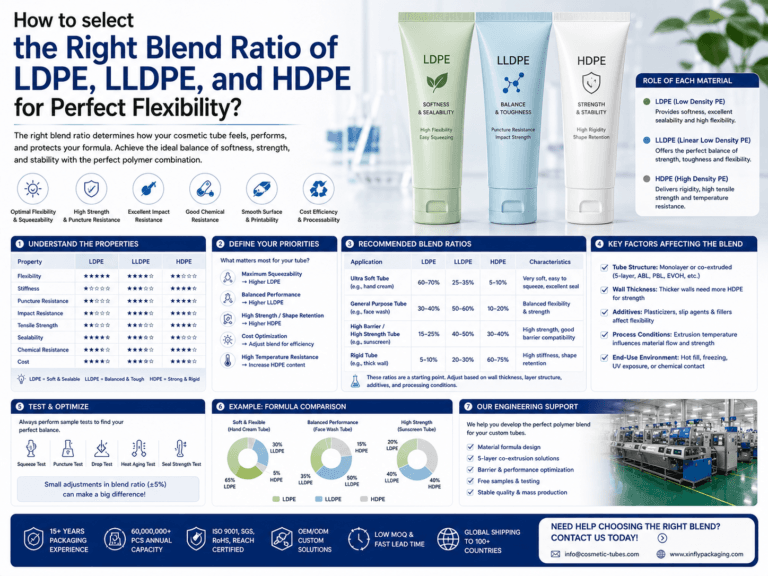
How to select the right blend ratio of LDPE, LLDPE, and HDPE for perfect flexibility?

How to select the right blend ratio of LDPE, LLDPE, and HDPE for perfect flexibility?

To select the right blend ratio of LDPE, LLDPE, and HDPE for perfect cosmetic tube flexibility, brands must balance softness, squeeze recovery, body strength, stress-crack resistance, standing stability, and formula dispensing behavior. There is no universal “best” ratio because a…

Read MoreHow to select the right blend ratio of LDPE, LLDPE, and HDPE for perfect flexibility?
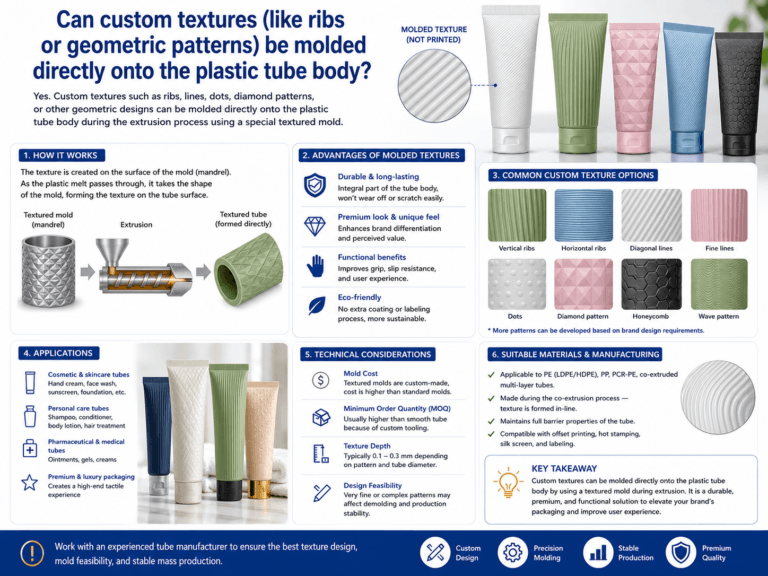
Can custom textures (like ribs or geometric patterns) be molded directly onto the plastic tube body?

Can custom textures (like ribs or geometric patterns) be molded directly onto the plastic tube body?

Yes, custom textures such as ribs, grip lines, diamond patterns, geometric embossing, or tactile surface effects can be created on plastic cosmetic tube packaging, but the available method depends on where the texture is located and how deep the pattern…

Read MoreCan custom textures (like ribs or geometric patterns) be molded directly onto the plastic tube body?
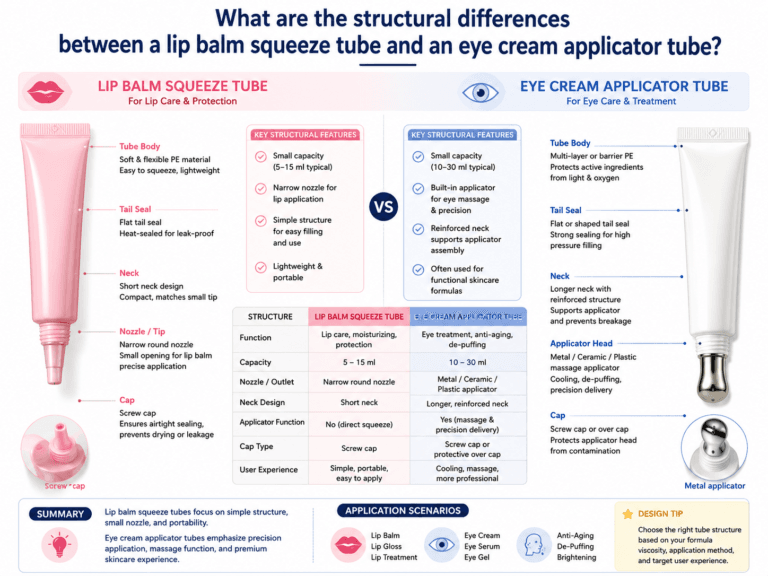
What are the structural differences between a lip balm squeeze tube and an eye cream applicator tube?

What are the structural differences between a lip balm squeeze tube and an eye cream applicator tube?

The main structural difference between a lip balm squeeze tube and an eye cream applicator tube is the dispensing head. A lip balm squeeze tube usually uses a soft slanted applicator, small nozzle, or smooth plastic tip for direct lip…

Read MoreWhat are the structural differences between a lip balm squeeze tube and an eye cream applicator tube?
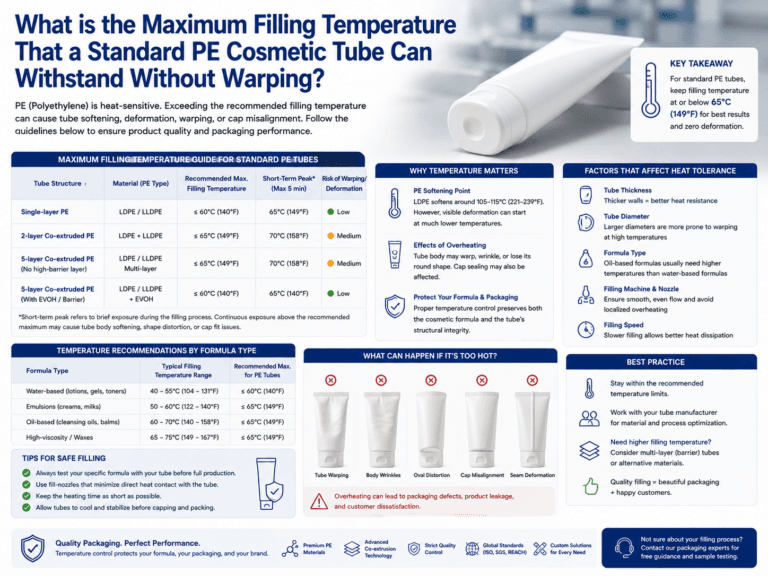
What is the maximum filling temperature that a standard PE cosmetic tube can withstand without warping?

What is the maximum filling temperature that a standard PE cosmetic tube can withstand without warping?

For a standard PE cosmetic tube, the recommended filling temperature is usually below 45°C to 50°C to reduce the risk of warping, paneling, shoulder deformation, tail-seal stress, or print damage. Some PE tubes may tolerate slightly higher short-term temperatures, but…

Read MoreWhat is the maximum filling temperature that a standard PE cosmetic tube can withstand without warping?
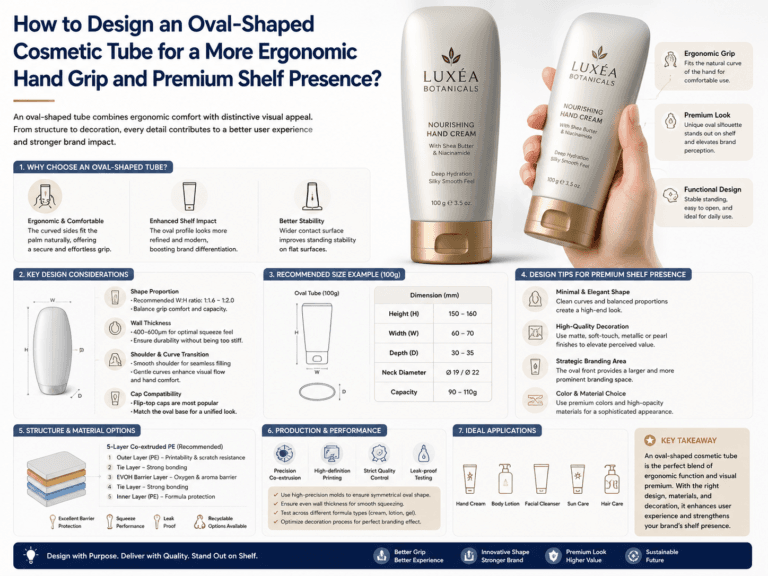
How to design an oval-shaped cosmetic tube for a more ergonomic hand grip and premium shelf presence?

How to design an oval-shaped cosmetic tube for a more ergonomic hand grip and premium shelf presence?

To design an oval-shaped cosmetic tube for better ergonomic hand grip and premium shelf presence, brands should optimize the oval ratio, tube width, wall thickness, shoulder transition, cap base, squeeze force, artwork layout, and filled stability together. An oval tube…

Read MoreHow to design an oval-shaped cosmetic tube for a more ergonomic hand grip and premium shelf presence?