
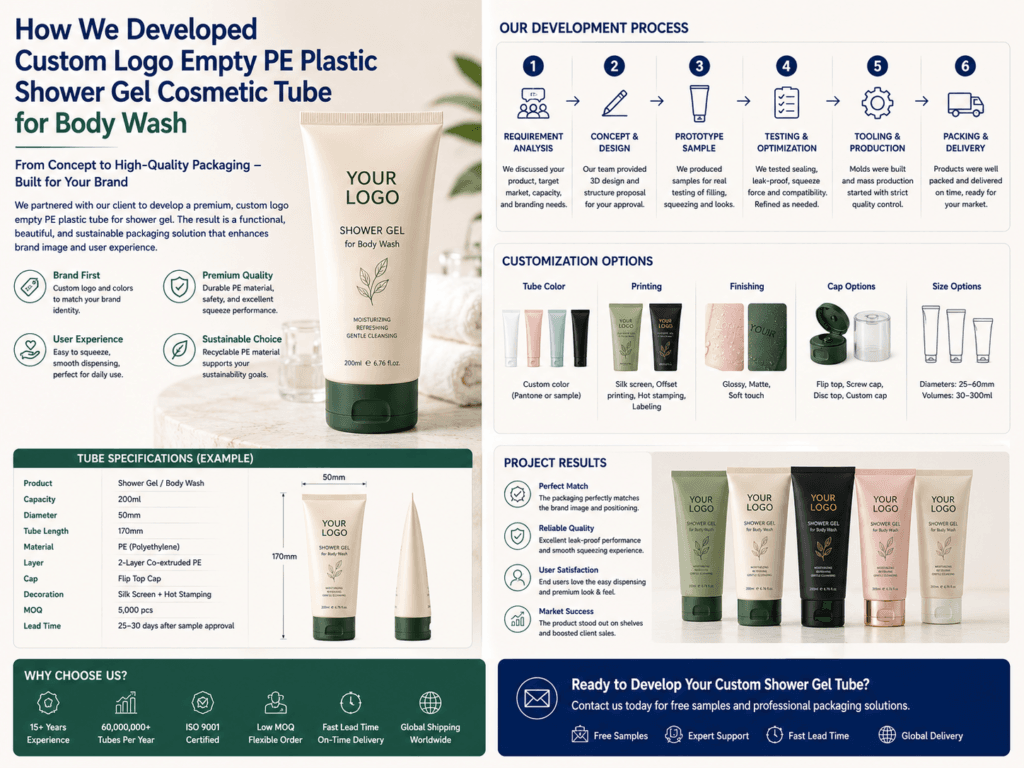
How We Developed Custom Logo Empty PE Plastic Shower Gel Cosmetic Tube for Body Wash
Case Study · Shower Gel Cosmetic Tube Packaging How We Developed Custom Logo Empty PE Plastic Shower Gel Cosmetic Tube for Body…

Case Study · Shower Gel Cosmetic Tube Packaging How We Developed Custom Logo Empty PE Plastic Shower Gel Cosmetic Tube for Body…
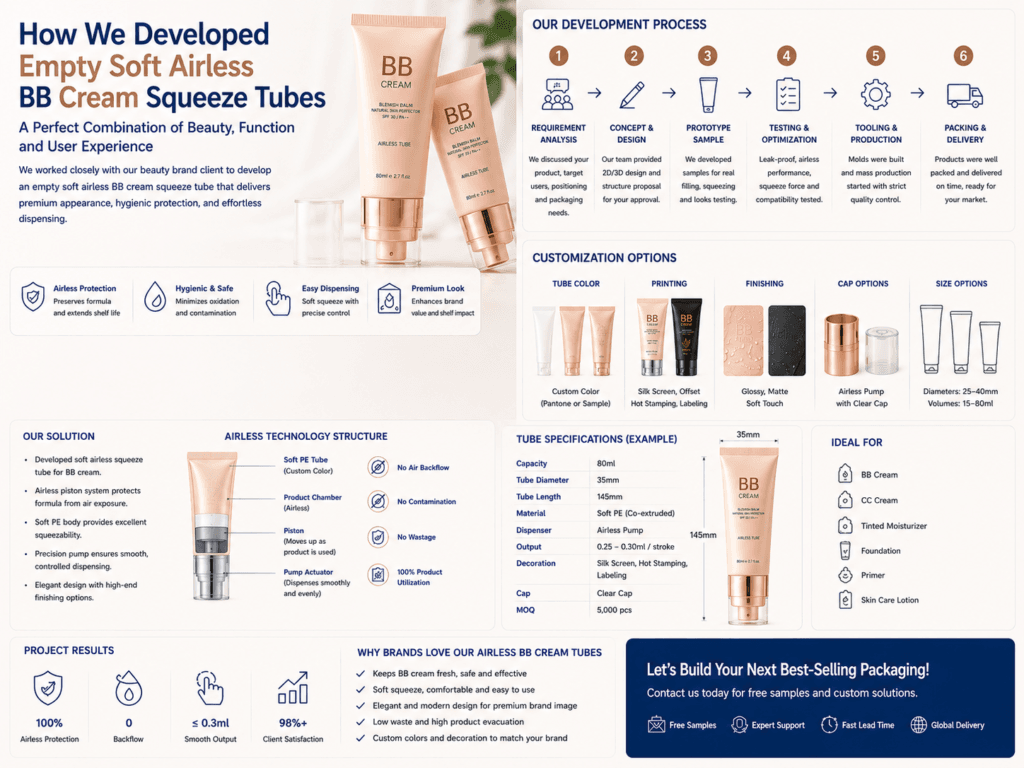
Case Study · Airless BB Cream Tube Packaging How We Developed Empty Soft Airless BB Cream Squeeze Tubes A beauty brand partnered…
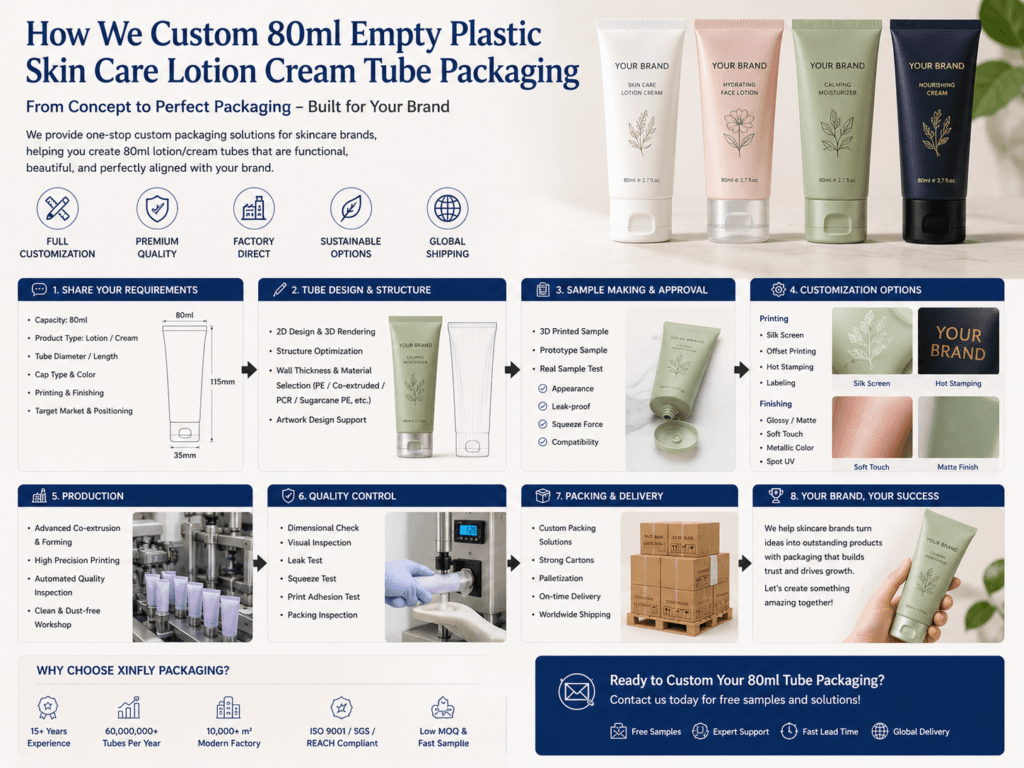
Case Study · 80ml Skincare Tube Packaging How We Custom 80ml Empty Plastic Skin Care Lotion Cream Tube Packaging A private label…
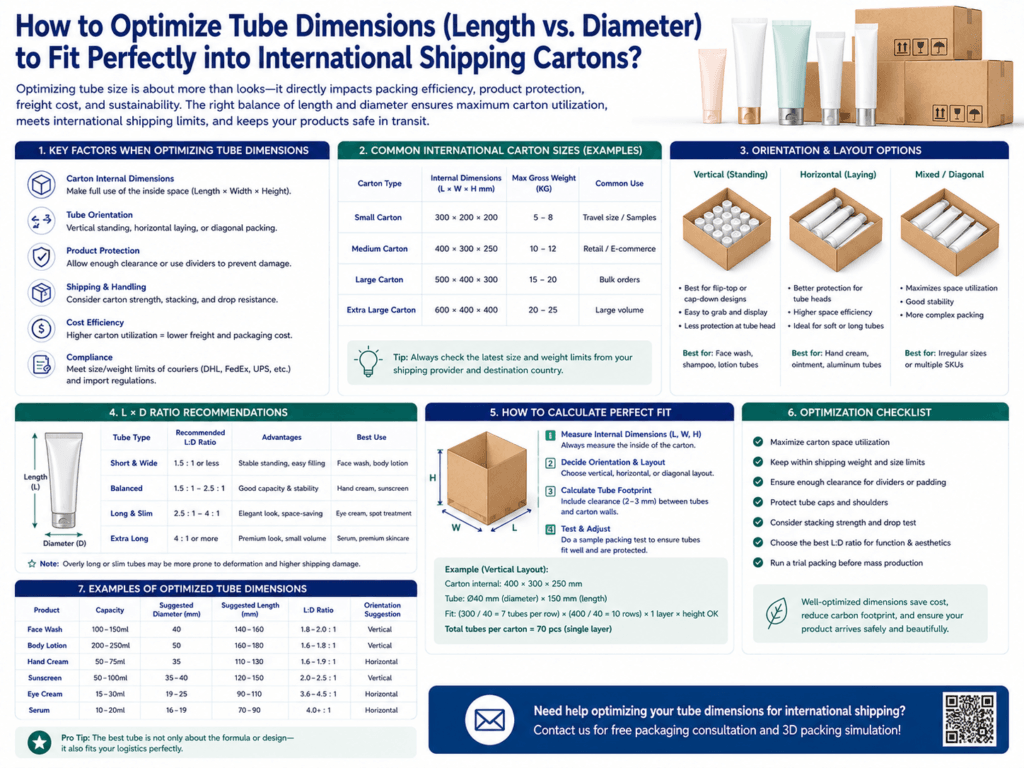
To optimize tube dimensions for international shipping cartons, brands should design tube length and diameter together with carton size, inner packing layout,…
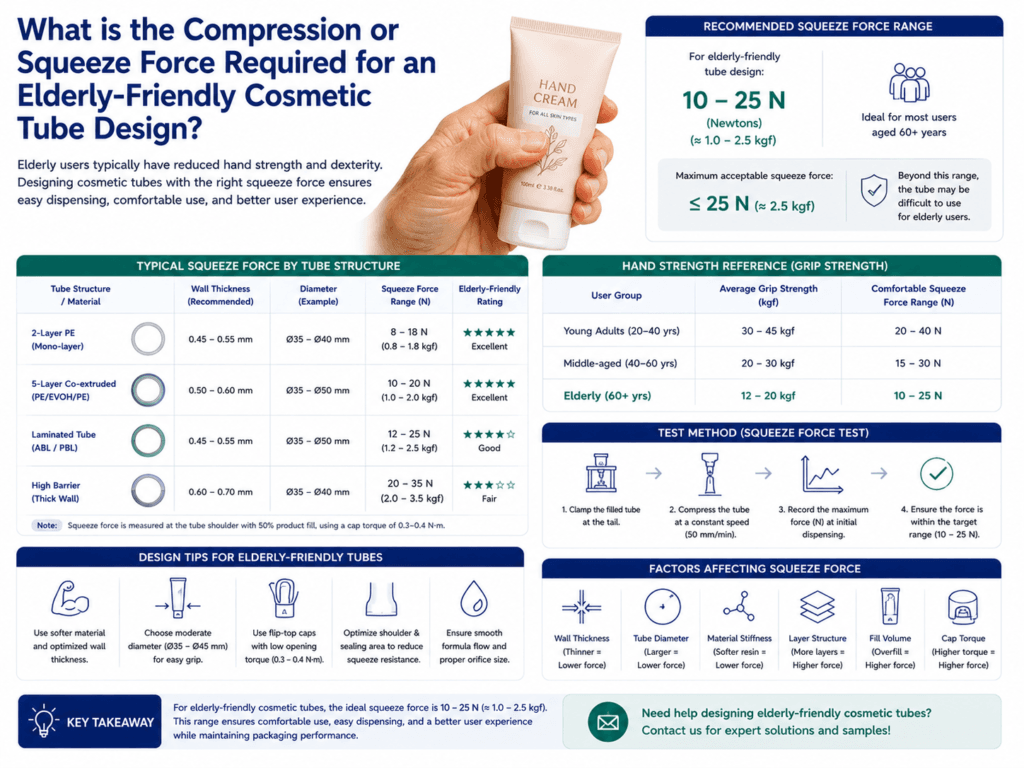
For an elderly-friendly cosmetic tube, the compression or squeeze force should be low enough for users with reduced hand strength to dispense…
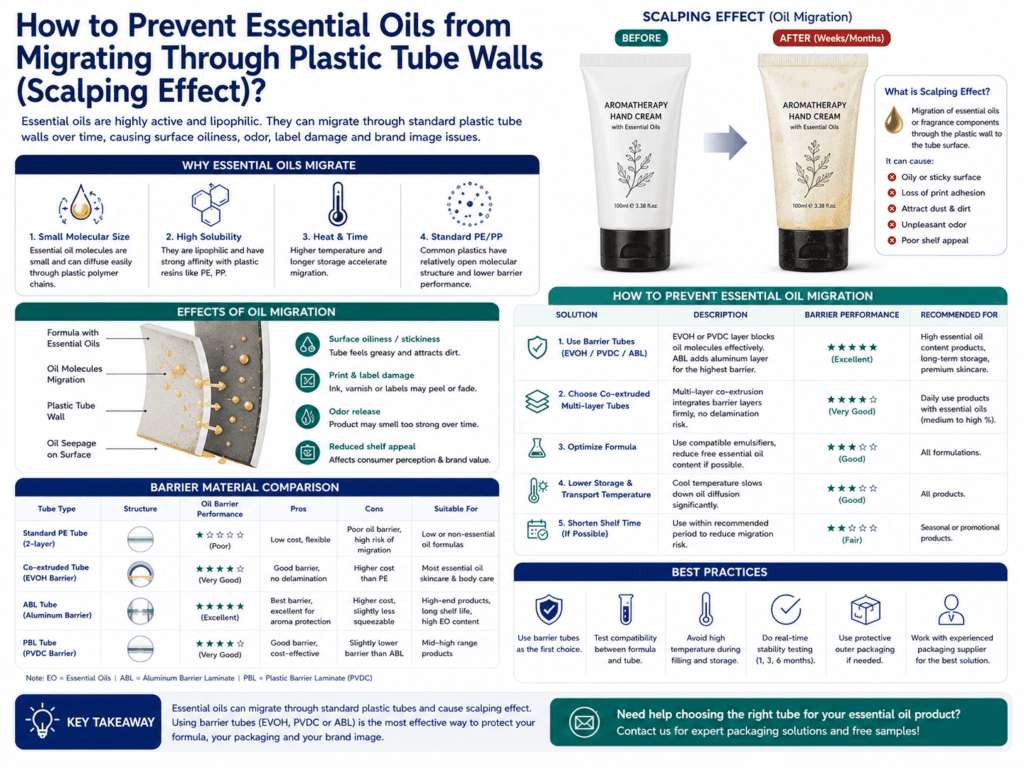
To prevent essential oils from migrating through plastic tube walls, brands should use a stronger barrier tube structure, choose the right inner…
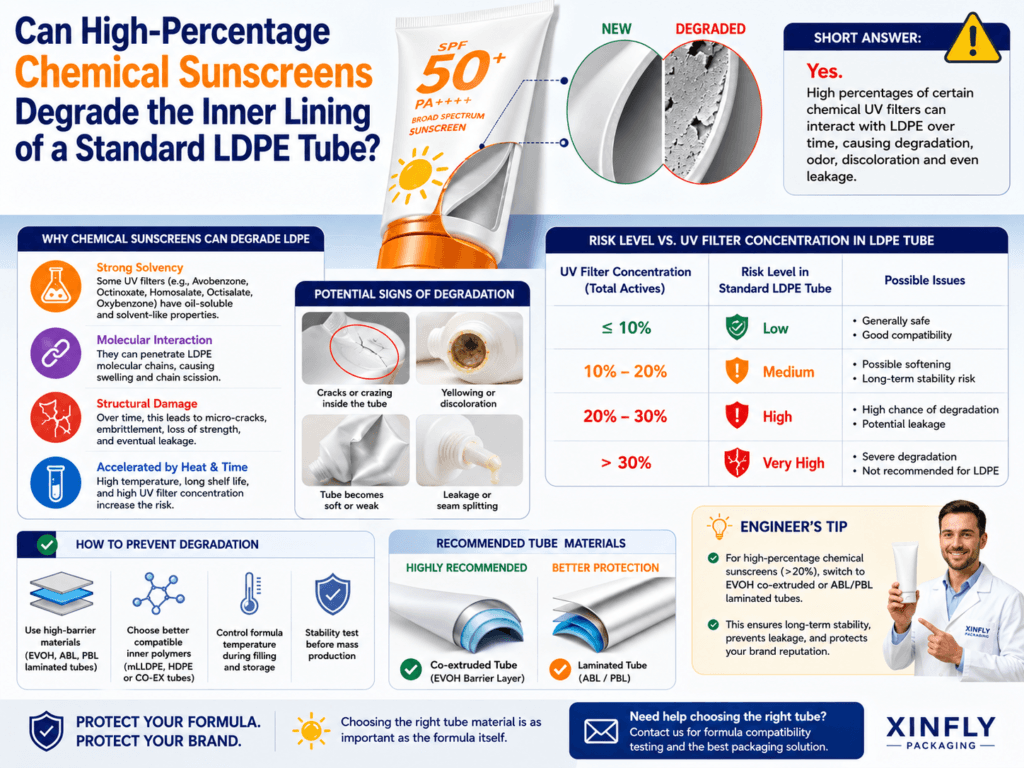
High-percentage chemical sunscreens can create compatibility risks with the inner lining of a standard LDPE tube, but they do not always directly…
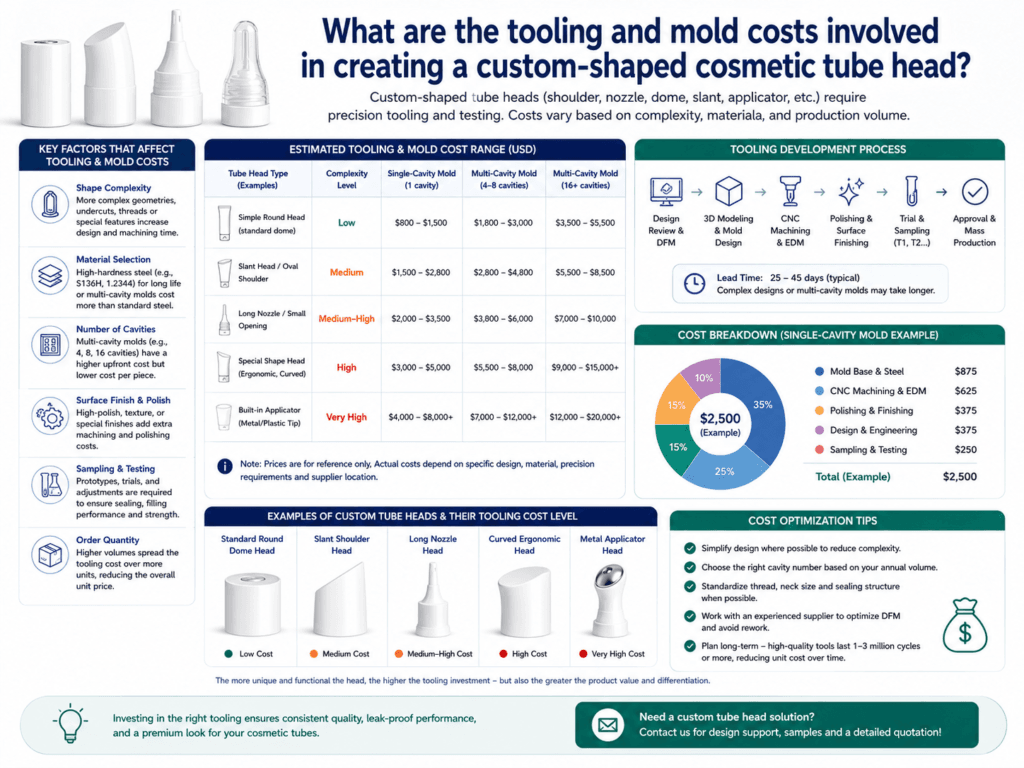
Creating a custom-shaped cosmetic tube head usually involves tooling and mold costs for the tube shoulder/head, cap matching, thread structure, sealing surface,…
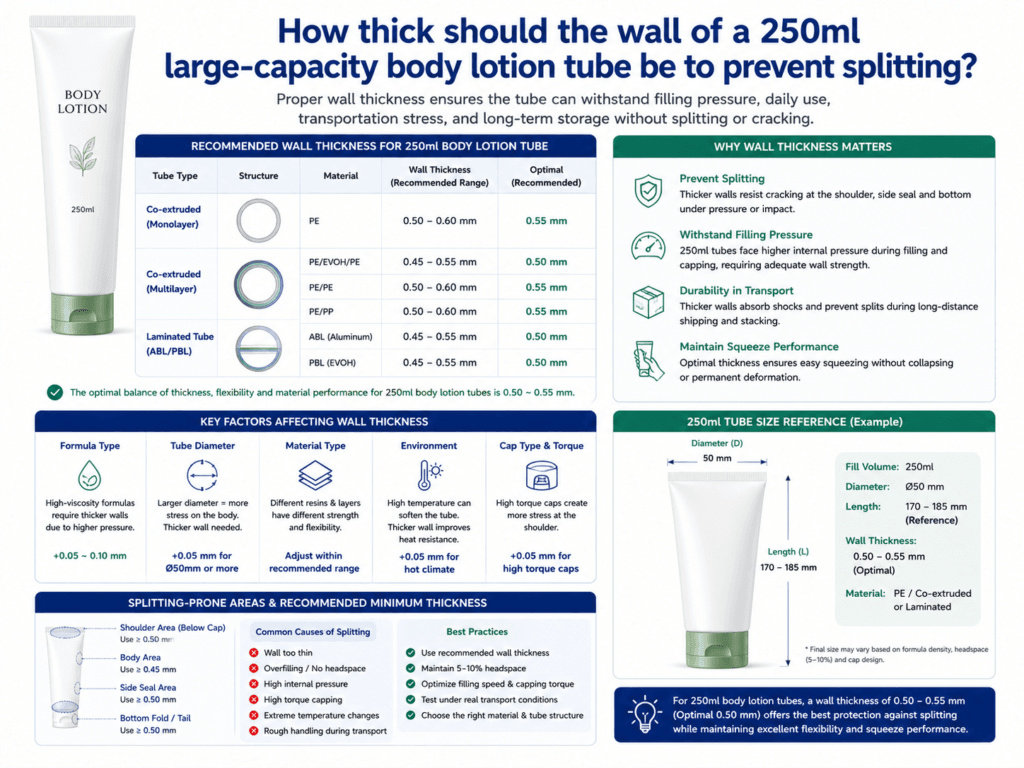
For a 250ml large-capacity body lotion tube, the wall thickness is commonly recommended around 0.55mm to 0.75mm, depending on the tube diameter,…
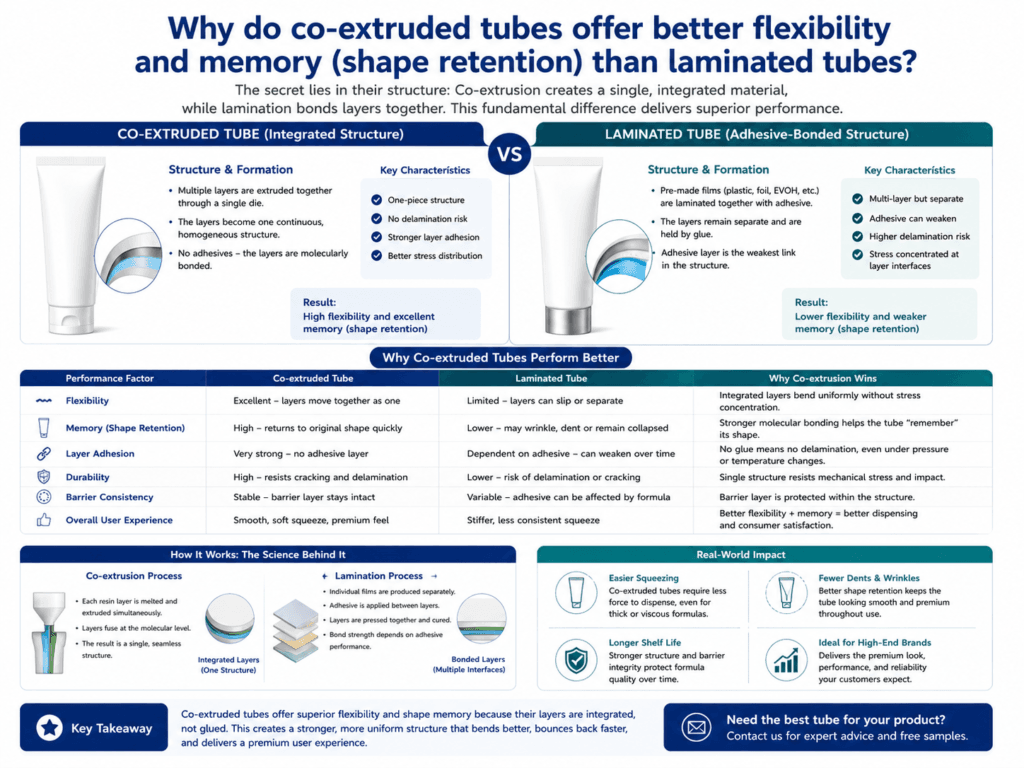
Co-extruded tubes often offer better flexibility and memory, or shape retention, because their tube body is made from continuous extruded plastic layers…
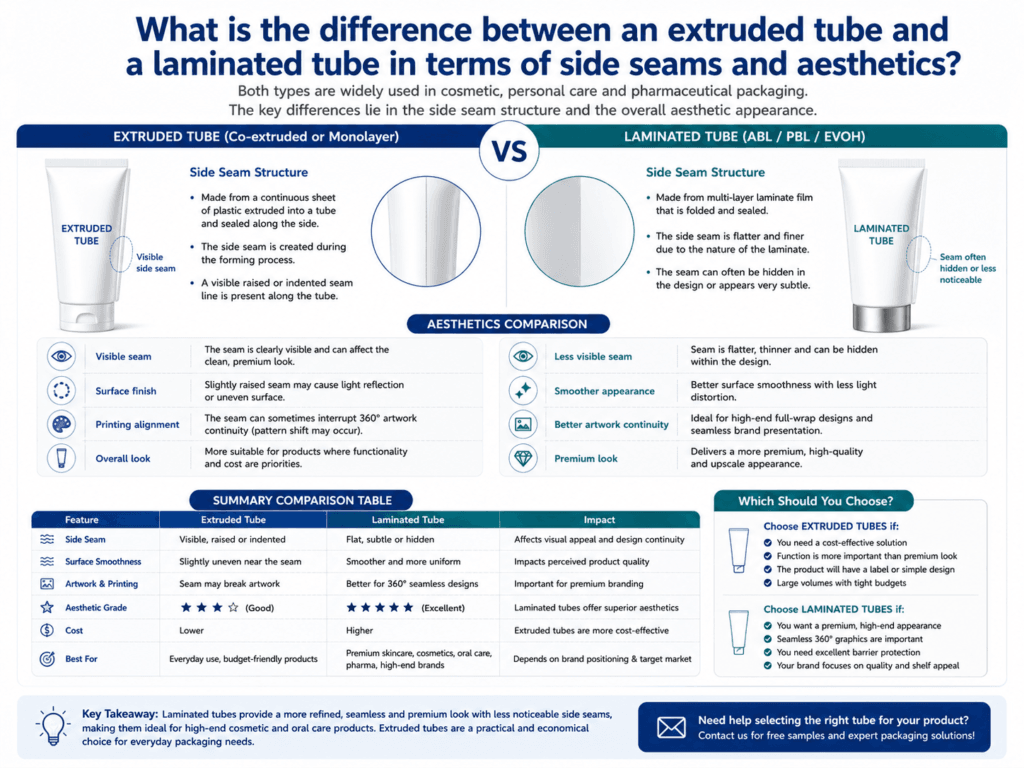
The main difference between an extruded tube and a laminated tube is that an extruded tube usually has a seamless tube body,…
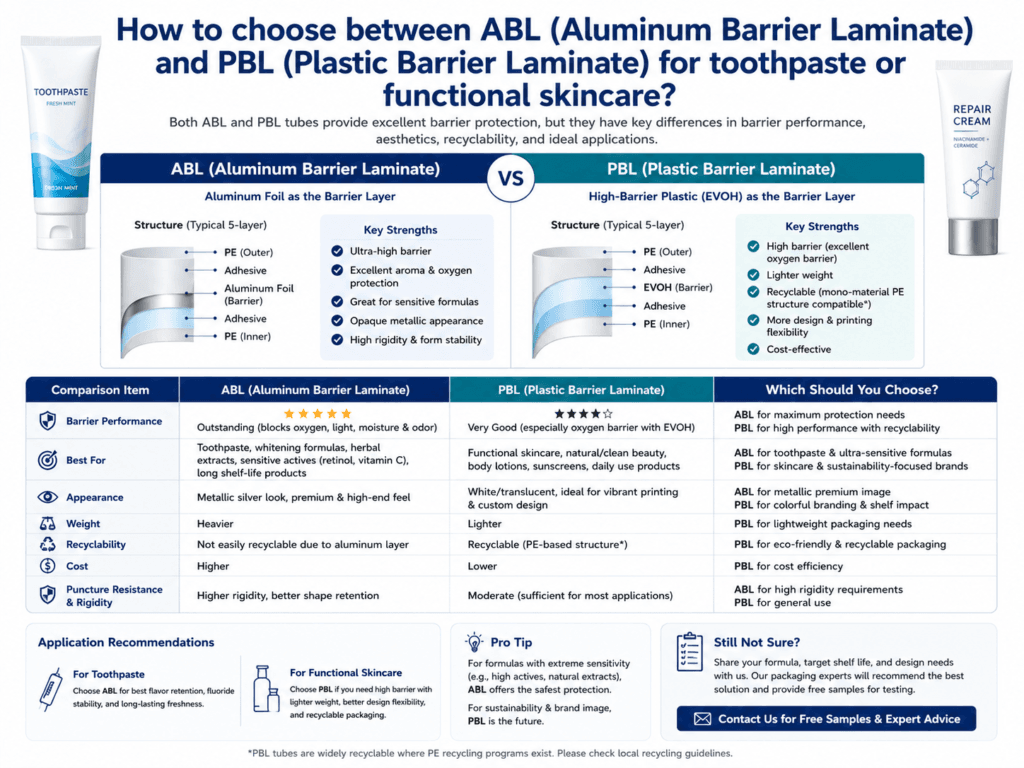
To choose between ABL (Aluminum Barrier Laminate) and PBL (Plastic Barrier Laminate) tubes for toothpaste or functional skincare, brands should compare barrier…