

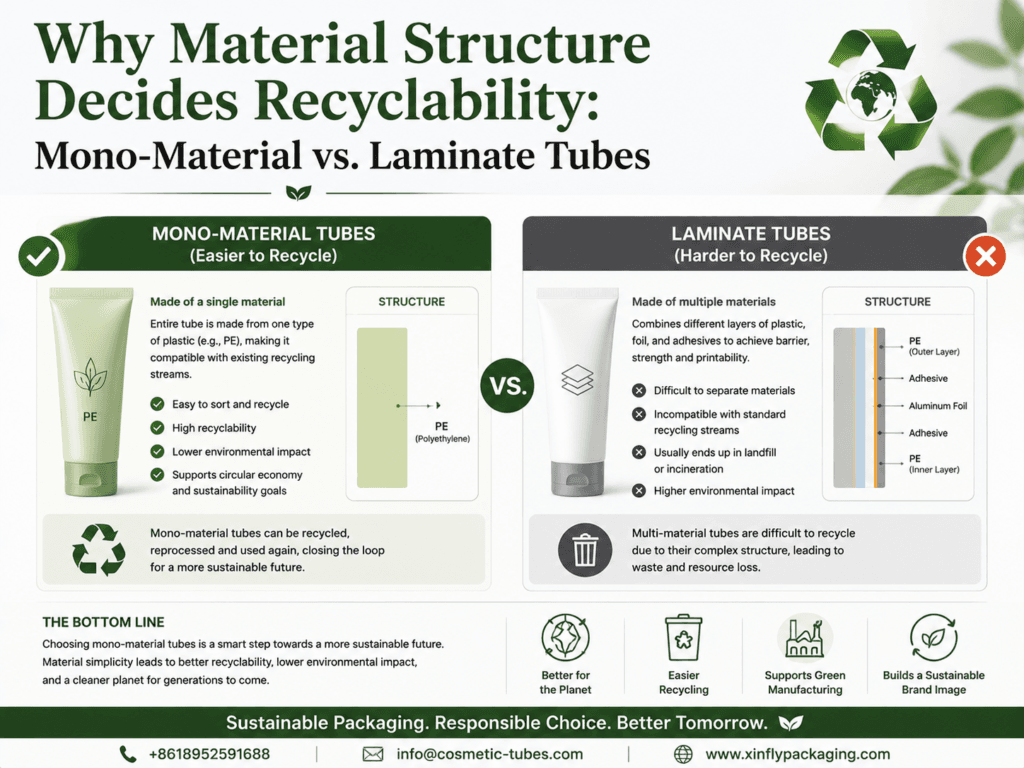
You help the environment when you notice the material structure of a tube. The material structure affects how easy it is to recycle a tube. If you pick a mono-material tube, it is made from one polymer. This material structure helps recycling centers work faster and save money. Laminate tubes have a more complex material structure, so they are harder to recycle. When you learn about material structure, you help make recycling better and support the environment. Every tube you pick is important for the planet.
Key Takeaways
- Pick mono-material tubes for easier recycling. They use one kind of plastic. This makes it easy for recycling centers to handle them.
- Laminate tubes are harder to recycle. They have different materials mixed together. This can cause contamination and more waste.
- Choose brands that give clear recycling tips. These tips help you throw away tubes the right way. This also helps the circular economy.
- Wash your tubes before you recycle them. Clean tubes make better recycled materials. This helps recycling work better.
- Learn about your local recycling rules. Knowing what your center takes helps you make good choices. This is better for the environment.
Understanding Material Structure in Tubes
Mono-Material Tube Basics
You can find single-layer tubes in many stores now. These tubes are made from just one kind of plastic, like polyethylene or polypropylene. When you pick single-layer tube packaging, you help recycling centers do their job better. Single-layer tubes move easily through recycling machines. You do not have to take them apart before recycling. This design makes less waste and keeps more tubes out of landfills. Many toothpaste and cosmetic brands use single-layer tube packaging because it is simple to recycle. You also get better recycled material from these tubes.
Tip: Single-layer tubes do not mix materials, so recycling centers can sort and process them quickly.
Laminate Tube Composition
Laminate tubes are built in a different way. They have layers of materials pressed together. Most laminate tubes use both plastic and aluminum. Some only use plastic layers, but many still have metal inside. This multi-layer design keeps the product safe, but it makes recycling tough. When you put a laminate tube in the recycling bin, the layers stay stuck together. Recycling centers need special machines to pull the layers apart. If the tube has aluminum, it is even harder to recycle. Most recycling centers cannot recycle these tubes, so they usually end up as trash.
- Laminate tubes often contain:
- Plastic barrier layers
- Aluminum foil layers
- Adhesives to hold layers together
Key Differences in Material Structure
There are big differences between single-layer and multi-layer tubes. The table below shows how the structure changes recycling:
| Feature | Mono-Material Tubes (Single-Layer) | Laminate Tubes (Multi-Layer) |
|---|---|---|
| Composition | One type of plastic | Mix of plastics, aluminum, adhesives |
| Recycling Ease | Easy to recycle | Hard to recycle, needs special machines |
| Sorting Requirements | Standard sorting | Advanced sorting and delamination needed |
| Impact on Recycling Streams | Low contamination | High contamination, more waste |
Single-layer tube packaging helps recycling centers work faster and make better recycled materials. Multi-layer laminate tubes slow down recycling and can cause contamination. When you choose single-layer tubes, you help keep recycling clean and cut down on waste.
Material Structure and Recycling Outcomes
Mono-Material Tube Recycling
When you pick a mono-material tube, you help recycling. These tubes use one kind of plastic. Recycling centers can sort them easily. You do not need to take apart layers. This simple design makes recycling better. More tubes stay out of landfills.
Mono-material tubes still have some problems. Things like EVOH, adhesives, inks, and colorants can mix in. These things make recycled plastic less good. Sometimes, the recycled plastic cannot be used again. You can help by cleaning your tube. Try to pick products with less ink or color.
Note: Clean and simple mono-material tubes help recycling centers make high-quality recycled plastic.
Laminate Tube Recycling Challenges

Laminate tubes are harder to recycle. They have many layers pressed together. Most laminate tubes use plastic, aluminum, and adhesives. This design keeps products safe. But it makes recycling tough.
Recycling centers have trouble with laminate tubes:
- Laminated tubes have different materials in each layer.
- Machines cannot separate these layers easily.
- Most centers do not have special machines for laminate tubes.
- Advanced machines cost a lot and are not common.
- Many people do not know laminate tubes need special care.
If you put a laminate tube in the recycling bin, it often becomes trash. Mixed materials make recycling harder. They can also contaminate other recyclables. You can help by checking if your center takes laminate tubes.
Role of Recycling Facilities
Recycling centers handle your tubes. The material structure decides how well they can recycle. Most centers have machines for single-material plastics. They sort, clean, and melt mono-material tubes easily. This helps recycling and keeps the stream clean.
Laminate tubes need special machines and extra steps. Many centers do not have these machines. So, laminate tubes often go to landfills. Not knowing about laminate tube recycling makes things worse. You can help by learning what your center can recycle. Choose tubes that match their machines.
Tip: Ask your recycling center which tubes they accept. This helps you pick tubes that support recycling and cut down on waste.
You are important for recycling. When you pick a mono-material tube, you make recycling easier. When you know about laminate tube challenges, you help keep recycling clean and efficient.
Why Use Laminate Tubes
Functional Advantages
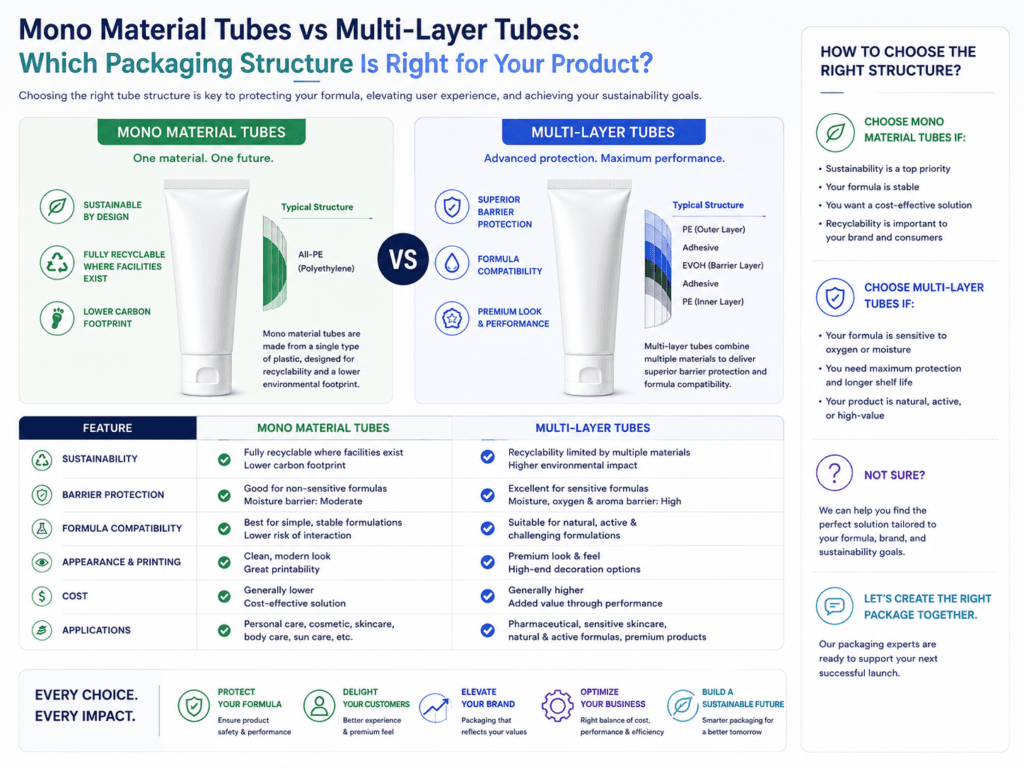
You might ask why brands still pick laminate tubes for packaging. Laminate tubes keep products safe from water, air, and light. This helps toothpaste, creams, and food stay fresh longer. The layers in a laminate tube stop chemicals from getting in. They also keep products from going bad. Laminate tubes are used for medicine and personal care items. They meet tough rules for food and health safety.
Here is a quick comparison:
| Feature | Laminated Tubes | Mono-Material Tubes |
|---|---|---|
| Product Protection | Superior due to multi-layer structure | Limited |
| Shelf Life | Extended due to effective barriers | Shorter |
| Barrier Against | Moisture, oxygen, light | Limited |
| Compliance with Regulations | High, suitable for pharmaceuticals | Varies |
There are two main types of laminate tubes. Aluminum barrier laminate (ABL) tubes protect sensitive products best. Plastic barrier laminate (PBL) tubes are lighter and still work well. Many companies use these tubes for flexible packaging.
Barriers to Mono-Material Adoption
Switching to mono-material packaging is not always easy. Companies need special machines to make these tubes. They also have to follow strict rules for food and product safety. Big companies already have the right tools and supply chains. Small companies may find it hard to keep up.
There are also technical problems. It is tough to make a tube that protects products and looks good. Companies must test new tubes to see if they work with filling lines and recycling. These tests cost time and money. Not all companies can change fast.
Industry Shifts Toward Mono-Material
The packaging industry is changing a lot. More brands want packaging that is easy to recycle. Shoppers and new laws push companies to use better tubes. Over 60% of people now like brands with green packaging. Big companies like Unilever, Nestlé, PepsiCo, Coca-Cola, and Procter & Gamble want to use more mono-material tubes. The market for these tubes is growing quickly. Experts think it will keep growing for years.
The European Union says all packaging must be recyclable by 2030. This rule makes companies move away from laminate tubes and pick recyclable mono-material packaging.
You help this change every time you pick a tube made from sustainable packaging.
Sustainability and Material Structure
Environmental Impact
You make a big difference when you pick the right tube. Mono-material tubes help recycling centers work faster. They also keep more tubes out of landfills. These tubes use less energy when they are recycled. You help the planet by choosing tubes made from one plastic. Laminate tubes are harder to recycle. Most recycling centers cannot pull their layers apart. This means laminate tubes often become trash. This adds to pollution and hurts the earth.
How easy it is to recycle a tube matters for sustainability. Using mono-material tubes helps lower greenhouse gas emissions. It also saves important resources. Laminate tubes need more energy to recycle. They also make more waste. You can see the difference in this table:
| Tube Type | Recycling Rate | Energy Use | Waste Produced |
|---|---|---|---|
| Mono-material | High | Low | Less |
| Laminate | Low | High | More |
Picking tubes that are easy to recycle helps the environment. Every tube you choose has an effect on the planet. You can help by learning about tube materials. Support brands that use packaging that is better for the earth.
🌱 Tip: Wash your tube before you recycle it. This helps recycling centers make better recycled materials and supports the planet.
Implications for Consumers and Brands

Brands are working hard to be more sustainable. Many now use mono-material tubes and give clear recycling tips. You can find these tips on the package or on their websites. Brands like The Honest Co. and Tom’s of Maine tell you to check your local recycling rules. They help you know what to do with your tubes.
- The Honest Co. gives disposal tips online.
- Tom’s of Maine puts recycling tips on its toothpaste tubes.
- Big brands like Haleon, Colgate-Palmolive, Unilever, and P&G use recyclable mono-material tubes and support recycling programs.
When you follow these tips, you help create a circular economy. Brands also team up with groups to make recycling better and cut down on landfill waste. You help the planet when you pick tubes from brands that care about the earth.
Jiangsu Xinfly Packaging Co.,Ltd. is a top supplier of cosmetic tubes. They offer custom PE, PCR, ABL, and PBL tube packaging for beauty brands around the world. Their tubes meet high standards for being good for the planet. You can see certifications like ISO, RoHS, SGS, PCR Plastic GRS, and third-party tests. You can check their SGS test report here and see their certifications here.
Note: You help brands reach their sustainability goals when you pick tubes with clear recycling tips and trusted certifications.
You help recycling when you pick tubes with the right material. Mono-material tubes are easy to recycle. They also keep trash out of landfills. When you choose packaging, look for simple designs. These designs should fit what recycling centers can handle.
- Packaging design and strong markets decide if a tube can be recycled.
- Using the same kind of packaging stops confusion.
- Companies and recyclers team up to make recycling better.
Big companies use new rules and set goals to make tubes easier to recycle. Your choices and what you know help make these changes happen.
Frequently Asked Questions About Mono-Material vs Laminate Tubes
Learn why material structure decides recyclability in cosmetic tube packaging, including mono-material tubes, laminate tubes, recyclable cosmetic tubes, PCR cosmetic tubes, sustainable cosmetic packaging and OEM cosmetic tube manufacturing.
What are mono-material cosmetic tubes?
What are laminate cosmetic tubes?
Why does material structure affect tube recyclability?
Are mono-material tubes more recyclable than laminate tubes?
Do laminate tubes offer better barrier protection?
Which is better for sustainable cosmetic packaging?
Can mono-material cosmetic tubes be customized?
Can laminate tubes be used for sunscreen packaging?
What products are suitable for mono-material tubes?
What products are suitable for laminate tubes?
Can Xinfly Packaging support both mono-material and laminate tubes?
How do I choose between mono-material and laminate tubes?
Need Help Choosing Mono-Material or Laminate Tubes?
Xinfly Packaging helps beauty brands compare mono-material tubes and laminate tubes based on recyclability, formula protection, sustainability goals, printing requirements and OEM cosmetic tube manufacturing needs.