
You see words like bio-based, recycled, and recyclable when you look for sustainable packaging. These words are important. Each type affects the environment in its own way. Knowing these differences helps you pick packaging that creates less waste. It also helps save resources and meets the need for eco-friendly products. The market for sustainable packaging is growing quickly. Recycled content packaging will be about 41% of the market in 2025.
| Statistic | Value | CAGR |
|---|---|---|
| Sustainable packaging market size by 2029 | $423.56 billion | 7.67% |
| Recycled materials packaging market size by 2029 | $245.56 billion | 5.27% |
| Production volume increase (2026-2029) | 248.60 million tons to 315.70 million tons | N/A |
Key Takeaways
- Learn how bio-based, recycled, recyclable, and compostable packaging are different. This helps you make smart choices.
- Pick recycled packaging to cut down on waste. It saves energy because it uses things that were used before.
- Find recyclable packaging that works with your local recycling program. This makes sure materials get reused the right way.
- Use compostable packaging for food. It breaks down safely in compost places. This helps keep trash out of landfills.
- Think about how each packaging type affects the environment. This helps support sustainability and lowers your carbon footprint.
Bio-Based Packaging
What Is Bio-Based?
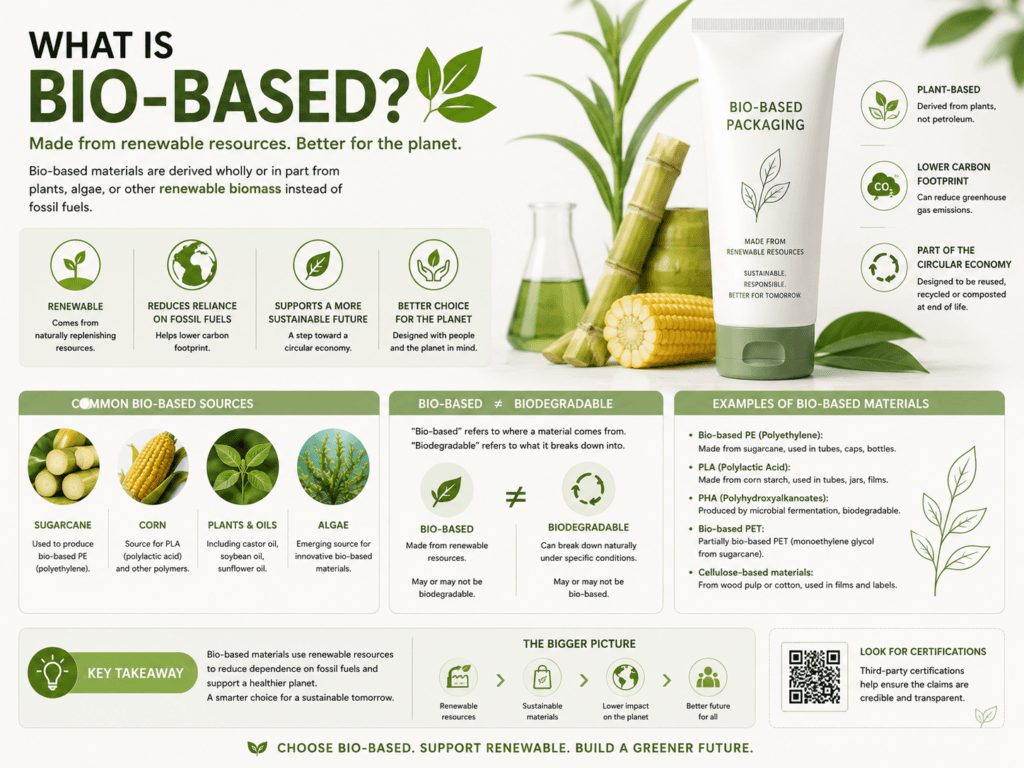
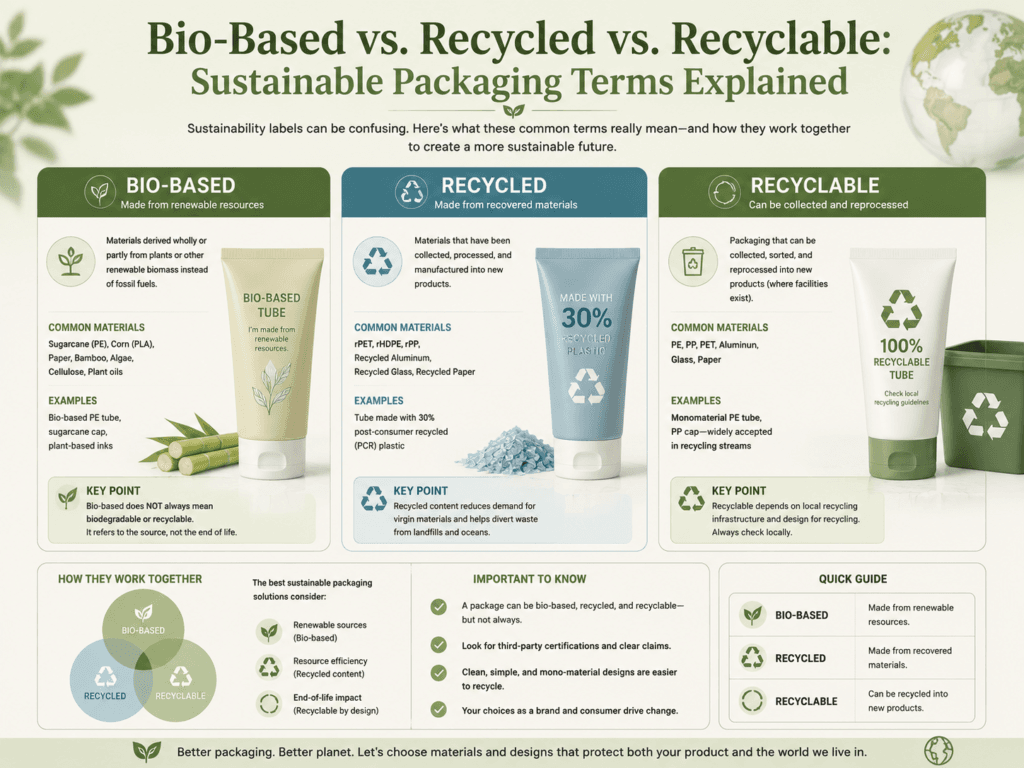
You might see “bio-based” when shopping for green packaging. Bio-based means the material comes from plants or other things that grow back. It does not come from oil or gas. There are many kinds of bio-based plastics. Some are called bioplastics like PLA and PHA. These are made from corn, sugarcane, or other plants. Some packaging uses paper or cardboard from trees in special forests. You can also find bio-based films and even materials made from algae.
Note: Not all bio-based plastics break down in nature. Some need special places to compost. Some are not compostable or biodegradable at all.
Xinfly Packaging has bio-based choices for brands that want to help the planet. You can pick tubes made with bioplastics or mixes that use things that grow back.
Pros & Cons
You should think about the good and bad sides of bio-based plastics before picking them for your packaging.
| Advantages | Disadvantages |
|---|---|
| Less harm to the environment | Costs more to make |
| Helps the planet stay healthy | May not last as long |
| Makes less carbon pollution | Needs special ways to throw away |
| Can be composted | Can hurt nature if not thrown away right |
| Follows rules for the environment | Hard to use everywhere |
Using bioplastics means less pollution and helps the earth. But they can cost more or need special ways to get rid of them.
Impact on Sustainability
Bio-based plastics can help you use less oil and save minerals. You might see less damage to nature if you use plant-based packaging. But growing plants for bioplastics can use more land and water. This can sometimes cause more pollution or hurt the soil. The effect on global warming can change based on how you make and throw away the packaging. A biopolymer from plants can lower your carbon pollution, but only if you recycle or compost it the right way.
Tip: Always check if your local recycling or composting center takes bioplastics. This helps make sure your packaging does not end up in a landfill.
Recycled Packaging
What Is Recycled?
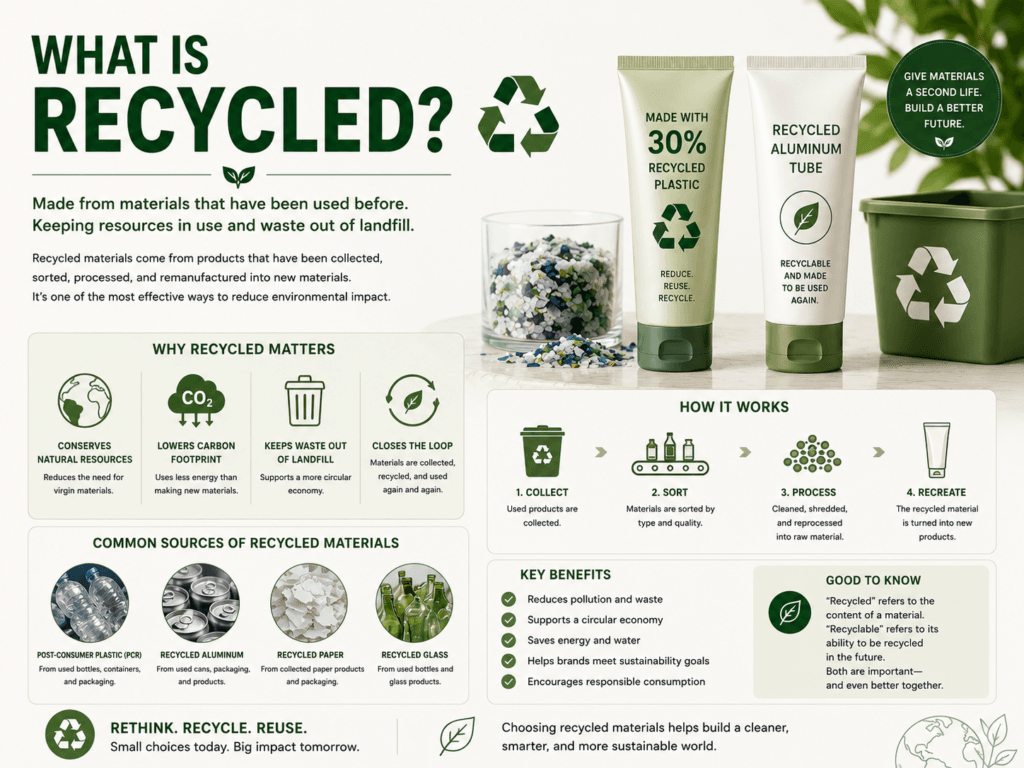
You see recycled packaging in many places. This kind of packaging uses things people already used before. Instead of using new stuff, companies collect old items. They turn these old items into new packaging. Recycled content comes in different types. Some common recycled materials are:
| Material Type | Source/Description |
|---|---|
| Recycled Plastic (LDPE) | Used for poly mailers and bubble wrap; requires drop-off at designated collection points. |
| Cellulose and Glassine | Derived from plant fiber; used for wraps and trays; recyclable through standard paper streams. |
| Common Recyclable Categories | Includes paper/cardboard, glass, metals (aluminum and steel), plastics (specific codes), and organics. |
| Examples in Packaging | Corrugated boxes, glass containers, metal cans, rigid plastic bottles (#1 PET, #2 HDPE), compostables. |
You find recycled plastic in bottles and mailers. Boxes made of paper or cardboard often use recycled content. Aluminum cans and glass jars also come from recycled things.
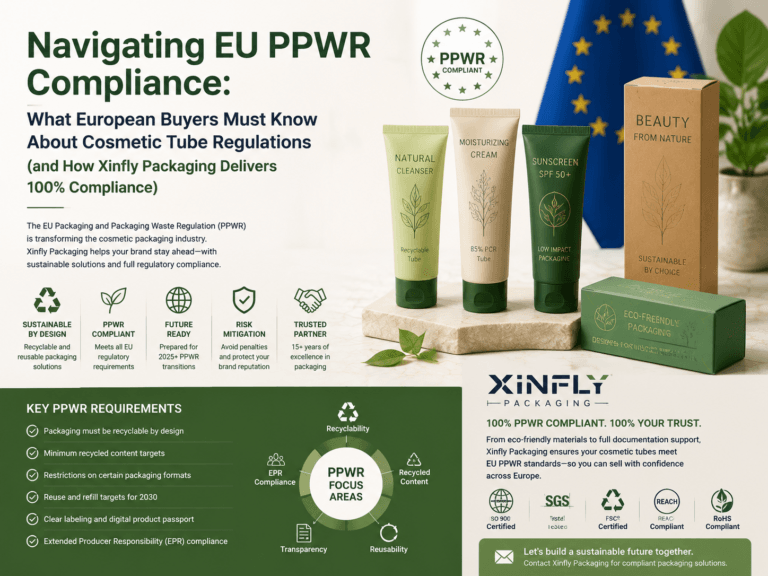
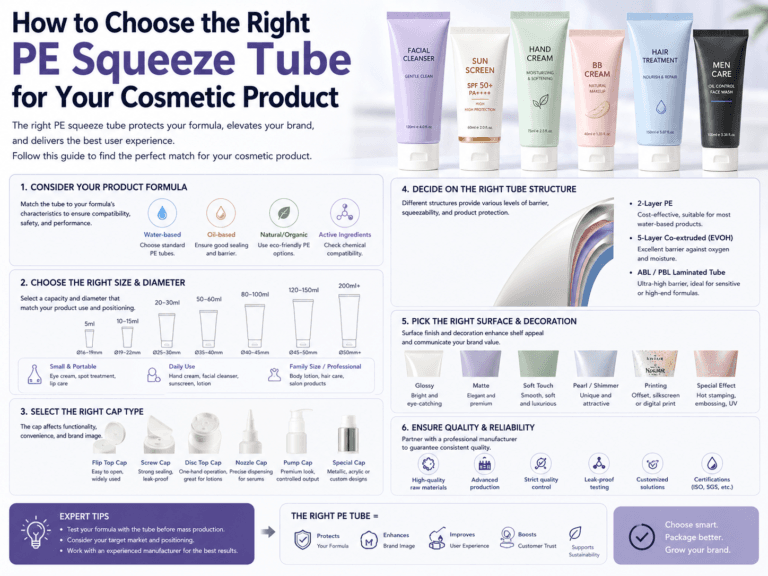
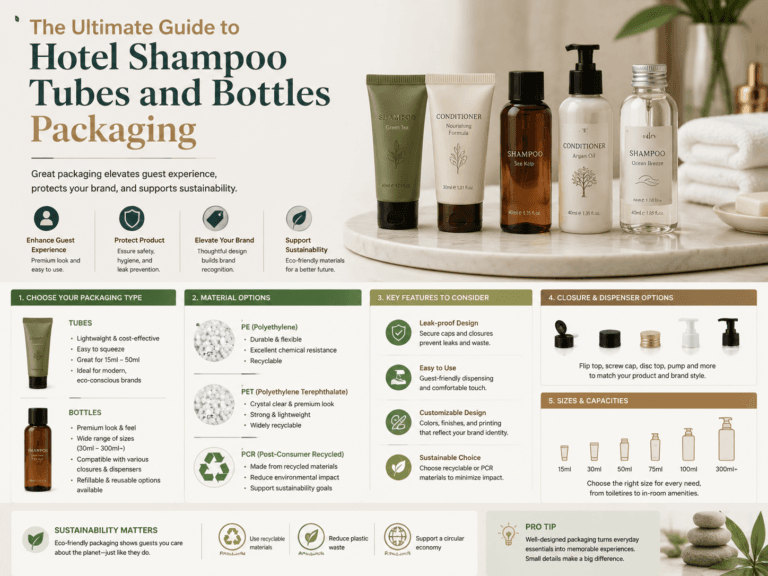
Jiangsu Xinfly Packaging Co.,Ltd. makes custom tube packaging for beauty brands. They use PE, PCR, ABL, and PBL tubes. Their tubes with recycled content follow strict rules. The company has ISO, RoHS, SGS, and GRS certificates. They also have third-party testing. You can see all their certificates at https://xinflypackaging.com/certifications/.
Pros & Cons
It is important to know the good and bad sides of recycled packaging. Here are some things to think about:
- Recycled content means we use fewer new resources.
- Recycled packaging helps keep trash out of landfills.
- Recycled plastic stays strong and works for many things.
- Virgin plastics use new materials and hurt nature more.
- Recycled packaging can cost more to make.
- Sometimes, recycled content has less color or is not as clear.
Tip: Recycled packaging is great for online shopping. It keeps products safe and helps the planet.
Sustainability Benefits
Choosing recycled content helps the earth. Recycled packaging saves energy. For example, recycled aluminum uses much less energy than new aluminum. Recycled paper saves a lot of energy too. Recycled plastic and glass save energy as well. You do not need farmland and you keep plastic out of nature. Recycled packaging helps make the world cleaner and supports green goals.
Recycled content makes a big change. It lowers greenhouse gases and saves water. You help keep materials in use and out of landfills.
Recyclable Packaging
What Is Recyclable?
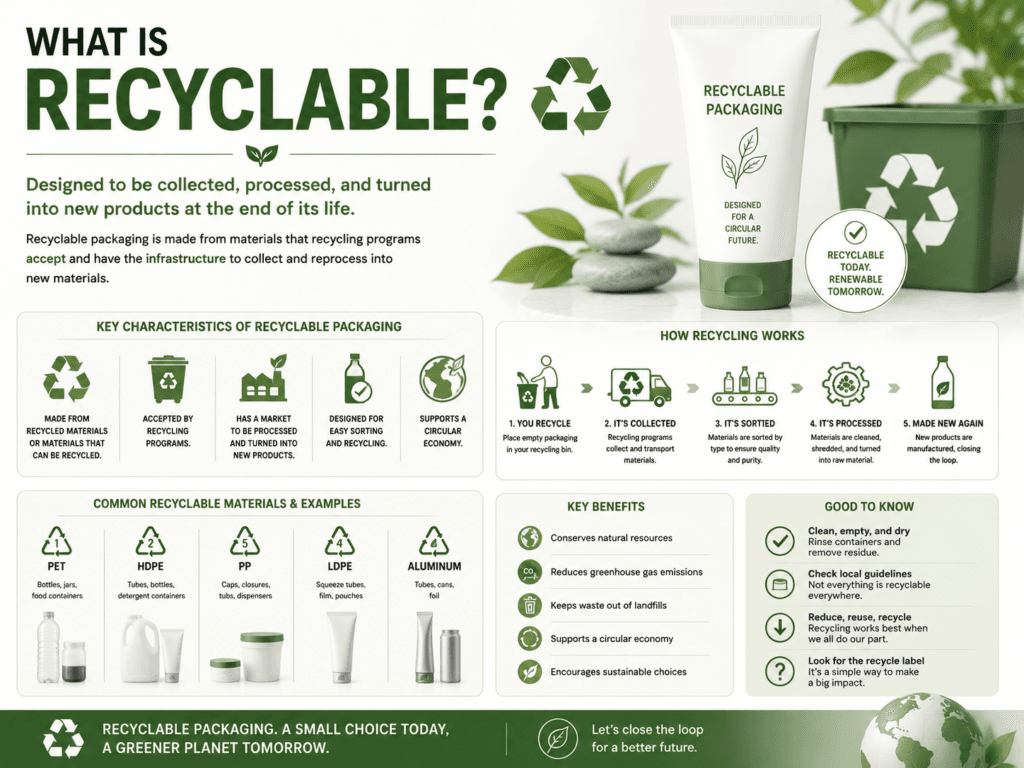
You see “recyclable” on lots of packages. This means you can use the item again to make something new. Recycling centers take certain materials. These include PET, HDPE, LDPE, PP plastics, paper, cardboard, and aluminum. You find these in bottles, cans, boxes, and trays. The way the package is made is important. It must follow rules for recyclability. You also need a recycling program near you. Not every place takes all recyclable materials.
| Characteristic | Description |
|---|---|
| Design | The item is made to be recycled by the APR Design® Guide. |
| Access | People must have a way to recycle the item. |
| Acceptance | The item is taken by a recycling system. |
| Markets | The recycled resin must be useful or have a program. |
| Common Materials | PET, HDPE, LDPE, PP plastics, paper, cardboard, aluminum |
How Recycling Works
You help recycling happen. First, you put recyclable packaging in your bin. Trucks pick up these items and bring them to a center. Workers and machines sort the materials by type. PET and PP plastics go in different piles. Glass and aluminum are sorted too. Each pile gets cleaned and processed. Factories use these materials to make new things. This cycle keeps resources in use and cuts down on waste.
- Collection: You put recyclable packaging in your bin.
- Sorting: Centers separate things like aluminum, paper, and plastics.
- Processing: Each material is cleaned, ground, or melted.
- Manufacturing: Factories use recycled materials to make new products.
Pros & Cons
Recyclable packaging has many good sides, but there are some limits.
Pros:
- Keeps trash out of landfills.
- Saves energy and raw materials.
- Helps a circular economy.
- Many recycling programs take common recyclable materials.
Cons:
- Not all recyclable packaging gets recycled. In the US, only about 13.3% of plastics were recycled in 2023.
- Some places do not take all types of recyclable plastics.
- Dirty items can stop recycling from working well.
Note: Recyclable does not always mean the item gets recycled. Local rules and recycling rates matter.
Jiangsu Xinfly Packaging Co.,Ltd. has recyclable options for beauty brands. Their PE, PCR, ABL, and PBL tubes meet strict rules and have ISO, RoHS, SGS, and GRS certificates. You can see their certificates online.
Environmental Impact
Recyclable packaging helps the earth in many ways. It keeps trash out of landfills and saves open land. Recycling aluminum saves up to 95% of the energy needed for new aluminum. Using recycled materials lowers greenhouse gases and saves resources. Curbside recycling makes it easier for you to help. When you recycle, you help keep the world clean and save resources.
| Evidence Type | Description |
|---|---|
| Landfill Reduction | Recyclable packaging keeps trash out of landfills and saves land. |
| Resource Conservation | Cuts down on using new materials and saves energy. |
| Energy Savings | Recycling aluminum saves up to 95% of the energy for new aluminum. |
Tip: Always check what your local recycling program takes. This helps your recyclable packaging get used again.
Compostable Packaging & Other Terms
What Is Compostable?
You see compostable packaging at stores and restaurants. Compostable means the material breaks down into safe things. These are water, carbon dioxide, and compost. This happens in a composting place. Compostable packaging needs special heat and moisture. These are found in big composting centers. You can use compostable packaging for food trays, wraps, and utensils. Many of these products use plant fibers or PLA. These come from things that grow back.
Biodegradable packaging is not the same. It breaks down slowly and can leave small plastic pieces or bad stuff. Biodegradable plastics need certain heat or germs to break down. You should check if your compost center takes compostable packaging.
Tip: Compostable packaging works best in big composting centers. Home composting may not break down everything.
Compostable vs. Biodegradable
You need to know how compostable and biodegradable packaging are different. Compostable packaging follows strict rules. It must break down 90% in six months at a composting center. The end products are safe and do not leave bad stuff. Biodegradable packaging does not have a set time to break down. It can take years and may leave harmful bits.
| Factor | Biodegradable Packaging | Compostable Packaging (EN13432) |
|---|---|---|
| Defined timeframe for breakdown | No — timeframe varies widely | Yes — 90% breakdown within 6 months |
| Specific conditions required | Variable — may require specific temperature, humidity or microbial environment | Yes — industrial composting conditions (55 to 60°C, controlled moisture and oxygen) |
| End products verified | No — may include toxic residues or microplastic fragments | Yes — CO2, water and compost with no toxic residue |
You can see compostable packaging is safer for nature. Biodegradable plastics can be confusing because they do not always break down well.
Practical Use Cases
You find compostable packaging in many places. Restaurants use bagasse boxes and compostable forks and spoons. Fast food places use fiber trays and PLA wraps. Supermarkets sell PLA lid boxes and deli trays that break down. Events and catering use compostable cutlery sets. Airlines and trains use sealed compostable trays and fiber lids.
| Industry | Recommended Eco-Friendly Packaging Type |
|---|---|
| Restaurants & Cafés | Bagasse clamshell boxes, kraft bowls, compostable utensils |
| Fast Food Chains | Molded fiber trays, PLA-lined wraps, burger boxes |
| Supermarkets & Farmers Markets | PLA lid boxes, biodegradable deli trays, produce containers |
| Events & Catering | Sectioned meal trays, disposable compostable cutlery sets |
| Airlines & Railway Catering | Sealed compostable trays, fiber lids, lightweight packaging |
You should compare compostable, biodegradable, bio-based, recycled, and recyclable packaging to make good choices. Compostable packaging needs special places to break down. Biodegradable packaging breaks down over time but can leave things behind. Recycled packaging uses old waste and helps the planet. Recyclable packaging keeps materials in use and helps the earth. Bio-based packaging comes from plants but may not always be recyclable.
Note: Jiangsu Xinfly Packaging Co.,Ltd. has packaging with ISO, RoHS, SGS, and GRS certificates. Their recycled tubes use old waste and follow strict rules.
Sustainable Packaging Comparison
Key Differences
You see different kinds of sustainable packaging. Each kind has special features and ways to get rid of it. You can find bio-based, recycled, recyclable, compostable, and biodegradable packaging in stores and online. Here are the main differences:
- Bio-based packaging uses materials from plants or things that grow back. It is not always recyclable or compostable.
- Recycled packaging uses materials that people already used. This keeps trash out of landfills and helps reuse things.
- Recyclable packaging can be made into new products. Metals can be recycled many times. Plastics lose quality each time they are recycled.
- Compostable packaging breaks down into natural parts in compost centers. Some compostable items have inks or glue that can change compost quality.
- Biodegradable packaging breaks down slowly, but it may leave tiny plastic bits or bad stuff.
You need to look at what the material is made of and how to throw it away. Compostable packaging works best where there are compost centers. Recycled and recyclable packaging help keep materials in use. Bio-based packaging uses less oil and gas. Each type has good points and some limits.
Environmental Impact
You want to pick packaging that helps the earth. Sustainable packaging makes less trash and saves resources. Studies show compostable packaging, like bagasse bowls, makes about 45 grams of CO₂ for each bowl. Plastic bowls make around 90 grams. PLA cups make 60% less pollution than new PET cups. In places with lots of recycling, PET can be as good as PLA. In places with little recycling, compostable packaging is better.
Sustainable materials like rice paper, seaweed, jute, cotton, bamboo, and hemp make less waste and help nature. They support green supply chains and save resources. Sustainable packaging keeps materials in use and uses fewer new things. You help keep trash out of landfills and lower harm to nature.
Compostable packaging is better for the earth, especially where things get dirty. Recycled packaging saves energy and lowers greenhouse gases. Recyclable packaging keeps raw materials in use and cuts down on using new resources. Bio-based packaging makes less carbon if you throw it away the right way.
Choosing the Right Option
You need to think about a few things when picking sustainable packaging. Here are some tips for businesses and shoppers:
- Product protection is important. Different materials give different strength and softness.
- Check if the packaging works with your business. This stops problems in your work.
- Think about how customers will throw away the packaging. Pick materials that fit their habits.
- Think about shelf life and storage. Some biodegradable materials may break down before you use them.
- Make sure the source is green and easy to get. Good sources help keep quality high.
- Look at cost and how much you need. Sustainable packaging costs more at first, but you save money on trash fees and follow rules.
- Pick packaging that fits your brand. Good design makes customers like your products more.
| Packaging Type | Upfront Cost Comparison | Long-term Benefits |
|---|---|---|
| Bio-based | Higher (20-50% more) | Less waste fees, follows rules |
| Recycled | Higher | Saves money on trash costs over time |
| Recyclable | Higher | Helps follow new rules |
| Compostable | Higher | More people like green options |
| Traditional | Lower | Trash fees may go up later |
You see that most people are willing to pay more for green products. Many people like compostable food packaging, even if it costs more. Governments are making new taxes and rules for recyclable and compostable packaging. These changes make green packaging more popular.
Tip: Always check your local recycling and composting programs before picking packaging. This helps you make the best green choice.
You should check the whole life of your packaging. This means looking at what it is made of, how you use it, and how you throw it away. It helps you set green goals and plans. Sustainable packaging keeps materials in use, uses more recycled stuff, and is made to be recycled. Compostable packaging is good for food and dirty items.
Jiangsu Xinfly Packaging Co.,Ltd. makes custom PE, PCR, ABL, and PBL tube packaging for beauty brands. Their products have ISO, RoHS, SGS, and GRS certificates. You can see their certificates online. These certified choices help you follow rules and reach your green goals.
Note: Sustainable packaging helps you protect the earth, follow rules, and make your brand better. You make a difference by picking the right kind.
You can pick the best packaging if you know the main differences. Recyclable packaging works only if there is a good recycling system. Compostable packaging turns into safe parts in special compost centers. Bio-based packaging is made from plants or things that grow again. Recycled packaging uses materials that people already used.
To get the best results, look at what you need. Try out new materials. Talk to certified suppliers like Xinfly Packaging for expert advice.
Frequently Asked Questions About Bio-Based, Recycled and Recyclable Packaging
Understand the difference between bio-based packaging, recycled packaging and recyclable packaging, including sustainable cosmetic tubes, PCR plastic tubes, sugarcane plastic tubes, eco-friendly cosmetic packaging and OEM cosmetic tube manufacturing solutions.
What is bio-based packaging?
What is recycled packaging?
What does recyclable packaging mean?
What is the difference between bio-based and recycled packaging?
Is bio-based packaging always recyclable?
Is recycled packaging the same as recyclable packaging?
What are PCR cosmetic tubes?
What are sugarcane plastic cosmetic tubes?
Which is better: bio-based, recycled or recyclable packaging?
Can sustainable cosmetic tubes be customized?
Can sustainable packaging support OEM cosmetic tube manufacturing?
Why choose Xinfly Packaging for sustainable cosmetic packaging?
Need Sustainable Cosmetic Tube Packaging?
Xinfly Packaging helps skincare and beauty brands choose bio-based, recycled and recyclable cosmetic tube packaging based on material claims, brand positioning, formula compatibility, custom printing and OEM manufacturing needs.