
You want the best sustainable cosmetic tube for your brand in 2026. PCR plastic is the top choice for sustainable cosmetic packaging. It helps cut down waste and supports sustainability. Eco-friendly cosmetic packaging is important to you and your customers. In the last five years, eco-friendly options have grown fast. More people care about cosmetic packaging and the environment now. You should think about both the environmental and practical benefits. This will help you pick the best sustainable and eco-friendly cosmetic packaging for your products.
- The market share of eco-friendly cosmetic tubes has grown fast because more people want them.
- Material science has made new eco-friendly packaging, like recyclable monomaterial tubes.
- Paper-based tubes in cosmetic packaging are expected to grow at a CAGR of 12.9% from 2025 to 2034.
Key Takeaways
- PCR plastic and sugarcane tubes are great eco-friendly choices. They are good for cosmetic packaging in 2026. These tubes can be recycled easily. They also make less pollution.
- Sugarcane tubes come from plants. They can break down in nature. They help us use less oil. PCR tubes reuse old plastic. This helps cut down on plastic trash.
- Wheat straw tubes use farm leftovers. They need more energy to make. They also take longer to break down than other tubes.
- Eco-friendly packaging makes people trust brands more. It also makes them loyal. By 2026, 82% of buyers will pay more for green products.
- Picking green materials and designs helps cut waste. Using refillable or recyclable tubes is smart. This matches what buyers want. People want more eco-friendly products.
Most Sustainable Cosmetic Tube in 2026
Direct Comparison of PCR, Sugarcane, and Wheat Straw
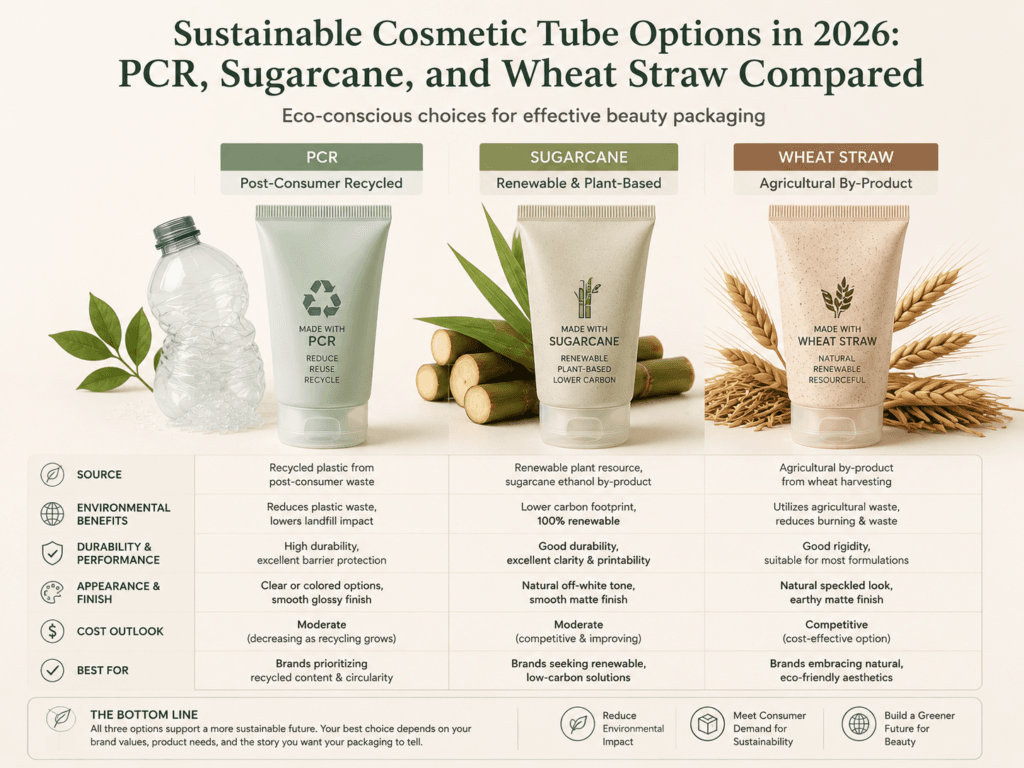
You want to find the best sustainable cosmetic tube in 2026. There are three main choices: PCR plastic, sugarcane tubes, and wheat straw tubes. Each one has special benefits for packaging. They also affect the environment and your brand in different ways.
| Material Technology | Composition | Carbon Reduction | Best Application | Recyclability |
|---|---|---|---|---|
| Mono-material PP/PE | 100% Single Polymer | ~25% | Foundations, Cleansers | Excellent |
| PCR (Post-Consumer) | 10% – 50% Recycled Plastic | ~30% – 45% | Hair care, Body lotions | High |
| Green PE (Bio-based) | Sugarcane Ethanol | ~70% (Raw Material) | Face creams, Serums | High |
Sugarcane tubes use a resource that grows back. This means less need for fossil fuels. Making sugarcane tubes uses less water and energy. This lowers their carbon footprint. Sugarcane tubes also break down faster in nature. Wheat straw tubes use farm waste. But they need more steps to make. This uses more energy. Wheat straw tubes also take longer to break down.
PCR tubes are made from recycled plastic. This helps reduce plastic waste. It also supports reusing materials. PCR tubes work well for many beauty products. They are easy to recycle and protect products well. New ideas for PCR include pump systems made from one material. Lighter tubes also use less plastic. These changes make recycling easier.
Sugarcane tubes are good because they have a low carbon footprint. They also break down quickly. PCR tubes are great for recycling and cutting waste. Wheat straw tubes use farm waste but need more energy and break down slower.
Why This Matters for Brands and Consumers
You care about how your choices affect the earth and your customers. Picking the right tube can help your brand look better. Most people now want eco-friendly packaging. In 2026, 82% of people say they will pay more for green packaging. About 74% think about packaging when buying beauty products. If you use recyclable tubes, 67% of people may buy from you again. Over half of shoppers want products with recycled materials.
New ideas in packaging let you offer more choices. Companies now make tubes you can refill or replace. These can cut plastic waste by up to 80%. Some new tubes use recycled aluminum. Lighter tubes also use less plastic.
You want to pick materials that fit your green goals and what your customers want. PCR and sugarcane tubes are the top choices in 2026. They are good for the planet and work well for beauty products. Using these tubes shows you care about the future and helps build trust with your customers.
Why Sustainable Packaging Matters
Environmental Impact of Cosmetic Packaging
You see how regular cosmetic packaging hurts the planet. Most beauty products come in plastic containers. These containers cause big problems for the earth.
- Regular plastic packaging makes more plastic trash. This trash makes the world’s plastic problem worse.
- Companies use new plastic from oil to make most packaging. Making this plastic uses up resources and puts out greenhouse gases.
- Many containers still have some product inside when thrown away. This leftover stuff adds to trash and makes recycling harder.
- People use about 355 million tons of plastic each year. This number keeps getting bigger.
- Since 1950, people made about 8300 megatons of synthetic polymers. About 4900 megatons are now in landfills or polluting nature.
- Oceans now have about 5.25 trillion plastic pieces. These weigh almost 269 thousand tons.
You can see why eco-friendly packaging is important. Eco-friendly choices help cut down waste and protect the planet. When you pick sustainable cosmetic packaging, you help stop pollution and save resources.
Consumer Demand for Sustainable Solutions
You want products that fit your values. Many people now look for eco-friendly packaging when buying cosmetics. You care about the earth and want brands to care too.
Many governments around the world are making stricter rules about plastic use. This makes companies try molded pulp packaging as a good choice.
- Governments in Europe and North America want companies to use less plastic and recycle more.
- The EU and the U.S. have new rules for greener packaging.
- These rules help set better standards for using and reusing things.
You can see that sustainable packaging is not just a fad. It is what you and other shoppers want. Eco-friendly packaging helps brands earn trust and loyalty. When you buy cosmetics with sustainable packaging, you help make the future better for everyone.
Eco-Friendly Packaging Materials Overview
PCR (Post-Consumer Recycled) Plastic Explained
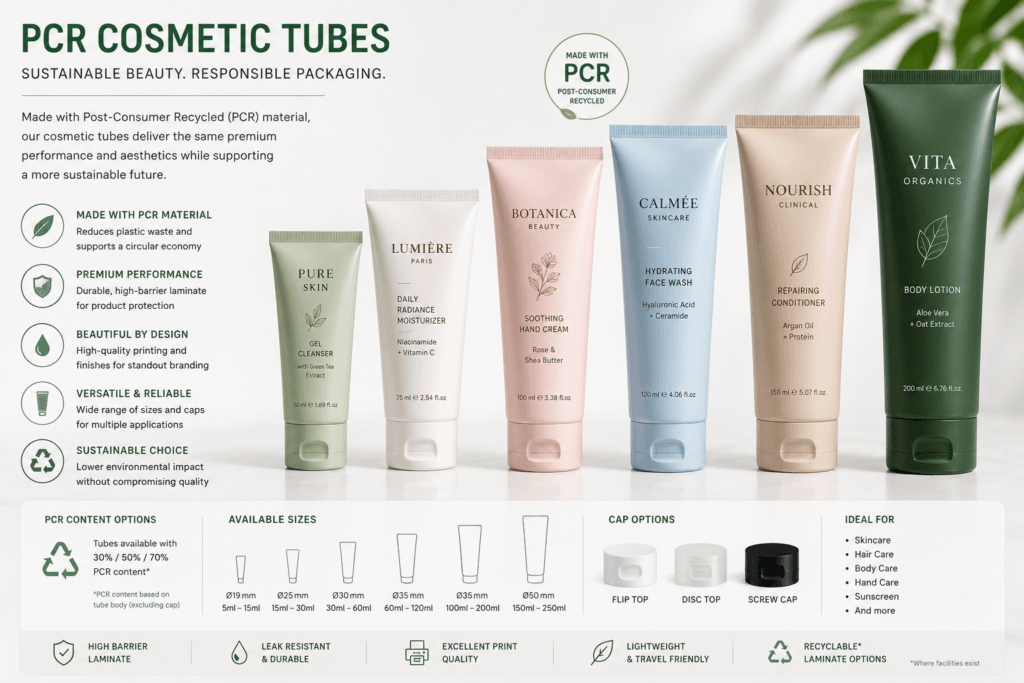
PCR plastic is a smart choice for green packaging. It is made from recycled tubes and containers. Companies collect old cosmetic packaging and turn it into resin. This resin is used to make new packaging that is high quality. Some brands use EcoPrime, which comes from recycling centers. Ocean Bound PCR uses plastic found near rivers and oceans. Some caps have 100% PCR, and some packages have up to 80%. When you pick PCR PET, you help the planet. PCR plastic cuts down on waste and gives strong packaging.
Sugarcane-Based Tubes and Their Benefits
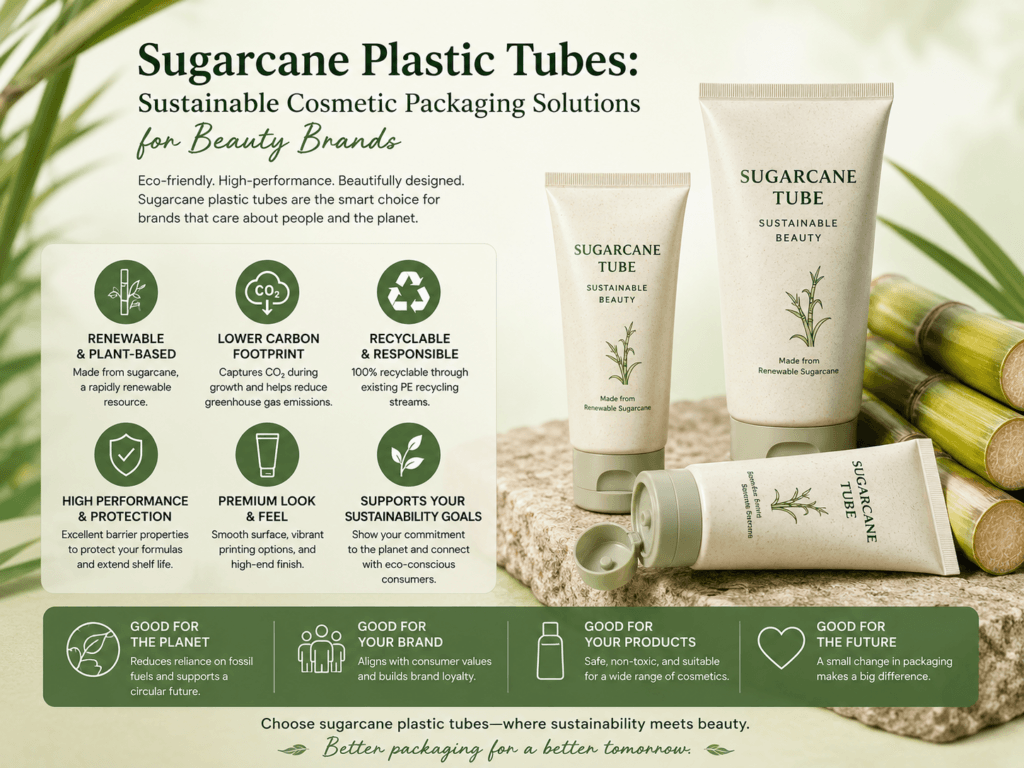
Sugarcane tubes are made from plants that grow back fast. This makes sugarcane a renewable resource. Using sugarcane makes less carbon than using oil-based plastic. Bioplastics from sugarcane are better for the earth. These tubes break down in nature and are compostable. Regular plastic stays around for a long time. Sugarcane tubes help us use less oil and support green packaging. The leftover sugarcane fiber, called bagasse, can also be used. Sugarcane tubes are a great eco-friendly choice for cosmetics.
Wheat Straw Tubes and Their Advantages
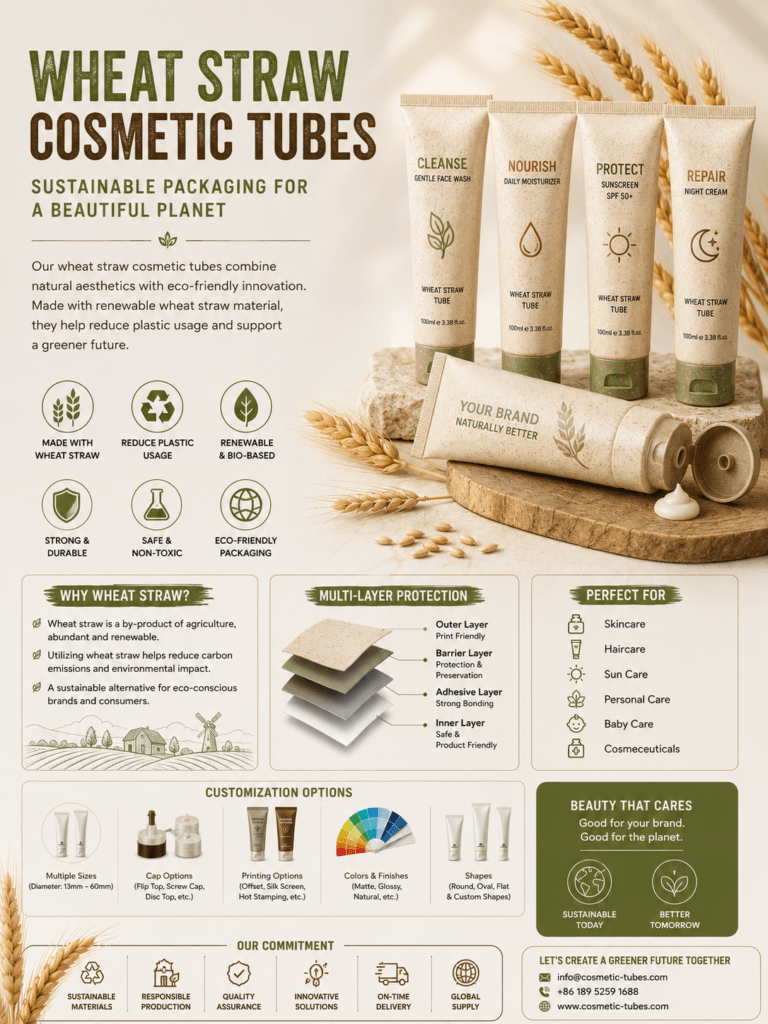
Wheat straw tubes are a new green packaging idea. Wheat straw comes from farm waste, so it is renewable. Using wheat straw helps cut down on farm trash. It also means we need less new plastic. Wheat straw tubes use things that would be thrown away. This helps the planet and supports green packaging. These tubes look and feel different from other tubes. Choosing wheat straw tubes shows you care about the earth.
Environmental Impact Comparison
Carbon Footprint and Resource Use
You want to know how each tube affects the earth. Sugarcane tubes are special because they take in carbon. When sugarcane grows, it pulls carbon dioxide from the air. For every kilogram of Green PE made, 3.09 kilograms of CO2 are removed. This helps fight climate change. If you use only sugarcane tubes, you can cut carbon by 70%. PCR tubes also help because they reuse plastic. Wheat straw tubes use farm waste, but need more energy.
Biodegradability and End-of-Life Options
You want packaging that breaks down safely. Sugarcane tubes can break down, especially with bagasse fiber. Wheat straw tubes also break down, but slower. PCR tubes do not break down, but you can recycle them many times. Sugarcane bioplastics are strong and can break down. You should check if your recycling center takes these tubes. Picking recyclable or biodegradable tubes keeps trash out of landfills.
Reducing Plastic Waste
You can help cut plastic waste by picking green packaging. Many people care about this:
- 90% of buyers like brands with green packaging.
- 54% picked products for eco-friendly features in six months.
- 70% look for clear labels about being green.
- 43% will pay more for recyclable packaging.
You make a difference when you pick green tubes. These choices help keep the planet clean and show you care about the future.
Material Sourcing and Supply Chain
Availability and Scalability in 2026
You want to know if there will be enough eco-friendly materials for your cosmetic tubes. By 2026, about 41.4% of squeeze tubes will use bio-based materials like sugarcane and wheat straw. This means you will find more green packaging choices. Companies use new technology to keep products safe with these materials. Big brands now sell fully recyclable cosmetic tubes because more people want sustainable packaging.
Sugarcane bio-plastics and wheat straw come from resources that grow back. These options help lower the carbon footprint of your supply chain. But these materials need special composting places to break down. You should think about this when you design your cosmetic products.
You might have some problems when you try to make more products. Sustainable materials like bio-resin plastic and PCR packaging cost 10% to 30% more than regular plastic. Suppliers often ask you to buy at least 25,000 PCR cosmetic tubes. These higher costs can make your products cost more for customers.
- It often takes longer to get sustainable cosmetic packaging.
- Getting materials locally and using green shipping, like boats, can slow delivery.
- Vendors may not change quickly when the market changes.
Ethical Sourcing and Supply Chain Control
You want to be sure your cosmetic packaging is really sustainable. Sometimes, vendors do not give proof or certificates for their materials. Greenwashing is a problem. Some suppliers say they are eco-friendly but are not. It can be hard to find vendors who use real sustainable materials because there is not much openness.
Note: There is no government rule that says what makes a beauty brand sustainable. You must make your own rules and check your supply chain closely.
Small cosmetic brands often have less money and knowledge. This makes it harder for them to manage a sustainable supply chain. You should pick suppliers who are honest and can show proof of what they do. Watch for new ideas in barrier technology and product changes. These things help you use sustainable packaging without losing product quality.
Recyclability and Circularity in Sustainable Cosmetic Packaging
Recycling Systems for Each Material
You want to know how each cosmetic tube can be recycled. The way you recycle depends on what the tube is made of. Here is a simple table to help you compare:
| Type of Tube | Material Used | Eco-Friendly Attributes |
|---|---|---|
| PCR Tubes | Post-Consumer Recycled | Reduces waste, promotes recycling, versatile for packaging. |
| Sugarcane Tubes | Bio-based from sugarcane | Reduces carbon footprint, sustainable alternative to plastic. |
| Wheat Straw Tubes | Wheat straw fiber | Renewable materials, reduces virgin plastic use, durable. |
Most local recycling centers take PCR tubes. These tubes help the circular economy because old tubes become new ones. Sugarcane tubes are made from plants. Some sugarcane tubes can be recycled, but you should ask your recycling center first. Wheat straw tubes use plant fibers. Some of these tubes break down in nature, but not all recycling places take them yet.
You can also pick refillable or reusable tubes. These choices help you use less packaging and keep materials in use longer.
Challenges and Opportunities for Closed-Loop Packaging
There are some problems when you want packaging to be reused or recycled. Here are the main things that make it hard:
- Supply chain challenges: It can be tough to get enough PCR materials that are safe.
- Material performance: Recycled tubes might look or feel different.
- Economic barriers: Some recycling methods cost more money than others.
- Regulatory compliance: You must follow rules to keep packaging safe for people and the planet.
- Consumer understanding: Some people do not know how to recycle or reuse tubes. Brands need to teach people about these choices.
There are also new chances to do better. Many brands now have refillable and reusable tubes. These options help keep materials in use and support a circular economy. When you pick recyclable or biodegradable tubes, you help cut waste and protect the earth.
Performance and Suitability for Beauty Brands
Durability and Product Protection
You want your cosmetic tubes to keep products safe and last long. PCR, sugarcane, and wheat straw tubes are strong and protect well. The table below shows how each tube type works:
| Tube Type | Durability and Product Protection | Sustainability Aspect |
|---|---|---|
| PCR PE Tubes | Maintains durability and performance | Utilizes recycled materials, reducing plastic waste |
| Sugarcane Tubes | Designed to maintain durability | Made from renewable resources, lower carbon footprint |
| Wheat Straw Tubes | Similar durability to traditional plastics | Uses agricultural waste, supports sustainability |
These tubes stop leaks and keep air out. They are tough enough for squeezing and travel. They work just like regular plastic tubes.
Compatibility with Cosmetic Formulas
You need to check if your packaging works with your formulas. Some sustainable tubes can react with certain ingredients. Strong or sensitive formulas might cause swelling or cracks. Sometimes, additives can move into the product. You should always test your products with the tube before selling them. This helps you avoid problems and keeps customers happy.
Tip: Ask your supplier for test results before picking a new tube material.
Design Flexibility and Branding
You want your packaging to look special on store shelves. Sustainable tubes let you pick many custom designs. You can choose different shapes, finishes, and printing styles. The table below lists some features you can use:
| Technique/Feature | Impact on Branding and Design |
|---|---|
| Printing Techniques | Offset, hot stamping, digital, embossing for premium visuals |
| Finish Options | Matte, glossy, metallic, textured finishes for unique positioning |
| Geometry Flexibility | Oval and super flat tubes for more display choices |
| Transparency Features | Windows and gradient coloring to show off your formulas |
- You can make special cap shapes, like lines or petals.
- Unique shapes and decorations help your brand get noticed.
- Special packaging makes your products easy to spot and remember.
These features show you care about the planet and style. This helps you connect with shoppers who want eco-friendly products and builds a strong brand.
Consumer Perception and Market Trends
How Consumers View Eco-Friendly Packaging
More shoppers now care about eco-friendly packaging. People want brands to use materials that help the earth. When you see cosmetics in green tubes, you feel happy about your choice. Many shoppers look for clear signs that brands use eco-friendly materials. You trust brands that show their packaging is recyclable or can break down.
Eco-friendly packaging makes you proud to support brands that help nature.
You see labels that say “recyclable” or “made from plants.” These labels help you pick what to buy. You often tell friends about your favorite green brands. You want packaging that looks good and feels safe for the planet. When you find cosmetic packaging with less plastic, you feel smart about your choice.
Impact on Brand Image and Loyalty
You feel close to brands that use green packaging. When you see packaging made from recycled or biodegradable stuff, you know the brand cares about the earth. Brands with refillable tubes let you bring back containers for more product. This makes you want to shop with them again.
- Biodegradable materials like bamboo and paper tubes attract people who care about the planet.
- Recyclable choices, like glass and post-consumer recycled plastics, help the earth.
- Reusable packaging lets you return containers for refills and builds loyalty.
Brands often have programs that reward you for picking green products. These programs make you feel special and want to buy again.
- Loyalty programs for green choices make you like the brand more.
- Rewards for eco-friendly shopping make you want to come back.
- Brands use these programs to help the earth and keep customers.
You like brands that share your values. When you join programs that reward green choices, you feel good. You want to support brands that help the planet. This makes you want to buy more cosmetics from them.
Recommendations for Brands
Key Criteria for Choosing Sustainable Cosmetic Tubes
You want to make good choices for your brand and the earth. When you pick sustainable packaging, you should check a few important things. The table below shows what matters most:
| Criteria | Description |
|---|---|
| Sustainable Ingredient Sourcing | Pick ingredients that help the planet and come from safe places. |
| Sustainable Packaging | Use packaging that does less harm and supports green goals. |
| Corporate Commitments | Show your promise to eco-friendly actions in your company’s daily work. |
| Consumer Transparency | Tell your customers clearly about your eco-friendly efforts and packaging choices. |
You should also use eco-friendly materials and refillable systems. Many brands now make new designs to cut waste and support green packaging. Always think about how your choices affect the earth and your customers.
Tip: Use ways to make products that protect the planet and keep bad chemicals out.
Steps to Transition to Sustainable Packaging
You can help your brand use eco-friendly packaging by following these steps:
- Check what your brand needs and set clear goals for your packaging.
- Find suppliers who offer eco-friendly tube packaging and build strong partnerships.
- Share your green story with your customers to build trust and loyalty.
You should keep checking for new rules about sustainable packaging. Laws can change, so you need to stay updated. Many changes take time, but you should always watch for new trends and ideas. This helps you stay ahead and ready for the future.
Note: Review your packaging plan often to make sure you meet new rules and keep your brand strong.
You learned that PCR plastic and sugarcane are the best choices for sustainable cosmetic tubes in 2026. These eco-friendly tubes help your brand look good and keep the earth safe. When you pick green packaging, you help recycling and reuse. To do well, you should:
- Choose eco-friendly tubes that work well and meet market needs.
- Use refillable tubes or simple designs so recycling is easy.
- Look for new features like airless pumps and tubes with more than one chamber.
Keep learning about eco-friendly trends. Your choices help make the future better.
Frequently Asked Questions About Sustainable Cosmetic Tube Options
Get answers about sustainable cosmetic tube options including PCR tubes, sugarcane plastic tubes, wheat straw tubes, recyclable PE tubes, sustainable cosmetic packaging materials and OEM manufacturing support.
What are PCR cosmetic tubes?
What are sugarcane plastic tubes?
What are wheat straw tubes?
What does recyclable cosmetic tube mean?
Which sustainable tube material is best for skincare packaging?
Can sustainable tubes be customized?
Are sustainable cosmetic tubes durable?
Can sustainable tube materials support OEM projects?
Do sustainable tubes cost more than standard tubes?
How do I choose the right sustainable cosmetic tube?
Why choose Xinfly Packaging for sustainable tube solutions?
Need Sustainable Cosmetic Tube Packaging Solutions?
Xinfly Packaging supports skincare and beauty brands in choosing PCR tubes, sugarcane plastic tubes, wheat straw tubes and other eco‑friendly options with premium printing, flexible MOQ and professional OEM manufacturing services.