Published: .
A buyer sees small brown flecks on a wheat straw tube and asks whether the delivery has a printing problem. The supplier points to the material’s appearance. The designer points to a mark near a letter. Without a shared reference, three people can look at the same tube and argue about three different things.
Wheat straw tube appearance reference approval starts by separating the proposed material look, the printed design and any unexplained observation. This guide helps you build a physical-reference record before ordering. It does not declare every speck acceptable, identify contamination from a photograph or set a universal visual limit. The supplier and responsible quality reviewers must agree the applicable requirements and evidence for your actual configuration.
Define the Appearance You Are Buying
Ask What the Proposed Material Description Covers
When reviewing wheat straw cosmetic packaging, request the proposed material description and the supplier’s representative appearance samples. Keep the body reference and intended colour identified. A category name does not define the exact distribution, size or colour of visible features in every configuration. Ask what the supplier’s sample represents and which aspects remain subject to confirmation.
Do not infer composition percentages or environmental performance from the appearance. A flecked surface is an observation, not evidence of a particular material content. If your purchase includes a material claim, obtain the relevant configuration-specific documentation and have the responsible parties review it separately. This article addresses appearance references and print review, rather than certifying composition or an environmental outcome.
Keep Body and Closure References Separate
The closure may have its own material, colour and surface specification. Record its reference independently from the body. Do not assume that visible features on one component establish the appearance requirement for another. If the proposed cap differs from the body, ask the supplier to show that intended combination and record what the appearance review actually covers.
Separate the Background from the Printed Design
Compare Unprinted and Printed Areas
Request a reference that lets reviewers understand the proposed background appearance as well as the decoration. Ask which regions are unprinted, where ink is applied and which surface finish is proposed. This helps frame a discussion about a mark near a graphic. It does not by itself establish the mark’s origin or justify a conclusion about whether the item conforms.
Identify the Graphic Requirement
A clear print file should identify the lettering, lines and other artwork features the reviewer is assessing. The wheat straw printing discussion describes issues relevant to decoration on this material category. For your order, ask the supplier to explain the proposed print process and the reference against which its output will be reviewed. Do not transfer generic examples into automatic acceptance rules.
| Observation | Record first | Question to resolve |
|---|---|---|
| Visible feature in an unprinted area | Component, location and specimen identity | Does it match the agreed material-appearance reference? |
| Mark beside a printed letter | Image of the mark and surrounding artwork | Is the graphic requirement affected under the agreed review? |
| Variation between body and cap | Separate component references | Is this the intended material and colour combination? |
| A feature appears different in a photo | Lighting, scale and reference image | Is a physical comparison needed before interpretation? |
| An unexplained mark raises concern | Specimen identity and handling record | Who should investigate and decide the appropriate disposition? |
| A delivered item differs from a sample | Delivery and reference identifiers | Which approved requirement applies to this configuration? |
This table is a question-routing tool, not a defect catalogue. A feature can need further review even when it resembles the intended material texture. Equally, a photograph can exaggerate a feature without establishing that the physical item differs from the reference. Preserve the observation and assign the interpretation to the appropriate reviewer rather than guessing the cause.
Build a Physical Appearance Reference Set
Identify Each Specimen
For wheat straw cosmetic tubes, use specimen references that the buyer and supplier can connect to the proposed body, cap, colour and decoration. Include a date and the sample’s development role. A reference labelled only “natural tube” can become difficult to interpret when several projects use different blends, colours or artwork. The useful identifier points back to a specific proposed configuration.
State What the Set Is Intended to Show
Ask the supplier whether the proposed specimens illustrate a particular appearance, a stated range or another defined purpose. If a range is being proposed, have the responsible reviewers describe and agree its scope. Do not assume that receiving several different-looking samples automatically establishes the boundaries for production acceptance. The accompanying decision matters as much as the specimens themselves.
Distinguish a Reference from an Approval
A sample can be useful before it is approved. Mark it as submitted, under review or accepted for a stated scope, as appropriate. Keep unresolved questions visible. A courier receipt or a photograph of samples on someone’s desk does not establish agreement to their appearance. Record the actual decision and the participant responsible for making it.
Agree How the Comparison Will Be Made
Make Viewing Conditions Traceable
Ask the reviewers to agree relevant lighting, viewing arrangement and specimen state for their comparison. Record those conditions so another reviewer can understand the observation. This guide does not select a light source, inspection distance or visual threshold. Those choices should reflect the project’s requirements and the responsible parties’ agreed review procedure.
Use Photographs as Supporting Records
When documenting a feature, include an overall view to locate it and an appropriate closer view. Keep the specimen reference with both images. Avoid relying on an enlarged crop that removes the surrounding print or makes a small feature look like a different kind of issue. A photograph can support communication; it does not replace every question that a physical reference can answer.
Review Lettering and Material Appearance Together
Keep Readability in the Discussion
A brand may like a textured background and still need clearly legible product wording. Have the design and quality reviewers assess the intended text on a representative decorated specimen. Record which graphic features they reviewed and which concerns remain. Do not assume that a successful review of a large brand name also approves every small line elsewhere on the pack.
Confirm the Proposed Printing Process
Use the printing and design process to discuss artwork, colour and surface finish with the supplier. Ask what is proposed for the selected material and configuration, and what representative sample is available for review. Do not prescribe a universal ink system, adhesion result or production adjustment from appearance alone. Any technical test or acceptance requirement needs its own agreed basis.
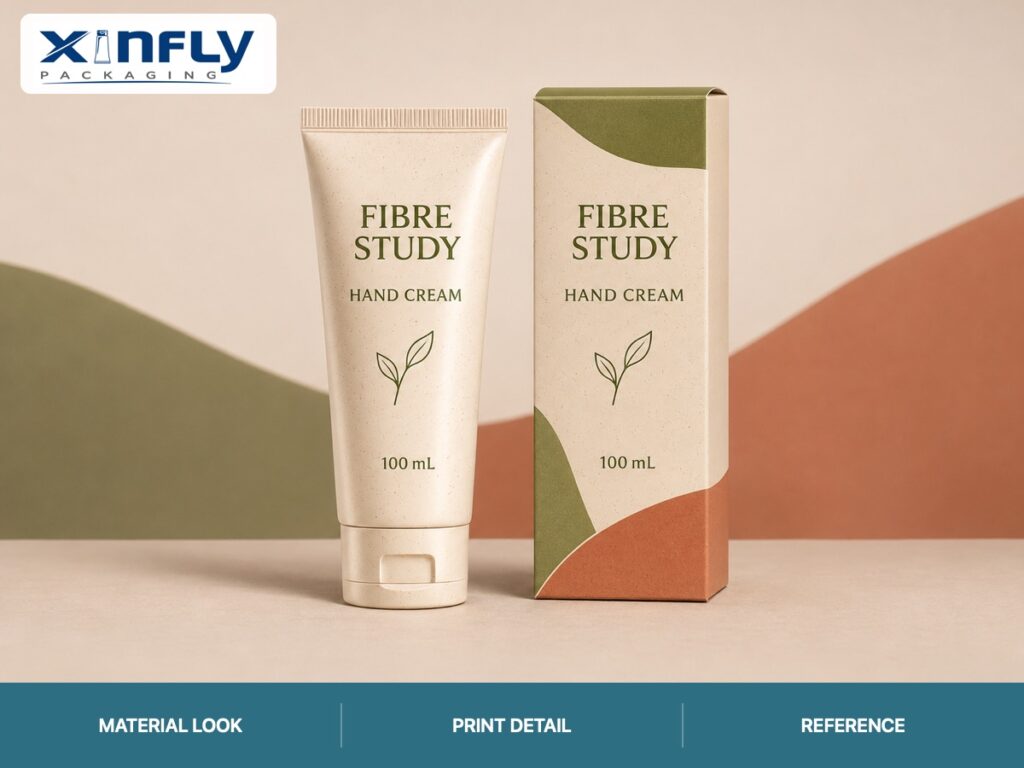
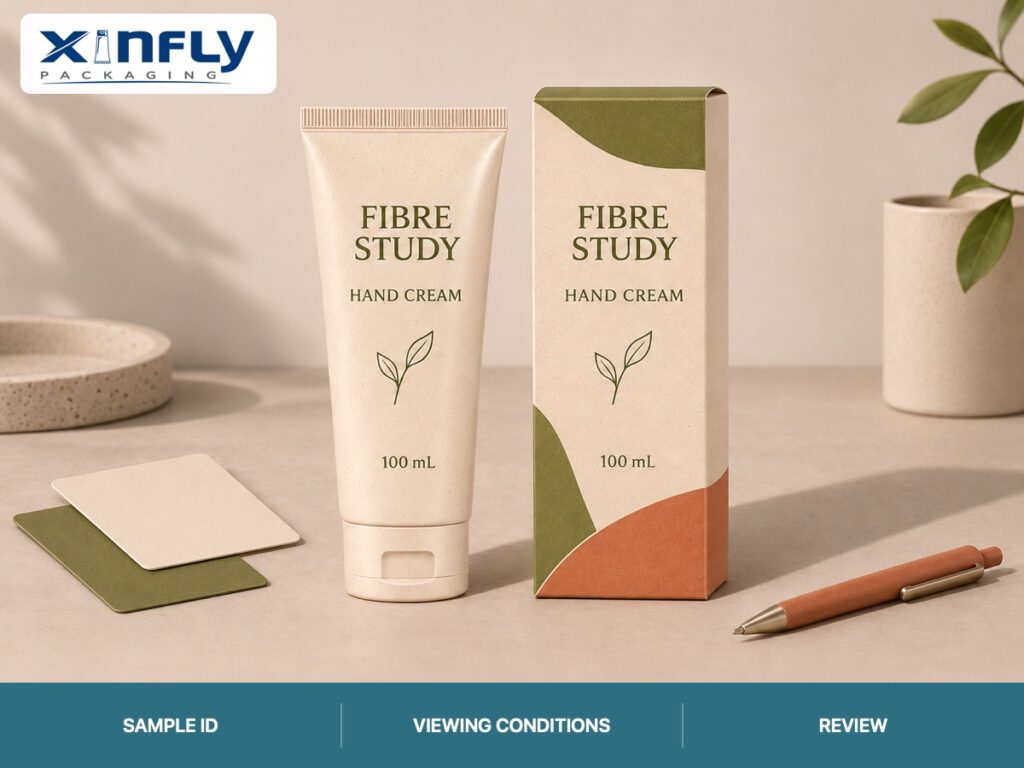
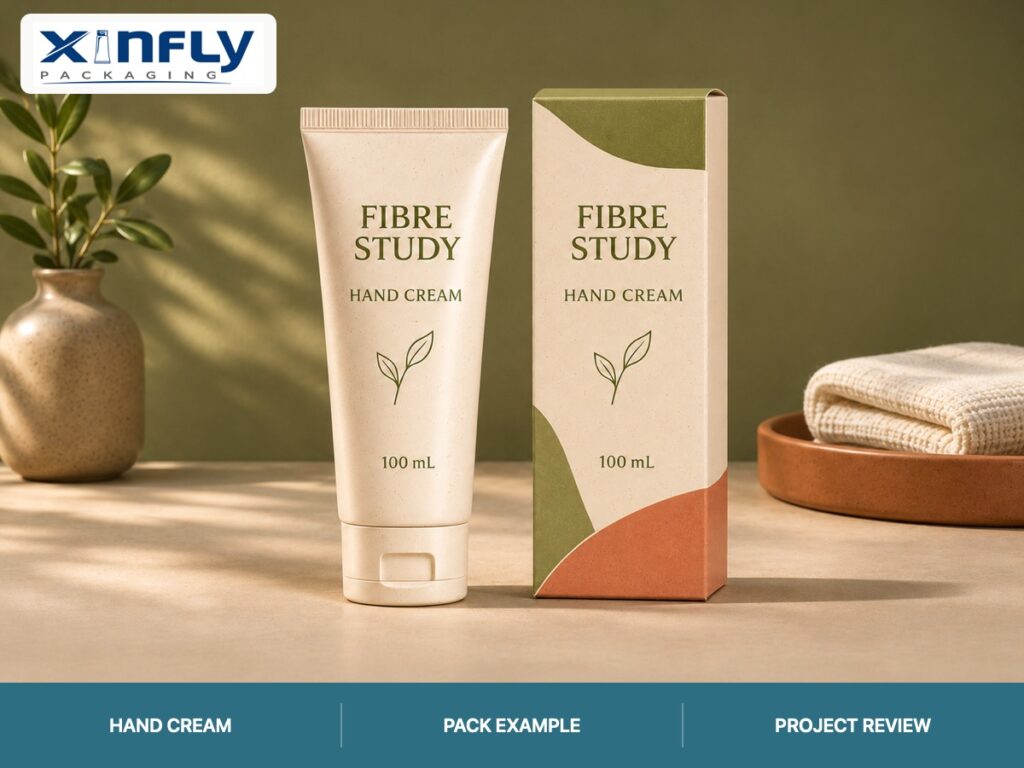
The illustrations use a fictional FIBRE STUDY hand-cream pack: a cream wheat-straw-filled-plastic-style body with fine visible flecks, moulded shoulder, straight crimped display tail and cream round flip-top cap. Olive single-colour screen-print-style wording and a leaf coordinate with the printed carton. The images illustrate an appearance concept. They do not establish material content, the permissible size of a feature or a measured print result.
Keep the Reference Record Usable at Receipt
| Record field | Information to retain | Why the receiving team needs it |
|---|---|---|
| Configuration | Body, closure, colour and artwork references | Identifies the item the reference applies to |
| Specimen ID | Unique physical-reference identifier | Connects observations to the right sample |
| Sample role | Appearance concept or representative review specimen | Prevents a mock-up being used outside its scope |
| Viewing basis | Agreed conditions and applicable procedure | Gives the comparison a defined context |
| Scope accepted | Specific material appearance and graphic features | Shows what the decision actually covers |
| Open questions | Unresolved observation and responsible reviewer | Keeps a pending issue from becoming assumed acceptance |
| Decision record | Participant, date and acknowledged outcome | Preserves the actual approval status |
| Change reference | Any later configuration or reference revision | Helps the receiver identify the current basis |
The register is not an inspection sampling plan. It does not define how many units to inspect or how many observations are acceptable. Agree those matters in the project’s quality assurance review. Keep a visual reference connected to the applicable requirements and decision authority, rather than treating the existence of a sample as a complete quality agreement.
Handle an Unexplained Observation Carefully
Preserve Identity and Context
If a delivered tube raises a concern, retain the relevant identification and document where the observation occurred. Follow the organisation’s agreed handling and disposition process. Do not remove the feature, alter the specimen or make a public claim about its cause before the responsible parties have reviewed it. A traceable observation is more useful than a confident explanation unsupported by evidence.
Ask the Right Follow-Up Question
The supplier may need information about the body, decoration, component or handling stage to investigate. Provide the current approved reference and the affected item references. Ask what evidence is needed to distinguish the proposed appearance from the concern raised. Keep any interpretation attributed to the participant who actually made it, and record the agreed next action.
Request Samples for a Defined Decision
Through sample development, ask for the configuration and decoration needed to answer your appearance question. If the question concerns background features behind small lettering, a blank body alone may be insufficient. If the question concerns the proposed base appearance, a heavily decorated area may obscure it. Explain the decision so the supplier can propose an appropriate representative specimen.
A useful request can read: “Please identify the proposed wheat straw tube material and component references, provide representative appearance samples, and explain the intended scope of the sample set. We need to review the unprinted background and the attached artwork together. Please identify the proposed print process and any appearance questions requiring agreement before production.” Add capacity, quantity and destination for the commercial discussion.
Keep Later Changes Connected to the Reference
If the body material description, colour, cap, finish or artwork changes, ask which parts of the previous appearance decision remain applicable. Do not assume either that everything must be rejected or that every earlier reference carries over unchanged. Record the responsible reviewer’s assessment, the new reference if needed and the conditions still pending. That makes the receiving record useful without manufacturing a history of tests or approvals.
Frequently Asked Questions
Are all brown specks on wheat straw tubes acceptable?
No universal conclusion follows from that description. Compare the identified specimen with the agreed reference and requirements, and route unexplained observations to the responsible reviewer. Appearance alone does not establish a feature’s origin or the item’s conformity.
Can a flecked look prove the material content?
No. If composition matters to the purchase or a proposed claim, request the relevant documentation for the actual configuration. Keep that evidence review separate from the visual comparison. A photograph or a textured sample does not establish a percentage or certification.
Should I approve a blank tube before reviewing print?
A blank specimen may answer a base-appearance question, while a decorated specimen answers another. Identify the purpose of each reference and ask the supplier what is needed for the intended review. Record the scope accepted rather than treating one sample as approval of every later feature.
Can an enlarged photograph replace a physical reference?
It can help communicate location and detail, but the appropriate review may require a physical comparison. Record the image context and specimen identity, and ask the reviewers which evidence is sufficient. Do not assign a pass or fail solely from an unexplained crop.
What should I send Xinfly Packaging first?
Send the intended application, capacity, colour direction, artwork and quantity. Explain which appearance features need review and provide any existing reference. Ask Xinfly Packaging to identify the proposed configuration, representative samples and questions that should be resolved before ordering.
Conclusion: Agree the Reference Before Debating the Mark
A useful wheat straw tube appearance review connects the proposed material look, printed detail and physical specimen with an explicit decision. It preserves unexplained observations without guessing their cause. Contact Xinfly Packaging with your artwork and appearance requirements to discuss a quotation and sample plan based on a traceable reference.