Published: .
Technical review: pending.
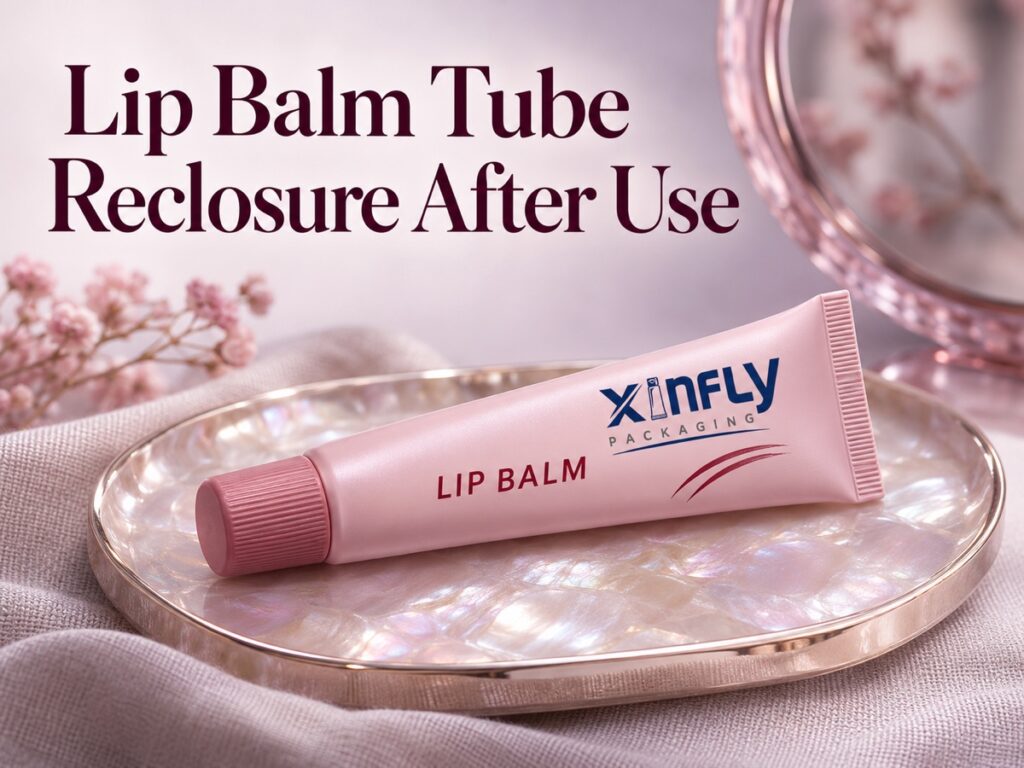
Check lip balm tube reclosure after use when choosing a slanted applicator and screw cap. A clean new sample can close neatly on a sales desk. After dispensing, balm can collect on the slanted face, travel onto the neck or appear inside the cap. The buyer needs to know how the same assembly handles the intended apply, wipe if applicable, close and reopen sequence. Write down which closure behavior is acceptable before the trial and use the observations to decide whether to retain the tip and cap or request mating parts with a different geometry.
Start With the Intended Application
Define the Pair You Want to Approve
The sample concept is a dusty rose PE squeeze tube with a narrow molded shoulder, straight ribbed heat-sealed tail, original one-color line print and a short matching screw cap. A slanted applicator is exposed when the cap is removed. Start with lip balm squeeze tubes with slanted tips and ask the supplier for matching finished parts and a section drawing of the tip, neck and cap. Identify each revision. Similar cap colors and outside dimensions can conceal differences at the thread or the surface that contacts the tip.
Describe the Use Cycle in Plain Language
Specify the expected way a person draws balm from the tube and where the pack is kept between uses. Include the application surface used for the trial, how much product is dispensed and what happens before the cap is returned. The cycle can be simulated on the bench using a clean agreed contact surface. This lets a buyer observe the pack without treating the check as a use study. Use production-intent balm approved by the formulation team and note any stand-in formula separately.
Inspect the Tip and Cap Seat
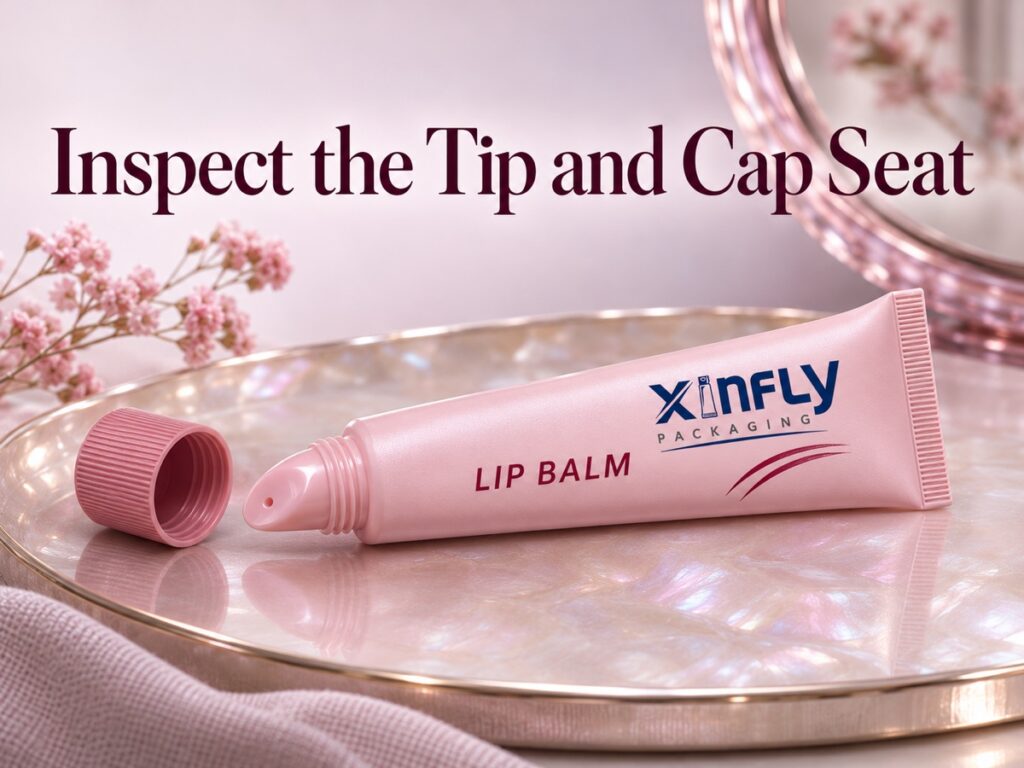
Look for three areas where residue can appear. Start at the slanted applicator face and orifice. Continue to the neck, including the thread start and shoulder just below it. Finally, look at the corresponding area inside the cap and on the cap seat. Take matching photos on a clean reference at the start of the trial. Keep the tip and cap paired during handling and record which surfaces show residue on reopening.
Request the Contact Geometry
Ask for the slant direction, applicator face and orifice shown in relation to the shoulder. Request both thread references and ask the supplier to point out the cap's intended final resting position. Ask which surfaces are intended to contact when the cap is closed on the specified tip. If the cap uses an internal projection, identify it on the section and ask where it rests relative to the orifice. Use those details to decide where to look after repeated closure. A photo of the exterior cap alone leaves these questions open.
| Feature | Supplier to show | Buyer to record after closing | Evidence needed to hold the choice |
|---|---|---|---|
| Slanted applicator face | Complete tip profile and orifice location | Balm remains at the outlet, spreads across the face or transfers into the cap | Before and after photos under similar light |
| Neck and thread | Thread start, neck clearance and shoulder position | Residue on entry, skipped engagement or change in the first turn | Matched drawing and note from the same sample |
| Cap seat | Mating section and described final resting position | Visible gap, early stop or different resting position | Clean reference photo and corresponding trial photo |
| Inside of screw cap | Plug or contact surface if used and its relation to tip | Where balm transfers on reopening | Paired cap and tube IDs kept with trial observations |
| Tube body and fill | Production-intent body, filler brief and sealed trial conditions | Product amount and fill state used at the time of the observation | Filled-unit sample identification and approved fill record |
Record a Clean Reference First
Ask the team to identify the normal closing action on a clean tube and cap before dispensed balm is introduced. Compare the first engagement and final position with the supplier drawing. Decide how someone will recognize the same position on a used sample. A removable alignment mark may help if the supplier agrees where to place it and it leaves the closure surfaces clear. Keep a separate record for the starting clean reference so marks or residue from later cycles remain apparent.
Repeat the Apply and Close Cycle
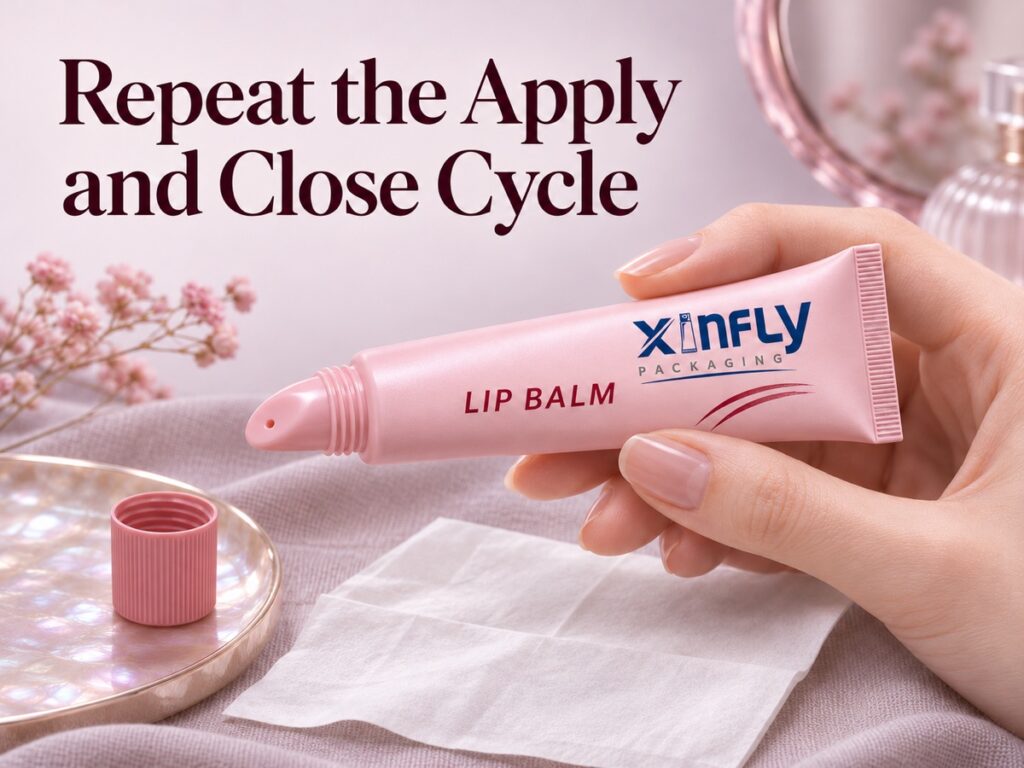
Use finished tubes with the intended fill state and the same identified cap revision. Carry out the defined dispensing and application simulation, return the cap using the agreed closing method and inspect it when the trial calls for reopening. Shape the sequence around the target application. For a balm usually carried in a bag, the buyer can specify the ordinary carry orientation between observations. Ensure the supplier and product team agree any conditioning or handling sequence used to compare options.
Agree the Wiping Step in Advance
Write two scenarios if a clean wipe is part of the intended use but closure without wiping is also relevant. In one scenario, follow the agreed wipe material, touch area and timing. In the other scenario, close after the same dispense and application step without a wipe. Use separate identified units where reasonable so residue from one procedure does not transfer to the next. Compare results under matching conditions and label the outcomes by procedure. A pass with wiping supports that particular use condition.
Define What the Observer Should Log
On each check, record whether the cap started cleanly, reached the reference position and could be removed by the intended action. Note where balm has moved since the previous check. If the original closure feels different, record what actually changed, such as an extra turn, a second attempt or a cap edge stopping above its original position. Ask the responsible team whether to add a force or torque measurement for development, with a suitable method and project-specific limits.
| Checkpoint | Observation and record | Buyer action if the result differs |
|---|---|---|
| Before cycle | Body and cap revision, fill batch, clean photograph and cap position | Resolve a clean fit problem before evaluating residue |
| After application | Dispensed amount or agreed preparation, visible tip area and wipe procedure | Repeat with matched preparation if the comparison is uneven |
| At cap return | Whether engagement starts normally and reaches the reference position | Capture the incomplete position and retain the matching parts |
| At reopening | Tip, thread and cap seat residue locations, opening observations and sample ID | Separate transfer into the cap from a change in cap fit |
| After agreed repeats | Number of cycles and the first occurrence of any recurring symptom | Review the proposed geometry with the supplier for the identified condition |
| Review | Accept, hold or repeat, with owner and record of the exact configuration | Attach the buyer decision to the filled reference and quote revision |
Compare Like With Like
Suppose the sample closes after the wipe but stops above its clean position on some no-wipe cycles. Check that both groups used the same part revisions and fill preparation. Keep the retained sample in its observed state and request a supplier review of its contact geometry. If the supplier suggests a changed cap, repeat the defined procedure on the new cap with the compatible tip. Keep one control from the original build to check that the observation conditions still produce a comparable result. This is a decision to investigate a combination of parts and use conditions.
Look Again After the Agreed Rest
If the pack normally spends time closed between applications, ask the team to name a rest period and the orientation used for that comparison. Retain the same cap on each sample and examine the tip and cap seat after reopening. A smear on the contact face and a smear on the thread call for different follow-up questions. Describe the area and the fit observation separately, then compare it with the clean reference. The review can include normal storage orientations selected for the brief, but a short reclosure comparison cannot establish shelf life, leakage during shipping or formula compatibility. Request those checks separately when the project requires them.
Turn the Trial Into a Purchase Decision
Compare Complete Tip and Cap Sets
Ask each supplier to quote the slanted tip, matching cap and body as an identified assembly. Show the separate cap and applicator revisions on the drawing. Include the intended filling state and decoration and request filled trial work with the actual components before the commercial release. If product and filling work happen elsewhere, agree which team assembles and identifies the units. Ask for changes to the tip, thread or cap insert to be declared with an updated drawing and sample.
Retain a Sample That Shows the Decision
Keep a clean sealed assembly and the paired parts from the check that drove the decision, using storage instructions agreed by the product team. Link them to the same quote, drawing and observation sheet. Confirm what the supplier and buyer will hold or repeat if the cap revision or formula changes. Use the production-intent tube sample review process to agree the samples and drawings before moving to the next purchase stage.
Frequently Asked Questions
Can empty lip balm squeeze tubes confirm reclosure?
Use them to check clean mating, part identity and access to the applicator. Include filled, sealed samples for the repeated-use comparison so that the tip, thread and cap see the agreed residue and handling conditions. Keep results labeled by the actual fill.
Should a buyer test one wipe method or two?
Choose the scenarios expected for the application. If the intended instruction is to wipe the tip, test that handling sequence and ask whether the buyer also needs a no-wipe scenario. Use the same preparation for the candidates compared under each procedure.
Is visible residue inside the cap an automatic rejection?
Agree the acceptance condition with the product and packaging teams before collecting observations. Record where residue is found and any change in closure position, user handling or appearance. Use that information to decide whether the project needs an altered closure or another check.
Can I change the cap while keeping the same lip balm tip?
Request a mated detail drawing and fit samples for the proposed cap, then repeat the clean reference check and the appropriate use cycles. Confirm the purchase order names the approved combination. Similar dimensions on the outside of both caps are only a starting point for comparison.
What should the buyer send with the quote brief?
Share the fill or formula reference approved for the trial, expected use, applicator and cap styles, project drawings or samples, and the acceptance observations you care about. Ask the supplier to identify the intended mating surfaces and quote the sample stage with the named part revisions.
Conclusion
Approve reclosure on a filled lip balm tube using the intended tip and its matching cap. Document the clean reference, the use procedure, where residue moves and whether the cap reaches its agreed final position. Include the selected assembly and the repeat-check trigger in the purchase file. Send Xinfly Packaging the matched part requirements and your use record when you request slanted-tip lip balm tube samples.