Published: .
Technical review: pending.
Run face wash tube grip checks with wet hands before committing to the body shape, surface finish and closure for a rinse-off cleanser. Buyers often compare those features on empty samples in a meeting room. The real handling decision occurs when someone lifts a filled tube from the sink, reaches for its opening tab and dispenses while the other hand is occupied. A sample that feels fine on a dry bench can behave differently in that sequence. Check the complete handling task on filled samples and define which observed changes would justify a different tube.
Describe the Sink-Side Task
Set the Starting Position
Start with the way the tube is stored during ordinary use. A standing tube can be picked up from its body, label panel or cap. A tube placed on its side may need to be turned before the tab can be reached. Agree on one normal starting position and one credible alternative. Ask the reviewer to perform the same sequence on each candidate so the pickup, opening, squeeze and placement are comparable. If users normally have the other hand occupied, include that in the approved trial script.
Define the Illustrated Pack
The sample concept is a pale celadon round PE tube with a shallow molded shoulder, straight ribbed heat-sealed tail and matte deep-teal flat-base flip-top closure. The face carries a restrained screen-printed line pattern. This lets buyers evaluate the finished print and the thumb contact area together. For 100ml face wash tubes with flip-top caps, request the proposed cap, body and actual decoration in the same sample. Treat the size as a project option and confirm the diameter, fill mass and shape on the supplier drawing.
Map the Grip Zones
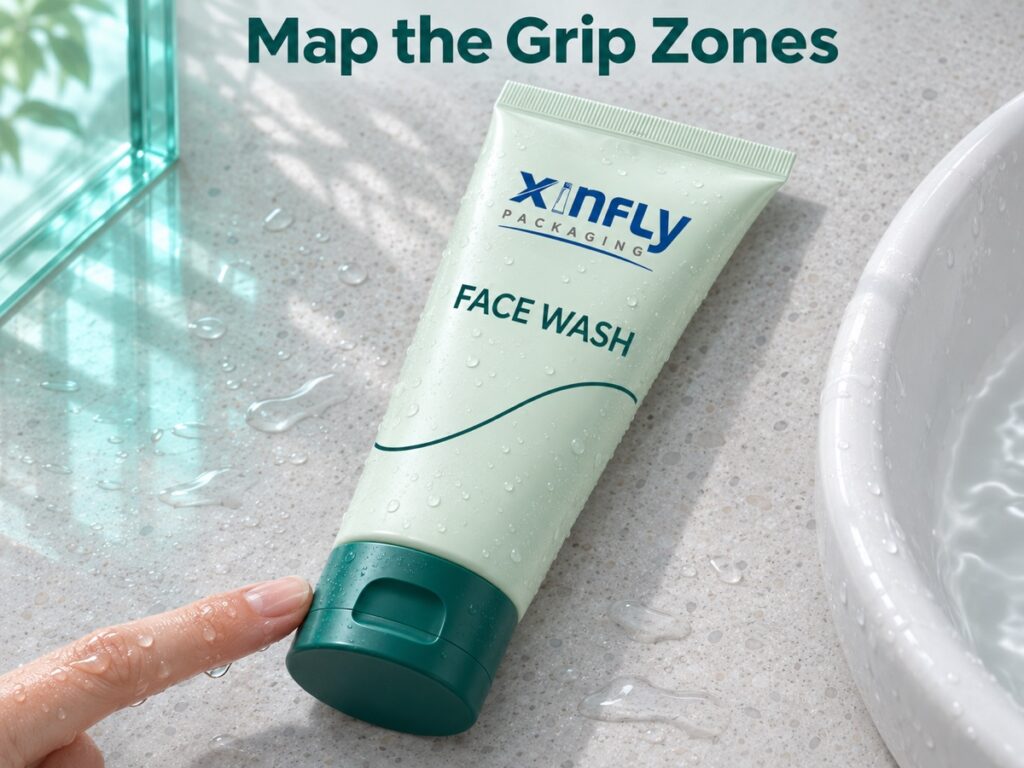
Look at the place where fingers actually hold the tube during pickup and use. The cap skirt, shallow shoulder and broad front panel can each serve a different purpose. A user may lift by the body and rotate to find the cap recess. Measure and record which parts of the hand move, slip or reach again. Keep the printed surface and hand position visible in an annotated approval photo.
Separate Thumb Access From Body Control
With a flip-top closure, the user needs a reachable tab plus enough control of the body to lift that tab. If the whole tube turns when the thumb pushes, collect a note on the grip before changing the cap. If the thumb cannot find the lip even when the tube stays steady, compare the tab geometry and location. The flip-top closure configurations give a common vocabulary for requesting a marked cap sample and drawing.
Control Finish and Geometry in the Comparison
Pick one dimension or surface variable to compare where possible. A shorter body may change finger placement. A wider cap skirt may move the natural grip. A new coating can change the surface the digits actually touch. Ask the supplier to explain when two changes come together, such as a new cap that also requires a different shoulder. Keep the actual revision identifiers on each sample and cluster results by complete assembly when the differences cannot be separated.
| Zone | Description on the drawing or sample | Observation to collect | Possible RFQ follow-up |
|---|---|---|---|
| Body panel | Body diameter or axes, finish and ink coverage at pickup | Fingers shift, hold steadily or rotate the tube | Request another body profile or finish in the same artwork area |
| Molded shoulder | Transition and usable space above the cap | Fingers ride onto the cap or stay on the body | Ask for a marked shoulder profile and same-cap comparison |
| Cap skirt | Lower outline, height and any texture or recess | User grasps or avoids the skirt during pickup | Compare cap skirt shapes on the same proposed tube |
| Thumb tab | Closed recess location and direction from front artwork | User finds and lifts tab with or without changing grip | Ask supplier for the actual closed cap and tab drawing |
| Tail and upper body | Sealed tail width and artwork or finish near the normal squeeze | Grip migrates up or down as the user dispenses | Mark the intended squeeze zone and retain a sealed trial unit |
Run the Wet-Hand Trial

Choose project conditions with the buyer's product and packaging teams. Use production-intent capped and filled samples with matching build and conditioning. Compare dry-hand use with a defined wet-hand state. Record the agreed water and hand preparation routine, the time between wetting and pickup, and whether observed water is on the tube body before use. If the expected scenario includes cleanser residue, use a separately defined step approved by the product team. Record it separately from a water-only comparison.
Use a Short, Repeatable Sequence
From the stated position, pick up the tube, turn it to the dispensing orientation, open it, dispense the target amount, close it and return it to the surface. Ask reviewers to use the same hands and initial orientation for the candidates they compare. An observer should record the first unplanned movement, such as a regrip, an extra supporting hand or a cap being turned away from the access position. State the observation in neutral language. “Needed a second grip before opening” is more specific than “poor usability.”
Keep the Fill Level Visible in the Record
A new, full tube and a partly used tube can sit differently in the hand. The buyer can choose two defined fill states that reflect the expected application. Prepare separately identified samples at those states and record how they were prepared. Use the same formula for both candidates, when the product team approves it, and keep the formula batch and fill amount in the record. If the trial uses a stand-in, identify the stand-in and use the result for handling only under the stated fill conditions.
| Step | Record consistently | What would prompt comparison |
|---|---|---|
| Pick up | Starting orientation, tube surface state and first contact zone | Tube rotates or slips enough to require a new grip |
| Reach tab | Hand position, direction and whether a second hand was used | Tab remains hard to find while the body is held |
| Open | First unplanned movement and whether the closure was fully opened | The pack repeatedly shifts before the tab lifts |
| Squeeze | Agreed fill state, contact area, dose method and hand changes | User loses control of aiming or has to switch grip unexpectedly |
| Close and set down | Closure appearance, finger contact and placement on sink surface | Candidate repeatedly needs another attempt at closure or stable placement |
| Repeat trial | Sample ID and changed condition, such as wet body or lower fill state | One configuration changes more than the buyer has agreed is acceptable |
Compare Orders and Trial Conditions
Ask each reviewer to try the candidates in an order set before testing and vary the starting candidate where the team can. Allow people to become familiar with the task using a practice example, then collect the results under comparable conditions. Write down any breaks or changes in the wetting step. Separate accidental damage to a sample from ordinary handling. This practice helps a small project review identify what to check again, without treating the results as a population claim.
Work Through a Mixed Result
Consider a proposed tube whose cap tab is easy to find on a dry bench but whose body repeatedly twists on pickup in the wet-body condition. A change to tab force would leave the pickup observation unresolved. Ask the supplier for the same cap on two body finishes, if available, and verify the observed rotation again in the wet-body step. If the tube is picked up securely but the tab remains awkward only at a lower fill, compare where the hand is supporting the tube when the thumb reaches for the tab. Keep these as separate lines on the worksheet. In each case the result depends on the pack, fill and conditions used for the trial. Scope any resulting approval to those details and keep a photo that shows the hand contact point responsible for the difference.
Decide What to Change for Production
Translate the Observation Into a Request
If a reviewer repeatedly changes grip before the tab lifts, ask for two marked samples showing the proposed improvement and current control. If the fault is concentrated at pickup, ask whether a body finish or shape option can keep the existing tab and cap. If a closure change affects shoulder geometry, ask for a new assembly drawing and a separate fit check with the filler. Use finished tube sample development to discuss which combinations can be represented in production-intent samples.
Approve the Handling Condition With the Drawing
Write the selected body's material, finish, cap part and artwork revision on the quote comparison. Attach the filled-unit sample ID and the trial record that informed the recommendation. Have the buyer state which handling observations are acceptable and what happens when a result crosses the agreed limit. A repeat order under the same specification should have a clear trigger for checking a changed coating, declared cap revision or new body profile. Confirm how the supplier will communicate each change.
Frequently Asked Questions
Can I compare empty face wash tubes for wet grip?
Empty samples can help check tab reach, panel shape and where the hand naturally sits. Use filled samples for the pickup, squeeze, return and partial-fill parts of the decision. The fill should reflect the proposed use when the product team approves that condition.
Is cap opening force the same as wet-hand grip?
Measure opening force separately if the team needs a numerical closure check. A grip observation describes whether the user can control the assembled tube during the intended task. Record the actual movement that causes a problem, then decide whether to review cap opening, body support or both.
Should water go directly onto the tube before the check?
Include that condition if a wet exterior is part of the intended scenario. Define how it is prepared, the time before pickup and how it differs from a wet hand on a dry tube. Agree on the same procedure for each option and keep results labeled by condition.
Can one matte sample represent the final decoration?
Request a sample with the actual coating, artwork process and print coverage in the grip areas. A visual match on an undecorated tube may leave a different touch area on the finished packaging. Use a separate marked trial if the finish is still open to change.
What should an RFQ for custom facial cleanser tubes include?
Give the supplier the intended fill, material and body profile, cap drawing or sample, decoration and grip zones. Explain the use sequence and the observations that will drive the choice. Include the trial sample request and any limits set by the filler for the cap and body.
Conclusion
Qualify the chosen body and cap through the actions that matter at the sink. With the same fill, starting position and wet-hand conditions, record where users have to change grip and identify which component caused the contact issue. Give Xinfly Packaging the body and closure references, artwork and handling conditions when you request a face wash tube sample quote so it can propose comparable configurations for the buyer's trial.