
Quick Answer
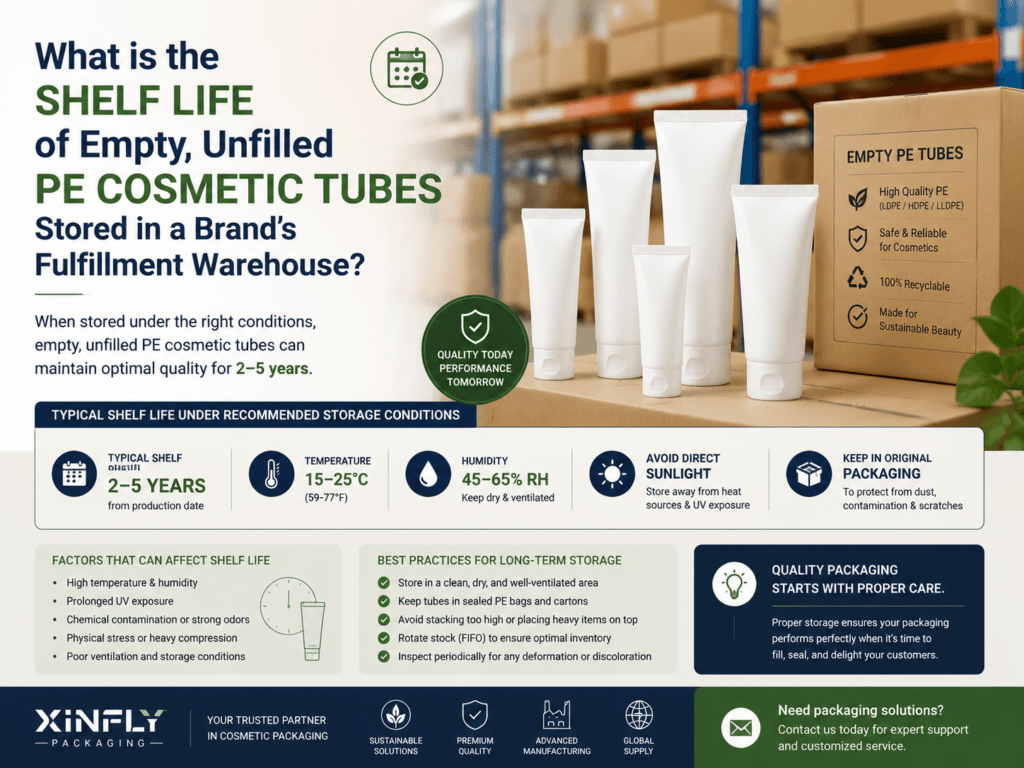
Empty, unfilled PE cosmetic tubes typically have a recommended shelf life of around 24–36 months when stored correctly in a controlled warehouse environment.
The actual storage life depends on PE resin quality, tube structure, printing decoration, packaging protection, temperature, humidity, UV exposure and warehouse management practices.
For cosmetic brands, empty tubes are often manufactured months before filling. The tubes may stay in a brand warehouse, distributor warehouse or third-party fulfillment center before being shipped to a contract filler (CMO).
Unlike finished cosmetic products, empty packaging does not contain active ingredients that expire. However, the packaging material and decoration can gradually change over time if storage conditions are poor.
Does an Empty PE Cosmetic Tube Have an Expiration Date?
PE cosmetic tubes do not have a traditional expiration date like a cosmetic formula. Instead, manufacturers usually define a recommended storage period based on material stability and packaging performance.
During storage, the main concerns are not biological spoilage but:
- Loss of mechanical strength caused by long-term environmental exposure.
- Color changes caused by UV light or oxidation.
- Surface contamination affecting printing or filling compatibility.
- Changes in cap fit, sealing performance or dimensional accuracy.
- Dust, moisture or chemical contamination from improper warehouse conditions.
Typical Shelf Life of Different Cosmetic Tube Types
| Tube Type | Recommended Storage Period | Main Storage Consideration |
|---|---|---|
| Mono-layer PE Tube | 24–36 months | Protect from UV exposure, heat and contamination. |
| 2-Layer PE Tube | 24–36 months | Maintain stable temperature to protect dimensional performance. |
| 5-Layer EVOH Barrier Tube | 24–36 months | Protect barrier structure and prevent long-term environmental stress. |
| PCR PE Cosmetic Tube | 18–36 months depending on material control | Recycled resin consistency and storage conditions are important. |
| ABL / PBL Laminated Tube | 24–36 months | Avoid excessive heat and humidity affecting laminate performance. |
What Factors Affect the Shelf Life of Empty PE Tubes?
1. Temperature
High temperatures accelerate polymer aging and may affect tube flexibility, recovery and dimensional stability.
2. UV Exposure
Direct sunlight can cause color fading, surface aging and changes to plastic appearance.
3. Humidity
Excess moisture may affect cartons, labels, printing quality and storage cleanliness.
4. Packaging Protection
Proper inner bags and cartons protect tubes from dust, scratches and contamination.
5. Material Quality
Virgin PE, PCR PE and multilayer structures may have different long-term stability characteristics.
6. Warehouse Conditions
Controlled storage environments significantly improve packaging reliability before filling.
What Are the Recommended Storage Conditions for Empty PE Cosmetic Tubes?
Proper warehouse conditions are essential for maintaining the performance of empty cosmetic tubes before filling. Even though PE tubes are durable, long-term exposure to unsuitable environments can affect appearance, dimensional stability and filling performance.
| Storage Factor | Recommended Condition | Potential Risk if Not Controlled |
|---|---|---|
| Temperature | Recommended storage around 15–30°C in a stable indoor environment. | High temperature may accelerate aging, softening and deformation. |
| Humidity | Store in a dry warehouse away from excessive moisture. | Humidity may damage cartons, labels and printing surfaces. |
| Sunlight Exposure | Avoid direct sunlight and UV exposure. | Possible color fading, surface aging and appearance changes. |
| Dust Control | Keep tubes sealed in protective bags or cartons. | Dust contamination may affect filling cleanliness. |
| Stacking Method | Avoid excessive compression from heavy stacking. | Long-term pressure may cause bending or ovalization. |
Can Empty Cosmetic Tubes Be Stored for Several Years?
Technically, empty PE cosmetic tubes can remain usable beyond the recommended storage period if they have been stored under excellent conditions. However, brands should not assume unlimited shelf life because packaging performance depends on many variables.
Before using long-stored tubes, a filling trial and appearance inspection are recommended, especially when the tubes have been stored for more than three years.
Important: A tube that looks visually acceptable may still have changes in mechanical properties, sealing behavior or decoration adhesion. Always validate long-stored packaging before commercial filling.
What Happens to PE Cosmetic Tubes During Long-Term Storage?
| Possible Change | Cause | Impact on Production |
|---|---|---|
| Color Variation | UV exposure, oxidation or pigment instability. | May create inconsistency with approved samples. |
| Reduced Flexibility | Long-term environmental aging. | Different squeeze feeling during consumer use. |
| Surface Contamination | Dust, chemicals or poor packaging protection. | May affect printing, filling or appearance. |
| Dimensional Change | Heat exposure or continuous compression. | Possible issues with filling machine compatibility. |
| Cap Fit Variation | Long-term storage stress or improper packing. | Possible leakage or assembly problems. |
Should Brands Use FIFO Management for Empty Cosmetic Tubes?
Yes. Brands and fulfillment warehouses should apply FIFO (First In, First Out) inventory management for cosmetic packaging.
Using older tube inventory first helps reduce unnecessary long-term storage time and prevents packaging from remaining unused for several years.
- Record production date and supplier batch information.
- Store cartons according to manufacturing batch.
- Use older approved inventory before newer shipments.
- Avoid mixing different production batches without inspection.
- Maintain traceability for future quality investigations.
What Should Be Checked Before Filling Old Stock Cosmetic Tubes?
Before sending stored empty tubes to a contract manufacturer (CMO), brands should perform a packaging verification process.
| Inspection Item | Purpose |
|---|---|
| Visual Appearance Check | Confirm color, scratches, contamination, deformation and surface condition. |
| Tube Dimension Measurement | Verify diameter, length and compatibility with filling equipment. |
| Cap Assembly Test | Confirm proper thread engagement, closing force and sealing performance. |
| Printing Inspection | Check ink adhesion, scratches, fading or decoration changes. |
| Filling Line Trial | Confirm smooth feeding, filling and sealing performance. |
| Leakage Test | Ensure the tube and closure system still meet requirements. |
Does Storage Time Affect Cosmetic Tube Filling Performance?
Yes. Long storage periods may influence how smoothly tubes run on automatic filling lines.
Filling machines require consistent tube dimensions, neck alignment and mechanical strength. Tubes that have been exposed to heat, pressure or contamination may create problems such as:
- Tube feeding instability on automatic equipment.
- Difficulty inserting tubes into filling machine holders.
- Poor sealing quality after filling.
- Inconsistent appearance after tail sealing.
- Higher rejection rates during production.
How Should Brands Store Large Quantities of Empty Cosmetic Tubes?
Warehouse Best Practices
- Keep cartons indoors away from direct sunlight.
- Avoid placing cartons directly on wet floors.
- Use pallets to prevent moisture absorption.
- Avoid excessive carton stacking pressure.
- Maintain clean warehouse conditions.
- Keep original protective packaging until production use.
- Record batch numbers and incoming inspection results.
Factory Engineer Recommendation
Recommended Inventory Strategy for Cosmetic Brands
For most skincare and personal-care brands, maintaining approximately 12–24 months of packaging inventory is usually easier to manage than storing very large quantities for many years.
When brands need to purchase larger volumes to obtain better pricing, they should consider:
- Splitting deliveries into multiple shipments.
- Confirming warehouse storage conditions before production.
- Maintaining supplier batch traceability.
- Performing periodic inventory inspections.
- Validating older inventory before filling.
The goal is not only to reduce packaging cost but also to maintain consistent filling performance and final product appearance.
Summary
Empty, unfilled PE cosmetic tubes generally have a recommended shelf life of approximately 24–36 months when stored in proper warehouse conditions.
Although PE tubes do not expire like cosmetic formulas, long-term storage can affect packaging performance through temperature exposure, UV radiation, humidity, dust contamination, mechanical pressure and poor inventory management.
For cosmetic brands storing packaging inventory before filling, the best practices are maintaining a controlled warehouse environment, protecting cartons from sunlight and moisture, applying FIFO inventory management and conducting inspection before sending old stock to a contract filler.
A professional cosmetic tube manufacturer should provide batch traceability, storage recommendations and quality verification procedures to ensure empty tubes remain suitable for filling and retail production.
Related Questions
| Topic | Related Resource |
|---|---|
| PE Cosmetic Tube Materials | PE Cosmetic Tubes: Materials, Benefits and Applications |
| Cosmetic Tube Quality Control | What QC Standards Should Be Included in a B2B Cosmetic Packaging Contract? |
| Production Sample Approval | What Are the Differences Between PPS and Digital Layout Proof? |
| Manufacturing Lead Time | What Is the Typical Lead Time for Custom Printed Cosmetic Tubes? |
| Shipping Protection | How to Optimize Shipping Carton Packaging for Empty Cosmetic Tubes? |
| Tube Deformation During Transport | What Causes Cosmetic Tubes to Deform During High-Heat Ocean Transit? |
What Information Should Brands Record for Stored Cosmetic Tubes?
Proper traceability helps brands identify potential packaging issues when inventory has been stored for extended periods.
- Supplier name and production batch number.
- Manufacturing date and shipment date.
- Tube material structure and specifications.
- Printing batch and decoration information.
- Storage location and warehouse conditions.
- Inspection records before filling.
- CMO filling trial results.
Can Brands Request Shelf-Life Recommendations From Tube Manufacturers?
Yes. Professional cosmetic packaging manufacturers should provide recommended storage conditions and packaging handling guidelines based on the tube structure, material selection and decoration requirements.
For example, a standard mono-layer PE tube may have different storage considerations compared with a PCR tube, EVOH barrier tube, soft-touch coated tube or tube with metallic decoration.
Packaging Engineer Recommendation
Before placing a large packaging order, brands should discuss not only the production quantity but also their expected inventory cycle.
If packaging will be stored for a long period before filling, the supplier should understand:
- Expected warehouse storage duration.
- Destination climate conditions.
- Whether tubes will be stored in a fulfillment center or CMO warehouse.
- Whether special decoration such as soft-touch coating or hot stamping is required.
- Whether periodic inventory inspection is needed.
The correct packaging solution considers the entire lifecycle from manufacturing, storage, filling, transportation and final consumer use.
Recommended Storage Checklist
- ✔ Keep cartons sealed until production use.
- ✔ Store indoors away from direct sunlight.
- ✔ Avoid extreme temperature fluctuations.
- ✔ Keep cartons on pallets instead of directly on the floor.
- ✔ Avoid excessive stacking pressure.
- ✔ Use FIFO inventory management.
- ✔ Inspect long-stored tubes before filling.
- ✔ Maintain supplier batch traceability.
Need Reliable PE Cosmetic Tubes for Long-Term Inventory Storage?
Xinfly Packaging provides OEM PE cosmetic tubes with controlled materials, quality inspection, batch traceability and export packaging solutions for global skincare brands.
Request A Tube QuoteContact Packaging Expert