Quick Answer
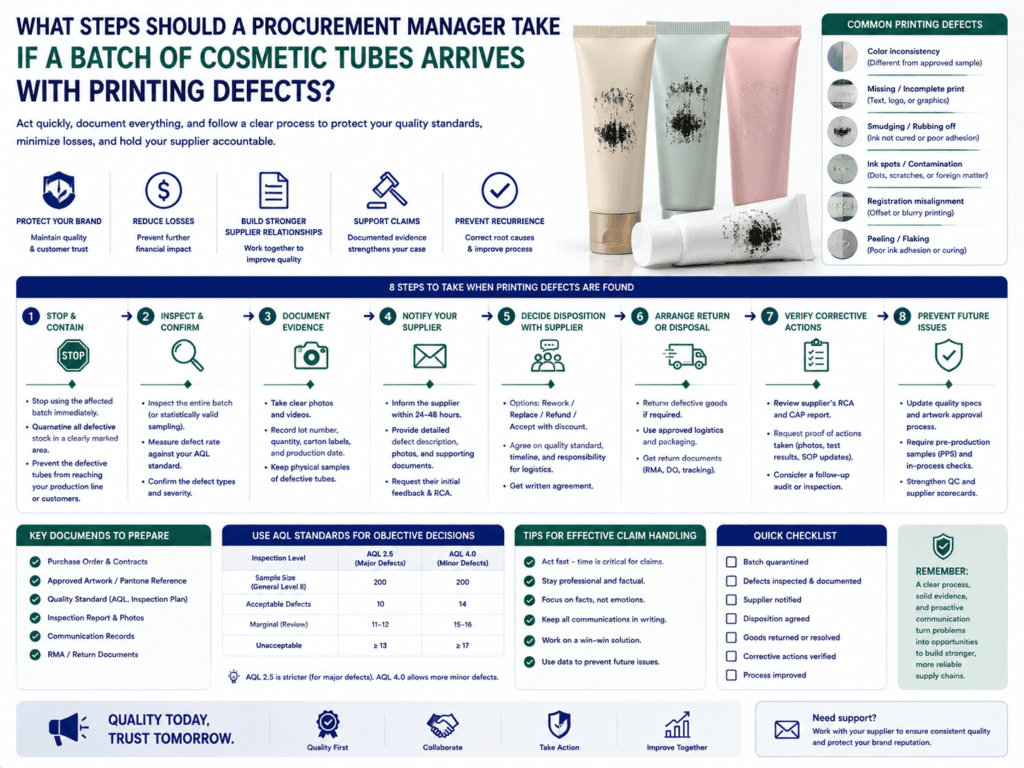
When a batch of cosmetic tubes arrives with printing defects, procurement managers should immediately quarantine the affected goods, document the defects with photos and inspection records, compare the results against approved samples and QC standards, and request a formal corrective action report from the tube manufacturer.
The correct response is not simply requesting a replacement. A professional B2B packaging investigation should identify the root cause, determine whether the defect affects usability or appearance, define responsibility, and prevent recurrence in future production batches.
Printing defects on cosmetic tubes can affect brand image, filling-line efficiency and retail acceptance. Common problems include ink smudging, color deviation, missing print areas, poor adhesion, hot stamping failure, logo distortion, registration errors and surface scratches.
Because cosmetic tube printing involves extrusion conditions, corona treatment, ink formulation, printing plates, curing parameters and packaging handling, the solution requires cooperation between the buyer, quality team and tube manufacturer.
First Step: Stop Shipment Release and Quarantine the Batch
The first action after discovering printing defects is to prevent uncontrolled use of the affected tubes.
1. Isolate the Inventory
Separate defective cartons from approved stock. Mark the affected batch number, production date and carton quantity.
2. Stop Filling Process
If the tubes have not entered the filling line, pause production until the defect impact is evaluated.
3. Protect Traceability
Keep labels, carton marks, inspection reports and supplier documents for investigation.
What Information Should Procurement Collect Before Contacting the Supplier?
A supplier cannot perform an effective investigation without complete evidence. Procurement managers should prepare the following information:
- Purchase order number, tube specification and approved artwork version.
- Production batch number and quantity received.
- Photos and videos showing the defect location.
- Percentage of defective tubes found during inspection.
- Comparison between defective tubes and approved PPS samples.
- Storage and transportation conditions after delivery.
- Whether the tubes have already been filled or assembled.
Procurement Tip: Never send only a photo of one defective tube and request compensation. Professional suppliers need batch-level evidence to determine whether the issue comes from printing production, transportation damage, filling-line handling or storage conditions.
Common Cosmetic Tube Printing Defects and Possible Causes
| Printing Defect | Possible Cause | Investigation Focus |
|---|---|---|
| Ink Smearing or Transfer | Insufficient curing, poor ink adhesion, excessive friction during packing | Check curing parameters, surface treatment and carton handling |
| Color Difference Between Batches | Ink formulation variation, substrate color change, incorrect Pantone matching | Compare approved color standard and production records |
| Logo Position Shift | Tube rotation error, printing machine alignment issue | Check registration accuracy and tube positioning system |
| Missing Printing Area | Printing plate problem, blocked screen, artwork preparation error | Review plate, screen and production inspection records |
| Hot Stamping Peeling | Poor adhesion, incorrect temperature or pressure | Test foil adhesion and stamping parameters |
| Ink Cracking After Filling | Tube deformation, ink flexibility issue, insufficient adhesion | Perform bending and filling-line simulation tests |
Factory Engineer Recommendation
Do Not Judge Printing Defects Only by Appearance
A cosmetic tube may look acceptable before filling but fail during automated filling, sealing, transportation or retail handling.
The engineering team should evaluate:
- Ink adhesion strength after rubbing and tape testing.
- Color difference against the approved Pantone standard.
- Printing registration tolerance.
- Resistance to alcohol, oil and cosmetic ingredients.
- Performance after tube squeezing and tail sealing.
How Should Procurement Communicate With the Cosmetic Tube Manufacturer?
After identifying a printing defect, procurement managers should communicate with the supplier using a structured quality complaint process rather than an informal message.
A professional supplier response should include defect analysis, containment action, root cause investigation and preventive measures.
| Communication Step | Procurement Action | Supplier Responsibility |
|---|---|---|
| 1. Issue Notification | Send defect description, photos, quantity affected and batch information. | Confirm receipt and assign quality contact. |
| 2. Containment Action | Stop using affected tubes and separate inventory. | Identify whether remaining stock requires inspection. |
| 3. Technical Investigation | Provide approved samples and production requirements. | Review printing records, operators, machines and materials. |
| 4. Corrective Action | Review supplier proposed solution. | Provide CAPA or 8D corrective action report. |
| 5. Final Resolution | Approve replacement, sorting or acceptance decision. | Implement prevention measures for future production. |
Should Procurement Reject the Entire Batch?
Not every printing defect requires complete rejection. The correct decision depends on defect severity, cosmetic appearance requirements, filling-line impact and agreed quality standards.
| Defect Level | Example | Recommended Action |
|---|---|---|
| Critical Defect | Wrong logo, missing mandatory information, incorrect regulatory text | Reject batch or request complete replacement |
| Major Defect | Large color difference, obvious printing shift, peeling ink | Supplier investigation and corrective action required |
| Minor Defect | Small cosmetic marks not visible during normal use | Evaluate according to AQL acceptance criteria |
| Production-Acceptable Variation | Normal color tolerance or slight position variation | Accept if within approved specification |
How Does AQL Inspection Apply to Cosmetic Tube Printing Defects?
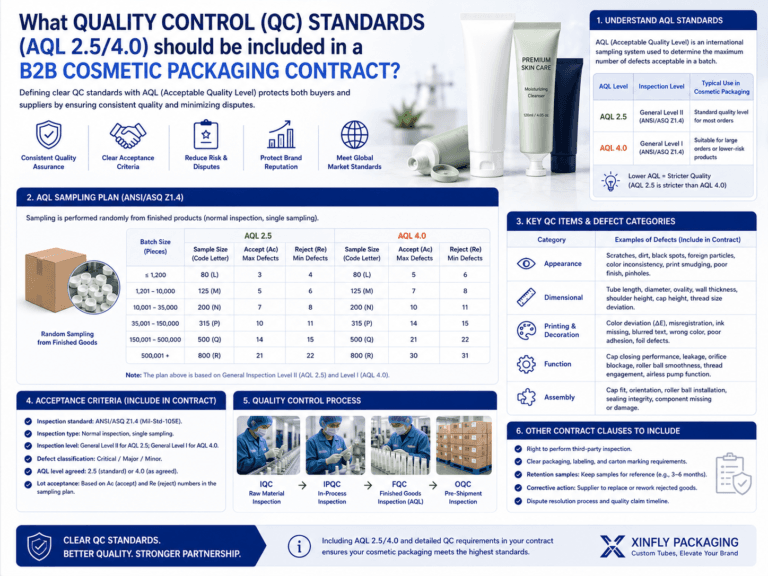
Many B2B cosmetic packaging contracts use AQL inspection standards to define acceptable quality limits. Printing defects should be classified before inspection begins.
| AQL Category | Typical Cosmetic Tube Example | Inspection Decision |
|---|---|---|
| Critical | Incorrect artwork, wrong brand name, missing required label information | Usually zero tolerance |
| Major | Large ink peeling, obvious logo misalignment, severe color mismatch | Follow agreed AQL limit |
| Minor | Small scratches, slight printing variation, tiny appearance issues | Accept within agreed tolerance |
Factory Engineer Recommendation: Define Printing Standards Before Mass Production
Many disputes happen because buyers and factories have different expectations about what is acceptable.
Before production approval, the purchase specification should define:
- Approved Pantone color reference or physical color standard.
- Maximum acceptable color difference tolerance.
- Logo positioning tolerance.
- Minimum font size and line thickness.
- Ink adhesion requirements.
- Hot stamping adhesion standard.
- Surface treatment requirements.
- AQL inspection level.
How Should the Factory Perform Root Cause Analysis?
A professional cosmetic tube manufacturer should not only replace defective tubes. The supplier should identify why the defect occurred and prevent recurrence.
Common 8D Corrective Action Process
| 8D Step | Purpose |
|---|---|
| D1: Build Quality Team | Assign responsible engineers from printing, production and QC departments. |
| D2: Describe the Problem | Define defect type, quantity, location and affected batches. |
| D3: Containment Action | Prevent defective tubes from reaching filling or customers. |
| D4: Root Cause Analysis | Identify the actual cause using 5 Why analysis, machine records and inspection data. |
| D5: Corrective Action | Adjust printing parameters, materials, operators or inspection methods. |
| D6: Verify Effectiveness | Confirm that corrective action eliminates repeat defects. |
| D7: Prevent Recurrence | Update SOPs, training documents and quality checkpoints. |
| D8: Close the Case | Document final approval and future control measures. |
What Are the Most Common Root Causes of Cosmetic Tube Printing Failures?
Poor Corona Treatment
Low surface energy prevents ink from bonding correctly with PE tube surfaces.
Incorrect Ink Selection
Ink chemistry may not match the tube material, coating or formula environment.
Insufficient Curing
Ink may remain soft and become scratched during packing or transportation.
Printing Machine Alignment
Incorrect positioning can cause logo shift or registration errors.
Artwork Preparation Error
Wrong plate, incorrect separation or outdated artwork version may create defects.
Handling Damage
Finished tubes may be damaged after printing during packing or transportation.
How Can Buyers Prevent Future Printing Defects?
Should the Supplier Replace Defective Cosmetic Tubes?
Replacement responsibility depends on the cause of failure and the agreement between buyer and manufacturer.
| Situation | Typical Responsibility |
|---|---|
| Factory produced wrong artwork or incorrect color | Supplier normally responsible for replacement or compensation. |
| Printing failed because approved specifications were not followed | Supplier should provide corrective solution. |
| Damage occurred after delivery due to improper storage | Responsibility depends on logistics conditions. |
| Customer changed artwork after approval | Buyer may bear additional production cost. |
| Normal manufacturing tolerance within agreed limits | Usually accepted according to contract specifications. |
Incoming Inspection Checklist for Cosmetic Tube Printing Quality
Before releasing cosmetic tubes to the filling department, procurement and quality teams should perform incoming inspection based on approved samples and quality standards.
| Inspection Item | What To Check | Acceptance Requirement |
|---|---|---|
| Artwork Version | Confirm logo, text, barcode, regulatory information and artwork revision. | Must match the latest approved artwork file. |
| Color Accuracy | Compare tube color and printed ink against approved Pantone standard. | Within agreed color tolerance. |
| Logo Position | Check printing alignment around the tube circumference. | Within approved registration tolerance. |
| Ink Adhesion | Perform rubbing, tape or alcohol resistance tests. | No unacceptable ink peeling or transfer. |
| Printing Completeness | Check missing letters, broken lines, incomplete graphics. | No critical or major printing defects. |
| Surface Appearance | Inspect scratches, stains, contamination and handling marks. | Meets approved cosmetic appearance standard. |
| Batch Consistency | Compare samples from different cartons and production lots. | No abnormal variation between cartons. |
What Documents Should Procurement Request From the Supplier?
For repeated B2B cosmetic tube purchases, procurement teams should maintain a complete quality documentation package.
- Approved digital artwork and final production artwork confirmation.
- Pre-production sample (PPS) approval record.
- Printing color standard or Pantone confirmation.
- Production inspection report.
- AQL sampling report.
- Ink adhesion test results when required.
- Batch traceability information.
- Corrective action report for non-conforming products.
How Can Procurement Managers Prevent Printing Problems Before Mass Production?
How Should Procurement Evaluate Supplier Compensation?
When a printing defect occurs, compensation should consider the actual business impact rather than only the defective tube quantity.
| Impact | Example | Possible Solution |
|---|---|---|
| Minor Appearance Issue | Small cosmetic marks within acceptable limits. | Accept according to agreed AQL standard. |
| Sorting Required | Some tubes can be used after additional inspection. | Supplier supports sorting cost or provides discount. |
| Production Delay | Defects stop filling operations. | Supplier provides replacement plan and delivery recovery. |
| Complete Batch Failure | Wrong artwork or severe printing failure. | Replacement production or negotiated compensation. |
Should Cosmetic Tube Buyers Perform Factory Audits?
For large-volume cosmetic packaging projects, factory audits can reduce repeated printing failures by reviewing production capability before ordering.
Recommended Factory Audit Points
- Printing equipment condition and maintenance records.
- Operator training and production procedures.
- Artwork management system.
- Ink storage and mixing control.
- Corona treatment process.
- Quality inspection checkpoints.
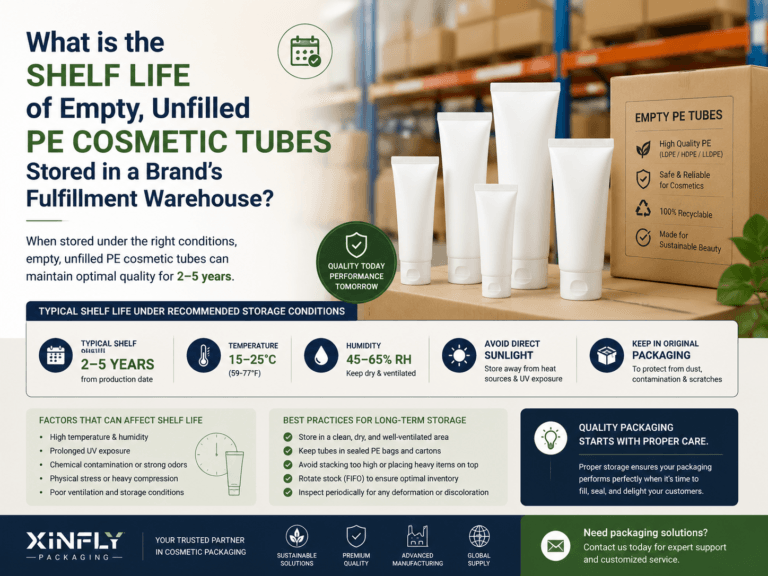
- Finished goods storage conditions.
- Complaint handling and corrective action system.
What If Printing Defects Are Found During Filling?
Sometimes printing problems are discovered only after tubes arrive at the contract manufacturer (CMO) and enter the filling process.
In this situation, the buyer should immediately coordinate between the tube supplier and filler instead of treating the problem as an isolated packaging issue.
| Situation | Recommended Action |
|---|---|
| Defect discovered before filling | Quarantine tubes and complete supplier investigation. |
| Defect discovered during filling | Stop production, record machine impact and inspect remaining tubes. |
| Defect causes sealing problems | Evaluate whether printing contamination affects tube performance. |
| Defect affects retail appearance only | Decide acceptance based on brand quality standard. |
Factory Engineer Final Recommendation
The Best Way to Avoid Expensive Printing Failures
The lowest-cost solution is prevention. Once thousands of cosmetic tubes have been printed, packed, shipped internationally and delivered to a filling facility, correcting a printing problem becomes much more expensive.
Professional cosmetic packaging buyers should establish a quality-control system that includes:
- Artwork approval before plate or screen preparation.
- Physical PPS approval before mass production.
- First article inspection during production startup.
- AQL inspection before shipment.
- Clear defect classification standards.
- Supplier corrective action procedures.
Procurement Manager Action Checklist
Summary
When cosmetic tubes arrive with printing defects, procurement managers should not immediately focus only on replacement or compensation. The priority is to protect production, collect evidence, identify the root cause and establish preventive controls.
A reliable cosmetic tube manufacturer should provide transparent investigation, quality documentation and corrective action. By controlling artwork approval, PPS confirmation, printing standards, AQL inspection and supplier communication procedures, brands can significantly reduce packaging quality risks.
Related resources:
- Pre-production Sample (PPS) vs Digital Layout Proof
- Required Artwork File Formats for Cosmetic Tube Printing
- AQL Quality Standards for Cosmetic Packaging Contracts
- Coordinating Tube Manufacturer and CMO Timelines
Need Reliable Custom Printed Cosmetic Tubes?
Xinfly Packaging helps cosmetic brands develop custom printed PE, ABL and PBL tubes with controlled artwork approval, printing validation, quality inspection and global export support.
Request Custom Tube Solution Explore Custom Cosmetic Tubes