Put a cap on a sample tube and it can look ready for production. Put your mineral sunscreen inside it, squeeze it after cooling, and carry it in a packed pouch. Now you have something you can buy against. A tube that looked fine on a desk can take too much force to dispense, leave white residue around the cap, or split at the tail after filling. Finding those problems in a pilot costs less than sorting finished stock.
This mineral sunscreen tube sample checklist gives beauty brands, contract fillers, and packaging buyers a way to compare filled samples before approving an order. The example is a zinc oxide formula in 50 mL sunscreen tube packaging with a printed plastic barrier laminate body, molded shoulder, straight sealed tail, and flip-top cap. Apply the same steps to the actual formula, fill size, and closure you plan to order.
Give the Tube Supplier a Sample Brief
Describe How and Where the Product Will Be Used
A sunscreen sold in a beach kit spends time in a bag and gets opened with wet or sandy hands. A facial sunscreen sold for daily use might be opened more often and dispensed in smaller amounts. Give the supplier the intended use, target fill, desired tube dimensions, sales channel, and the expected handling conditions. If the pack goes into a travel kit, send the pouch dimensions and the available space next to the other products.
Tell the Filler Which Sample Version They Have
Give each sample configuration a code. For example, A might use the proposed tube wall and a smaller outlet, while B uses the same tube wall and a larger outlet. Include the closure drawing revision and material specification with each set. Use the same formula lot and filling conditions when comparing A and B. If the supplier changes the cap and the tube wall at the same time, you can compare the packs, but you lose the chance to learn what caused the difference.
Before shipping empty samples, ask the supplier to include enough closures and tubes for the planned filling trial, storage comparisons, and a retained set. Some checks consume the sample, so use separate units for destructive seal checks and later visual review. Confirm what counts as a pilot sample. An undecorated stock tube can answer a fit question, while the material, neck and seal need to match the proposed production version for the filled-pack review.
Separate Fill Volume From Finished Dimensions
Two empty sunscreen tubes can both be offered as 50 mL while differing in width, length, and available sealing space. Send the target net fill to your filler and ask them to confirm the required fill mass using the formula density. Have them check that the tube holder fits, the nozzle can reach the correct position, and the open tail is long enough to seal and code. Confirm the finished tube length against the pouch or carton after sealing. The drawing for an open tube is only half the story.
Compare Tube Structures With the Actual Formula
Compare PE and Laminated Tubes for Mineral Sunscreen
Ask for a flexible PE sample as a baseline if the formulation team considers it suitable. Request a specific plastic barrier laminate tube as a second candidate if the formulation has a documented barrier requirement. Ask for the proposed wall and shoulder construction. If a supplier offers a coextruded barrier tube, get its details too. Broad material names help organize samples, but they do not tell you how the complete package will behave after filling.
| Candidate | What to ask for | What to compare |
|---|---|---|
| Extruded PE baseline | Wall thickness, shoulder and neck drawing, cap option | Squeeze effort, recovery, formula compatibility and tail sealing |
| Plastic barrier laminate | Layer construction, product-contact layer, seam and shoulder details | Storage results, side seam appearance, dispensing and print alignment |
| Coextruded barrier tube | Barrier layer, wall construction, supported decoration and cap options | Compatibility, stiffness and filler performance with the proposed construction |
Match the Format to a Mineral SPF Travel Kit
For mineral sunscreen tube packaging going into a travel kit, quote the laminated tube, shoulder, cap and outlet as one assembly. Compare a 50 mL flip-top sunscreen tube with the smaller format on the actual pouch drawing. Have the filler mark each sample with its wall construction, orifice and approved fill. If the small tube only fits when squeezed into the pouch, allow more clearance around the cap before approving the kit.
Agree on Who Signs Off Formula Compatibility
The packaging team can document the tube construction and provide samples. The formulator or testing partner should define what they need to evaluate in the filled pack, how they’ll compare it with a reference, and when they can approve it. Ask for a written plan covering storage conditions, inspection intervals, the control sample, and relevant changes in appearance, odor, viscosity, separation, and product loss. When testing squeeze tubes for zinc oxide sunscreen, have the formulation team decide which changes or measurements matter for its particular product. Approve the packaging after they review the results.
Test Dispensing, Leaks, and the Tail Seal
Try Two Outlet Sizes With the Same Cap Style
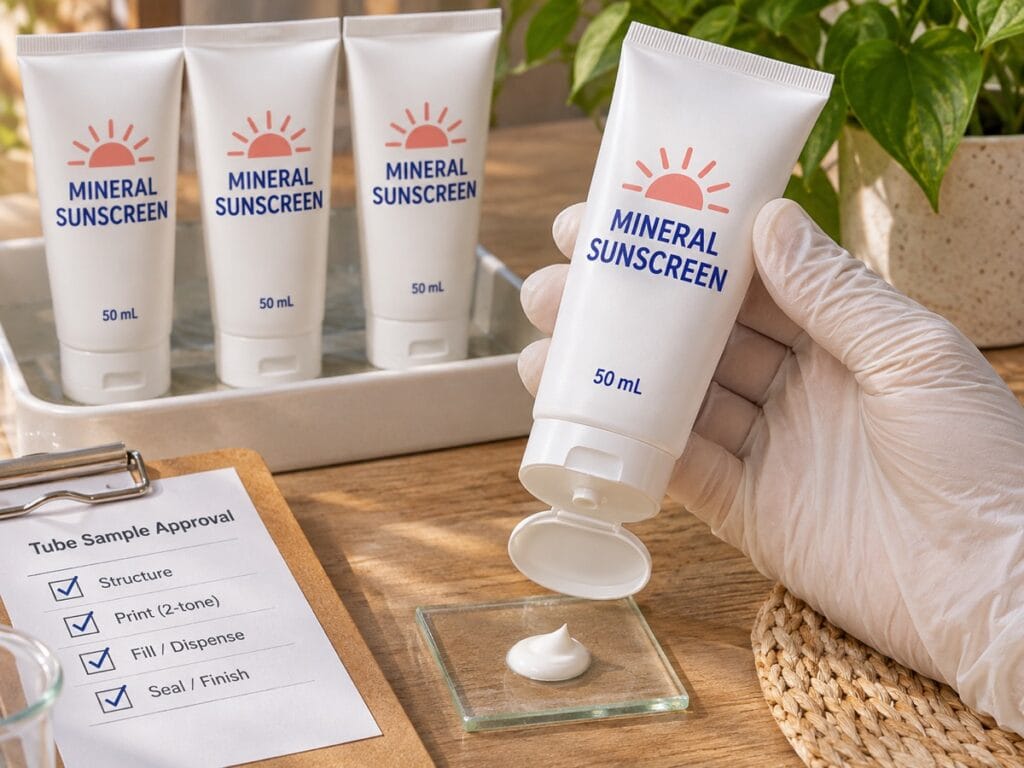
Some mineral creams are dense, and the outlet that works for a fluid lotion may frustrate someone using a thicker cream. Try two practical outlet sizes with the same wall stiffness. Dispense from full and nearly empty tubes after conditioning them at the temperatures your team agreed to test. Note how quickly the cream starts moving, how easily the user can stop the flow, and whether the cap closes cleanly after use. If the smaller outlet needs a hard squeeze and the larger one creates a messy dose, ask about a middle option before changing the wall.
Put a Number on the Dose When You Can
Use a scale to measure what each test user dispenses in one normal squeeze. Record the tube version, fill level, and temperature. You’ll spot inconsistencies that a simple pass or fail rating can hide. The measurements are a way to compare dispensing behavior. The brand and formulation team set any directions about how much sunscreen consumers should apply.
Check the Cap and Tail as Separate Leak Paths
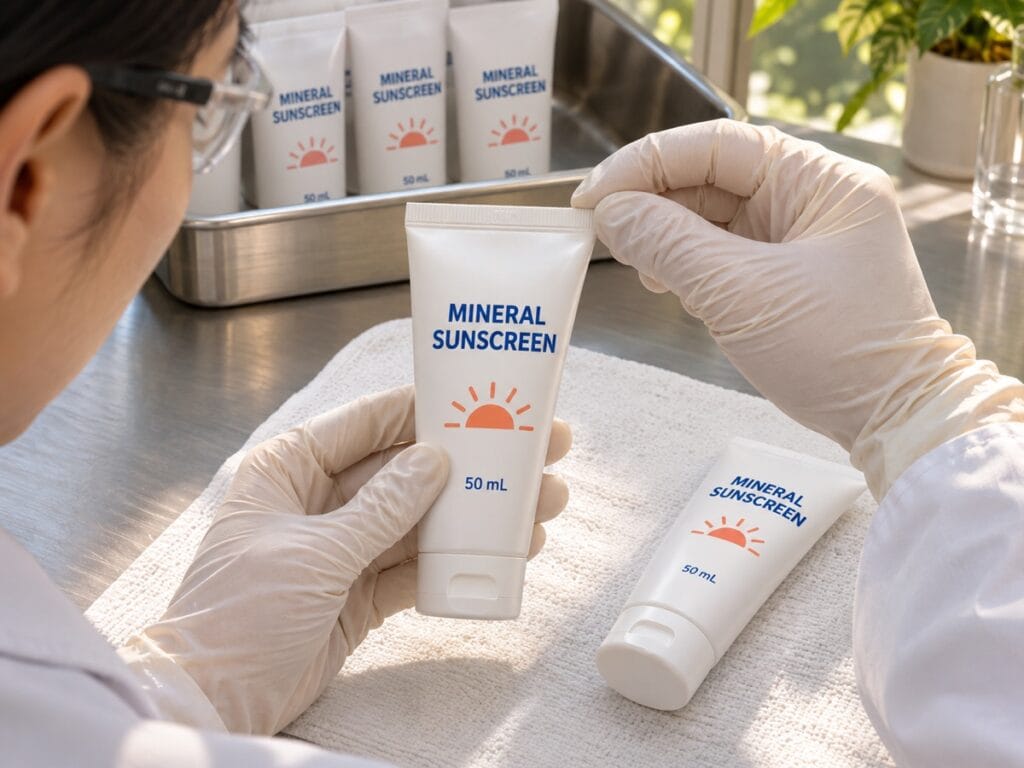
Clean the outside of each filled tube before testing. Mark the cap and tail ends, record how the tube was stored, and use a clean absorbent surface to help spot fresh residue. If you see product around the lid, check whether it escaped during storage or remained from a previous dispense. If you find it at the tail, look for an incomplete seal, folds, or contamination in the seal area. Give the filler and supplier photos, the sample code, and the filling lot so they can investigate the right interface.
| Check | Record | Decision owner |
|---|---|---|
| Cap use and dispensing | Outlet, temperature, fill level, dose and lid behavior after repeated use | Product and packaging teams |
| Leak resistance | Storage orientation, conditions, duration and location of any residue | Packaging quality and filler |
| Tail seal | Filler settings, seal appearance and results of agreed seal checks | Filler and packaging quality |
| Formula compatibility | Reference, sample version, inspection dates and relevant formula observations | Formulator or test partner |
| Decoration and transport | Print position, scuffing and package condition after actual kit or carton handling | Brand and operations teams |
Put a few closed tubes in the actual pouch alongside the other products. Check for pressure on the lid when the zipper is closed and whether corners or hard components rub against the tube. Inspect the pouch after your planned handling trial. A smear inside the bag can tell you where to look, but it may not tell you where the leak started. Keep at least one clean sample outside the pouch as a comparison and photograph the position of each tube before handling.
Run the Pack Through the Real Filling Setup
Ask the filler to run a representative pilot with the proposed tube and note how it behaves at loading, dosing, sealing, trimming, and coding. A sample sealed by hand can look clean while the production machine leaves an inconsistent tail because the tube sits at a different height in its holder. Watch for air pockets, formula at the seal area, or artwork rotation if the line uses an orientation mark. Record which steps needed adjustments and retest if changing a part or setting can affect an earlier result.
Match EU Test Documents to the Tube You Will Order
For EU procurement, ask which test report covers the tube body, closure, and decoration in your brief. SGS-CSTC’s Guangzhou branch reported a pass for the combined lead, cadmium, mercury, and hexavalent chromium test under Article 5(4) of Regulation (EU) 2025/40 on the submitted white soft plastic tube body (report GZHL260603010501OT, June 26, 2026). Use that report as an example of how to check the part description. Its sample table does not identify the laminate structure or the closure, and a separate filled trial is needed to evaluate your sunscreen formula. The official PPWR text sets out the regulation’s wider requirements.
Approve the Printed Sample and Compare Quotes
Review Offset Artwork on the Actual Laminate
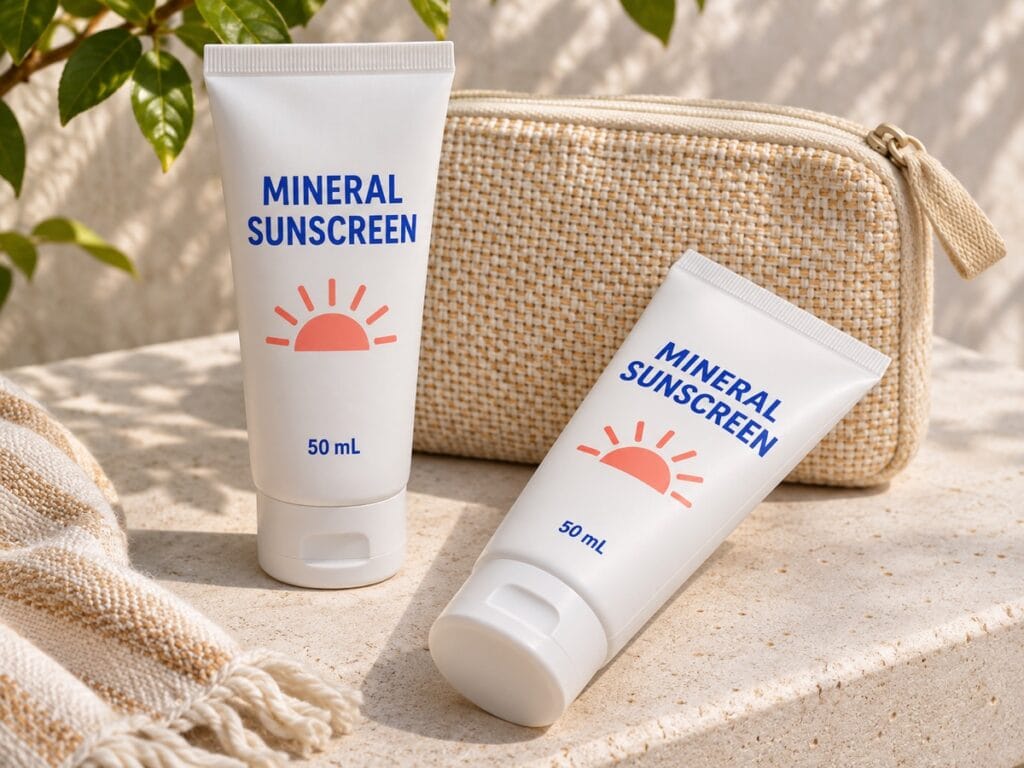
For the illustrated PBL tube, a white body with cobalt text and a coral sun gives buyers a clear sample to assess. Check the printed text and graphic against the supplier’s approved dieline and make sure the image sits where you expect when the cap is shut and the tube stands upright. Ask how the printer handles the side seam and the areas near the shoulder and tail. Review the actual print on a sealed tube under consistent lighting. Then put the tube in the intended pouch or carton and check for rubbing where the print touches the pack.
Make Each Quote Match the Approved Construction
Put the tube diameter, fill, material structure, closure and outlet, body and cap colors, print, finish, and test responsibilities on a single brief. Ask each supplier to confirm exactly what is included, whether tooling or artwork setup is charged separately, and which specifications are subject to availability. If the lowest quote changes the structure or closure, record the difference and decide whether it warrants a second trial. Use the Xinfly Packaging sunscreen tube range as a starting point, and send the team your formula and filling requirements so they can quote against the project you’re actually buying.
Separate Setup Costs From Recurring Unit Costs
Ask for the first order and repeat order to be quoted separately. A new closure or printing setup can change the first invoice even when repeat units cost the same. Ask which charges apply per artwork or color and who owns any project-specific tooling. If suppliers quote different quantities, put them on the same delivery basis and include expected filling loss, freight, and inspection in your comparison. Ask how a material or cap substitution will be communicated and approved after launch.
Frequently Asked Questions
Does every zinc oxide sunscreen need a laminate tube?
The formula determines the requirements. Ask your formulation team which risks they expect, then compare filled samples in a suitable baseline pack and the proposed barrier pack using their agreed protocol.
Can we approve a printed tube before compatibility testing finishes?
You can approve the artwork as a separate decision. Record the substrate and finish it was approved on, and hold the final packaging approval until the complete configuration has passed the required checks. A material change may require a new print proof.
Will a wider outlet fix a hard-to-squeeze sunscreen tube?
It may help. Test it against the same formula, fill level, and wall stiffness. If it dispenses too much or fouls the closure, try another outlet or evaluate a more flexible wall with the same opening.
Can we use a 50 mL approval for 30 mL travel size sunscreen tubes?
For a 30 mL travel size sunscreen tube, carry over the evidence that applies to the same material and formula. Recheck dimensions, squeeze behavior, cap fit, and filling and sealing on the new size. A different diameter or shoulder may change how the package runs and feels.
What should we keep after approving the pilot?
Retain the signed specification, filled reference samples, approved print proof, pilot settings, and test records. Give quality and purchasing access to the same versions so they can judge the first production lot against what was approved.
Conclusion
Release a mineral sunscreen tube order when the formula team has approved the filled pack, the filler can seal it consistently, and the user can get a clean dose in the intended setting. Send Xinfly Packaging the material, closure, filling, and artwork requirements together. A well-defined sample request gives everyone the same pack to test and the same specification to quote.