Published: .
Two eye cream tubes can have similar silver-colored tips and still leave very different questions unanswered. What is the insert made from? Does the contact surface have a separate treatment? Which carrier connects it to the tube, and which cap belongs to that assembly? A photograph cannot supply every answer.
An eye cream metal applicator component brief turns an attractive pack into an identifiable purchasing proposal. Start with the proposed eye cream tube with metal applicator, then request the applicable component, material and assembly references. This guide offers an inventory worksheet and a quotation-clarification table. It does not establish an alloy, surface treatment, compatibility result or performance claim for a particular product.
Identify the Assembly Before Comparing Tips
Give the Complete Proposal a Reference
Ask for a reference that identifies the proposed combination of body, applicator assembly and closure. Keep it alongside the quotation and sample identity. A familiar catalog image may show the design family, but the written proposal should identify which actual combination the supplier wants you to evaluate.
If several options are being discussed, give each its own row in your comparison. Do not compare one supplier's complete assembly with another supplier's insert alone while calling both “metal heads.” Record what is included and which components still require selection or confirmation.
Ask for an Applicable Drawing or Component List
A supplier may describe the parts using its own terminology. Ask for a drawing, component list or other explanation that connects those names to the proposed item. The useful output is a shared understanding of what each reference identifies, not forcing every provider to use the buyer's preferred vocabulary.
Keep the explanation within the agreed information-sharing process. Where a detail is not available at the quotation stage, identify the question and the point when it must be resolved. Do not complete an empty specification field by guessing from a photograph of a similar applicator.
Separate Appearance, Base Material and Contact Surface
Silver-Colored Is an Appearance Description
Ask the provider to identify the proposed insert material through an applicable specification or declaration. Record the exact reference it supplies and the component it covers. The word “metal” is broad, while a silver-colored appearance does not independently identify the underlying material.
Avoid copying a material name from a different product page into your order. A related catalog item can help begin the discussion, but the accepted proposal should identify its own construction. Ask the supplier to explain any difference between the catalog description, quotation and sample information.
Ask Whether the Surface Has a Separate Description
Ask whether a coating, treatment or other surface description applies to the proposed part, and request the relevant identification where available. Keep the answer distinct from the base material. This is a question to resolve, not an assumption that every metal applicator has a particular treatment.
Identify which proposed surfaces contact the formula or the user in the intended assembly. Ask the responsible packaging and formula teams what information they need for their assessment. A visually similar surface should not be treated as equivalent without an appropriate basis connected to the actual proposal.
Connect Every Material Statement to a Part
A document describing the insert should not silently cover the carrier, shoulder, closure or entire tube. Mark the applicable part on the record. If one statement covers several components, ask the supplier to identify that scope clearly rather than relying on the document's position in an email attachment list.
Build a Component Inventory
Use the Worksheet for Applicable Parts Only
The table lists questions a buyer may need to ask. It is not an assertion that every eye cream applicator contains all these parts or uses a particular attachment system. Mark a row not applicable when the supplier's actual explanation supports that answer, and retain the explanation with the proposed assembly reference.
| Part or feature to identify | Question for the proposed assembly | Record to keep |
|---|---|---|
| Tube body and shoulder | Which material and drawing references apply? | Identified component specification |
| Visible applicator insert | What part and material reference is proposed? | Insert reference and applicable material statement |
| Contact surface | Is there a separate surface description or treatment? | Applicable surface information or explicit answer |
| Carrier or connecting piece | Which part connects the applicator to the body? | Component and assembly explanation |
| Closure or protective cover | Which exact cap or cover belongs to this assembly? | Closure reference and relevant drawing |
| Any additional sealing feature | Is one present and what identifies it? | Applicable part reference or not-applicable explanation |
Keep the Formula Path Distinct from the External Form
Ask the supplier to explain the relevant dispensing path and the parts associated with it. An external photograph may not reveal internal geometry or every contact surface. Keep any technical explanation attached to the actual drawing or component references rather than trying to infer a complete internal design from visible contours.
This helps the responsible team request the right information for evaluation. It does not replace its assessment of the formula, proposed assembly or intended use. If a required connection remains uncertain, record the question instead of describing the package as already qualified.
Connect the Cap to the Applicator Proposal
Identify the Closure as Part of the Combination
A cap selected for its appearance still needs to be the cap proposed for the actual assembly. Ask which reference applies and what information supports the intended fit and supply condition. Do not treat a similar-looking cover from another concept as an interchangeable component.
The tube caps and closures page can help frame the available closure discussion. For the order itself, retain the selected part reference and the applicable assembly information. Keep closure selection distinguishable from approval of the printed body so an artwork decision does not become an unintended component decision.
Distinguish Display State from Delivery State
A display sample may show the complete external arrangement, while production components may be supplied in another agreed state. Ask the provider which assembly operations are included and which remain with the filling or other project partner. Record the required state before approving the commercial scope.
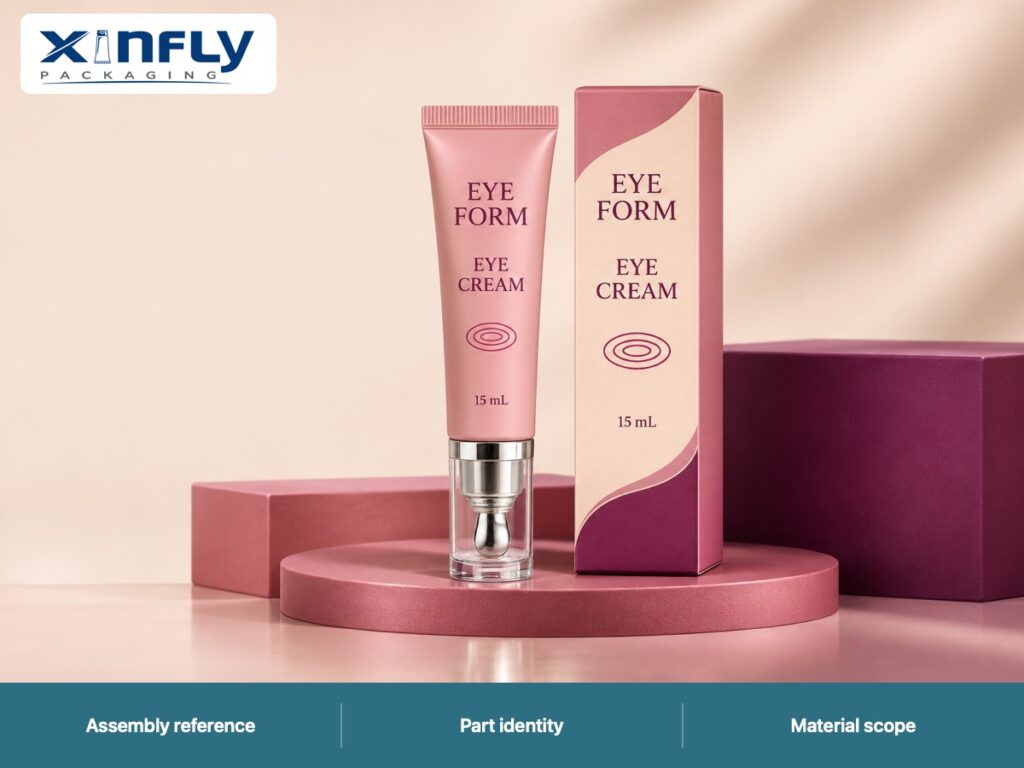
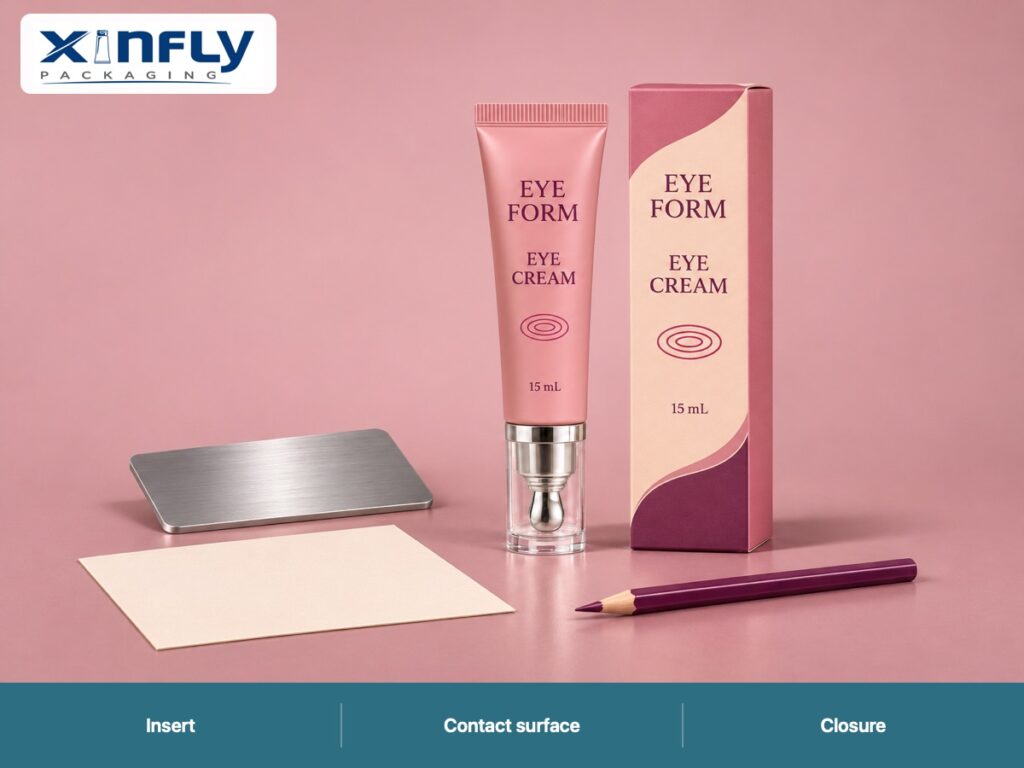
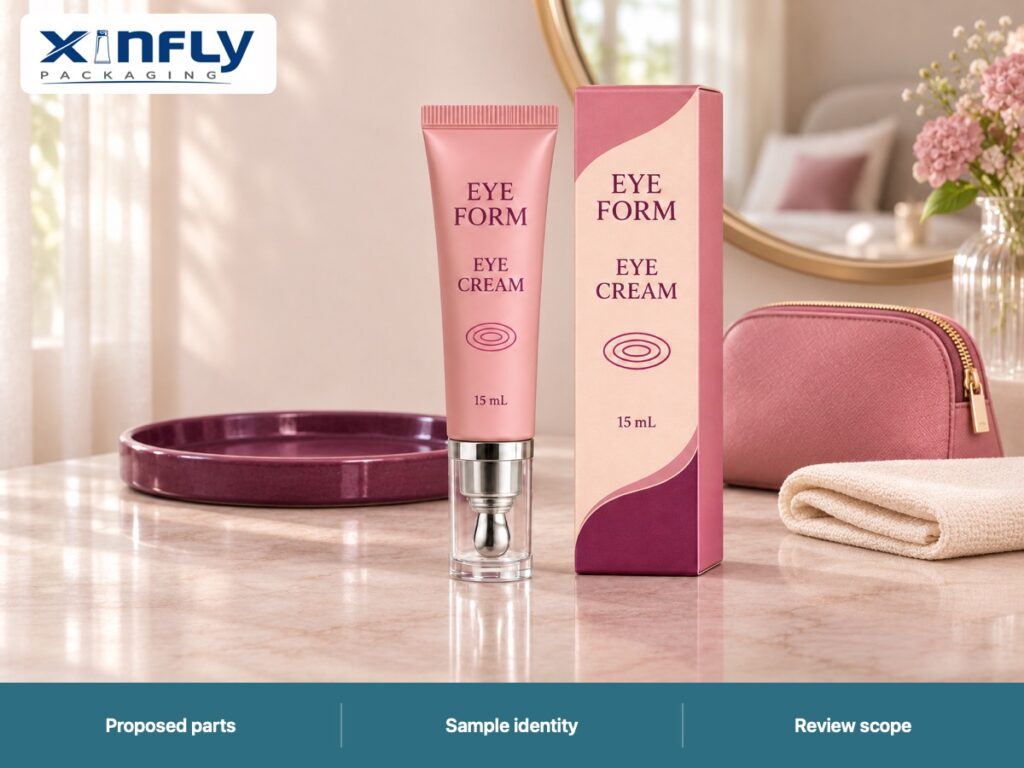
The EYE FORM concept shows a dusty-rose PE body, molded shoulder, straight crimped display tail, silver-colored collar and rounded teardrop-shaped insert inside a clear cylindrical protective cap. Plum lettering and rose oval screen-print details coordinate with a rose/plum/cream carton. This illustration does not identify an alloy, internal attachment method or qualified contact surface.
Ask for Quotations That Identify the Same Deliverable
Turn Broad Descriptions into Answerable Questions
Ask each supplier to identify the proposed parts and supporting references. Keep unanswered details visible when comparing offers. A lower headline quotation is difficult to assess if it covers a different assembly or leaves a material, closure or remaining operation undefined.
| Broad description | Useful clarification to request | Purchase record to retain |
|---|---|---|
| Metal applicator head | Which insert and associated assembly are included? | Named assembly and component references |
| Premium metal finish | What appearance and any surface description are proposed? | Applicable finish reference and scope |
| Matching cap | Which exact closure reference applies? | Identified cap and assembly connection |
| 15 mL tube | Which body drawing and proposed construction apply? | Drawing revision and component specification |
| Ready for filling | What is the stated supply condition and remaining work? | Agreed delivery-state description |
| Approved sample | Which specimen and which features were accepted? | Sample identity and explicit approval scope |
Use Capacity as a Starting Field
A request for a 15ml eye cream tube with metal applicator should still identify the proposed body dimensions and construction through a drawing. Ask the filling partner to review the relevant proposal. Nominal capacity alone does not settle every filling, closing or assembly requirement.
For eye cream tube packaging options, narrow the inquiry to the intended item before comparing commercial conditions. Keep any proposed dimensions, material choices and component references subject to the actual project confirmation rather than presenting a catalog family as a fully specified order.
Match Samples to the Component Record
Ask What the Specimen Represents
When a sample arrives, record its identity and ask which proposed parts, materials and decoration details it represents. If it is an appearance reference or an earlier development stage, keep that limitation visible. Do not expand its approval scope simply because it resembles the desired finished pack.
Discuss development sample requirements with the supplier and the people responsible for evaluation. Ask which physical state they need and what information must accompany it. A sample request should connect to the component questions, not merely reproduce a picture from the original inquiry.
Keep Observations Separate from Acceptance
An observation might note the visible cap arrangement, principal dimensions or a question about the contact surface. Acceptance requires the responsible team to decide whether the relevant requirement has been met. Keep the two stages distinct so a buyer's photograph or meeting note does not become a technical release through implication.
This guide prescribes no retention force, dispensing result or compatibility limit. Ask the relevant reviewers to define the evaluation and acceptance basis for the project. Identify the specimens used so any resulting conclusion can be assessed against the actual proposed combination.
Preserve the Component Identity at Reorder
Carry Forward the Accepted References
A reorder should identify the accepted component and assembly references, not only the printed product name. Keep the applicable drawing and artwork revisions with the commercial request. Ask the supplier to identify any proposed change rather than assuming that the same external appearance establishes the same construction.
If a component changes, have the responsible team assess the affected scope. A revised cap, insert or surface proposal may raise different questions even when the tube artwork is unchanged. This article does not assume a change is acceptable or unacceptable; it provides a way to make the change identifiable for review.
Send a Focused Brief to Xinfly Packaging
Describe the intended eye cream pack, proposed nominal capacity, applicator appearance and closure preference. Ask for the assembly references, applicable material information and available sample scope. Include the specific questions your formula and filling partners need answered before they can review the proposal.
You can send Xinfly Packaging your applicator component brief with the two tables adapted to your project. Confirm component availability, documentation, sample options and commercial conditions against the actual quotation. A clear inventory gives both sides a practical basis for discussing what remains unresolved.
Frequently Asked Questions
Does a Silver Tip Identify Its Metal Material?
It describes appearance, not a complete material specification. Ask the supplier for the proposed insert reference and applicable material information. Keep any surface description separate where relevant, and connect each statement to the component it actually covers rather than inferring construction from a photograph.
Does the Applicator Material Statement Cover the Whole Tube?
Check its stated scope. Identify the body, shoulder, carrier, closure and any other applicable parts separately. A statement about one insert should not automatically become a statement about the complete assembly. Ask the provider to explain broader scope if that is what the project requires.
Can I Compare Two Metal-Head Quotes Without Drawings?
Ask for enough applicable component or assembly information to identify the proposed deliverables. A formal drawing may be part of that process, depending on availability and stage. Keep unresolved questions visible; do not describe two offers as equivalent merely because their photographs look similar.
Is a Transparent Protective Cap Evidence of Compatibility?
Its appearance does not establish fit, contact-surface suitability or formula compatibility. Identify the proposed cover and assembly references, then ask the responsible reviewers what evaluation is required. The illustrated transparent cap communicates an external design concept rather than a completed qualification result.
What Should a Reorder Reference Include?
Identify the accepted body, applicator assembly, closure, relevant material and drawing references, plus the approved decoration revision. Ask the supplier to disclose any proposed difference. Keep the new commercial request connected to the accepted specification while leaving changes subject to the appropriate review.
Conclusion
An eye cream metal applicator becomes easier to purchase when its parts and evidence are identifiable. Separate visible appearance, base material, contact surface, connecting components and closure, then link the proposed specimen to those references. Xinfly Packaging can review the resulting component brief with you, while construction details, evaluation requirements and commercial scope remain matters for the actual project agreement.