Published: .
The sample parcel arrives, and everyone wants a tube. Design takes two for a meeting. A filling partner asks for several more. Someone opens a cap repeatedly to assess its feel. Then the technical team requests untouched specimens, and nobody knows which ones are left in their original condition.
A sunscreen tube sample allocation plan gives each specimen a purpose before that happens. Begin with the proposed sunscreen tube packaging, identify the decisions you need to make, and ask each responsible team what samples its work requires. This is a purchasing and coordination tool. It does not prescribe test methods, sample sizes, acceptance limits or evidence for sunscreen performance claims.
Plan Around Decisions Rather Than a Round Number
Ask What Each Team Needs to Decide
Design may need a decorated reference, while a filling partner may need components in a different supply state. Another evaluation may require the actual formula in the proposed finished assembly. Write down the decision first. A request for “twenty samples” says little about whether those twenty items can answer the project's questions.
For custom sunscreen squeeze tubes, attach the proposed body, closure and decoration references to the request. Identify which details are already represented and which remain provisional. The sample quantity should follow the agreed evaluation plan and sample availability, rather than making an available parcel dictate the project's technical requirements.
Ask the Method Owner to Confirm Its Requirement
The person or organization performing an evaluation should confirm what it needs: specimen condition, quantity, preparation and identification. Do not substitute a purchasing estimate for that instruction. If the method owner has not answered, mark that allocation as provisional instead of presenting it as an approved testing plan.
This also helps reveal incompatible requests. One team may expect a decorated closed display sample while another needs empty components for filling preparation. Combining those under the same description can leave a parcel numerically complete but practically unsuitable for the intended work.
Identify the Sample State
Distinguish Appearance References from Functional Specimens
An appearance reference helps communicate design. It may not represent the exact construction, preparation or delivery state required for another evaluation. Identify that limitation on the sample record. A production-looking photograph or an attractive carton should not expand what the physical specimen can demonstrate.
Ask the supplier which features of the proposed sample are representative. Keep the answer with the specimen identity rather than only in the original email. When the sample reaches a new team, it should arrive with enough context to prevent an appearance reference being treated as a fully qualified pack.
Record Whether the Sample Is Empty or Filled
Empty components and filled packs answer different questions. Where an evaluation requires a filled specimen, identify the relevant formula and preparation responsibility through the agreed project process. Do not assume that an empty-packaging supplier provides filling or that a decorative sample contains the intended formula.
| Intended decision | Sample information to request | Quantity owner | Important limitation to record |
|---|---|---|---|
| Appearance review | Decoration and component references represented | Design reviewer | Which production details remain provisional |
| Filling preparation | Required component delivery state | Filling partner | Which assembly or final-closing operations remain |
| Project evaluation | Specimen condition and preparation required by the method | Responsible evaluator | Scope of the planned evaluation |
| Reference retention | Identity, condition and intended reference purpose | Project owner | Whether the retained item represents an approved stage |
| Contingency request | Reason extra specimens may be needed | Project owner with relevant team | Availability and replacement state require confirmation |
Protect Samples from Unrecorded Use
Separate Shared Viewing from Specimen Preparation
Passing one tube around a meeting can be convenient. Record that handling when the specimen's condition matters to later work. Do not assume that an item repeatedly opened, marked or otherwise handled remains suitable for an evaluation whose owner requested an untouched or differently prepared sample.
Keep an identifiable group for general discussion if the plan calls for one. Ask the evaluator which prior handling affects its own requirements. The purchasing team does not need to invent a technical rule; it needs to avoid losing the information required for the responsible person to decide.
Confirm Any Planned Sequence of Evaluations
If several activities will use the same specimen, have the relevant owners agree the sequence and suitability. A sample used for an earlier activity may have a changed condition. Counting it again for a later task without that agreement can make the allocation look larger than the usable sample supply.
Do Not Reuse a Specimen by Spreadsheet Assumption
Label an item as available for another activity only when the responsible team accepts its condition for that purpose. Otherwise, keep the allocations separate. A spreadsheet cannot reverse handling or preparation, and an unexplained reuse can make the resulting records difficult to interpret later.
Build an Allocation Ledger
Give Each Group a Purpose and Holder
Assign a sample-group reference, quantity, destination and intended activity. Identify the person holding the specimens and the relevant preparation status. You can use individual identifiers where needed, but do not impose an elaborate numbering system that the teams cannot maintain. The record should remain practical throughout the review.
Distinguish requested, received, assigned, used and retained quantities. These are different states of the same sample supply, not separate quantities to add together. Keep actual receipts visible when the supplier can provide fewer items or a different representative state than the original request.
Use an Illustrative Budget to Check the Arithmetic
The following twenty-sample example demonstrates allocation arithmetic only. It is not a recommended sample size, a statistical plan, a supplier commitment or a testing requirement. Replace every quantity with the confirmed needs of the responsible teams and the sample states available for the project.
| Sample group | Quantity | Intended holder | Planning question to resolve |
|---|---|---|---|
| Appearance discussion | 4 | Design team | Which decoration and physical details are representative? |
| Filling-related work | 6 | Filling partner | What component state and preparation are required? |
| Defined project evaluation | 4 | Responsible evaluator | Does the supplied condition meet its stated requirement? |
| Reference retention | 4 | Named project holder | Which stage and condition should remain available? |
| Contingency allocation | 2 | Project coordinator | When may these be reassigned and by whom? |
| Total allocated | 20 | Across identified holders | Reconcile against actual receipt without double counting |
If four of those twenty specimens are sent to a reviewer, that movement does not create four additional samples. Track the transfer against the existing allocation. If a reviewer needs more than planned, record a revised request or an authorized reallocation rather than quietly borrowing from the retained group.
Keep a Useful Reference Set
Define What the Retained Pack Represents
A reference retained for approved decoration serves a different purpose from an untouched development specimen. Name the purpose and stage. If the reference includes a carton, drawing or artwork file, identify those related items so the next person understands what the comparison is meant to show.
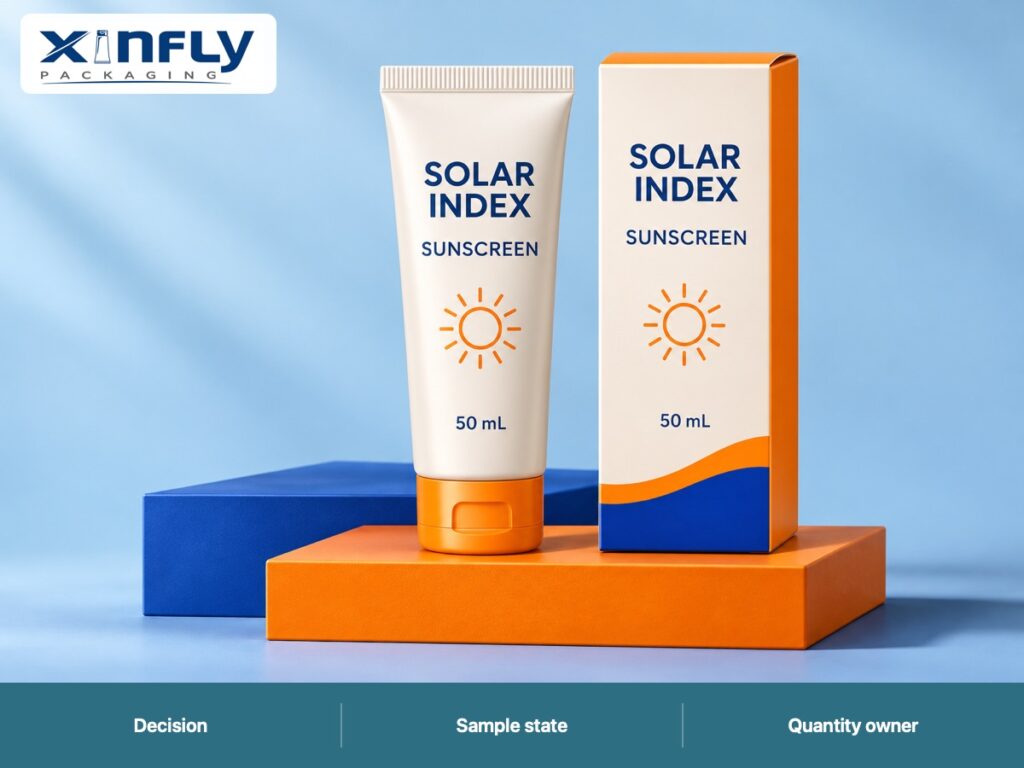
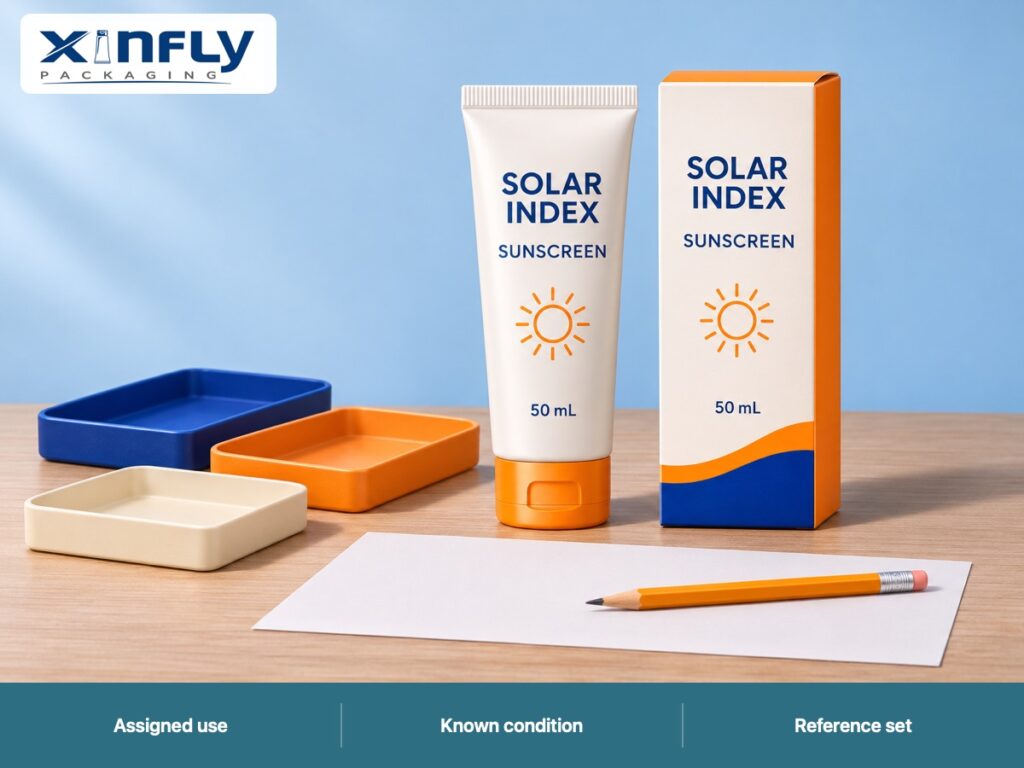
The SOLAR INDEX illustration uses a warm-white PE body, molded shoulder, straight crimped display tail and orange flip-top. Navy lettering and an orange sun-ray motif form a two-color screen-print concept, with a matching orange/navy carton. It is not a retained production sample, a tested sunscreen product or evidence of SPF performance.
Agree Who Holds It and How It Is Identified
Record the holder, sample reference and any relevant agreed handling or storage instruction. Ask the responsible team what conditions apply to the intended reference purpose. This article does not provide a universal storage period or claim that a retained specimen remains unchanged indefinitely.
When the approved proposal changes, review whether the earlier reference remains useful and how it should be labeled. Preserve its identity as an earlier stage rather than silently replacing the file description. Historical references can still be useful when their limitations remain clear.
Request Samples with the Right Information
Make the Proposed Tube Specification Identifiable
For an inquiry about 50ml sunscreen tubes with flip-top caps, name the proposed drawing, cap reference and decoration stage alongside the nominal capacity. Ask which sample features are available for confirmation. The words “50 mL” do not establish every dimension, filling requirement or representative construction detail.
Discuss sample development requirements with the supplier before sending quantities to several recipients. Separate available stock references from project-specific specimens where applicable. Confirm the proposed scope and commercial conditions instead of assuming every requested sample can be supplied in the same form.
Attach Each Recipient's Preparation Instructions
Give the supplier and any preparing party the requirements that affect the sample they must provide. Keep confidential formula information within the agreed process and provide the references needed by the responsible teams. A missing preparation instruction can be more consequential than a small difference in parcel quantity.
Use the packaging quality discussion to identify relevant project questions, while leaving evaluation methods and acceptance decisions with the responsible owners. A general quality page or a sample allocation ledger does not itself qualify the pack for the intended formula or application.

Reconcile the Plan Before Making the Purchase Decision
Connect Each Decision to the Specimens Used
When results or comments return, retain the sample-group reference and the conditions represented. An approval without sample identity can be difficult to apply to the proposed order. Ask whether the reviewer has accepted a particular feature, requested a revision or left a question unresolved.
Keep the allocation ledger separate from the approval summary. The first shows where samples went and how they were used. The second records what the relevant reviewers concluded. Distributing all samples successfully should not be mistaken for completing every planned evaluation.
Ask Xinfly Packaging About the Remaining Gaps
Share the proposed tube references, sample-state requirements, recipients and confirmed quantity requests. Identify any open technical preparation question before asking for replacement specimens. You can send Xinfly Packaging your sunscreen sample allocation brief to discuss what can be provided for the actual project.
Record any revised sample scope and update the allocation before dispatch. That gives each team a common understanding of what it will receive and prevents a newly available specimen from being treated as interchangeable with an earlier reference without review.
Frequently Asked Questions
How Many Sunscreen Tube Samples Should I Request?
Ask each responsible reviewer or evaluator to confirm the number and state required for its activity, then reconcile those requests with supplier availability. The twenty-specimen table is arithmetic illustration only. It is not a sample-size recommendation, a testing standard or a promise that those quantities are available.
Can One Tube Be Used for Several Evaluations?
Have the relevant owners confirm whether its condition and planned sequence are acceptable for their activities. Record prior handling and preparation. Do not count one specimen as independently available for multiple tasks when an earlier activity may affect its suitability for a later one.
Should I Keep an Untouched Reference?
Ask the project owner and relevant reviewers which reference purpose and condition are needed. Identify the retained specimens, stage and holder. This guide does not prescribe a universal retention quantity or period; the decision should reflect the actual project requirements and agreed handling conditions.
Does a Decorated Sample Prove the Pack Is Suitable for My Formula?
A decorated specimen may communicate appearance without representing every feature needed for formula-related evaluation. Ask which construction and preparation details are representative. Keep any project-specific evaluation and acceptance evidence connected to the identified specimens rather than inferring suitability from appearance.
What If the Parcel Contains Fewer Samples Than Planned?
Record the actual receipt and ask the responsible teams to review their allocations. Confirm any reallocation or additional request before using reserved specimens. Keep unresolved activities visible rather than implying that an evaluation was completed simply because the available samples have all been assigned.
Conclusion
A sample plan works when every specimen has an identifiable purpose, state and holder. Confirm requirements with the people doing the work, avoid unapproved reuse, and reserve references deliberately. Reconcile what arrived with what was used and what remains. Xinfly Packaging can discuss the available packaging samples against that brief, while technical methods, sample needs and acceptance remain project-specific decisions.