
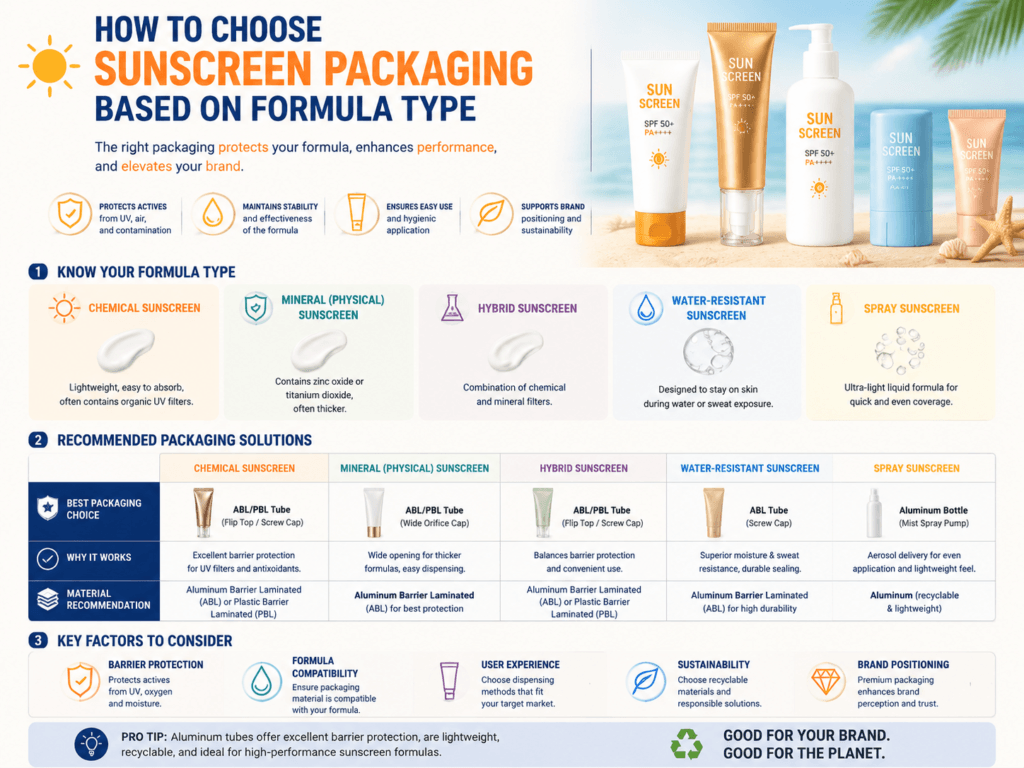
When you choose sunscreen packaging, first check the formula type. How your sunscreen feels and works can help you choose the right packaging. Formula behavior and stability are very important as they keep the product safe and enhance its effectiveness for you. Consider how simple the packaging is to use, and also ensure it prevents germs from getting in. Make sure it aligns with what consumers want to buy. Good packaging not only keeps your sunscreen safe but also aids you in making a wise choice.
Key Takeaways
- Pick sunscreen packaging based on how thick or thin the formula is. Think about the texture and how you use it. This helps make it easy to use and work well.
- Keep sunscreen ingredients like zinc oxide and UV filters safe. Use packaging that blocks light or air to protect them. This keeps the sunscreen stable and good quality.
- Match the packaging to the sunscreen type. Use tubes for lotions. Use airless pumps for creams. Use spray bottles for mists. Use sticks for putting sunscreen on certain spots.
- Make sure the packaging is clean and stops germs from getting in. It should follow safety rules and have correct labels. This helps people trust the product and keeps it good longer.
- Try different packaging choices to see what works best. Pick what fits your formula, brand goals, and what customers like. This makes people happy when they use it.
Formula Attributes Impacting Packaging
Viscosity & Texture
It is important to check viscosity and texture. Viscosity tells you if sunscreen is thick or thin. This affects how you spread it on your skin. It also changes how well it protects you. Thin formulas, like gels or liquids, fit in regular tubes. Thick creams or zinc formulas need strong packaging. This keeps their shape and stops them from breaking.
- Viscosity helps you pick a tube, pump, or jar.
- Consistency changes how the sunscreen feels for you.
- Spray sunscreen is light and covers big areas easily.
- Liquid sunscreen is good for small spots and feels soft.
The right packaging stops leaks and keeps sunscreen safe.
Ingredient Stability
Sensitive ingredients in sunscreen need protection. Some, like zinc oxide and chemical UV filters, break down in light or air. Opaque bottles and UV-protective packaging keep them stable. Airless pumps and tight caps block air and keep the formula fresh.
- Aluminum tubes or tinted plastics block bad rays.
- Multi-layer tubes give extra safety from light and air.
This keeps sunscreen quality and protection strong.
Application Method
How you apply sunscreen changes your experience. Different packaging helps you use the right amount and get good coverage.
| Application Method | Benefits |
|---|---|
| Sprays | Easy, even coverage for large areas |
| Sticks | Targeted, precise application |
| Pump Dispensers | Clean, controlled use |
Tubes let you control how much you use. Spray bottles cover big areas fast. Sticks are good for small spots, like your face. Pump bottles keep things clean and stop germs.
Hygiene & Preservation
You want packaging that keeps sunscreen safe from germs and air. Opaque or UV-protective packaging stops ingredients from breaking down. Airless pumps and sealed tubes block bacteria and air. Thermal-resistant packaging helps sunscreen stay stable in heat. This keeps the quality and protection strong.
Branding & Positioning
Packaging design shows what your brand stands for. Balm-format sticks are liked for clean beauty and mineral formulas. Simple and eco-friendly packaging shows high quality and attracts eco-conscious buyers. The shape and look of packaging can change how often people use sunscreen and how much they put on.
Tip: Pick packaging that fits your brand’s goals and formula type for the best market position.
Choose Sunscreen Packaging by Formula
Lotions
When picking packaging for lotion sunscreen, think about daily use. Lotion formulas are smooth and easy to spread. You need packaging that is simple to use and easy to carry. Here are some choices:
- Tubes are good for daily use. They fit in bags and are easy to squeeze. You can control how much you use.
- Pumps or airless bottles give cleaner use. They help you use the right amount. These are nice for home or travel.
You should keep sunscreen safe from light, air, and heat. The table below shows what can change how long sunscreen lasts and how strong the SPF stays:
| Factor | Impact on Sunscreen Shelf Life and SPF Stability |
|---|---|
| Light exposure | Breaks down UV filters |
| Air and oxidation | Makes SPF weaker |
| Heat sensitivity | Changes how ingredients work |
| Airless pump dispensers | Keep SPF strong |
| Opaque and UV-blocking tubes | Help sunscreen last longer |
| Aluminum and laminated tubes | Keep heat-sensitive formulas safe |
Xinfly Packaging has tubes and pumps that keep your sunscreen good and easy to use. Picking the right packaging helps you use sunscreen every day and keeps it working well.
Creams
Cream sunscreens are thicker than lotions. You need packaging that makes it easy to get out and keeps it clean. Tubes are a smart pick because they are easy to carry and use. They work for face and body sunscreen.
For fancy creams, airless bottles are best. They keep the cream clean and let you use thick formulas easily. This packaging feels special and is good for high-end brands. The table below shows what makes cream sunscreen packaging work well:
| Feature | Description |
|---|---|
| Superior ABL Barrier Technology | Stops air and light from getting in, keeping SPF strong. |
| Large Open Orifice | Makes it easy to squeeze out thick creams. |
| High-Quality PE Material | Feels soft and bounces back after squeezing. |
| Precise Dispensing Orifice | Lets you use just the right amount. |
| Advanced Multi-Layer Barrier | Blocks air and UV light, keeping sunscreen safe. |
You want packaging that is easy to carry and use. Xinfly Packaging has tubes and pumps that help you use cream sunscreen every day.
Gels
Gel sunscreens feel light and soak in fast. You need packaging that keeps them safe and easy to use. Foil packs work well and meet FDA rules. Tubes and pumps also help you use gels without mess.
| Feature | Benefit |
|---|---|
| Multi-Purpose Foil Pack | Meets FDA rules, so it is safe. |
| Unique Applications | Many packaging choices for different places and uses. |
You must make sure the packaging works with the gel. If not, it could leak or the label could get ruined. Xinfly Packaging has packaging that keeps gel sunscreen safe and easy to use.
Sprays
Spray sunscreens need packaging that gives a fine mist. This helps cover big areas fast. The spray part is very important for easy use. You want packaging that does not leak and is easy to carry.
- Spray bottles help you put on sunscreen without touching it.
- They give a steady mist and cover hard-to-reach spots.
- The packaging must keep out light, air, and water.
You also need to follow safety rules and have clear labels. Tamper seals show if the bottle has been opened. The table below shows how rules change packaging:
| Regulatory Requirement | Impact on Packaging Design |
|---|---|
| Safety Standards | Makes sure packaging is safe for people. |
| Labeling Requirements | Needs clear SPF and ingredient labels. |
| Tamper-evident Seals | Keeps the product safe and shows if opened. |
Xinfly Packaging has spray bottles that help you use sunscreen safely and easily.
Sticks
Stick sunscreens are great for small spots and are easy to carry. You can use them on your face, ears, or nose. Stick packaging keeps the sunscreen solid and clean. You get the right amount every time.
Xinfly Packaging has stick packaging for both mineral and chemical sunscreens. These sticks fit in your pocket or bag, so you can use them anywhere.
Mineral Sunscreens
Mineral sunscreens use zinc oxide or titanium dioxide. These need packaging that blocks light and air. You should pick opaque tubes, airless pumps, or sticks. These keep the sunscreen safe and easy to use.
Xinfly Packaging has UV-blocking tubes and pumps that keep mineral sunscreen working well.
Chemical Sunscreens
Chemical sunscreens use UV filters that can break down in light or air. You need packaging that keeps them fresh. Airless pumps, opaque tubes, and laminated bottles work best. They help you use sunscreen every day and keep it strong.
Xinfly Packaging has many packaging choices that keep chemical sunscreens safe and easy to use.
Tinted Sunscreens
Tinted sunscreens protect your skin and add color. You want packaging that is small, easy to use, and not messy. Flip-top caps, pumps, and squeeze tubes are all good. They let you use one hand and keep things clean.
- Small packaging fits in bags or pockets for quick use.
- Different ways to dispense match the formula and help you use it better.
- One-handed use is good for outdoor activities.
Xinfly Packaging has many options for tinted sunscreens. This helps you use sunscreen easily and stay protected.
Tip: Always pick packaging that matches the sunscreen formula and how people use it. Xinfly Packaging can help you find the best packaging to keep your sunscreen safe and easy to use.
Packaging Comparison Table
You need to pick the best sunscreen packaging for your formula. Good packaging keeps your sunscreen safe and simple to use. The table below shows how each packaging type works for different formulas. It lists the good and bad things about tubes, pumps, sticks, and sprays. This table helps you see which packaging gives you the best experience.
| Packaging Formats | Formula Types | Pros | Cons |
|---|---|---|---|
| Tubes | Lotions, creams | Easy to squeeze, portable | Can get messy, not always clean dispensing |
| Pumps | Lotions, creams, gels | Clean dispensing, controlled dose | May waste product, not always portable |
| Sticks | Mineral, tinted | No mess, precise application | Limited to small areas, not for all formulas |
| Sprays | Gels, liquids | Fast coverage, easy to use | Can waste product, may not cover evenly |
Tip: You get the best results when you match the packaging to your sunscreen formula. Pumps and sticks help you keep things clean and stop germs. Tubes are great for travel and everyday use. Sprays cover big spots fast but can waste sunscreen.
You should choose packaging that keeps sunscreen safe from light and air. Pumps and sticks keep the formula fresh and safe. Tubes and sprays are quick to use but might not keep sunscreen strong. Pick packaging that fits your needs and keeps your sunscreen working well.
You can test different packaging to find what works best for your sunscreen. The right packaging helps you use sunscreen every day and keeps your skin safe.
Steps for Packaging Selection
You should use clear steps when picking sunscreen packaging. First, do some testing. Try each packaging type with your sunscreen formula. See if the packaging keeps the formula safe and simple to use. Testing shows how the packaging changes the way people use it.
After testing, you need to evaluate. Check if the packaging protects sunscreen from light, air, and heat. Think about how the packaging matches your brand and what users want. Compare different packaging types to see which one works best. You can use a table to keep track of your choices:
| Step | What to Check | Why It Matters |
|---|---|---|
| Testing | Formula stability, ease of use | Keeps sunscreen safe |
| Evaluation | Protection, fit, appeal | Improves user experience |
| Compliance | Meets rules and standards | Keeps users safe |
| Supplier | Quality, support, options | Helps packaging decisions |
You also need to follow the rules. Make sure your packaging meets all safety and label rules. This keeps people safe and helps them trust your product.
It is smart to work with a good supplier like Xinfly Packaging. A good supplier helps you check packaging and gives you many choices. They help you pick the best packaging for your sunscreen.
Tip: Always test and check before you choose your packaging. This helps your sunscreen work well and keeps it safe for users.
You should use these steps every time you pick packaging. Careful checking helps you make smart choices and keeps users happy.
You want your sunscreen to last and work well. The right packaging keeps sunscreen safe and strong. You need to match the formula to the best packaging. This helps people use sunscreen easily. Testing different packaging helps you see what works best. Xinfly Packaging can help you pick good options. Their advice helps you make smart choices. Good packaging makes sunscreen easy for everyone to use. It helps people remember to use sunscreen every day. The right packaging makes sunscreen simple to use. It keeps sunscreen fresh and ready. It helps people use sunscreen more often. Packaging should be easy to open and close. It should let people use sunscreen quickly. Good packaging makes using sunscreen smooth. It lets people use sunscreen anywhere. Safe packaging keeps sunscreen clean. It stops messes and spills. Fun packaging makes sunscreen more enjoyable. It helps friends use sunscreen together. Kids can use sunscreen easily with the right packaging. People can use sunscreen at the beach or pool. Sports players can use sunscreen during games. Students can use sunscreen at school or on trips. Families can use sunscreen at home or outside. Travelers can use sunscreen in the car or on vacation. Outdoor lovers can use sunscreen while hiking or camping. Runners and bikers can use sunscreen on the go. People can use sunscreen at parks, playgrounds, or gardens. You can use sunscreen at concerts, festivals, or parties. You can use sunscreen at picnics or family reunions. Outdoor learning and art are easier with good packaging. Summer camp and outdoor reading are better with easy sunscreen. Science class and music outside are more fun with simple packaging. Outdoor games and fun with friends are easier with good packaging. Using sunscreen every day is simple with the right packaging. Good packaging gives everyone the best experience.
Pick sunscreen packaging that fits your formula. Try different types. Ask Xinfly Packaging for help. Give everyone a great experience every time they use sunscreen.
Frequently Asked Questions About Sunscreen Packaging
Learn how to choose the right sunscreen packaging for SPF stability, including cosmetic tube materials, barrier structures (EVOH, ABL, PBL), sustainability options and OEM cosmetic tube manufacturing solutions.
What is the best packaging for sunscreen?
Why is sunscreen tube packaging so important?
What is the difference between EVOH, ABL and PBL tubes?
Are ABL tubes better for sunscreen packaging?
Are PBL tubes eco-friendly?
Can sunscreen packaging affect SPF stability?
What materials are used for sunscreen tubes?
What size sunscreen tube is most common?
Can I customize sunscreen tube packaging?
What printing methods are available for sunscreen tubes?
Are eco-friendly sunscreen tubes available?
Why choose Xinfly Packaging for sunscreen tubes?
Looking for Custom Sunscreen Packaging Solutions?
Xinfly Packaging helps skincare brands design high-barrier sunscreen tubes with full OEM customization, sustainable materials and professional packaging engineering.