
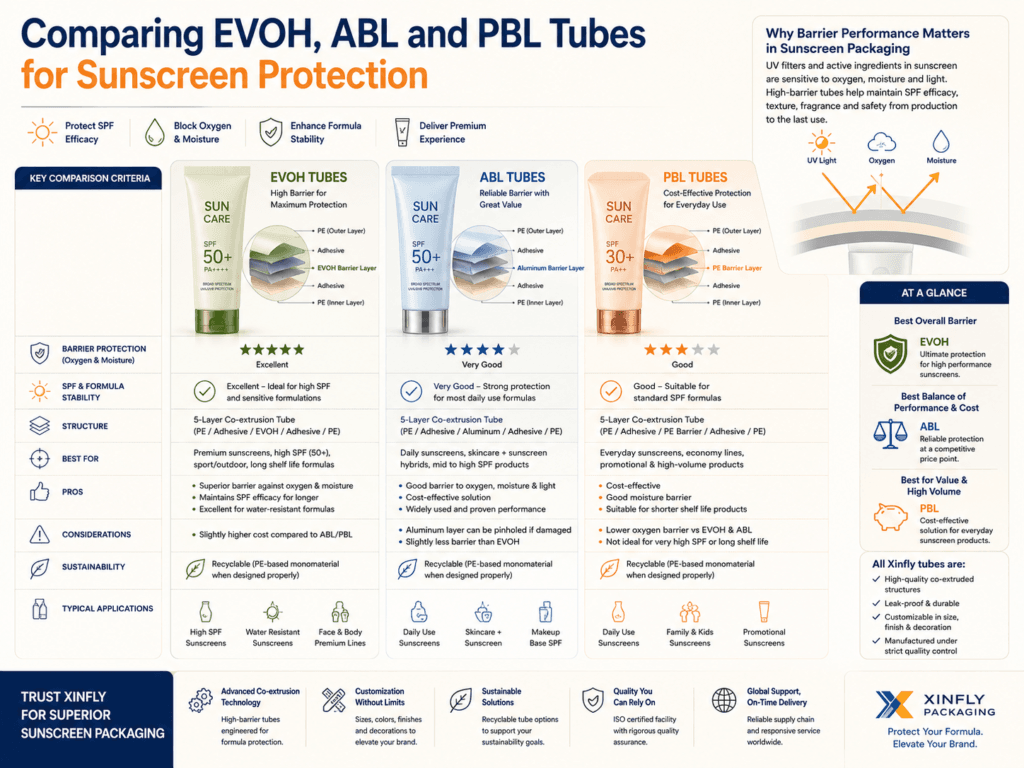
You need the right tube to keep sunscreen safe. When considering EVOH vs ABL tubes, it’s important to note their differences in barrier strength and cost. EVOH tubes excel at blocking oxygen and moisture, while ABL tubes provide better protection against light. Additionally, PBL tubes utilize plastic barriers and are easier to recycle. Tests like the Color Difference Index demonstrate how packaging changes over time, and UV exposure cycles assess the durability of the tubes. Choosing the right tube, whether it’s EVOH or ABL, ensures that sunscreen remains fresh and effectively protects your skin.
Key Takeaways
- Pick ABL tubes if you want the best shield from light and oxygen. This helps your sunscreen work well. EVOH tubes are good for formulas that need strong oxygen barriers. They help sunscreen stay fresh for a longer time. PBL tubes are better for the environment and can be recycled easily. They are a smart pick for brands that care about the planet. Multilayer tubes give more protection from air, light, and water. This keeps sunscreen stable. Always look for strong, non-see-through packaging. This keeps the sunscreen’s important parts safe and working.
Why Sunscreen Packaging Matters
Product Stability Factors
You want your sunscreen to work every time you use it. The tube or bottle you choose plays a big role in keeping sunscreen safe and effective. Sunscreen can lose its power if the active ingredients break down. This can happen when the product faces light, heat, air, or germs. Good packaging helps stop these problems.
- Opaque bottles and UV-protective tubes block sunlight. This keeps the sunscreen from breaking down.
- Airless pumps and sealed tubes keep air and bacteria out. This helps the formula stay fresh.
- Thermal-resistant tubes and insulated containers protect against heat. This stops the sunscreen from getting too warm and losing its strength.
A study showed that some packaging materials, like LDPE/HDPE mixtures, can change when exposed to sunlight. The packaging can become weaker and even absorb some sunscreen ingredients. This means the sunscreen may not protect your skin as well. You need packaging that stands up to sunlight and keeps the sunscreen safe.
Tip: Always check if your sunscreen tube feels sturdy and blocks light. This helps you know if it will protect the formula inside.
Protection from Light and Oxygen
Light and oxygen can damage sunscreen. When light gets into the tube, it can break down the active ingredients. Oxygen can also cause the sunscreen to lose its power. You need packaging that blocks both light and air.
- Opaque materials like HDPE and PET are good at blocking UV light. This keeps the sunscreen strong.
- Some sunscreen formulas have ingredients that break down easily in sunlight. These need extra protection from the packaging.
- The right tube can stop oxygen from getting in. This keeps the sunscreen fresh for longer.
You should choose packaging that matches your sunscreen’s needs. If your formula has sensitive ingredients, look for tubes with strong barriers. This helps your sunscreen stay safe and effective until the last drop.
Tube Materials Overview
EVOH Features
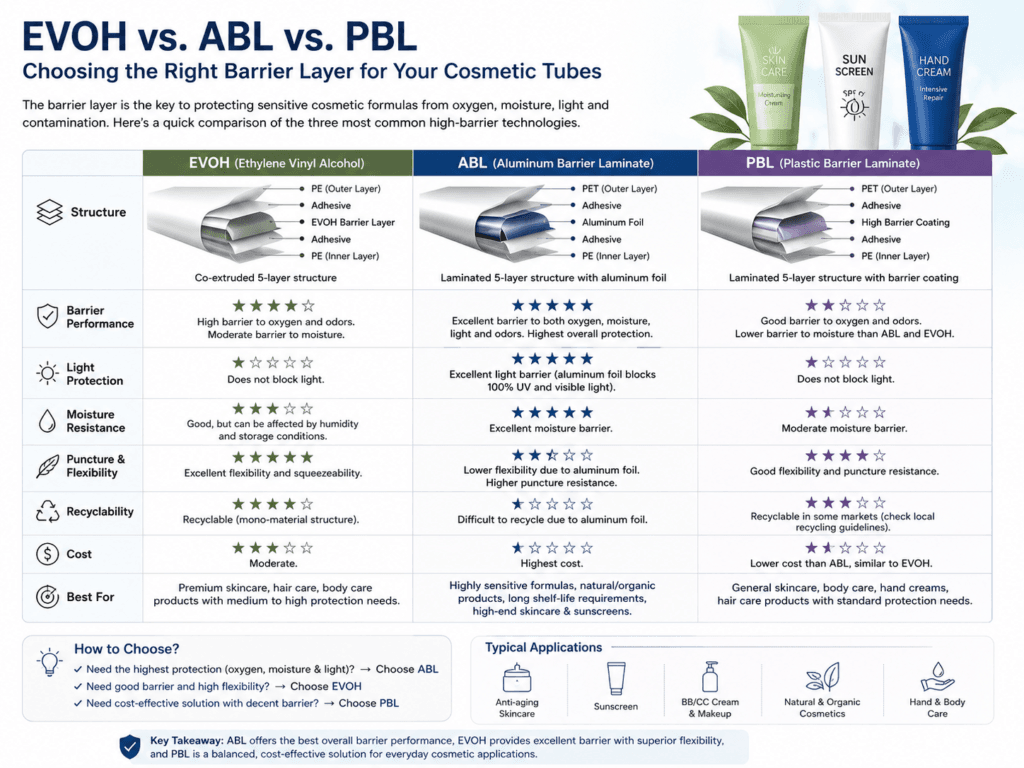
EVOH tubes are used in many sunscreen products. They protect sensitive ingredients inside the tube. EVOH means ethylene vinyl alcohol. This material is a strong gas barrier. It stops oxygen from getting in. This keeps your sunscreen fresh longer. EVOH tubes have a special structure. The EVOH layer sits between plastic walls. A thin adhesive coating makes the barrier stronger. EVOH almost stops all oxygen from reaching the product. It also blocks other gases like carbon dioxide. EVOH tubes are flexible and easy to shape. They can be recycled in small amounts with mono-material systems. EVOH needs hydrophobic layers to stay strong. Moisture can make the barrier weaker.
Tip: EVOH tubes are best for formulas needing strong oxygen protection.
ABL Tubes Structure
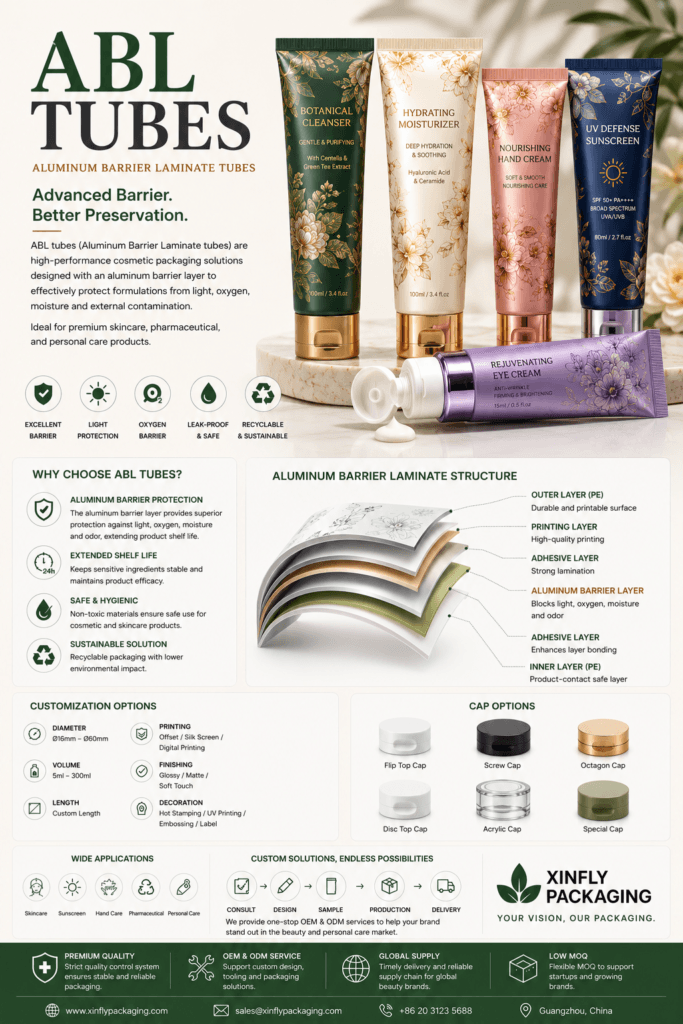
ABL tubes use aluminum foil as a strong barrier. There are three main layers in these tubes:
| Layer Type | Function |
|---|---|
| Outer Plastic | Gives durability and protection |
| Aluminum Foil | Blocks oxygen, light, and moisture |
| Inner Plastic | Keeps the product safe and secure |
The aluminum layer blocks over 99% of oxygen and moisture. ABL tubes feel stiff and keep their shape well. The metallic finish makes them look fancy. These tubes give the best barrier protection.
PBL Tubes and EVOH Barrier
PBL tubes use only plastic layers. They often include EVOH for extra protection. EVOH in PBL tubes blocks gases and moisture. EVOH has a special molecular structure. It has both polar and non-polar parts. This helps keep the contents safe. The EVOH layer is the main barrier in these tubes. Making the EVOH layer thicker gives more protection. PBL tubes are great for printing and feel soft to touch. They are fully recyclable and flexible.
Xinfly Packaging Options
You can pick ABL or PBL tubes at Xinfly Packaging. Here is a quick comparison:
| Feature | ABL Tubes | PBL Tubes |
|---|---|---|
| Barrier Protection | Excellent oxygen, moisture, and light barrier | Very good barrier protection |
| Flexibility | Less flexible | Highly flexible and soft-touch |
| Recyclability | Harder to recycle because of aluminum | Easier to recycle and eco-friendly options |
| Typical Applications | Toothpaste, creams, medicated products | Skincare, cosmetics, hand cream, sunscreen, facial cleanser |
Xinfly has strong sunscreen tubes with leak-proof caps. You can choose different finishes. There are sustainable options for outdoor and travel products. These tubes keep your sunscreen safe and easy to use.
EVOH vs ABL: Barrier and Performance
Oxygen and Moisture Barriers
Sunscreen needs strong protection. EVOH and ABL tubes are different. They both stop air and water from getting in. Air and water can spoil sunscreen. You want a tube that keeps them out.
EVOH tubes have a special layer. This layer blocks oxygen. It slows down oxidation. ABL tubes use aluminum foil. Aluminum is the best barrier. Almost no oxygen gets through. This keeps sunscreen fresh for longer.
Check this table to see how they compare:
| Pillar | EVOH Tubes | ABL Tubes |
|---|---|---|
| Barrier Performance | Excellent oxygen barrier, low OTR | Industry gold standard, near zero OTR |
| Oxygen Transmission Rate (OTR) | Lower than ABL | Near zero OTR |
| Water Vapor Transmission Rate (WVTR) | Lower than ABL | Lower than PE |
ABL tubes are the best at blocking air and water. EVOH tubes also give strong protection. Many sunscreen tubes use EVOH layers. These tubes slow down oxidation. They keep sunscreen safe.
You protect your sunscreen best by picking tubes with strong barriers. This stops air and water from causing problems.
Light and Chemical Protection
Light can break down sunscreen. Tubes need to block light and chemicals. ABL tubes are best for light protection. Aluminum foil blocks almost all light. This keeps sunscreen strong.
EVOH tubes block some light. They do not block as much as ABL tubes. EVOH tubes also stop chemicals from getting in. Both types give good protection. ABL tubes are better for light.
Here is a table showing how tubes perform:
| Tube Type | Barrier Performance | Recyclability | Weight |
|---|---|---|---|
| ABL | Superior oxygen and moisture barrier | Not recyclable | Heavier |
| PBL | Slightly lower barrier performance | Fully recyclable | Lighter |
ABL tubes block air, water, light, and chemicals. EVOH tubes give strong protection too. Sensitive formulas use EVOH tubes. These tubes slow oxidation. They keep sunscreen safe.
Pick ABL tubes for the best light and chemical protection. Choose EVOH tubes for strong air and water barriers. Both help keep sunscreen safe and effective.
Suitability for Sunscreen
Compatibility with Formulations
You want your sunscreen to work well and stay safe. The tube must fit your sunscreen formula. Sunscreen has oils, water, and active ingredients. Some of these can break down fast. Good packaging keeps everything stable.
Industry experts say multilayer tubes are best for sunscreen. These tubes protect from air, light, and moisture. There are three main types:
- PBL tubes give strong barrier protection. They help stop your sunscreen from breaking down.
- ABL tubes use aluminum to block light and oxygen. They keep your sunscreen steady.
- Sunscreen works best in multilayer tubes.
You see these tubes in many skincare products. They help keep sunscreen fresh. You can trust them to protect your sunscreen.
Tip: Always look for sunscreen tubes with more than one layer. This helps your sunscreen formula stay strong.
Preventing Degradation
Sunscreen can lose power if air or light gets in. You want to stop this from happening. EVOH, ABL, and PBL tubes all help stop this. Each tube type uses a special barrier.
ABL tubes have aluminum foil. This foil blocks almost all light and oxygen. Your sunscreen stays safe inside. EVOH tubes use a plastic barrier. This slows down oxidation. PBL tubes use plastic layers with EVOH. They protect from moisture and air.
You need strong packaging for skincare. Sunscreen breaks down fast if it gets air or sunlight. Multilayer tubes keep the formula stable. You get better results and longer shelf life.
| Tube Type | Barrier Strength | Light Protection | Moisture Protection |
|---|---|---|---|
| ABL | Very High | Excellent | Excellent |
| EVOH | High | Good | Very Good |
| PBL | High | Good | Very Good |
You protect your sunscreen best by picking tubes with strong barriers. This keeps your skincare safe and working well.
Sustainability and Recycling
Recyclability of PBL and ABL Tubes
You want to know what happens to your sunscreen tube after you use it. Recycling is important for the earth. PBL tubes are easy to recycle in most places. These tubes have only plastic layers. Recycling centers can handle them without trouble. You help cut down on trash when you pick PBL tubes.
ABL tubes have both plastic and aluminum. This mix makes recycling harder. Most centers cannot pull apart the layers. These tubes often go to landfills instead. You may not see recycling labels on ABL tubes. PBL tubes usually have recycling certifications. This shows you are making a better choice for nature.
Here is a simple table to compare the tubes:
| Tube Type | Recyclability | Certifications |
|---|---|---|
| PBL Tubes | Fully recyclable in local programs | Recognized recycling certifications |
| ABL Tubes | Hard to recycle because of mixed materials | N/A |
You can see PBL tubes are best for recycling. This helps you reach your goal for better sustainability.
Environmental Trends
You notice new ideas in sunscreen packaging each year. Brands now care more about recycling and being green. Here are some big trends:
- Biodegradable and eco-friendly packaging is getting popular. You see sugarcane tubes, compostable paper, and refillable bottles in stores.
- Global rules say sunscreen must keep its SPF level. Packaging must protect the product and help with recycling.
- Smart packaging, like UV-sensitive labels, shows if your sunscreen got too hot.
- Using recycled plastic, aluminum, and paper sticks lowers harm to the planet.
- Biodegradable materials, like PLA from cornstarch, are being tested for sun care.
- Simple packaging uses less stuff and weighs less. This means less trash and fewer resources used.
- Refillable bottles and plant-based plastics, like bamboo, help cut single-use waste.
You help these trends by picking tubes that are easy to recycle. You support the earth and help keep it safe for the future.
Cost and Customization
Price Comparison
You want to know how much sunscreen tubes cost. The price changes based on the tube type and what it is made of. abl tubes are more expensive because they use aluminum. Aluminum prices can go up or down with world events. Tariffs also affect aluminum prices. abl tubes need special machines to make them. This makes them cost more. PBL tubes use plastic resins. Their price depends on oil costs. Making PBL tubes is easier and costs less. Many brands pick PBL tubes to save money.
Here is a table showing market share and price factors:
| Tube Type | Market Share (2025) | CAGR (%) | Key Factors Influencing Price |
|---|---|---|---|
| abl tubes | 58.4% | 4.7% | Superior barrier performance, higher manufacturing costs due to aluminum |
| PBL | 41.6% | 7.4% | Better recyclability, lower manufacturing costs, growing demand for aluminum-free options |
abl tubes cost more because they protect sunscreen better. PBL tubes are cheaper and easier to recycle. You can pick the tube that fits your budget and needs.
Note: abl tubes may cost more, but they give you the best barrier protection for sensitive sunscreen formulas.
Customization and Artwork
You want your sunscreen tube to look nice and match your brand. There are many ways to customize your tube. abl tubes have a shiny, metallic look. They feel stiff and fancy. You can print glossy artwork with metallic effects. PBL tubes feel soft to touch. You can pick matte or smooth decorations. These tubes are flexible and easy to squeeze.
Here is a table comparing customization features:
| Feature | abl tubes | PBL Tubes |
|---|---|---|
| Tube Appearance | Metallic and rigid | Soft and flexible |
| Printing Effect | Glossy, metallic | Matte, soft-touch |
| Eco-Friendly Options | Limited | PCR, bio-based, recyclable |
| Squeezing Experience | Rigid | Smooth and soft |
You can match tube types to your product’s shape, shelf life, and brand goals. abl tubes are best for products needing strong barrier protection. PBL tubes are good for brands wanting eco-friendly choices and style. You can pick the artwork and finish that makes your sunscreen stand out.
Tip: Pick abl tubes for shiny printing and strong protection. Choose PBL tubes for eco-friendly options and flexible designs.
Regulatory and Safety
Compliance for Sunscreen Packaging
You must follow strict rules when you package sunscreen. In the United States, the FDA sets the standards. In Europe, you follow EU guidelines. These rules help keep sunscreen safe and effective for everyone.
- You need to show clear labels. The packaging must list the SPF, water resistance, and all ingredients.
- You must use tamper-evident seals. This helps you know if someone has opened the product before you buy it.
- You need to use safe materials for the tube. The packaging should not react with the sunscreen inside.
- The FDA asks for stability testing. You must prove that your sunscreen works well in heat, cold, and light.
- In Europe, you must protect UV filters. The packaging should stop the sunscreen from breaking down in sunlight.
Note: Following these rules helps you trust the sunscreen you use. You know it will protect your skin as promised.
Safety Considerations
You want your sunscreen tube to keep the formula safe and easy to use. Different tube types offer unique safety features.
- EVOH tubes help you recycle more and use less material. They make the tube lighter and better for the planet.
- ABL tubes give you the best UV protection. They work well for sunscreens with sensitive ingredients.
- PBL tubes fit green goals. They let you pick flexible shapes and designs.
- Laminate tubes, like ABL and PBL, create strong barriers. They block UV rays, oxygen, and germs. This keeps your sunscreen stable.
- These tubes help keep SPF levels steady. Your sunscreen works the same from the first use to the last.
- The packaging stops air and water from getting in. This protects the sunscreen’s active parts.
- Sealed tubes limit hand contact. This keeps the product clean and lowers the risk of germs.
🛡️ Good packaging keeps your sunscreen safe, stable, and ready to protect your skin every time you use it.
Choosing the Right Tube
High-SPF and Sensitive Products
If you make sunscreen for high-SPF or sensitive skin, you need strong tubes. Some ingredients break down fast when they touch air or light. You should use tubes with the best barriers. Aluminum Barrier Laminate tubes block almost all oxygen and light. These tubes keep your sunscreen safe and stable. EVOH barrier tubes also protect the active parts by stopping oxidation. Both tube types help your sunscreen last longer and keep its SPF steady. Xinfly Packaging has both options, so you can pick what works for you.
Eco-Friendly and Premium Options
You may want your brand to be eco-friendly or look fancy. Some sunscreen tubes use recycled materials to help the planet. EVOH barrier tubes stop oxidation and keep the tube easy to squeeze. You can pick tubes with a nice look because the outside lets you print high-quality designs. For natural products, plastic barrier laminate tubes work well. If you want the strongest protection, aluminum barrier laminate tubes are best. Here are some features you might like:
- Blocks moisture and oxygen for longer shelf life
- Keeps the tube flexible for easy use
- Offers eco-friendly options with recycled materials
- Supports premium printing for a luxury look
Xinfly Packaging can help you find the best tube for your brand.
Budget-Friendly Choices
If you want to save money, you can pick tubes that fit your budget. Some brands use two-layer tubes for basic protection. These cost less and work for products that do not need strong barriers. If you need better safety, five-layer tubes give more protection but cost more. Here is a simple table to help you decide:
| Tube Type | Cost | Protection Level | Best For |
|---|---|---|---|
| 2-layer | Lower | Basic | Budget cosmetic brands |
| 5-layer | Higher | Enhanced | Premium cosmetic and sun care |
You can ask Xinfly Packaging for help picking the best tube for your product and price.
Quick Comparison Table and Checklist
Side-by-Side Tube Comparison
You want to know how tubes are different. This table shows the main features of EVOH, ABL, and PE tubes. You can use it to pick the best tube for your sunscreen. Each tube type has good and bad points. EVOH tubes give you a great oxygen barrier. ABL tubes are the best at blocking air and light. PE tubes, including pbl tubes, are cheap and easy to recycle.
| Feature | EVOH Tubes | ABL Tubes | PE Tubes (including PBL) |
|---|---|---|---|
| Barrier Performance | Excellent oxygen barrier, low OTR | Industry gold standard, near zero OTR | Moderate barrier, higher OTR |
| Cost | Mid to high, more affordable than ABL | Highest cost due to aluminum layers | Most budget-friendly |
| Sustainability | High, recyclable with less aluminum | Lower, aluminum complicates recycling | Good, widely recyclable |
ABL tubes protect sunscreen best but cost the most. EVOH tubes are good for both price and protection. PBL tubes are flexible and easy to recycle. You can pick tubes based on what is most important for your sunscreen.
Tip: If you want the strongest barrier, pick ABL tubes. If you want easy recycling, choose pbl tubes.
Decision Checklist
You need to check some things before picking a sunscreen tube. This checklist helps you make the right choice. Packaging experts say you should look at protection, convenience, sustainability, and compliance. Each point helps you find the best tubes for your sunscreen.
| Consideration | Key Benefits | Examples |
|---|---|---|
| Protection | Preserves SPF, prevents oxidation and thermal stress | Opaque materials, airless systems, UV coatings |
| Convenience | Improves user experience & portability | Tubes, sprays, sticks, pumps, pouches |
| Sustainability & Identity | Builds trust, reduces environmental impact | Recyclable, biodegradable, refillable packaging |
| Compliance | Meets legal standards & assures safety | Clear labels, tamper seals, FDA/EU-compliant materials |
Ask yourself these questions:
- Does the tube keep sunscreen safe from air and light?
- Is the tube easy to use and carry?
- Can you recycle the tube or pick eco-friendly tubes?
- Does the tube meet all safety rules?
You can use this checklist every time you choose tubes for sunscreen. PBL tubes check many boxes for brands that want green choices. ABL tubes are best for high-protection needs. EVOH tubes give you a strong barrier and good value. You can talk to Xinfly Packaging to find the right tubes for your sunscreen.
📝 Good tubes keep your sunscreen safe, easy to use, and trusted by your customers.
You have to pick the best packaging to keep sunscreen safe. ABL tubes give the strongest barrier for high-SPF and fancy skincare. EVOH tubes help sunscreen last and are better for the planet. PBL tubes are good for recycling and fit green goals. The packaging you pick changes how long sunscreen lasts and if people trust it. Opaque tubes keep important ingredients safe and show good quality. Sunscreen in these tubes stays fresh longer. Check the list and ask Xinfly Packaging to help you find the right tube for your brand.
- Opaque tubes keep ingredients safe and help people trust the product.
- Strong packaging makes sunscreen last longer.
Frequently Asked Questions About EVOH, ABL and PBL Tubes
Learn the differences between EVOH tubes, ABL tubes and PBL tubes for sunscreen and skincare packaging, including laminated cosmetic tubes, high-barrier cosmetic packaging, sunscreen tube packaging, sustainable cosmetic tubes and OEM cosmetic tube manufacturing solutions.
What are EVOH tubes?
What are ABL tubes?
What are PBL tubes?
What is the difference between EVOH, ABL and PBL tubes?
Which tube provides the best barrier protection for sunscreen?
Why are high-barrier tubes important for sunscreen packaging?
Are PBL tubes more sustainable than ABL tubes?
What products are suitable for EVOH, ABL and PBL tubes?
Can EVOH, ABL and PBL tubes be customized?
What printing options are available for laminated cosmetic tubes?
How do I choose between EVOH, ABL and PBL tubes?
Why choose Xinfly Packaging for EVOH, ABL and PBL tubes?
Need High-Barrier EVOH, ABL or PBL Tubes?
Xinfly Packaging helps skincare and sunscreen brands compare EVOH tubes, ABL tubes and PBL tubes based on barrier performance, sustainability goals, custom printing requirements and OEM cosmetic packaging needs.
