
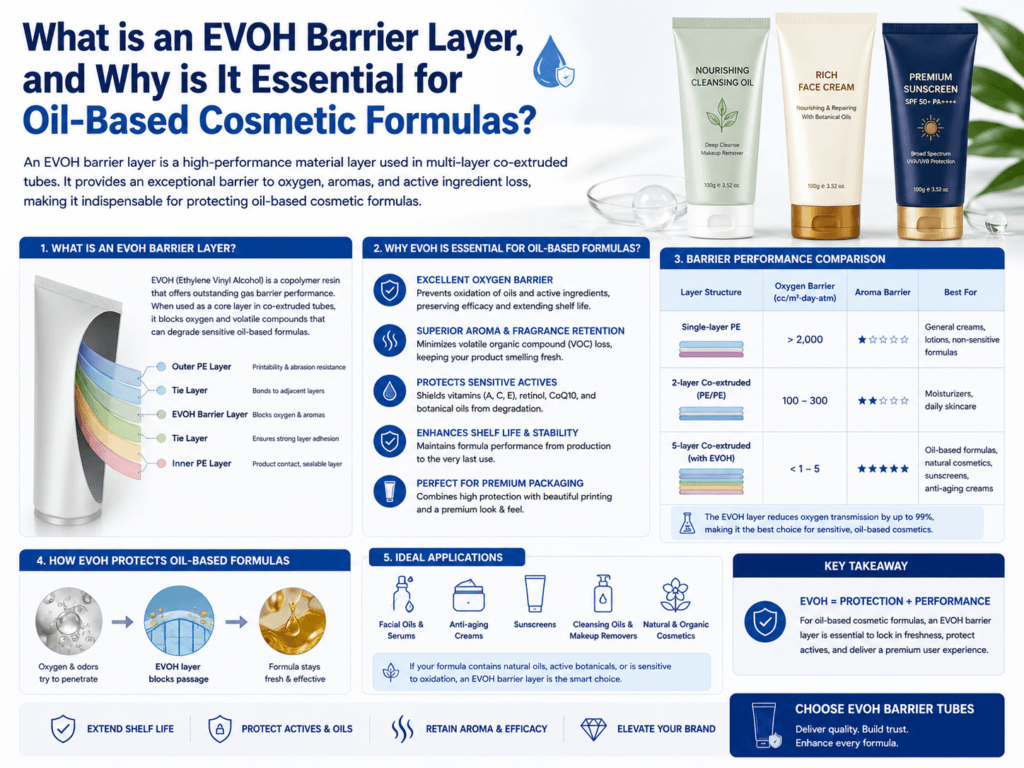
An EVOH barrier layer is a thin high-barrier layer made from ethylene vinyl alcohol copolymer. In cosmetic tube packaging, it is usually placed inside a co-extruded multi-layer structure to reduce the transmission of oxygen, aroma, and some chemical substances. This is why EVOH is widely used when brands need stronger product protection than standard PE tubes can provide.
For oil-based cosmetic formulas, EVOH is important because many oily or fragrant formulas are more sensitive to oxygen exposure, aroma loss, and ingredient migration. A regular tube may still work for simple products, but when the formula contains oils, essential oils, active ingredients, or rich fragrance, a stronger barrier layer often helps keep the product more stable during storage and use.
What Does the EVOH Layer Actually Do?
| Function | Why It Matters | Benefit for Cosmetic Tubes |
|---|---|---|
| Oxygen barrier | Reduces oxygen entering the tube | Helps slow oxidation of sensitive formulas |
| Aroma barrier | Keeps fragrance components from escaping too easily | Helps preserve scent profile over time |
| Chemical barrier support | Helps limit migration of certain substances | Improves package protection for demanding formulas |
| Shelf-life support | Maintains formula quality more consistently | Better long-term product stability |
Why Oil-Based Cosmetic Formulas Need Better Barrier Protection
- Oil-rich formulas can oxidize: Oxygen exposure can gradually affect color, odor, and performance.
- Fragrance can fade: Volatile aromatic components may slowly escape through weaker packaging structures.
- Some actives are more sensitive: Certain oil-soluble ingredients or botanicals benefit from stronger packaging protection.
- Premium formulas usually need longer stability: Barrier performance supports more reliable shelf life.
Why EVOH Is Usually Used Inside Multi-Layer Tubes
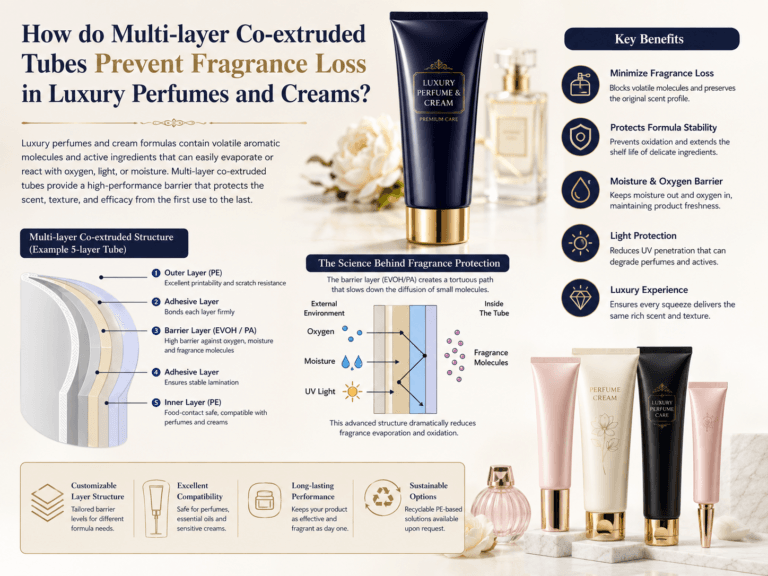
EVOH performs as a very strong gas barrier, but it is typically used as an internal barrier layer rather than as a standalone tube wall. In co-extruded tube structures, PE layers are commonly placed around EVOH to protect it, improve processing, and provide good sealing performance. This kind of multi-layer design helps combine flexibility, printability, sealing, and barrier function in one package.
Typical Tube Structure with EVOH
| Layer Position | Typical Role |
|---|---|
| Outer PE layer | Supports printing, appearance, and external protection |
| Tie layer | Helps bond PE and EVOH together in co-extrusion |
| EVOH barrier layer | Provides strong oxygen and aroma barrier |
| Inner PE layer | Contacts the formula and supports sealing and product compatibility |
When EVOH Is Usually Recommended
| Formula Type | Is EVOH Recommended? | Reason |
|---|---|---|
| Oil-based serum or cream | Usually yes | Helps protect against oxidation and aroma loss |
| Essential-oil or fragrance-rich formula | Usually yes | Helps retain aroma and reduce permeation |
| Basic cleanser with low sensitivity | Not always necessary | May not require high barrier performance |
| Active skincare with longer shelf-life target | Often yes | Better packaging protection supports stability goals |
Main Advantages of EVOH for Cosmetic Tubes
- Excellent oxygen barrier: Helps protect sensitive formulas from oxidation.
- Good aroma retention: Helps keep fragrance and volatile notes inside the package.
- Supports premium positioning: Useful for higher-value skincare and functional beauty products.
- Allows lighter plastic structures than some traditional high-barrier alternatives: Useful in modern co-extruded packaging design.
Main Trade-Offs to Understand
| Trade-Off | What It Means |
|---|---|
| Higher cost than simple PE tubes | EVOH barrier tubes are usually more premium than mono-layer structures |
| More complex structure | Multi-layer design is more technical than standard tubes |
| Not every formula needs it | Basic stable products may not require high barrier packaging |
Best Practical Recommendation
If your cosmetic formula contains oils, rich fragrance, oxidation-sensitive actives, or premium botanical ingredients, EVOH is often worth considering. If the formula is simple, stable, and not very sensitive to oxygen or aroma loss, a lower-barrier PE structure may be enough. The best decision depends on the formula stability target, expected shelf life, market positioning, and cost plan.
Summary
An EVOH barrier layer is a high-performance barrier layer used inside multi-layer cosmetic tubes to reduce oxygen and aroma transmission. It is essential for many oil-based cosmetic formulas because it helps protect the product from oxidation, fragrance loss, and certain migration-related risks.
For brands packaging oils, active skincare, or fragrance-sensitive beauty formulas, EVOH can be one of the most important hidden layers in the tube structure.
Learn more: What Is EVOH Barrier Material?, Co-Extruded Cosmetic Tubes Guide, 5-Layer Plastic Tubes, EVOH Barrier Tubes Manufacturer, How to Choose Cosmetic Tube Materials, Sunscreen Tube Packaging Guide.
Need the Right Barrier Tube for Your Cosmetic Formula?
Xinfly Packaging helps brands choose between standard PE, multi-layer, and EVOH barrier tube structures based on formula sensitivity, shelf-life goals, and packaging budget.