
You can find co-extruded cosmetic tubes in many fancy makeup and skin care products. These tubes are made with a special process that puts layers together. The layers help keep your products safe and fresh. Lately, more brands pick these tubes because they are lighter, better for the environment, and look different.
- Many beauty brands pick these tubes because they are easy to use and ship.
- More people want these tubes because they care about the planet, so the market keeps growing.
Key Takeaways
- Co-extruded tubes keep cosmetics safe from air, light, and water. This helps products stay fresh for a longer time. These tubes are light and good for the environment. Many brands like them because they care about the planet. You can change co-extruded tubes in many ways. They come in different shapes and sizes. You can also print on them to make brands stand out. Multi-layer tubes give extra safety for gentle formulas. They work well for expensive cosmetics like serums and sunscreens. Using co-extruded tubes helps products last longer on shelves. They are easy to use and look nice, which makes customers happy.
What Are Co-Extruded Cosmetic Tubes
Definition and Key Features
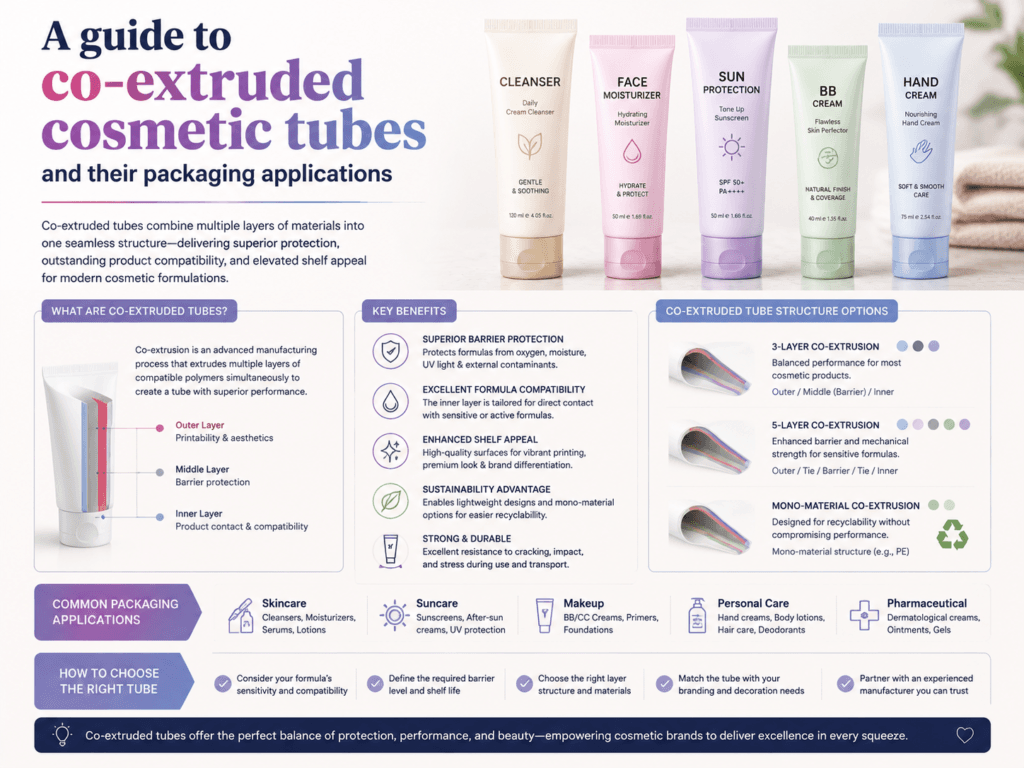
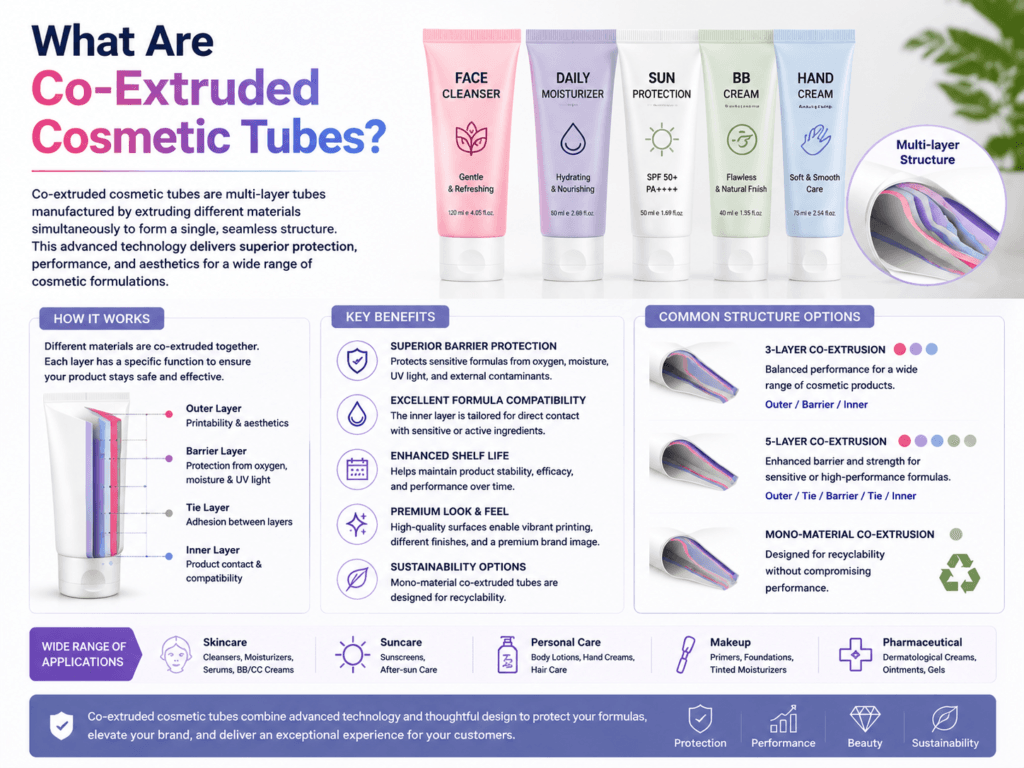
You can find co-extruded cosmetic tubes in lots of beauty products. These tubes are made using a process called co-extrusion. This means different layers of materials are put together to make one tube. Each layer does something important. Some layers stop air and light from getting in. Other layers make the tube strong or smooth for printing.
Co-extruded tubes look smooth and feel strong. The width stays the same all along the tube. They come in many shapes, so brands can make special packaging. The tube is made in one step, so it looks neat and even.
Tip: Co-extruded tubes are great for products that need to look nice and stay fresh, like face creams and sunscreens.
Here is a table that shows how co-extruded tubes are different from other tubes:
| Characteristic | Co-extruded Tubes | Other Tube Types |
|---|---|---|
| Width Variation | No variation in width | May have variations |
| Appearance | Superior appearance | Varies by type |
| Shape Flexibility | Can be produced in various shapes | Limited shape options |
| Molding Process | One-time molding combining materials | Different processes |
| Suitability for Fast-Consuming Cosmetics | High level of appearance required | Varies by type |
Co-extruded cosmetic tubes have several layers. For example, 3-layer tubes have three main layers. 5-layer tubes have five layers. Here is a table that shows the materials and what they do:
| Layer | Material | Function |
|---|---|---|
| Outer | PE (Polyethylene) | Printable outer surface |
| Core | HDPE (High-density PE) | Structural integrity layer |
| Inner | PE (Polyethylene) | Product-contact layer |
| Tie | Adhesive | Bonding tie layer |
| Core | EVOH (Ethylene Vinyl Alcohol) | High-performance oxygen barrier |
| Tie | Adhesive | Bonding tie layer |
| Inner | PE (Polyethylene) | Product-contact layer |
These tubes keep your product safe, look good, and feel strong.
Single-Layer vs Multi-Layer Tubes
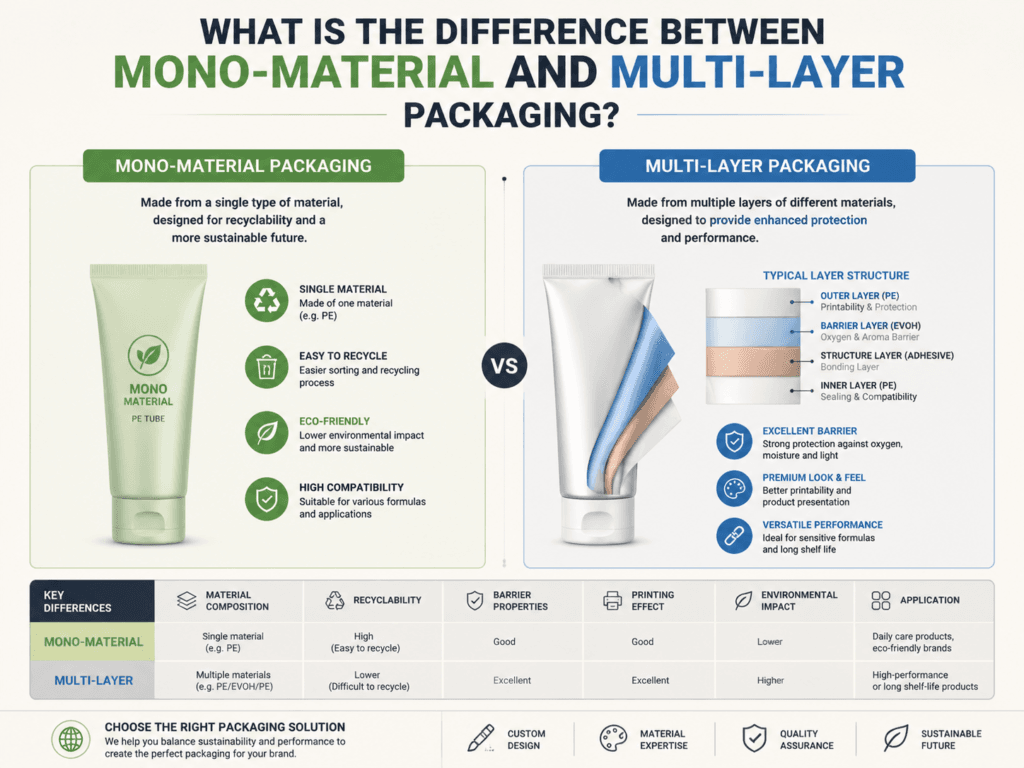
You might wonder how single-layer tubes are different from multi-layer tubes. The big difference is how many layers they have and how much protection they give.
Single-layer tubes use just one material. They are good for simple products like cleansers and lotions. These tubes cost less and are easier to recycle. Multi-layer tubes, like 3-layer or 5-layer tubes, use more materials. Each layer does something special, like blocking air or keeping out water.
Here is a table that compares single-layer and multi-layer tubes:
| Feature | Single-Layer Tubes | Multi-Layer Tubes |
|---|---|---|
| Protection | Adequate for stable formulas | Enhanced protection for sensitive formulas |
| Cost | Generally more cost-effective | Typically more expensive |
| Recyclability | Easier to recycle in single-material systems | Harder to recycle due to mixed materials |
| Suitability | Best for basic cleansers and lotions | Recommended for high-value, sensitive products |
Multi-layer tubes have many good points:
- They keep air and water out of sensitive products.
- They stop germs and keep products safe.
- They help sunscreen keep its SPF when stored or shipped.
- They block UV light and keep out germs.
You should pick multi-layer tubes for fancy or sensitive products. These tubes keep creams, serums, and sunscreens safe and fresh for a long time.
Co-Extruded Tubes Manufacturing Process
Co-Extrusion Technology
Co-extruded tubes are used in many beauty products. The process uses advanced technology to make these tubes. This technology lets you put different materials together in one tube. Each material gives the tube special features. The process does not use solvents, so it is better for the environment.
Here are some ways co-extrusion technology makes tubes better:
- You can make tubes with many layers, not just one.
- These tubes are stronger and can handle acids and alkalis.
- The surface is smooth, so printing is easy.
- You can change how thick each layer is for better protection and looks.
- You can mix materials to get things like flexibility or extra safety.
Co-extruded film helps make tubes that keep products safe from air, light, and germs. These tubes also look and feel high-quality.
Materials and Structure
You need to choose the right materials for co-extruded tubes. Every layer has a job to do. Some layers stop oxygen and water. Other layers make the tube strong or good for printing.
Here is a table that shows common materials and what they do:
| Layer Position | Material Used | Function |
|---|---|---|
| Outer Layer | PE | Printability and feel |
| Inner Layer | PE | Contact with the formula |
| Tie Layers | Adhesive | Bonding layers together |
| Central Layer | Ethyl Vinyl Alcohol | Barrier against oxygen and gases |
You can see how different materials block air and water:
| Material Type | Barrier Performance |
|---|---|
| Aluminum Foil | High Barrier |
| Polyvinyl Alcohol (PVA) | High Barrier |
| Ethylene-Vinyl Alcohol Copolymer (EVOH) | High Barrier |
| Nylon (PA) | Medium Barrier |
| Polyethylene Terephthalate (PET) | Medium Barrier |
Co-Ex 5 Layer tubes are very good at stopping oxygen, gas, solvents, and oil. They also block UV light.
If you pick linear polymers with simple shapes, you get better protection. How you make and shape the tube also changes how well it works. You can design co-extruded tubes to fit what each cosmetic product needs.
Co-Extruded Tubes vs Other Tube Packaging
Mono-Layer Tubes Comparison
When you compare tube packaging, you see big differences. Co-extruded tubes have many layers to protect products. Mono-layer tubes only have one layer. Co-extruded tubes keep out air, light, and water better. They give stronger protection for sensitive formulas.
Here is a table to help you compare these tubes:
| Tube Type | Characteristics | Applications |
|---|---|---|
| Co-Extruded Tubes | Multi-layer design offering superior barrier and structural qualities | Premium cosmetics |
| Mono-Layer Tubes | Simpler structure, typically lower performance, used for high visual appeal | Hand creams and low-cost products |
Mono-layer tubes have some limits you should know:
- Weak barrier protection
- Not good for formulas that lose air, light, or smell
- Shorter shelf life than multilayer tubes
If you want your product to last longer, pick co-extruded tubes. Mono-layer tubes are best for simple products that do not need much protection.
Laminated Tubes Comparison
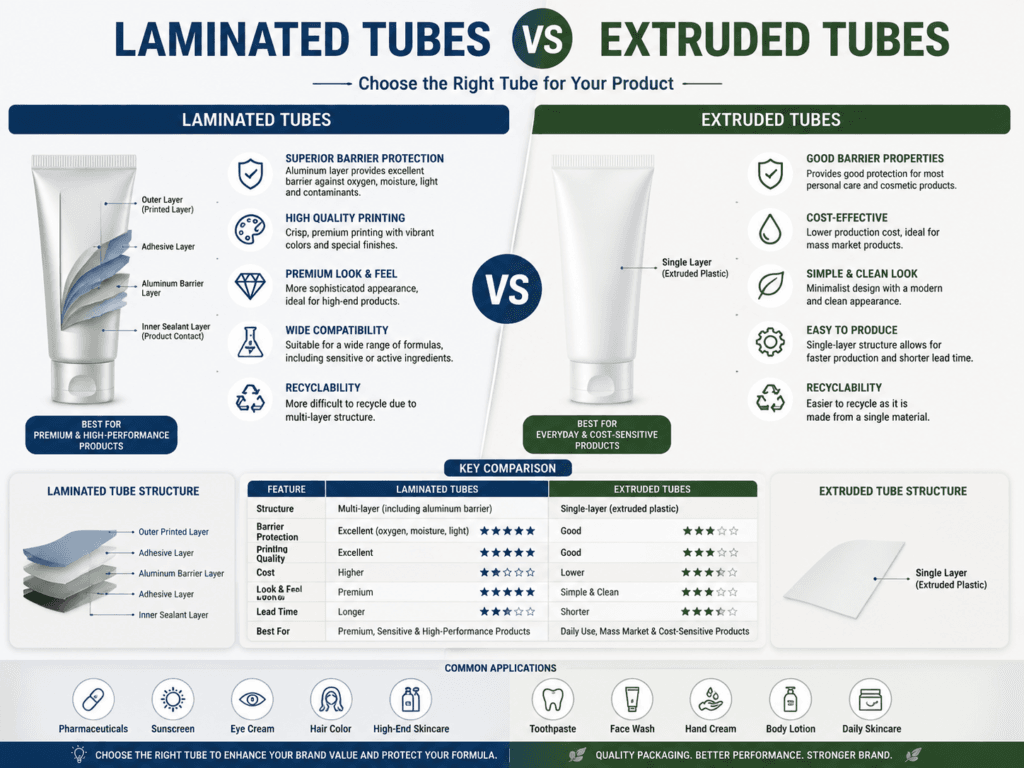
Laminated tubes use layers of plastic and sometimes aluminum. These layers are cut, rolled, and sealed to make the tube. This process is more complex and makes recycling harder. Co-extruded tubes have no seams and use extruded plastic layers. This makes recycling easier.
Here is a table that shows how these tubes compare in recyclability:
| Tube Type | Recyclability |
|---|---|
| Co-extruded Tubes | Easier to recycle due to mono-material construction |
| Laminated Tubes | More complex multi-layer structures complicate recycling |
You will also see these differences:
- Co-extruded tubes have a smooth outside and better print quality.
- Laminated tubes can look less smooth and have fewer design choices.
- Co-extruded tubes are easier to use and work for many products.
- You can pick from many finishes and printing styles with co-extruded tubes.
If you want tube packaging that looks nice, protects your product, and is easier to recycle, co-extruded tubes are the best choice.
Advantages for Cosmetics Packaging
Barrier and Product Protection
You want your cosmetics to stay safe and fresh. Co-extruded cosmetic tubes use new technology to make strong barriers. These barriers keep out air, water, and light. The co-extruded film in each tube blocks oxygen, moisture, and UV rays. This stops oxidation and keeps your formulas from changing. You can see how each barrier works in the table below:
| Barrier Type | Function | Materials Used |
|---|---|---|
| Oxygen | Reduces oxidation and prolongs shelf life | Aluminum foil, EVOH |
| Moisture | Prevents destabilization and microbial growth | High-quality barrier layers |
| Light (UV) | Shields sensitive ingredients from degradation | Aluminum barriers, UV-blocking plastics |
| Contaminants | Limits entry of bacteria and particles | Airless and pump tubes with multi-layer technology |
This protection is important for creams and serums. You can trust your products will last longer and work well.
Branding and Customization
You want your packaging to look special in stores. Co-extruded tubes give you many ways to show your brand. The smooth surface lets you print and decorate with high quality. You can pick custom printing, hot stamping, embossing, and more. The table below shows some choices:
| Customization Option | Description |
|---|---|
| Custom Printing | Allows for unique designs and branding elements. |
| Decoration Techniques | Includes options like hot stamping and embossing. |
| Material Choices | Flexibility in selecting tube materials. |
| Tube Shape | Ability to change the shape of the tube. |
| Color Matching | Customization to align with brand colors. |
You can use many colors and special finishes to make your tubes stand out. Many brands use these features to get more customers and build loyalty.
Tip: Good printing on co-extruded tubes helps your cosmetics get noticed and supports your brand.
Stability and Versatility
Co-extruded tube packaging keeps many cosmetics stable. The co-extruded film protects products from air, water, and UV light. You can use these tubes for creams, gels, ointments, and serums. The technology lets you pick different sizes, shapes, and closures. The table below shows how flexible these tubes are:
| Feature | Description |
|---|---|
| Customization | Fully customizable with premium printing and finishes to enhance brand appeal. |
| Barrier Protection | Provides excellent barrier protection suitable for various formulations. |
| Design Options | A range of design options available for different cosmetic products. |
| Size Variability | Available in various diameters and lengths, customizable to meet specific product needs. |
| Material Options | High-quality materials like HDPE/LDPE/LLDPE available for sustainability. |
| Aesthetic Appeal | Vibrant decorations and unique designs enhance product presentation and consumer attraction. |
You can count on co-extruded tubes for many uses in cosmetics. Tube packaging is now the top choice for brands that want safe, flexible, and nice-looking packaging.
Cosmetics Applications and Examples
Common Products and Scenarios
You can find co-extruded cosmetic tubes in many products you use every day. These tubes are good for things that need to stay fresh and safe. Some examples are:
- Shampoos
- Conditioners
- Skin creams
- UV sunscreens
- Lotions
- Hair care products
- Premium items that need a smooth look
These tubes help keep your cosmetics safe from air, water, and light. The co-extruded film inside helps creams and sunscreens last longer. When you hold the tube, it feels soft and fancy. You can squeeze the tube easily to get just the right amount. This makes using your cosmetics simple and fun.
Note: Co-extruded cosmetic tubes make your products look nice and feel special. You get both style and safety together.
Industry Examples
Lots of brands use co-extruded tube packaging for their best products. You will see these tubes in skin creams, sunscreens, and other personal care items. The co-extruded film keeps products safe and gives a smooth look. Brands pick these tubes for their fancy lines because they want you to notice the quality.
Jiangsu Xinfly Packaging Co.,Ltd. is a well-known supplier of cosmetic tubes. Their custom PE, PCR, ABL, and PBL tube packaging is used by beauty brands all over the world. Xinfly Packaging has important certifications like ISO, RoHS, SGS, PCR Plastic GRS, and third-party testing. You can check their SGS test report here and see all certifications on their certifications page.
Here is a table that shows where you often see co-extruded tubes in cosmetics:
| Application Area | Example Products | Why Use Co-Extruded Tubes? |
|---|---|---|
| Skin Care | Creams, lotions | Keeps formulas fresh and stable |
| Sun Protection | UV sunscreens | Blocks light and air, easy to use |
| Hair Care | Shampoos, conditioners | Flexible, strong, and attractive |
| Premium Cosmetics | Serums, specialty items | Smooth finish, luxury feel |
You can trust co-extruded tube packaging for many cosmetics. These tubes give you safety, style, and a better way to use your products.
Co-extruded cosmetic tubes are popular in beauty packaging. They use strong barriers to protect products and keep them fresh. You can pick eco-friendly materials for these tubes. This helps cut down on waste and makes the tubes lighter. Brands like how these tubes look and how easy they are to change. More people want fancy and earth-friendly packaging now. Co-extruded tubes help your brand get noticed and keep products safe.
FAQ:Co-Extruded Cosmetic Tubes Guide
Learn how co-extruded cosmetic tubes with EVOH barrier layers improve product stability, extend shelf life, and support premium skincare, sunscreen, and cosmetic formulations.
What are co-extruded cosmetic tubes?
What is EVOH in cosmetic tubes?
Why use co-extruded tubes for skincare products?
Are co-extruded tubes recyclable?
What products use co-extruded tubes?
What is the difference between laminated and co-extruded tubes?
What is the MOQ for co-extruded tubes?
Can co-extruded tubes be customized?
Need Custom Co-Extruded Cosmetic Tubes?
Xinfly Packaging provides high-performance co-extruded tube solutions with EVOH barrier technology, helping your brand improve product stability and packaging efficiency.