
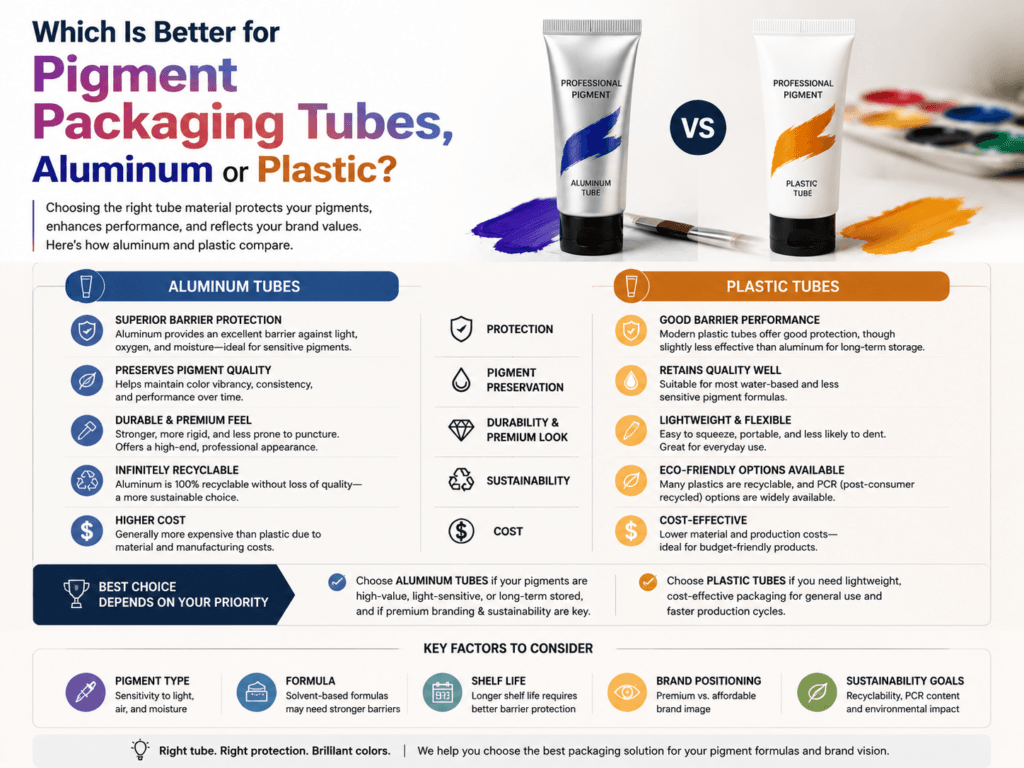
When you pick pigment packaging tubes, you must choose between aluminum and plastic. This choice depends on a few important things. Aluminum tubes keep pigments safe from air and light. This helps your products stay fresh. Aluminum is also good for the environment. It can be recycled many times. This means it lowers the carbon footprint of packaging. Plastic tubes are cheaper to make. They can be shaped in many ways. This makes them great for creative designs. Many brands use plastic for fun and flexible branding. If a brand wants to look fancy, it often picks aluminum. If a brand wants to save money and be flexible, it uses plastic.
- Product protection
- Sustainability
- Cost
- Brand positioning
Key Takeaways
- Aluminum tubes keep air and water out. This helps pigments stay fresh longer.
- Plastic tubes cost less. They can be made in many shapes and colors. This is good for creative branding.
- Aluminum tubes are good for the planet. They can be recycled fully. This helps cut down on waste.
- Think about how long the product lasts. Also, think about how people use it. This helps you pick between aluminum and plastic tubes.
- Look at what your brand needs. Aluminum is best for a fancy look and strong tubes. Plastic is best if you want to save money and have more choices.
Material Comparison for Pigment Packaging Tubes
Aluminum Tubes: Physical Properties
Aluminum tubes feel strong and tough. They have a smooth surface and shiny look. Aluminum does not bend much. You can squeeze these tubes, and they stay firm until empty. Aluminum stops dents and cracks. It does not mix with most pigments, so your product stays clean. The shape of aluminum tubes helps you use all the pigment. This means you waste less. Using aluminum tubes is smart because it helps cut down waste.
Plastic Tubes: Physical Properties
Plastic tubes feel light in your hand. You can bend and squeeze them easily. How flexible plastic is depends on the resin type. For example, PET and HDPE plastics are not the same strength. The thickness and design, like ribs, can make plastic tubes stronger. These features help plastic tubes take hits without breaking. But plastic tubes can change shape if you press too hard. Over time, they may not go back to their old shape. This can leave some pigment inside. Plastic tubes are easy to use, but they do not always empty as well as aluminum tubes.
Barrier Protection and Output Control
When you look at aluminum and plastic tubes, you see big differences in barrier protection. Aluminum tubes block almost all air and water. This keeps pigments fresh for a long time. Tests show aluminum tubes keep more than 95% of active ingredients safe, even after six months in tough places. Moisture stays under 10%. Aluminum tubes also keep air out after you squeeze out pigment. This matters for products that spoil fast.
Plastic tubes do not block as much air and water. HDPE plastic lets more air and water pass through. This can make pigments dry out or lose color faster. You may see that plastic tubes do not keep products as fresh as aluminum tubes. But plastic tubes let you control how much pigment comes out. The soft walls let you push out just the right amount. Still, plastic tubes can change shape, so you might not get all the product out.
Tip: If you need the best barrier for sensitive pigments, pick aluminum tubes. If you want flexible output and cool shapes, plastic tubes may be better.
| Feature | Aluminum Tubes | Plastic Tubes |
|---|---|---|
| Rigidity | High | Medium to Low |
| Flexibility | Low | High |
| Barrier Protection | Excellent | Moderate to Low |
| Output Control | Good | Excellent |
| Waste Reduction | Zero Waste Possible | Some Residue Left |
| Deformation Risk | Low | Medium to High |
You can see the main differences between aluminum and plastic tubes. These affect how well they protect pigments and how easy they are to use. Aluminum gives you great barrier protection and less waste. Plastic offers flexibility and better control, but more risk of changing shape and less protection.
Durability and User Experience
Aluminum Tubes: Durability and Corrosion Resistance
You want your pigment tubes to last a long time. Aluminum tubes are very strong. They do not dent or crack easily. You can squeeze them many times. They keep their shape well. Aluminum does not rust fast. Most aluminum tubes have a special inside layer. This layer stops pigment from touching the metal. It keeps the pigment safe and fresh. Aluminum blocks water and air very well. This helps your pigments last longer on the shelf.
Here is a table that shows how long each tube lasts:
| Tube Type | Average Lifespan |
|---|---|
| Plastic Tubes | 2 – 5 years |
| Aluminum Tubes | 3 – 7 years |
Aluminum tubes can last up to seven years. This means you get more use and less waste.
Plastic Tubes: Deformation and Residue Issues
Plastic tubes feel soft and bendy. You can squeeze them with little effort. Over time, plastic tubes can lose their shape. If you press too hard, they may not go back. This can trap pigment inside the tube. It can be hard to get all the pigment out. Plastic does not block water and air as well as aluminum. This means pigments can dry out or change color faster. Pigments in plastic tubes do not last as long.
The table below shows how aluminum and plastic tubes protect pigments:
| Feature | Aluminum Tubes | Plastic Tubes |
|---|---|---|
| Corrosion Resistance | Superior, treated with internal coating | Inferior, prone to degradation |
| Protection Against Moisture | Excellent, prevents oxidation and moisture ingress | Poor, allows moisture to affect pigments |
| Shelf Life | Extended to over 5 years due to effective sealing | Shorter, pigments can decompose quickly |
| UV Protection | Natural barrier against UV rays | High light transmittance leads to pigment damage |
| Condition After 6 Months | Slight crust on surface | Completely hardened |
Dispensing and Handling Experience
You want a tube that feels good in your hand. Aluminum tubes give a smooth squeeze. They keep their shape after you use them. You can use almost all the pigment. This means less waste. Plastic tubes are lighter and softer. You can control how much pigment comes out. Some people like this soft feel. But plastic tubes can change shape and trap pigment inside. Aluminum gives better protection and longer-lasting pigments. Plastic is easy to use and gives more control.
Tip: If you want the best durability and protection, pick aluminum tubes. If you want easy squeezing and a soft feel, plastic tubes may be better for you.
Environmental Comparison
Aluminum Tubes: Sustainability and Recycling
You want packaging that helps the environment. Aluminum tubes are a great choice for this. Aluminum comes from the earth and you can recycle it many times. It does not lose its quality when recycled. When you finish using an aluminum tube, put it in the recycling bin. Most recycling centers take aluminum. This helps cut down on waste and helps with waste management.
Aluminum tubes are easy to recycle. You can melt them and use the metal again. This saves energy compared to making new aluminum. Picking aluminum tubes is better for the planet. Many brands use aluminum tubes to show they care about the environment.
Note: If you want to help the earth and make less waste, aluminum tubes are a smart pick. You follow the trend of using green packaging when you choose aluminum tubes for your pigment packaging.
| Feature | Aluminum Tubes |
|---|---|
| Recyclability | 100% |
| Waste Reduction | Excellent |
| Sustainability | High |
| Waste Management | Easy |
Plastic Tubes: Environmental Impact
Plastic tubes affect the environment in a different way. You see plastic tubes everywhere because they are cheap and can be made in many shapes. But plastic tubes make more trash. Many end up in landfills or the ocean. This makes the problem of plastic waste worse. Plastic tubes do not break down fast. Some types can take hundreds of years to go away.
It is harder to recycle plastic tubes than aluminum tubes. Not all recycling centers take every kind of plastic tube. You may need to check if your center will recycle them. Using plastic tubes makes waste management harder. You see more trash and less green packaging.
If you want to help the planet, look for better choices. Some companies use recycled plastic or plant-based materials for tubes. These choices help cut down on waste and are better for the earth. Still, plastic tubes are not as good as aluminum tubes for recycling or being green.
Energy Use and Carbon Footprint
You should think about energy use and carbon footprint when picking packaging. Making aluminum tubes uses more energy at first. But recycling aluminum saves up to 95% of energy compared to making new aluminum. This means you lower the carbon footprint each time you recycle aluminum tubes.
Plastic tubes use less energy to make at first. But over time, plastic tubes make more waste. Many plastic tubes end up in landfills, which makes waste problems worse. Aluminum tubes keep products fresh, so you throw away less pigment. Less waste means a smaller carbon footprint for your packaging.
Tip: If you want to help the planet and lower your carbon footprint, pick aluminum tubes. You make a better choice for the earth and waste management.
| Packaging Type | Initial Energy Use | Recyclability | Waste Management | Carbon Footprint |
|---|---|---|---|---|
| Aluminum | High (first use) | Excellent | Easy | Low (when recycled) |
| Plastic | Low (first use) | Moderate | Difficult | High (with waste) |
You can see that aluminum tubes are better for the earth. They are easier to recycle and make less waste. Plastic tubes make more trash and hurt the environment more over time. When you compare both, aluminum tubes win for being green in pigment packaging.
Cost and Production Factors
Aluminum Tubes: Manufacturing and Price
When you look at pigment packaging tubes, you will notice that aluminum tubes cost more to make. The process to shape and finish aluminum takes extra steps. You need special machines to form the tubes and add protective layers inside. These steps help keep your pigments safe, but they also raise the price. On average, aluminum tubes are 30-50% more expensive than plastic tubes. You can see this cost comparison in the table below:
| Tube Type | Cost Comparison |
|---|---|
| Aluminum Tubes | 30-50% more expensive |
| Plastic Tubes | Baseline cost |
You pay more for aluminum tubes because they offer better protection and longer shelf life. If you want to show your product as premium, you may choose aluminum even with the higher price.
Plastic Tubes: Cost and Design Flexibility
Plastic tubes give you a lower cost for your packaging. The machines that make plastic tubes work fast and use less energy. You can make many shapes and sizes with plastic. This helps you create unique packaging for your brand. Plastic tubes also weigh less, so shipping costs stay low. If you want to save money and try new designs, plastic tubes are a smart choice. Many brands pick plastic tubes when they want to keep costs down and offer fun shapes.
Tip: If you want to test new looks or colors for your packaging, plastic tubes let you do this without spending much.
Branding and Customization Options
You can use both aluminum and plastic tubes to show off your brand. Aluminum tubes give a shiny, high-end look. You can print sharp logos and colors on them. This makes your product stand out on the shelf. Plastic tubes offer even more choices. You can pick from many colors, finishes, and shapes. Some plastic tubes have soft-touch or matte surfaces. You can add special caps or applicators to make your packaging unique.
If you want the best mix of cost, design, and branding, plastic tubes give you more options. Aluminum tubes work well if you want a classic, premium feel for your pigment packaging tubes.
Industry Usage and Trends
Pigment Packaging Tubes in Cosmetics and Inks
You can find aluminum lotion tubes and plastic lotion tubes in many industries. In cosmetics, aluminum cosmetic tubes keep creams, gels, and pigments safe from air and light. Artists like to use aluminum lotion tubes for paints and special gels. These tubes help colors stay bright and easy to use. Aluminum cosmetic tubes are also used for personal care, adhesives, and dyes. Plastic lotion tubes are good for lotions, cleansers, and hair products. People like them because they are light and simple to squeeze. Jiangsu Xinfly Packaging Co.,Ltd. makes both aluminum cosmetic tubes and plastic lotion tubes. They offer custom PE, PCR, ABL, and PBL tube packaging for beauty brands all over the world. Xinfly Packaging has certifications like ISO, RoHS (RoHS No.: NTS2405005R), SGS (Test Report No.: GZHL24050181970T), and PCR Plastic GRS (GRS-Certificate No.: ITS-TE-00059997-GRS-G). You can see more certifications at Xinfly Packaging Certifications.
- Common uses for aluminum lotion tubes:
- Cosmetics and personal care
- Artist paints and specialty gels
- Dyes and adhesives
- Common uses for plastic lotion tubes:
- Lotions and creams
- Hair and skincare products
- Everyday pigment packaging tubes
Plastic Lotion Tubes and Market Preferences
Plastic lotion tubes are the most popular in many places. The plastic tube packaging market for pharma and cosmetics was about USD 1.76 billion in 2023. Experts think this will grow to USD 2.76 billion by 2031. This happens because people want tubes that are easy to squeeze and make less waste. Cosmetics use 59.11% of these tubes, and squeezable tubes are 46.62% of the market. The Asia Pacific area uses the most plastic lotion tubes, with a 35.56% market share and the fastest growth. Brands pick plastic lotion tubes because they cost less, are light, and can be made in many shapes. You can choose many colors and finishes with plastic lotion tubes, so brands can look special.
Note: If you want packaging that is simple to use and fits many styles, plastic lotion tubes are a great pick.
Regulatory and Consumer Considerations
You should know what makes people pick aluminum lotion tubes or plastic lotion tubes. Many people want packaging that feels safe and looks nice. Some want luxury and care about the earth, so they pick aluminum cosmetic tubes. Others want to save money and like easy use, so they choose plastic lotion tubes. The table below shows what people like about each material:
| Material | Characteristics | Consumer Appeal |
|---|---|---|
| Aluminum | Lightweight, recyclable, durable | Luxury feel, sustainability |
| Plastic | Strong, chemical resistant, versatile | Cost-effective, functional options |
| Sustainable | Biodegradable options like paper, bamboo | Eco-friendly appeal |
Governments want more recycling and less plastic trash now. In Europe and Asia, new rules say packaging must be easier to recycle. Aluminum lotion tubes can be recycled many times and stay strong. This makes them a good choice for brands that want to follow new laws and help the earth. Safety rules, like the German Printing Ink Ordinance, make sure packaging for food and pigments is safe and clean. More brands use aluminum cosmetic tubes and green plastic lotion tubes to follow these rules and make customers happy.
You can pick between two good types of pigment packaging tubes. Aluminum tubes keep your pigments safe and fresh for a long time. They are also better for the environment. Plastic tubes are lighter, cost less, and are easy to use. You should think about what is most important for your brand:
- How well the tube protects your product and how long it lasts
- How the tube affects the earth and if it can be recycled
- How much it costs and how easy it is to get
- How people feel using it and how it looks for your brand
If you need help, you can ask suppliers like Xinfly Packaging. They have certified and custom tube choices for all kinds of needs.
Frequently Asked Questions
Learn how to choose the right cosmetic tube packaging for aluminum and plastic pigment tubes, including cost, performance, and sustainability considerations.
Which is better for pigment packaging: aluminum or plastic tubes?
Are aluminum tubes better for product stability?
Are plastic cosmetic tubes recyclable?
What is the cost difference between aluminum and plastic tubes?
Can both materials be customized for branding?
What industries use pigment packaging tubes?
What is the MOQ for cosmetic pigment tubes?
Need Custom Pigment Packaging Tubes?
Xinfly Packaging provides aluminum and plastic cosmetic tube solutions with OEM/ODM customization to help your brand balance cost, performance, and sustainability.