
You probably use toothpaste tubes every day. But have you thought about what they are made of? Most tubes use things like high-density polyethylene (HDPE), polypropylene, aluminum, or compostable paper. These materials keep toothpaste safe from air and water. People throw away about 20 billion tubes each year. These tubes can stay in landfills for 400 to 1,000 years. Knowing about these materials helps you make better choices for the Earth.
| Material Type | Why Manufacturers Choose It |
|---|---|
| HDPE | Can be recycled, strong, keeps toothpaste fresh |
| Aluminum | Blocks light and air, can be recycled |
| Polypropylene (PP) | Makes tight caps, stops leaks |
| Compostable options | Breaks down on its own, good for the planet |
Key Takeaways
- Toothpaste tubes use plastic, aluminum, and compostable paper. Knowing about these materials helps you pick greener choices. Most toothpaste tubes go to landfills and stay there for a long time. They can take hundreds of years to break down. Picking recyclable or biodegradable tubes can help cut waste. Recyclable HDPE tubes are now easier to find. Try to buy these tubes to make recycling simple and help the planet. You can also use refillable or reusable toothpaste containers. These choices use less plastic and are better for the earth. Every small choice matters. When you pick green products, you help nature and push companies to be greener.
Toothpaste Tube Materials
Plastics in Toothpaste Tubes
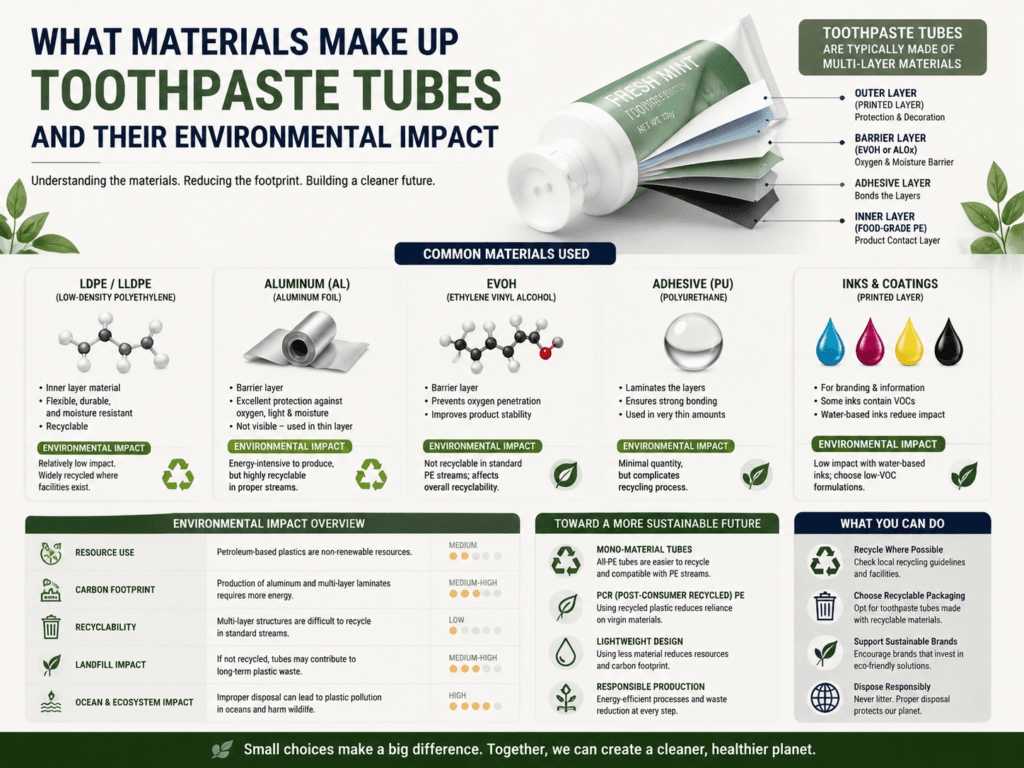
Most toothpaste tubes today are made from plastic. Companies pick plastic because it is strong and light. Plastic also keeps toothpaste fresh. The main types are plastic laminate tubes and HDPE tubes. Plastic laminate tubes have many layers of plastic. These layers make the tube bendy and tough. HDPE tubes use just one kind of plastic. This makes them easier to recycle.
| Type of Plastic | Properties | Pros/Cons |
|---|---|---|
| Plastic Laminate Tubes | Made from several layers, bendy, light, and tough. | Pros: Simple to make, cheap, stops leaks. Cons: Not very green, hard to recycle. |
| HDPE Tubes | Made from one plastic, can be recycled, strong, and safe. | Pros: Can be recycled, light and tough. Cons: Recycling depends on where you live. |
| Polypropylene (PP) | Used for caps, snaps closed, stays tight. | Pros: Strong, cheap. Cons: Hard to recycle if mixed with other plastics. |
Plastic tubes can stay in landfills for up to 500 years. If you throw away tubes with paste still inside, they often go to landfills. This adds to plastic waste. Plastic pollution can hurt animals and the planet.
Aluminum and Laminates
Some toothpaste tubes use aluminum or a mix of aluminum and plastic. Aluminum blocks air, light, and water. This keeps toothpaste fresh for longer. Aluminum tubes are light, so shipping is easier.
| Advantages | Disadvantages |
|---|---|
| Blocks air, light, and water to protect toothpaste | Costs more than plastic |
| Light weight helps lower shipping costs | Gets dents and bends easily |
| Can be recycled and is better for the planet | Not good for thick toothpaste |
| Very strong and easy to shape | Some toothpaste needs a lining to stop reactions |
Aluminum tubes can be recycled and are better for the Earth than most plastics. They also help keep toothpaste clean. Some toothpaste needs a lining inside the tube. This stops the metal from reacting with the paste.
Multi-Material Construction
Many toothpaste tubes use a mix of materials. They may have layers of different plastics and aluminum. This makes recycling very hard. The layers stick together and are tough to pull apart. Recycling machines cannot split these layers. Leftover toothpaste inside the tube can also make recycling harder.
- Multi-material tubes use sheets of plastic laminate and sometimes aluminum.
- These layers keep toothpaste safe but make recycling tough.
- Most recycling centers cannot handle these tubes, so they go to landfills.
- Now, companies are making tubes from just one material like HDPE or aluminum.
More companies are changing how they make toothpaste tubes. About 90% of toothpaste tubes and 75% of HDPE tubes in the US can now be recycled. People want greener choices, so brands are making better packaging for the Earth.
Environmental Impact of Toothpaste Tubes
Landfill and Pollution Issues
Toothpaste tubes are everywhere, but most become trash in landfills. About 20 billion tubes get thrown away around the world each year. Even if you recycle, only a few tubes actually get recycled. Almost 14 billion tubes stay in landfills every year. These tubes can take up to 500 years to break down. They slowly turn into tiny pieces called microplastics. This trash adds to pollution and hurts animals and plants. Making toothpaste tubes uses crude oil and energy. This causes more greenhouse gases. When tubes end up in the ocean, they break apart and pollute the water. Over 8 million tons of plastic go into the ocean every year. Toothpaste tubes are part of this problem.
- Most toothpaste tubes cannot be recycled.
- They stay in landfills for hundreds of years.
- Microplastics from tubes get into soil and water.
Did you know? Burning toothpaste tubes makes toxic chemicals. This makes pollution worse and adds more greenhouse gases.
Recycling Challenges
It is hard to recycle toothpaste tubes. Most tubes are made with layers of plastic and aluminum. This mix makes recycling difficult. Even if you try, sticky toothpaste inside the tube makes it harder. Special machines must shred and wash the tubes to clean them. Wish-cycling is when people put non-recyclable tubes in recycling bins, hoping they get recycled. This causes problems and messes up sorting at recycling centers.
- Wish-cycling makes recycling bins dirty.
- Dirty items mess up sorting at recycling centers.
- This makes recycling cost more and lowers recycling rates.
Tubes made from just one material are easier to recycle. But not all companies use these tubes. Recycling problems make packaging waste and pollution worse.
Toxicity and Longevity
Toothpaste tubes last a very long time in nature. Regular tubes can stay for hundreds of years and break into microplastics. These small pieces let out harmful chemicals and add to pollution. Bioplastics and cellulose tubes also take years to break down unless they go to special places. Making and burning tubes also makes greenhouse gases.
| Material Type | Degradation Time | Notes |
|---|---|---|
| Cellulose Tubes | Over 24 months | Whole tubes take longer to break down in normal weather. |
| Conventional Tubes | Hundreds of years | Break into microplastics and let out harmful chemicals. |
| Bioplastics (PLA) | Hundreds of years | Needs special composting or acts like PET plastic. |
You can help by picking recyclable tubes, toothpaste tablets, or making your own toothpaste. These choices make less trash and help the Earth.
Alternative Packaging Solutions
There are many choices besides regular toothpaste tubes. These new options help the Earth and support green living. Companies now work on making packaging easier to recycle. They also use materials that are better for the planet.
Recyclable HDPE Tubes
Some toothpaste tubes use only HDPE plastic. These tubes can go in normal recycling bins. Colgate started using these tubes in 2019. Now, most toothpaste tubes in the US are made to be recycled. Tom’s of Maine also uses HDPE tubes. This makes recycling easier than with tubes made from many materials. But some recycling centers still have trouble sorting small HDPE tubes. Colgate wants all its tubes to be recyclable soon. The Association of Plastic Recyclers likes these changes. They hope more companies will do the same.
Biodegradable and Compostable Options
You can pick biodegradable or compostable tubes. These use plant-based materials like paper, PLA, or bioplastics from corn or sugarcane. These break down much faster than normal plastic. Some tubes break down in just months or a few years. This means less trash in landfills and less plastic in nature. Many biodegradable tubes can be composted and help the soil. By choosing these, you help the planet.
- Lower Impact: These tubes break down fast.
- Made from plants, not oil.
- Less plastic ends up in landfills or oceans.
- Compostable and recyclable for better disposal.
Refillable and Reusable Packaging
You can use refillable or reusable toothpaste packaging. These include glass or metal containers, refill pouches, and toothpaste tablets. Toothpaste tablets come in glass jars, tins, or compostable bags. They have no plastic and are easy to take on trips. Refillable dispensers use small pods and cut waste by up to 80%. Making your own toothpaste in reusable containers also stops packaging waste.
| Type of Packaging | Description | Benefits | Drawbacks |
|---|---|---|---|
| Refillable Toothpaste Packaging | Glass or metal containers, refill pouches, pumps, or cartridges | Less plastic waste, good for the planet, builds loyalty | Needs effort, costs more at first |
| Toothpaste Tablets | No plastic, in glass jars, tins, or compostable bags | No plastic, easy to travel with, lasts long | Not everyone likes them, may not whiten well |
Some people do not want to switch. They like regular tubes because they are easy and give the right amount. Green options can cost more and are not always in stores. You can help by trying new types when you finish your old toothpaste. Support brands that use green packaging.
Government rules push companies to use green packaging. They help recycling and limit non-recyclable materials. This makes more eco-friendly products.
Jiangsu Xinfly Packaging Co.,Ltd. makes custom PE, PCR, ABL, and PBL tubes for beauty brands. They have ISO, RoHS, SGS, and GRS certificates. You can see their certificates here.
You see toothpaste tubes made from plastics, aluminum, and multi-layer materials. These tubes stay in landfills for a very long time. They break into tiny microplastics that can hurt animals. Picking plant-based, refillable, or powder options helps cut waste and pollution. You can help by:
- Using toothpaste tablets or powders in containers you can reuse.
- Trying refillable dispensers or making your own toothpaste.
- Supporting recycling programs and brands that care about the planet.
| Action | Impact |
|---|---|
| Reusable packaging | Cuts down landfill trash and pollution |
| Plant-based options | Gives better ways to get rid of tubes |
| Recycling participation | Helps bigger goals for a cleaner planet |
Every small step you take helps protect nature and pushes companies to make greener products.
What Materials Make Up Toothpaste Tubes & Their Environmental Impact
A complete oral care packaging guide explaining toothpaste tube materials such as PE, PCR, ABL, PBL and aluminum, and how each material affects sustainability, recyclability, barrier performance and environmental impact.
What materials are used in toothpaste tubes?
Which toothpaste tube material is most common?
What is PCR in toothpaste tubes?
Are toothpaste tubes recyclable?
Why are ABL tubes used in toothpaste packaging?
What is the difference between PE and PBL toothpaste tubes?
Which toothpaste tube is most environmentally friendly?
What is EVOH in toothpaste tubes?
Do toothpaste tube materials affect product shelf life?
How do I choose the right toothpaste tube material?
Can toothpaste tubes be customized in different materials?
Why choose Xinfly Packaging for toothpaste tubes?
Looking for Sustainable Toothpaste Tube Packaging?
Xinfly Packaging helps oral care brands choose the right materials for toothpaste tubes, balancing sustainability, barrier protection, cost and global manufacturing requirements.