
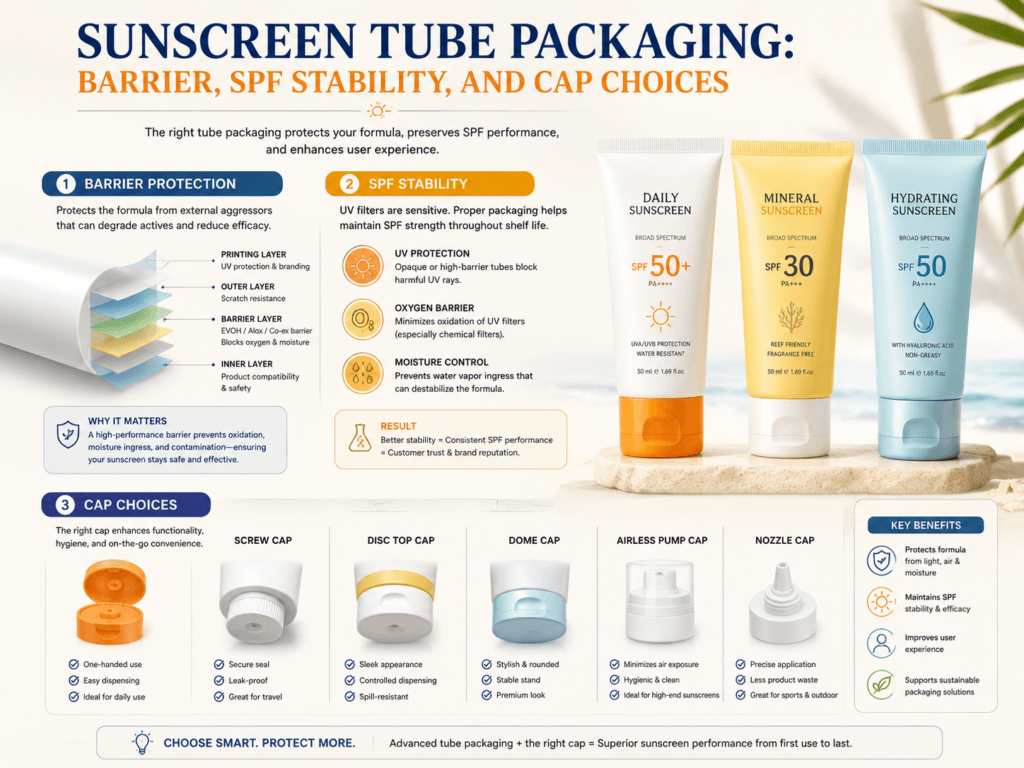
You count on sunscreen tube packaging to keep sunscreen safe and working. Barrier materials, tight seals, and good cap choices help stop germs and keep the sunscreen strong. Packaging protects the sunscreen from light, air, and heat. These things can hurt SPF stability. Companies like Xinfly Packaging use smart ways to stop these problems. The table below shows how packaging affects sunscreen shelf life and SPF strength:
| Factor | Impact on Sunscreen Shelf Life and SPF Stability |
|---|---|
| Light exposure | Causes UV filter breakdown |
| Air and oxidation | Lowers SPF strength |
| Heat sensitivity | Changes ingredient structure |
| Airless pump dispensers | Keep SPF strong |
| Opaque and UV-blocking tubes | Help sunscreen work longer |
| Aluminum and laminated tubes | Keep temperature-sensitive formulas stable |
Key Takeaways
- Sunscreen packaging keeps out light, air, and heat. These things can hurt SPF stability. Tubes made from aluminum or laminated films work best. They give strong barrier protection. Airtight seals help keep sunscreen fresh. They stop germs from getting in. Opaque or UV-blocking tubes make sunscreen last longer. They also help it work better. Pick a cap type that fits your needs. Flip-top caps are easy to use. Screw caps stop leaks better. Always make sure caps are closed tight after use. This stops leaks and keeps the sunscreen safe. Think about using eco-friendly packaging. This helps the planet and cuts down waste. Work with trusted suppliers like Xinfly Packaging. They give you good, safe, and strong sunscreen packaging.
Barrier Properties in Sunscreen Tube Packaging
Barrier properties are very important for sunscreen. They help keep sunscreen safe and working well. Picking the right tube helps protect the SPF. It also makes the sunscreen last longer. There are different types of tubes. Each one helps keep your sun cream tube or cosmetic tube fresh in its own way.
Tube Materials Overview
Plastic Tubes
Plastic tubes are used a lot for sunscreen. Most are made from PET film or LDPE film. PET film is strong and keeps its shape. It is also good for printing bright colors. LDPE film is soft and bends easily. It can be sealed with heat and does not get hurt by many chemicals. These tubes are good for many sunscreens. But they do not stop all light or oxygen from getting in.
| Material | Barrier Properties |
|---|---|
| PET film | Gives strong strength, keeps its shape, and prints well. |
| LDPE film | Seals with heat, bends easily, and resists chemicals. |
| Aluminum foil | Blocks almost all light, oxygen, and water. This protects UV filters and active ingredients. |
Laminated Tubes
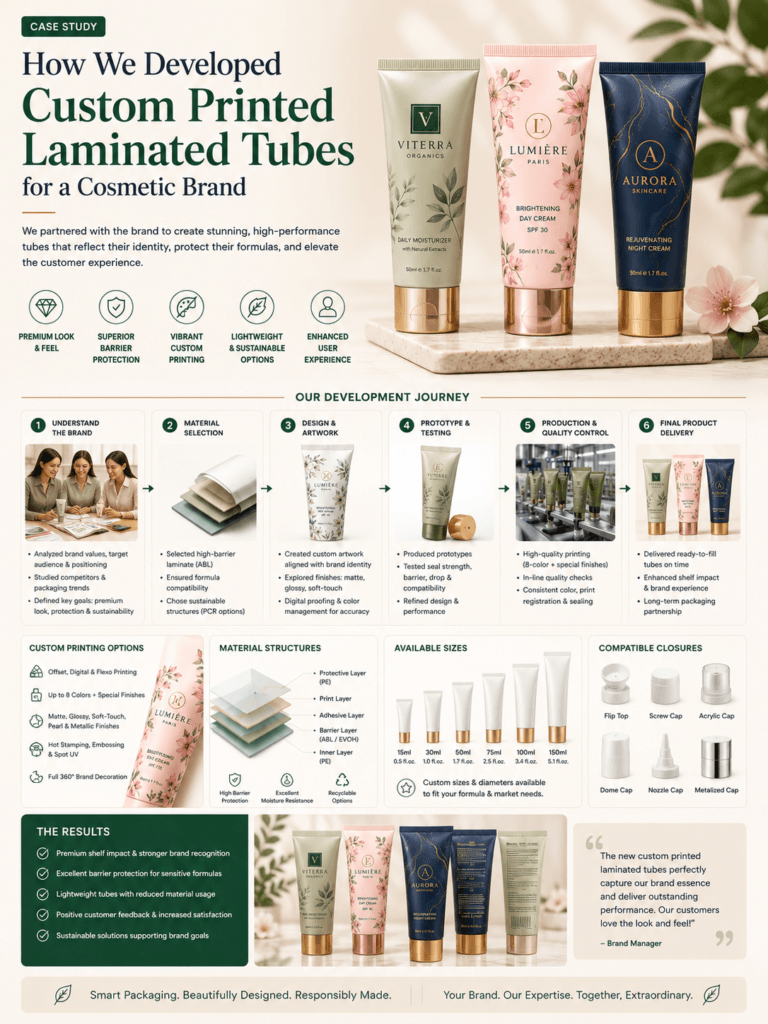
Laminated tubes have layers of different materials. These layers make the barrier better. Some tubes have a thin aluminum layer inside. This layer blocks almost all light, air, and water. Laminated tubes help keep SPF strong and protect important ingredients. They also feel smooth and look shiny, which people like.
Aluminum Tubes
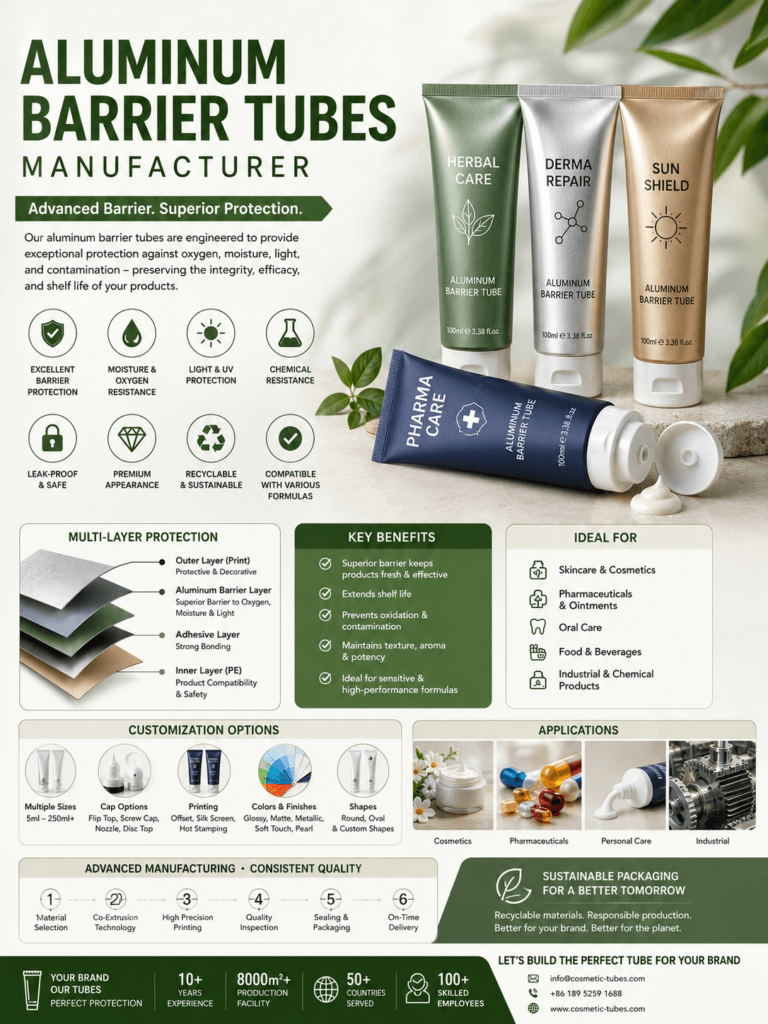
Aluminum tubes give the best barrier. They stop light, air, and water from getting in. This keeps sunscreen safe from things that can hurt the SPF. Aluminum tubes are good for formulas that need extra care. You often see them used for fancy sun cream tube products.
Multi-Layer and Opaque Barriers
Multi-layer tubes have many layers to make the barrier stronger. These layers can be plastic, aluminum, or special films like EVOH. Opaque barriers block light. This helps keep the sunscreen strong.
- Multi-layer tubes, like Aluminum Barrier Laminate (ABL) and Plastic Barrier Laminate (PBL), block more light and air than single-layer tubes.
- ABL tubes have a thin aluminum layer. This layer gives great protection from air, water, and light. It helps keep sunscreen safe.
- PBL tubes use plastic layers, sometimes with EVOH. These tubes also block air and water well, so the SPF stays strong.
If you pick multi-layer tubes, your sunscreen lasts longer and works better.
Airtight Seals and Shelf Life
Airtight seals keep air and germs out of the tube. This helps sunscreen stay fresh and safe. Good seals stop leaks and keep the SPF strong. If air gets in, it can break down the important ingredients. That means the sunscreen might not work as well.
You want packaging that seals tight every time you close it. This keeps the sunscreen safe, even after you open it. Brands like Xinfly Packaging use special sealing methods. These methods make sure every tube stays airtight. Their tubes help keep sunscreen strong and ready to use.
Tip: Always close the cap tightly after each use. This easy step helps your sunscreen work its best.
Xinfly Packaging’s Solutions
Xinfly Packaging has many ways to protect sunscreen. Their laminate tubes keep sunscreen working everywhere. Multi-layer tubes help keep SPF strong and steady. Xinfly Packaging also cares about the planet. They have eco-friendly packaging that helps cut down on waste. You can pick from many designs, so your cosmetic tube looks cool on the shelf.
| Advantage | Description |
|---|---|
| Superior Protection | Laminate tubes keep sunscreen working everywhere. |
| Stability and Performance | Tubes keep sunscreen steady and ready to use. |
| Preservation | Multilayer tubes keep sunscreen strong all the time. |
| Sustainability | Eco-friendly packaging helps the planet stay healthy. |
| Design Flexibility | Tubes are easy to use and show off cool designs. |
When you pick Xinfly Packaging, you get strong barriers, airtight seals, and smart designs. This helps your sunscreen stay safe, strong, and easy to use.
SPF Stability in Sunscreen Packaging
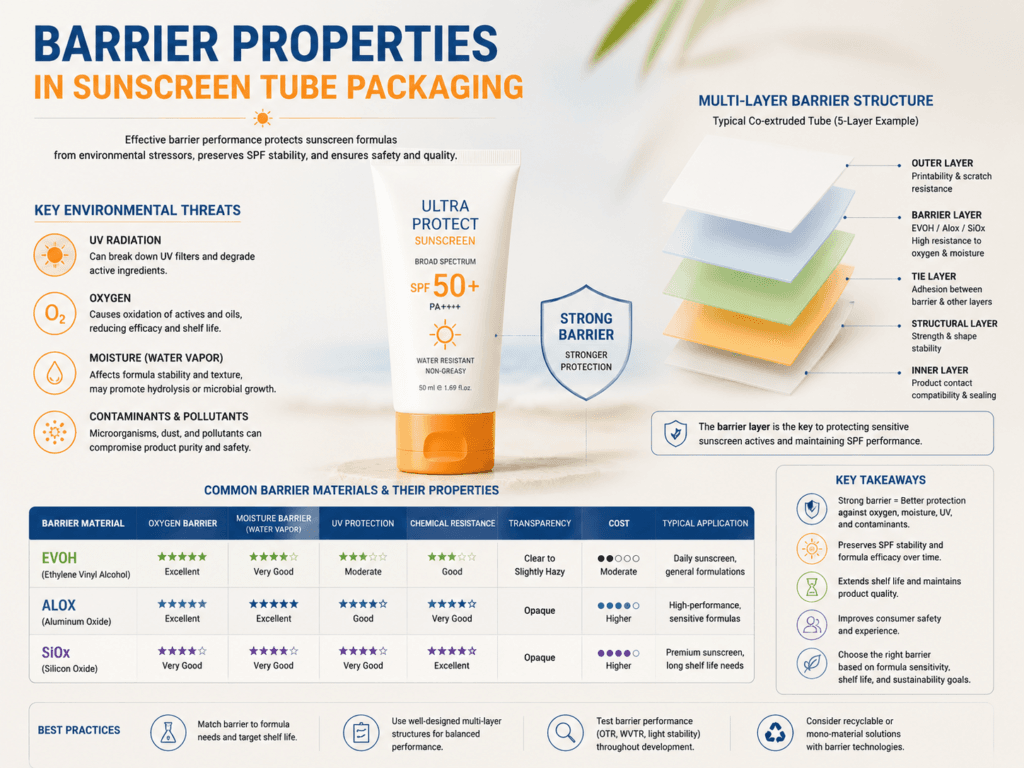
SPF stability is important for sunscreen to work well. If SPF goes down, you get less sun protection. You should know what changes SPF and how packaging helps keep it strong.
Factors Affecting SPF
Light Exposure
Light can break down sunscreen’s active ingredients. Sunlight or UV rays can make SPF weaker. Opaque tubes and UV-blocking packaging help stop this damage. You should pick packaging that keeps light out. This keeps sunscreen strong and helps it last longer.
Oxygen and Moisture
Oxygen and moisture can also lower SPF stability. Air inside the tube can cause oxidation. Oxidation changes sunscreen’s ingredients and lowers its strength. Moisture can let germs grow and cause contamination. Airtight tubes and strong seals keep air and water out. This protects sunscreen and keeps it safe.
Here is a table that shows the main things that affect SPF stability in sunscreen tube packaging:
| Factor | Description |
|---|---|
| Protection Against Light and UV | Opaque bottles and UV-protective packaging stop ingredient breakdown from sunlight. |
| Prevention of Oxidation | Airless pumps and sealed tubes keep air and bacteria out, keeping formula safe. |
| Heat Resistance | Thermal-resistant packaging stops damage from high temperatures during outdoor use. |
Packaging Design for SPF Preservation
You want packaging that keeps sunscreen stable and strong. Good design choices help keep SPF from dropping. Here are some features that help:
- Tubes block air and UV light, stopping ingredient breakdown.
- Direct dispensing lowers contamination risk.
- Tubes let you control how much sunscreen you use.
When you pick sunscreen tube packaging with these features, you help keep SPF stable. This means your sunscreen works better and lasts longer.
Tip: Keep your sunscreen in a cool, dry place and always close the cap tightly. This helps keep SPF stable and protects the formula.
Common Failures and Risks
Sometimes, packaging does not protect sunscreen well. If the tube lets in light or air, SPF can drop fast. Weak seals or bad caps can cause leaks. This lets in moisture and germs, which can cause contamination. If you use high-spf sunscreen, you need strong packaging to keep it working.
Common risks include:
- Tubes that are too thin and let in light or air.
- Caps that do not seal tight, causing leaks.
- Packaging that cracks or breaks in heat.
- Poor barrier materials that do not protect the formula.
If you want to keep sunscreen strong, always check the packaging for good barriers, airtight seals, and strong caps. This helps you avoid problems and keeps your sunscreen safe and effective.
Cap Choices for Tube Packaging
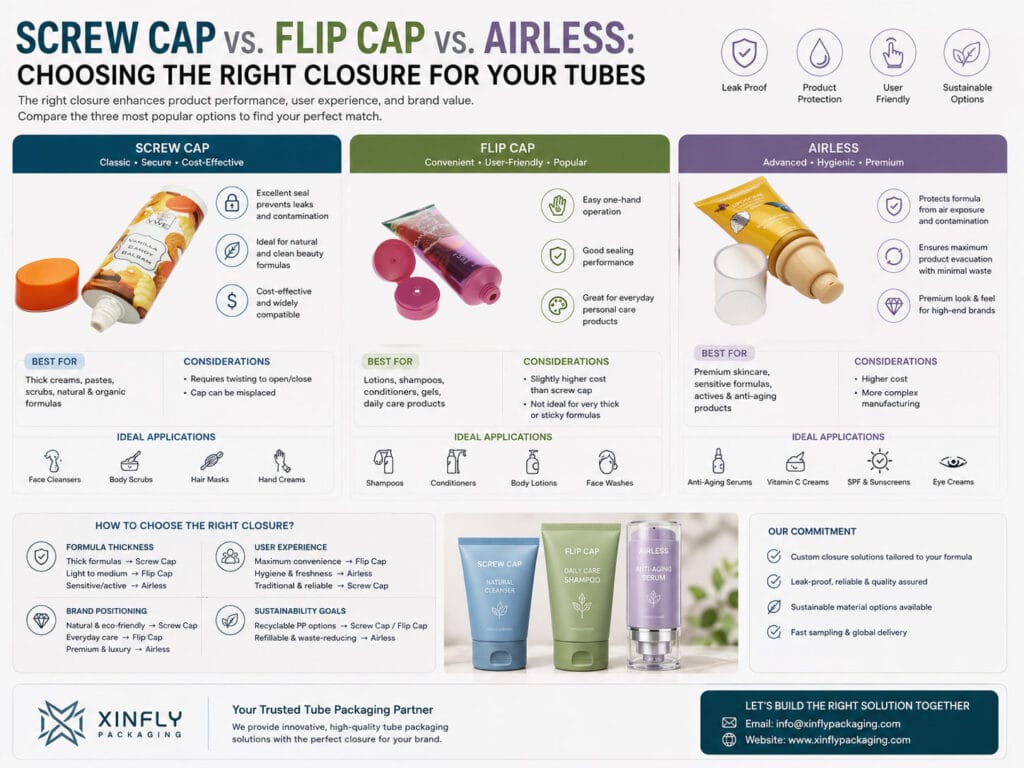
Choosing the right closure for your sunscreen tube packaging makes a big difference in how well your sunscreen stays safe and easy to use. The closure you pick affects how well the tube protects the formula, how simple it is to open and close, and how much you enjoy using it. Let’s look at the most common closure systems for sun cream tube and cosmetic tube products.
Flip-Top Caps
Flip-top caps are one of the most popular closure options for sunscreen. You can open and close them with one hand, which makes them very convenient. This closure lets you quickly get the sunscreen you need, even when your hands are wet or sandy at the beach. Flip-top caps help keep the tube packaging clean because you do not have to remove the cap completely. This reduces the chance of losing the closure or dropping it on the ground.
Flip-top caps offer good protection against leaks, but they may not be as strong as screw caps. They provide a moderate barrier to air and moisture. This helps keep your sunscreen fresh, but you should always make sure the closure snaps shut after each use. Many people like flip-top caps because they are easy to use and make applying sunscreen fast.
Screw Caps
Screw caps give you a high level of leak prevention and product integrity. You twist the closure on and off, which creates a tight seal. This closure system works well for travel because it is less likely to pop open in your bag. Screw caps offer excellent protection for your sunscreen and help keep the formula safe from air and germs. They also work well for thicker creams that need a strong closure.
Screw caps may take a little more time to open and close, but they give you peace of mind. You know your sunscreen will not leak or dry out. This closure is a good choice if you want the best barrier for your cosmetic tube.
Snap-On Caps
Snap-on caps are another closure option you might see on sunscreen tube packaging. You press the closure onto the tube until it clicks into place. This closure is quick and easy to use. Snap-on caps can be handy for kids or anyone who wants a simple way to open and close the tube.
Snap-on caps offer basic leak prevention, but they may not be as strong as screw caps or flip-top caps. You should check that the closure is secure after each use. Some snap-on caps have extra features, like tamper-evident bands, to help keep your sunscreen safe.
Here is a table to help you compare closure types for sunscreen tube packaging:
| Cap Type | Leak Prevention | Product Integrity | Convenience | Hygiene |
|---|---|---|---|---|
| Screw Cap | High | Excellent | Moderate | High |
| Flip-Top Cap | Moderate | Good | High | Moderate |
Tip: Always check that your closure is tightly sealed before putting your sunscreen in a bag or backpack. This helps prevent leaks and keeps your sunscreen ready to use.
When you choose the right closure for your sunscreen, you help protect the formula and make it easier to use every day. Xinfly Packaging offers many closure systems for sun cream tube and cosmetic tube products, so you can find the best fit for your needs.
Leak Prevention and Resealability
You want your sunscreen to stay inside the tube, not leak into your bag or pocket. Good cap design helps stop leaks and keeps your sunscreen fresh. When you pick a tube with a strong cap, you protect your sunscreen from air, water, and germs. This keeps the formula safe and ready to use.
Caps that seal tightly help you use every drop of sunscreen. You do not waste product, and you save money. Leak-resistant tubes also make it easy to carry sunscreen when you travel or go outside. You do not have to worry about spills or messes.
Here are some reasons why leak prevention and resealability matter:
- Sunscreen tubes are lightweight and leak-resistant when you close them properly.
- Tight caps let you use sunscreen in a clean way, so you do not touch the formula inside.
- Good design helps you squeeze out all the sunscreen, so you do not leave any behind.
Tip: Always check that your cap snaps or twists shut before you put sunscreen in your bag. This simple step helps you avoid leaks and keeps your sunscreen working well.
Companies like Xinfly Packaging test their caps and tubes to make sure they seal tight. They use strong materials and smart designs to help you keep your sunscreen safe. You can trust their tubes to protect your sunscreen, even on hot days or during travel.
User Experience
The cap you choose changes how you use your sunscreen every day. Some caps make it easy to open the tube with one hand. Others help you control how much sunscreen you use. You want a cap that fits your lifestyle and makes sunscreen simple to apply.
Here is a table that shows how different cap types affect your experience:
| Cap Type | Features |
|---|---|
| Flip-top caps | Allow quick access and easy dispensing |
| Pump bottles | Control the amount dispensed, ideal for thicker lotions |
| Spray nozzles | Provide even coverage but need to be leak-proof |
| Solid sticks | Offer targeted application without spills |
Flip-top caps work well when you need sunscreen fast, like at the beach. Pump bottles help you use just the right amount, so you do not waste any. Spray nozzles cover your skin evenly, but you must make sure they do not leak. Solid sticks let you put sunscreen exactly where you want, without making a mess.
You can find many of these cap options from Xinfly Packaging. They design caps that are easy to use and safe for travel. You get a better experience when you pick the right cap for your sunscreen.
Note: Try different cap types to see which one you like best. The right cap can make sunscreen part of your daily routine.
Matching Tube Packaging to Sunscreen Formulas
Picking the right tube for your sunscreen matters a lot. The packaging should fit your sunscreen’s ingredients and how thick it is. This keeps your sunscreen safe, easy to use, and working well.
Ingredient Compatibility
You need to check if your sunscreen works with the tube material. Some ingredients can react with certain plastics or metals. This might change how your sunscreen feels or lower its SPF. Sensitive formulas need extra protection. You want a barrier that blocks air, light, and water. This helps keep the active ingredients safe and your sunscreen fresh.
If you use a sun cream tube for mineral or chemical sunscreens, make sure the tube blocks light and oxygen. Sensitive formulas, like those with vitamin C or zinc oxide, need strong barriers. You can pick plastic, laminated, or aluminum tubes. Each type gives a different level of protection for your cosmetic tube.
Viscosity and Dispensing
Sunscreen comes in many textures. Some are thick creams, and some are light lotions. How thick your sunscreen is changes how it comes out of the tube. You want a tube that lets your sunscreen come out smoothly, without clogging or skipping.
Here is a table that shows what to look for in tube packaging for different thicknesses:
| Criteria | Description |
|---|---|
| Viscosity tolerance | Must reliably dispense formulas ranging from 8,000–15,000 cP without skipping or clogging. |
| Dose consistency | Delivers ±5% variation across 100 actuations to ensure effective SPF protection. |
| Leak resistance | Passes ISTA 3A tests with zero leakage, even under pressure changes. |
If your sunscreen is thick, you need a tube with a wide opening or a pump. For lighter lotions, a smaller nozzle works best. This helps you use the right amount every time.
Custom Solutions
Every sunscreen formula is different. You might need special packaging for your brand and product. Xinfly Packaging has many choices to help you. You can pick the size, material, and design that fits your sunscreen. Their team can help you choose the best tube for sensitive formulas or special textures.
Here are some things you can get with custom packaging:
- You can pick designs that match your brand.
- Strong materials protect sensitive formulas from air and light.
- Many sizes for different sunscreen types.
- Custom printing makes your product stand out.
- Leak-proof tubes keep your sunscreen safe.
- Easy-to-use designs help you apply sunscreen.
You can also find expert solutions for sun cream tube and cosmetic tube products. Xinfly Packaging has high-barrier options for sensitive formulas and eco-friendly choices, like PCR materials. They let you order small amounts and get samples fast, so you can test your packaging before you buy.
Tip: Always test your sunscreen with the tube before selling it. This helps you make sure the formula stays safe and easy to use.
Regulatory and Safety in Sunscreen Packaging
Compliance Standards
You need to know the rules for sunscreen packaging in each place. These rules help make sure sunscreen is safe and follows the law. In the US, sunscreen is an over-the-counter drug. You must follow FDA registration and rules like 21 CFR 352. The Sunscreen Innovation Act is important too. Sunscreen must pass SPF and broad-spectrum tests. You also need to follow labeling rules. In the EU, you must follow (EC) No. 1223/2009. This law says you must label SPF and UVA protection clearly. You must show sunscreen works against UVA and UVB rays. New rules limit some ingredients.
| Region | Key Regulatory Standards |
|---|---|
| US | Sunscreens are classified as OTC drugs, requiring FDA registration, compliance with 21 CFR 352, and adherence to the Sunscreen Innovation Act. Must pass SPF and broad-spectrum tests, with specific labeling requirements. |
| EU | Governed by (EC) No. 1223/2009, requiring clear labeling of SPF and UVA protection, effectiveness against UVA and UVB rays, and adherence to testing standards for claims. New regulations limit certain ingredients. |
Jiangsu Xinfly Packaging Co.,Ltd. makes packaging that meets these rules. Their tubes have certifications like ISO, RoHS, SGS, and PCR Plastic GRS. You can check their certifications online for extra peace of mind.
Labeling and Tamper Evidence
You must put important information on your sunscreen tube. This includes SPF, water resistance, and all ingredients. You also need tamper-evident seals. These seals show if someone opened the tube before you bought it. Packaging design must have enough space for labels. You need to see SPF value, claims, and instructions clearly. The design should be clean and easy to read.
- You must show SPF and water resistance on the label.
- You need to list all ingredients.
- Tamper-evident seals help you trust the product.
- Packaging must have space for clear instructions.
Tip: Always check for tamper-evident seals and clear labels before you use sunscreen. This helps you stay safe and informed.
Barrier and Stability Testing
You want sunscreen packaging to protect the formula and keep it stable. Tests help check if the tube works well. Some tests measure color changes in packaging after aging. Others check if the tube stays strong after drop tests. You also need to test sunscreen inside the tube under UV light and heat. This shows if packaging keeps the formula safe and stable.
| Testing Protocols | Description |
|---|---|
| Color Difference Index | Measures color changes in packaging before and after aging, with specific ΔE values indicating acceptable color shifts. |
| Post-Aging Drop Testing | Assesses structural integrity of UV-aged materials through standardized drop tests, ensuring they can withstand mechanical stresses. |
| Compatibility and Temperature Stability | Involves testing the actual sunscreen in packaging under UV radiation and elevated temperatures to evaluate color change, deformation, emulsion stability, and active ingredient retention. |
You need to use strong tests. For example, you can test sunscreen in the tube at 45°C for twelve weeks under UV light. This helps you see if packaging keeps sunscreen stable and working. If you use LDPE or HDPE tubes, you may see changes in color or shape after sunlight. These changes can affect product quality and safety.
Note: Always choose packaging that passes barrier and stability tests. This helps you protect your sunscreen and keep it working well.
Sustainability and Consumer Trends
Eco-Friendly Tube Packaging
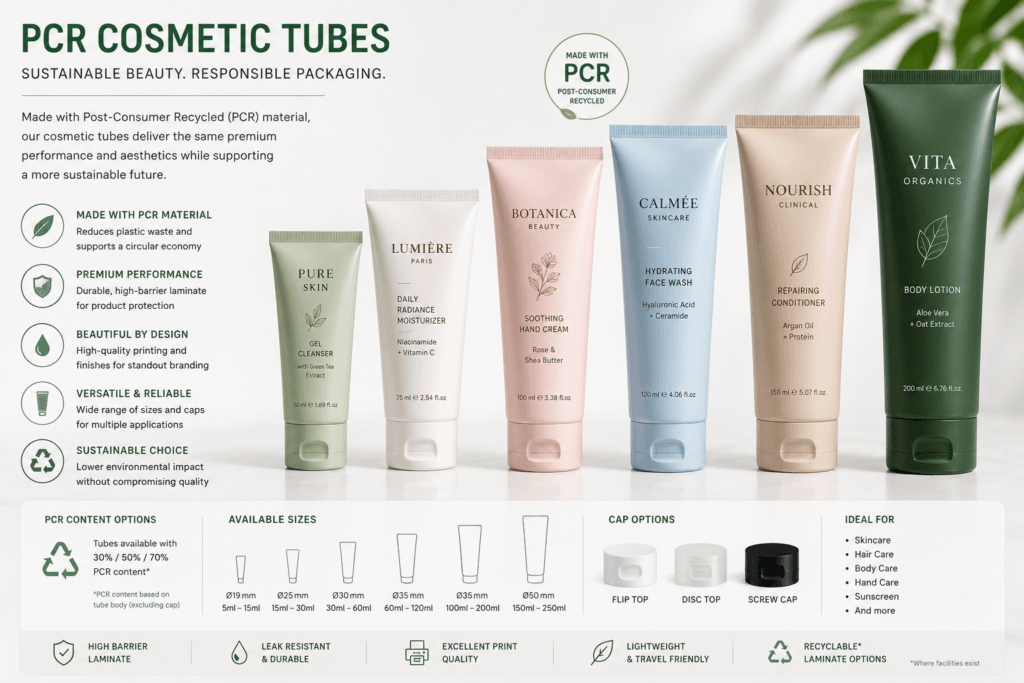
You can help the planet by picking eco-friendly tubes for sunscreen. Many brands use materials that make less waste and protect nature. You see more sun cream tube choices made from recycled or plant-based stuff. These options help your sustainability goals and show you care about the earth.
Here are some common eco-friendly packaging choices:
- Post-consumer recycled (PCR) materials use old plastic to make new tubes. This saves fossil fuels and keeps plastic out of landfills.
- Refillable packaging lets you use the same tube again and again. You buy refills instead of a new tube each time. You must clean the tube well to keep your sunscreen safe.
- Biobased materials, like cornstarch or seaweed, break down in nature. These tubes do not hurt the earth and are safe for people and animals.
Tip: Look for packaging with eco-labels or recycling symbols. These signs help you pick products that match your values.
Recyclability and Reuse
You can help the planet by recycling your sunscreen tubes. Many new tubes use materials you can recycle at home or at special centers. Some brands make tubes you can refill, which cuts down on waste. When you reuse or recycle your packaging, you help keep the planet clean.
Here is a table that shows how different packaging options help the environment:
| Packaging Type | Environmental Benefit |
|---|---|
| PCR plastic tubes | Reduce landfill waste and save resources |
| Refillable tubes | Lower the need for new plastic and cut down on trash |
| Biobased tubes | Break down naturally and do not pollute |
You should always check if your sun cream tube is recyclable. If you see a recycling symbol, rinse the tube and put it in the right bin. If you use a refillable tube, follow the cleaning steps to keep your sunscreen safe.
Consumer Preferences
You help shape the future of packaging. Many people now want products that support sustainability. Studies show that 73% of people around the world will pay more for products with sustainable packaging. Most Millennials and Gen Z shoppers say the environment affects what they buy.
You want packaging that is biodegradable, compostable, or easy to recycle. You also look for clear eco-labels on the tube. Many people like refillable and reusable designs because they help reduce waste. You see more brands using post-consumer recycled plastics and paper-based tubes.
Note: When you choose sunscreen with eco-friendly packaging, you support brands that care about the earth. Your choices help drive change in the beauty industry.
Choosing a Sunscreen Packaging Partner
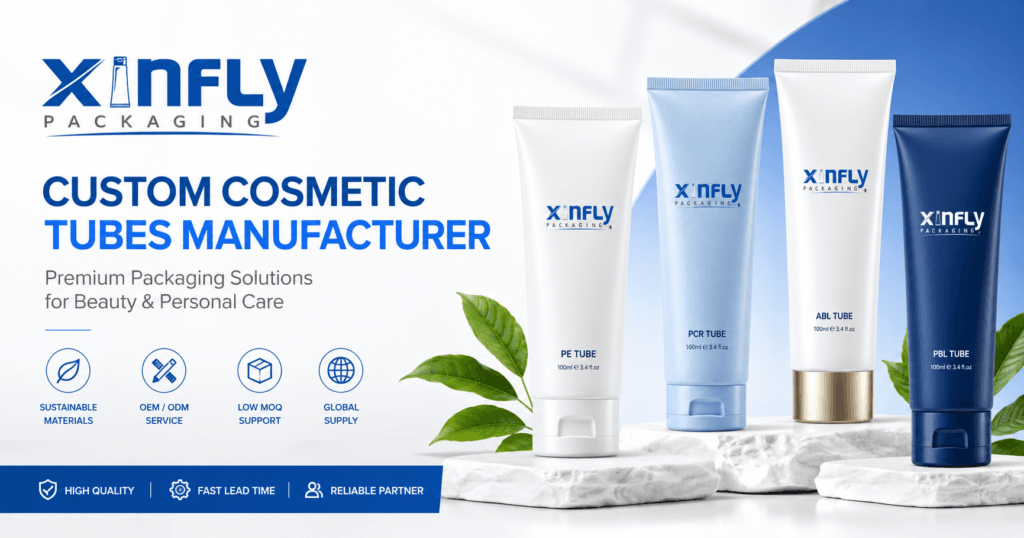
Picking the right company for your sunscreen packaging helps your brand do well. You want a supplier who knows what you need and helps your business grow. Here are some ways to make a good choice.
Evaluating Suppliers
Look for suppliers who give you strong packaging that keeps sunscreen safe. Make sure they use materials that block light and air. This helps your sunscreen stay strong and work well. You also want a supplier who knows the newest rules and can show proof of good quality.
Sunscreen is usually put in tubes, pumps, or airless dispensers. These containers keep out air and sunlight. This helps the sunscreen stay strong and work well. Opaque or UV-resistant packaging is important for sunscreen. Many sunscreen ingredients are hurt by light and heat. UV rays can break them down and make them weaker.
Jiangsu Xinfly Packaging Co.,Ltd. is a top cosmetic tube supplier. They make custom PE, PCR, ABL, and PBL tube packaging for beauty brands all over the world. You can see their certifications like ISO, RoHS, SGS, and GRS on their certification page. You can also check their SGS test report to feel even more sure.
Customization and Support
You need packaging that fits your brand and sunscreen formula. Xinfly Packaging lets you pick many things for your sun cream tube. You can choose the size, material, cap style, and printing that match your product.
| Customization Aspect | Details |
|---|---|
| Tube Size | Many sizes like 30ml, 50ml, 75ml, 100ml, 120ml, 150ml, and 200ml |
| Material | Choices are PE, PCR PE, ABL laminate, and PBL laminate |
| Cap Style | Flip-top caps, screw caps, nozzle caps, and custom caps |
| Printing Methods | Offset printing, silk screen, hot stamping, heat transfer, and custom labels |
| Eco-friendly Options | PCR plastic, recyclable PE, sugarcane plastic, and wheat straw plastic |
You also get good technical help:
- They make samples for printing and color checks.
- They test for leaks and if the tube works with your sunscreen.
- They check the quality to make sure it meets your needs.
This help lets you fix problems early and launch your product with confidence.
Quality Assurance
You want your sunscreen to stay safe from the factory to the store. Pick a supplier who tests their packaging for leaks, strength, and safety. Xinfly Packaging uses outside testing and has certifications like ISO, RoHS, SGS, and GRS. These show their packaging is high quality. You can trust their tubes to keep your sunscreen safe and your customers happy.
Tip: Always ask for test reports and certifications before you pick a packaging partner. This helps you make the best choice for your brand.
You want sunscreen tube packaging that keeps your sunscreen safe and easy to use. Strong barrier materials, airtight seals, and the right cap help with product protection and keep SPF stable. Many people like sun cream tube designs that feel good in your hand and stop leaks. You should look for packaging that controls how much you use and keeps germs out. Choose trusted suppliers like Xinfly Packaging, who use strict quality checks and certified materials, to make sure your sunscreen stays strong and safe.
Frequently Asked Questions About Sunscreen Tube Packaging, Barrier Protection & Cap Choices
Understand key factors in sunscreen tube packaging—barrier performance, SPF stability, cap options, materials and OEM support, including PE tubes, laminate tubes, EVOH & ABL layers, plus sustainable sunscreen packaging solutions.
What makes a sunscreen tube packaging barrier effective?
Why is barrier protection critical for SPF sunscreen tubes?
What materials are commonly used for sunscreen tube packaging?
How do cap choices affect sunscreen tube performance?
Are multi-layer tubes better for SPF sunscreen?
Can sunscreen tube packaging be customized?
What printing options are available for sunscreen tubes?
How does a sunscreen tube manufacturer ensure SPF stability?
What sizes and formats are common for sunscreen tubes?
Can sunscreen tube packaging be eco‑friendly?
Why choose Xinfly Packaging for sunscreen tube solutions?
Need Premium Sunscreen Tube Packaging Solutions?
Xinfly Packaging supports skincare brands with high‑barrier sunscreen tubes, SPF stability packaging, premium printing and cap selection, plus flexible MOQ and global OEM manufacturing services.