Published: .
Technical review: pending.
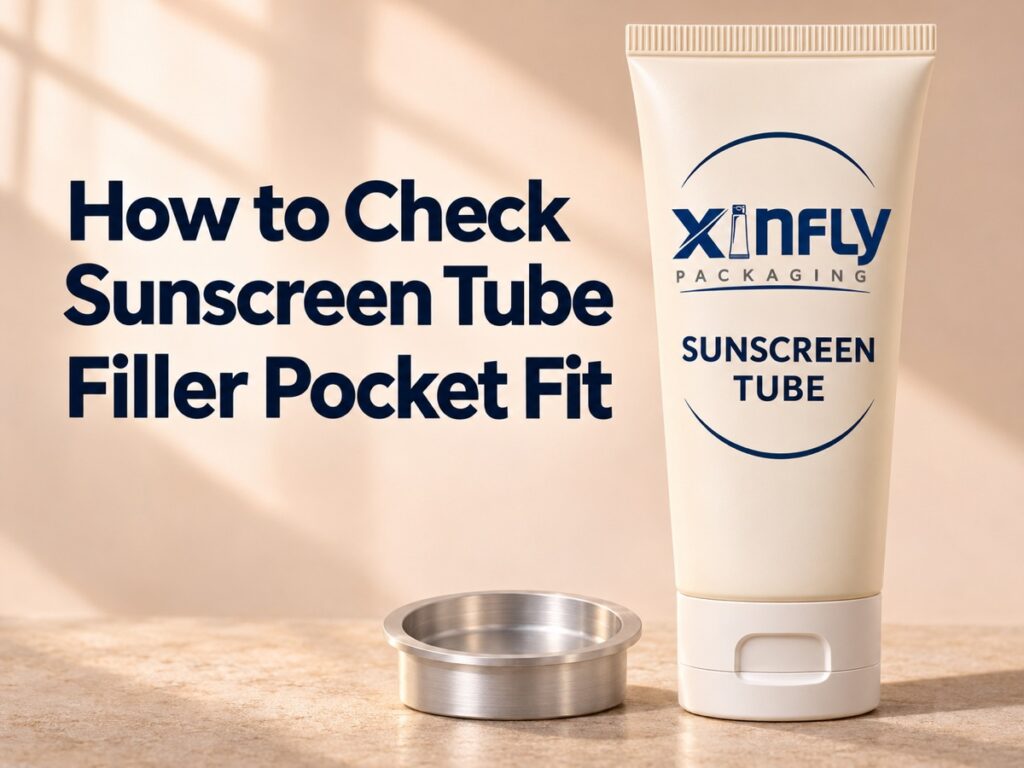
Sunscreen tube filler pocket fit is the match between a capped empty tube and the holder that carries it through the contract filler's line. A supplier can make a tube to the agreed outside diameter and the filler can still receive a pack that sits at the wrong height, leans toward a guide, or catches on the way out. The purchase decision is whether to order the proposed tube against an existing holder, order it with a documented holder change, or keep it at sample stage. Make that choice with a capped sample, the actual holder and a drawing that shows where the pack rests.
Define the Fit Before Requesting a Quote
Identify the Product State
Write down what goes into the machine. For a tail-filled project it might be an empty tube with the production cap fully closed and the tail open. Ask the filler to confirm that state and orientation. A filled, sealed sales sample can help the buyer discuss shelf appearance, but the open tail and the way the cap is seated are what the filler has to handle at loading. Give the supplier both views if the sales sample is the only pack the buyer has on hand.
Use One Reference Configuration
Give the proposed empty assembly its own sample ID and attach the drawing revisions for the body and cap. In this example the reference is a round PE sunscreen tube with a molded shoulder, an open tail for loading, and a flat-base flip-top cap. A filled illustration has the corresponding straight, heat-sealed tail and the same cap. A one-color screen print shows the front panel without introducing another variable into the fit decision. Verify the print and tail dimensions for the actual project. Buyers comparing 50ml sunscreen tubes with flip-top caps can start with the commercial collection and request a drawing for each proposed assembly.
Map Filler Contact Points
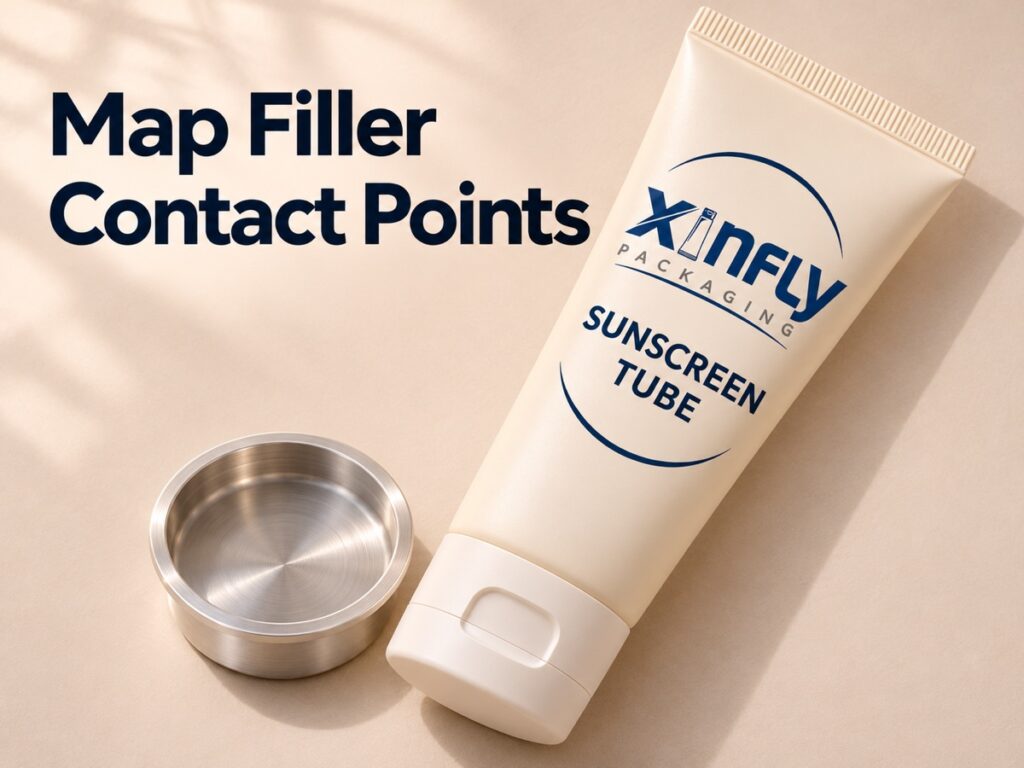
Ask the filler to show which surfaces on the existing holder actually locate the tube. Some holders locate at the cap skirt or base. A guide can also touch the body higher up. In either case, the cap profile, shoulder transition and local body width each need a defined measurement point. The pack size in milliliters belongs in the brief alongside those dimensions.
Locate the Seating Surface
Request a section or a marked photograph identifying the height reference on the holder and the corresponding feature on the tube. If the cap base seats on a ledge, note the base-to-open-tail height in the loading state. If the cap skirt is supported elsewhere, ask the filler to record that contact height separately. Label any rotation required for a hinge, code or artwork locator. A reference to the front of the tube is useful only when everyone can identify the same panel.
Record the Envelope at Each Guide
Ask the supplier to mark the body width and cap outline at the heights where the filler says the pack can touch. For a shaped profile, request both axes when the opening in the holder can see either orientation. Ask which submitted dimensions are subject to agreed tolerances and which are approximate catalog dimensions. Use the table to collect the line and sample references in one place.
| Feature | Supplier to supply | Filler to confirm | Buyer to retain |
|---|---|---|---|
| Cap skirt and hinge | Capped outline, closed hinge position and drawing revision | Clearance at the holder entrance and at release | Matched cap and holder revisions |
| Seating surface | Base profile and distance to a repeatable tube reference | Ledge or sleeve where the pack actually rests | Annotated section or photograph |
| Body at guide height | Width or two axes at the specified elevation | Guide elevation and approved setup position | Dimensions recorded from the same datum |
| Shoulder and transition | Shoulder profile on the assembly drawing | Free space during insertion and removal | Photo of the actual contact point if present |
| Open tail | Capped, unsealed overall height and tail shape | Expected insertion, alignment and extraction state | Empty-tube sample ID and state |
| Decoration | Real finish and front-panel reference on the trial sample | Any observation at the points that touch a guide | Decoration revision and inspection note |
Keep the Trackable Baseline
If the line already handles another tube, borrow a known accepted unit and label it as the baseline. Identify the holder set the baseline was run on. Ask the filler to document any support insert or orientation setup used for that unit. Then record the proposed cap and body as a second assembly. Comparing each configuration to the same holder record makes the results intelligible to a buyer who cannot visit the line.
Run the Pocket Fit Trial

Start with a bench fit on the holder or a safe, stopped setup selected by the filler. A filler operator can check seating, visible clearance and exit before any authorized line trial. Use capped empty sunscreen tubes drawn from identified samples. Request a range of sample units that reflects the dimensions that matter to the holder, where the supplier can provide them. Record actual sample measurements instead of describing a single sample as representative of every production pack.
Separate Load, Seat and Release
Record these as three observations. A tube may enter cleanly but never reach the seating stop. Another may seat correctly and catch on extraction when the cap skirt rotates. Identify the first point of contact and state whether it was expected for that holder. Keep photographs anchored to sample IDs. Ask the filler to define the action that counts as a fit failure, including what to do when the operator must nudge a unit to complete the check.
Confirm the Drawing on the Line
If the bench fit looks promising, have the filler decide whether to run the production-equivalent trial and how to conduct it. Ask for written identification of the actual line, holder set, setup revision and empty-tube batch. Confirm whether the trial included loading and extraction in the intended sequence. A recorded contact near the shoulder or cap needs a disposition before the buyer releases the order. Keep the walkthrough result and the line clearance decision traceable to the same cap and body revisions.
| Observation | Information to log | Decision before ordering |
|---|---|---|
| Enters and seats consistently | Unit IDs, holder position, seating reference and any witness marks | Carry the result forward to the agreed line trial |
| Stops above the agreed seat | Measured height difference and the first contacting surface | Hold the trial and request a drawing or holder correction |
| Tilts under the guide | Direction, guide setting, contact height and sample dimensions | Have the filler assess setup and confirm a repeat check |
| Catches on exit | Position, cap state and whether the issue repeated with the same unit | Review the exit path with the filler and flag the affected assembly |
| Visible rubbing | Surface, severity, number of affected units and photos | Ask commercial and technical owners to judge against the project standard |
| Different results across pockets | Holder IDs, condition of each insert and sample crossover checks | Review the holder set before judging the tube design |
Review Results by Sample and Holder
If one unit catches in a single holder, swap the same unit with the baseline at that holder and place the suspect unit in a second identified holder. Record the observations for both pairs. This is a troubleshooting comparison for the filler, with the applicable equipment safety controls in place. It can tell the team where to look next. It provides no basis to claim a production rejection rate. Set the quantity and run conditions of any follow-up check with the filler and keep the resulting release decision separate from the bench worksheet.
Compare Existing and New Holder Quotes
Put Setup Work on Its Own Line
Give all suppliers the same nominal fill, closure drawing and reference holder notes. Ask the quote to identify whether tooling, trial samples and support from a contract filler are included or separately priced. For a supplier proposing an adjusted cap, request a new cap drawing and production-intent samples. For a proposal to change the holder, have the filler state who supplies, qualifies and keeps the new inserts. Compare the work still needed to authorize a repeat order alongside the unit price.
Confirm the Handoff Before the Purchase Order
Have the selected supplier name the approved body and cap drawings on the purchase order acknowledgment. Attach the filler's trial record and the agreed rules for a repeat check when a contact dimension, cap revision or holder set changes. If a proposed part deviates after approval, ask for a marked drawing and place that change on hold until the responsible teams decide how to check it. The automated tube filling and sealing guide gives broader equipment context for the conversation with your filler.
Frequently Asked Questions
Can I qualify sunscreen tubes with an empty sample?
Use capped empty samples for the loading and holder fit described here. Ask the filler whether to conduct a separate trial for the filled pack, seal, weight control and downstream handling. Keep the results labeled by pack state so that a holder-fit approval does not obscure a later issue at a different station.
Is a 50 mL cap base always the holder datum?
Have the filler point to the actual contacting feature. A holder can locate the assembly on a skirt, a base or a supported surface around the tube. Ask for the reference height at that feature and check it on the closed assembly. Nominal volume by itself supplies none of these dimensions.
What if the tube fits with the cap hinge turned away?
Ask whether the chosen orientation can be maintained during loading and indexing on the intended line. Identify the allowed orientation on the drawing and include it in the trial record. If the setup cannot maintain it reliably, ask the supplier and filler to compare changes before purchase.
Does a smooth bench check release the tube for production?
A smooth bench fit supports the next trial decision. The filler determines the production-equivalent checks, including loading, seating and release on the actual setup. Get the intended production record signed by the appropriate owners before releasing any order contingent on their line approval.
What should I send with a request for custom sunscreen squeeze tubes?
Send the target pack size, a capped and open-tail reference, cap drawing, proposed surface finish, and the holder drawing or photographs with the relevant measurements. Include the sample quantity the filler wants and the approval gate for the trial. Explain which contact dimensions the supplier must hold for repeat orders.
Conclusion
Approve the tube with a specific body, closure and holder setup. Keep an annotated assembly drawing and a record of loading, seating and release with the purchase file. If you need a new cap or holder, put the additional work and ownership in the quote before releasing the purchase order. For a project using custom tube samples, send Xinfly Packaging the capped empty sample brief and the filler's contact dimensions so the team can compare feasible tube and closure options for your trial.