
Published: . Updated: .
A lip mask tube can dispense beautifully on the first use and become untidy a week later. Product gathers around the outlet, reaches the neck threads and transfers into the cap. The buyer then faces an awkward question: is the problem the applicator, the closure, the formula, or the way the pack is being used?
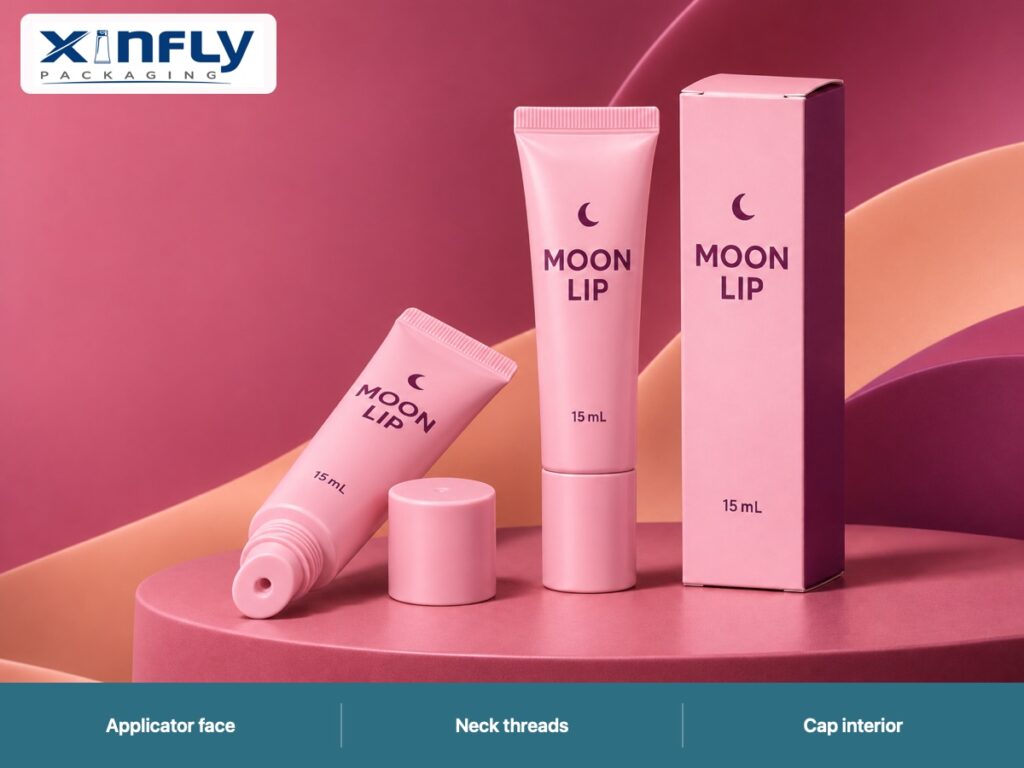
This lip mask tube cap-thread residue check gives purchasing and product teams a structured way to answer that question before a bulk order. The illustrated MOON LIP concept is a 15 mL pale-rose extruded PE tube with a flat heat-sealed tail, molded slanted applicator, cylindrical screw cap and plum one-color screen print. Its printed folding carton repeats the name and crescent motif. It is a packaging illustration, not a stock SKU or a test record. Explore lip balm squeeze tubes as the commercial starting point, then validate the actual mask formula and assembled closure.
Define the Use Pattern Before Comparing Samples
Describe How the Product Leaves the Tip
An overnight lip mask may be applied straight from a slanted tip, dispensed onto a fingertip, or used with a separate tool. Those routines leave different residues. Tell the supplier which motion the brand expects. If you test only fingertip dispensing but market direct application, the trial may miss how the outlet touches skin and how product spreads across the applicator face.
Ask the product team to define a typical application amount and routine. Use that target to structure the comparison, rather than promising a precise dose from an ordinary squeeze tube. Note the formula revision and sample temperature. A warm sample squeezed firmly and a cool sample handled gently do not create a useful paired comparison.
Keep First-Use and Repeated-Use Samples Apart
Retain clean, unused controls. Use separate samples for repeated dispensing, wiping and storage checks. Photograph the initial tip, neck and cap interior before adding product. Without that baseline, a mark discovered after testing may be incorrectly attributed to the dispensing process. Label each pack with a sample ID and the exact closure version.
Agree What Counts as Acceptable Residue
Zero visible product after every application may be unrealistic for a particular use routine. Define the decision in practical terms with the brand: does residue obstruct closure, transfer to fingers, accumulate on the exterior or make cleaning difficult? Record appearance and handling separately from seal performance. A tidy cap and a secure closure are related concerns, but neither observation proves the other.
| Location | What to observe | Question for the project team |
|---|---|---|
| Applicator face | Smear left after normal application | Can the intended user manage it easily? |
| Outlet | Stringing or product remaining at the opening | Does dispensing stop as expected? |
| Neck threads | Transfer after cap replacement | Does residue interfere with engagement? |
| Cap interior | Product location before wiping | Is transfer increasing with repeated use? |
| Exterior | Smear on cap edge or tube shoulder | Does handling spread product to fingers? |
Inspect the Assembly Before Filling
Match the Tip, Neck and Cap Drawing
Ask for the assembled drawing and identify the applicator, external thread, cap and any internal closing feature. Two caps with the same outside diameter can engage different necks. Request the part references used in the approval sample and ask whether those parts will also be used for production. A similar-looking cap from another source is a change that needs review.
If the supplier offers lip balm squeeze tubes with slanted tips, ask which tip shape and outlet are proposed for the actual mask. The slant angle, face area and outlet position should come from the approved component, not a designer's sketch. Do not infer the internal closing arrangement from a front photograph.
Examine Clean Parts Without Forcing Them
Check the neck and cap for visible molding defects, damaged threads or debris before filling. Screw the cap on using the agreed method and note whether it starts smoothly or sits at an angle. Avoid forcing a poorly started cap until it appears closed. That can conceal a fit problem and damage the sample you intended to evaluate.
If closing torque will be measured, have the supplier and filler agree the method and project target. Do not borrow a torque value from an unrelated container. Cap dimensions, materials and internal contact features differ. Keep a hand-feel observation separate from a measured torque record.
Confirm the Tube Body and Tail
The flexible body affects how users control a squeeze. Compare tip alternatives on the same body construction wherever possible. Otherwise a difference in stiffness can be mistaken for an applicator improvement. Inspect the heat-sealed tail independently and record the fill and sealing conditions. A closure review should not hide a separate tail-seal issue.
Run a Controlled Repeated-Use Comparison
Dispense the Same Formula in the Same Way
Use identified samples filled from the same formula batch. Start from the same fill level and agree the storage position before the trial. Follow the intended application motion and record whether the operator squeezes while replacing the cap. Product can be pushed toward the outlet during that final movement, so handling should be visible in the notes.
Change one factor at a time. If you compare two applicators, keep the formula, body, fill and cap assumptions aligned. If the cap must change with the tip, describe the comparison as two complete assemblies. That wording helps purchasing avoid ordering a mixture of the preferred tip and a cap that was never tested with it.
Photograph Before Cleaning
After dispensing, photograph the applicator face and threads before any wipe. Replace the cap using the agreed method, then open it and photograph the interior. Use consistent lighting and framing so later reviewers can compare like locations. A close photograph is useful, but also take a normal viewing-distance image to show the practical appearance.
Record whether residue lies on a decorative surface, a thread or a closing contact. Do not diagnose the cause from color alone. The same formula can reach several surfaces through application, cap insertion or squeezing. If a result looks unusual, repeat the same sequence with another identified sample before changing parts.
Compare Wiped and Unwiped Routines
A brand may instruct users to wipe the applicator after use. If so, test that routine with a defined material and motion. Keep a separate unwiped group if it represents plausible use. Do not clean every sample carefully and then generalize the result to consumers who may skip that step. The point is to understand the pack's behavior under the routine the product actually expects.
Separate Residue From a Seal Concern
Look at the Location After Storage
Store closed filled samples in positions relevant to use and distribution. Photograph the pack before opening and note any product on the exterior. After opening, inspect the cap interior without moving residue unnecessarily. External product at the cap edge deserves a different investigation from a thin film left on the applicator after direct application.
Agree storage conditions and duration with the formula and quality teams. The illustrated bedside setting suggests one application scene; it is not evidence that the pack performs at a particular temperature or orientation. For squeeze tubes for overnight lip masks, the test conditions must reflect both the actual formulation and the markets in which the finished product will be handled.
Repeat a Suspicious Result With a Clean Control
If product appears where it should not, check another sample with a documented clean start. Review whether the cap was cross-threaded, the tube squeezed while closing, or product placed on the neck during filling. A repeated result under controlled conditions gives the supplier a clearer problem to investigate. One ambiguous smear on an unlabeled sample is difficult to interpret.
Ask for a written response identifying the proposed cause, the affected component and the next trial. If the supplier suggests a different outlet or cap, request a new assembly drawing and sample reference. Avoid approving a change only through a photograph, especially when the internal contact surfaces have changed.
Include the Printed Carton in Handling
Put the closed tube into the actual folded carton and remove it as a customer would. Check whether the user grips the cap or presses the body while extracting it. A tight carton can encourage a squeeze that was absent from the bench trial. Review the carton fit before changing the applicator to compensate for a secondary-pack problem.
The MOON LIP concept uses matching pale-rose and plum artwork. In production, confirm the tube printing process and review the assembled pack with the final body and cap colors. Artwork approval does not replace closure approval, but a controlled version record should connect them.
| Record | Detail to include | Release question |
|---|---|---|
| Assembly identity | Body, tip, cap and artwork revision | Is this the configuration being ordered? |
| Use routine | Application motion, amount target and wiping rule | Does the trial reflect intended use? |
| Residue observations | Location and photos before cleaning | Is accumulation within project expectations? |
| Storage review | Formula, fill, orientation and conditions | Are exterior and interior findings understood? |
| Change control | Changed part and repeated checks | Has the new assembly been reviewed? |

Convert the Trial Into a Useful RFQ
Quote the Complete Closure Assembly
An RFQ for empty lip balm squeeze tubes should identify the intended lip-mask formula, nominal fill, body construction, tip design, outlet preference, cap and decoration. Include the application routine and residue concerns you want the sample program to resolve. Ask the supplier to distinguish production-representative parts from temporary sample components.
Request the price and development scope for each proposed complete assembly. If a new tool or additional sample round is required, have it itemized. Keep quantity, artwork scope and carton assumptions identical when comparing alternatives. A cheaper cap is not a meaningful saving if it belongs to a different neck and restarts the approval process.
Keep the Approval Sample for Repeat Orders
Retain signed physical samples and the final drawing, along with the observation record. Identify changes that require a new review: formula, body stiffness, tip mold, cap supplier, outlet or internal closing feature. At incoming inspection, compare the delivered parts with that reference before relying on historical test notes.
Discuss the Open Questions With Xinfly Packaging
Share the formula type, target fill, desired application method, expected wiping routine and the closure issues you have observed. Ask Xinfly Packaging to propose an identified sample assembly through its sample development process. Send the packaging team your lip-mask brief with photos showing exact residue locations. A precise question about the tip, threads or cap interior is easier to resolve than a general request for a better tube.
Frequently Asked Questions
Is residue on the applicator automatically a leak?
No. It may be product remaining after normal application. Record the location, handling and storage conditions, then investigate any exterior migration or closure concern separately.
Should I wipe the tip during every trial?
Use the intended routine and label it clearly. If both wiped and unwiped use are plausible, keep separate groups rather than combining the observations.
Can I change the cap while keeping the same tip?
Only after confirming fit and repeating the relevant assembly checks. Similar outside dimensions do not prove that threads and internal closing features match.
Why does the fill level matter in a residue comparison?
A different fill level changes the state of the package and may change how a user squeezes it. Keep starting conditions aligned so the comparison remains interpretable.
What should a supplier receive when a sample looks untidy?
Send the sample ID, formula revision, fill, application sequence, storage conditions and photographs taken before wiping. Identify whether the concern is appearance, handling, closing engagement or suspected migration.
Conclusion
A useful lip mask tube cap-thread residue check follows the product through dispensing, cap replacement and storage. Keep the assembly and use routine controlled, photograph each location before cleaning and separate appearance from seal questions. Xinfly Packaging can review the proposed slanted-tip pack and sample route when your brief identifies the actual formula, handling conditions and approval criteria.