Published: .
“The viscosity is 40,000.” That message looks helpful until the tube supplier asks for the units, temperature and measurement method. Without those details, two teams can repeat the same number while talking about different measurements. Choosing a hair mask tube from that number alone is a shaky start.
A hair mask tube viscosity data brief connects the formula reference with the conditions under which its viscosity was measured. It gives the supplier and filler enough context to discuss candidate packaging and plan useful samples. This guide offers a practical information template. It does not set a viscosity specification, select laboratory settings or claim that one reading can predict filling and dispensing performance.
Start with the Formula You Intend to Pack
Identify the Formula Revision
For hair mask tube packaging, attach viscosity information to a formula identifier, revision and sample reference. “Our hair mask” may cover a laboratory prototype, a later fragrance version and the manufacturing batch intended for launch. Those descriptions are not precise enough for a packaging discussion. Ask the formulation team which version the data and proposed sample actually represent.
Keep the identity on the data sheet, physical specimen and tube-sampling request. If confidential details must stay with the formulator, use an agreed reference that the parties can trace. The supplier does not need to invent missing formulation information. It needs to know which material the technical team is asking it to consider and whom to contact about the relevant properties.
Separate Formula Description from a Measurement
Words such as rich, thick and creamy can explain the intended product experience. They do not replace a measurement record. Conversely, a viscosity number does not describe every aspect of that experience. Send the commercial description as context and the laboratory data as a separately identified record. Each helps answer a different part of the packaging question.
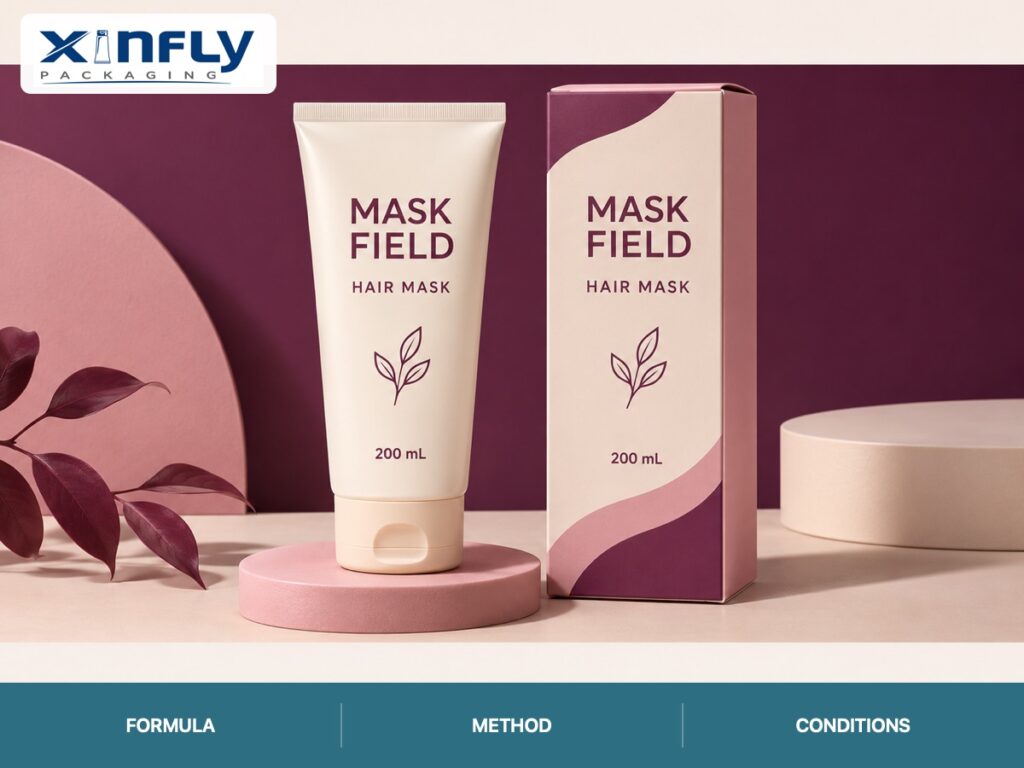
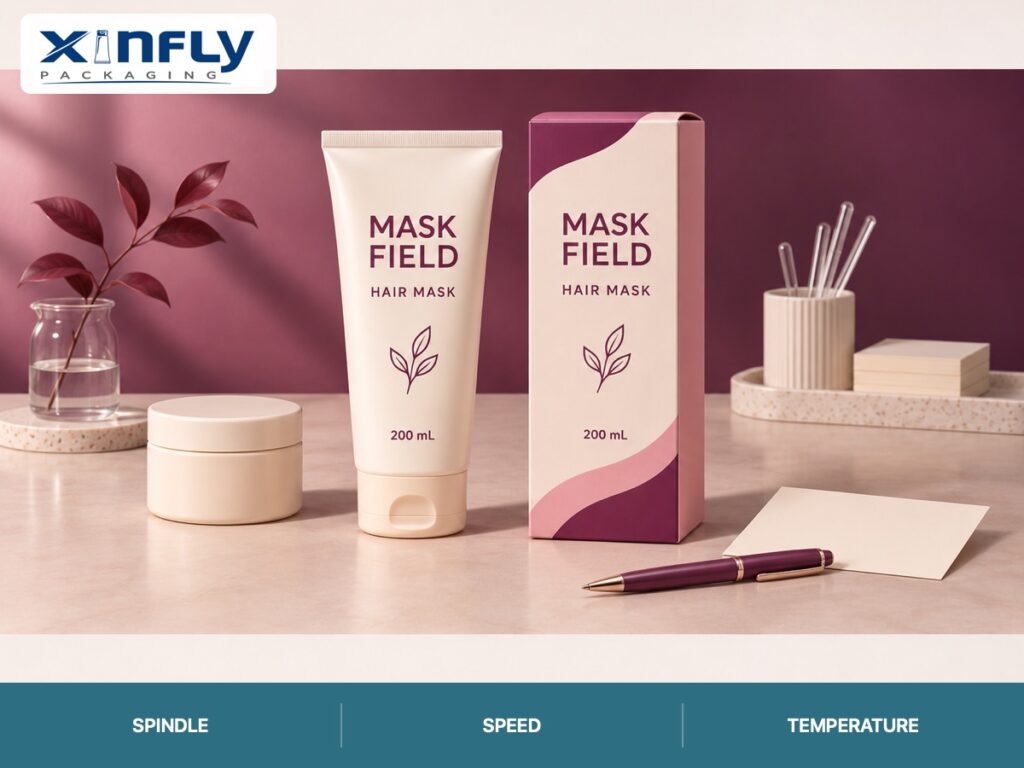
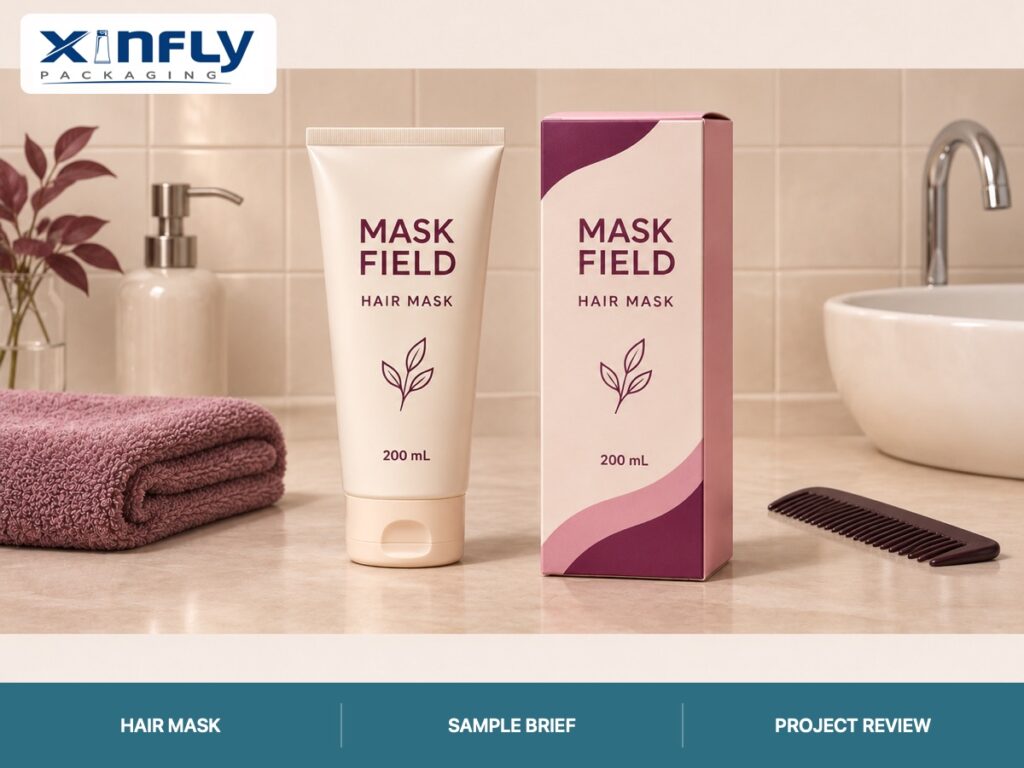
The illustrations use a fictional MASK FIELD design: an ivory PE-style tube with moulded shoulder, straight crimped display tail, cream round flip-top cap and plum single-colour screen-print-style lettering and leaf. Its matching carton uses ivory, plum and dusty pink. Neither the illustration nor its printed capacity states a viscosity range or proves suitability for a particular formula.
Ask for the Conditions Behind the Number
Record the Instrument and Measuring System
AMETEK Brookfield’s viscosity and rheology FAQs explain the importance of comparable measurement conditions. Instrument configuration, spindle, speed and temperature belong with the result. For materials whose measured viscosity depends on the conditions used, changing those conditions can change the reading. Ask the laboratory to supply its method description rather than reverse-engineering it from a number.
Keep Temperature, Timing and Preparation Visible
Request the temperature, measurement timing and sample preparation information used in the laboratory’s method. Also ask for the container and any relevant configuration details needed to understand the record. The formulator or laboratory should define the appropriate procedure. Purchasing should preserve and transmit it accurately; a buyer’s spreadsheet is not a substitute for a validated laboratory method.
Preserve the Original Units
Copy the reported value and units together. If a conversion is needed, have the responsible technical party check it and retain the original entry. An isolated number pasted into an RFQ is vulnerable to unit and transcription errors. Do not silently convert a measured result, round it or present it as a supplier’s guaranteed packaging capability.
Build a Data Brief That Can Travel with the Sample
| Field | Information to request | Responsible source |
|---|---|---|
| Formula identity | Identifier, revision and relevant batch reference | Formulator or brand technical team |
| Result | Value and units as reported | Laboratory record |
| Instrument | Model and relevant configuration | Laboratory record |
| Measuring system | Spindle or geometry reference | Laboratory record |
| Operating conditions | Speed and temperature used | Laboratory method and result record |
| Timing and preparation | Measurement timing and preparation description | Laboratory method |
| Sample context | Age or condition information relevant to the review | Formulator and laboratory |
| Decision purpose | Candidate packaging discussion or a defined trial question | Buyer, filler and technical reviewer |
Mark missing entries explicitly. The aim is not to make the table look complete by guessing a likely spindle or temperature. An accurate “not supplied” entry prompts the right follow-up. A plausible but invented setting creates a false comparison that can travel through several departments before anyone notices where it came from.
Check Whether Two Results Describe the Same Situation
Do Not Rank Numbers Before Matching Conditions
Suppose one formula sheet includes a viscosity result with a method reference, while a second sheet includes a result without its operating conditions. Even if their numbers differ, that information alone does not establish the practical significance of the difference. Ask the responsible laboratory whether the records are comparable and what clarification or further measurement is needed.
Keep Method Differences Separate from Formula Differences
Record the two questions separately: did the formulation change, and did the measurement method change? A revision in either field deserves a clear note. This does not mean every revision requires the same action. It means the technical reviewer should be able to identify the change before deciding what previous information remains useful for packaging selection.
Translate the Data into a Packaging Discussion
Define the Candidate Tube and Closure
Once the formula information is traceable, identify the proposed body, capacity, shoulder, outlet and cap references. A request for wide-orifice squeeze tubes for hair masks should describe a candidate option for evaluation, not an automatic prescription. Ask the supplier which structures it proposes and which physical references can be sampled. Availability and suitability need project-specific confirmation.
The tube outlet selection guide can help frame the geometry discussion. Keep the outlet dimension distinct from the cap’s outer size and the tube’s nominal capacity. Do not infer a precise outlet diameter from the viscosity value. The selected configuration needs review alongside the intended formula and the actual filling and dispensing questions.
State the Behaviour You Need to Evaluate
Tell the supplier and filler what remains uncertain. You may need to compare dispensing observations, assess the proposed incoming tube configuration or organise a filling trial. Identify one question for each evaluation. That makes it easier to select representative samples and appropriate reviewers than asking for a pack that “works with a thick cream” without any further context.
Keep Laboratory Data Separate from a Filling Trial
Describe the Filler’s Relevant Conditions
A laboratory viscosity record describes its own measurement. The filler’s process has its own equipment, material handling and operating conditions. Ask the filler which information it needs to assess a proposed tube. Record its questions without assuming that a laboratory test temperature or spindle speed translates directly into a production machine setting.
For custom squeeze tubes for keratin hair masks, supply the actual formula reference and the proposed filling configuration. “Keratin” in a product description does not establish the formula’s measured behaviour or its compatibility with a package. Ask the technical parties to identify the relevant checks. Keep any ingredient or performance wording on the eventual printed pack subject to the brand’s separate review.
Agree the Trial Question and Decision Owner
Use sample development to connect representative packaging with the planned review. Confirm the formula specimen, tube and closure references, sample condition, observation method and responsible reviewer. The parties must agree the applicable trial conditions and acceptance basis. This article supplies information fields, not sample counts, machine parameters or pass limits.
Make Sample Observations Useful
Describe What Happened
An observation such as “the reviewer found squeezing difficult under the recorded conditions” gives a concrete question to investigate. “The tube cannot handle this viscosity” goes further than the observation supports. Keep the conditions, specimen reference and observation together, and ask the relevant technical parties to decide which variable should be investigated next.
Change One Defined Factor in a Comparison
If the project team proposes a comparison, document what will differ and what should remain consistent for that question. Candidate differences might include a specified outlet or body option. The responsible reviewers should choose the comparison design. Do not change the formula, tube structure and review procedure together and then attribute the outcome confidently to just one of them.
| Information received | What remains unresolved | Appropriate next action |
|---|---|---|
| Value without units | Meaning of the reported number | Request the original laboratory entry |
| Value with units but no conditions | Basis for interpreting the reading | Request the method and operating conditions |
| Two formula revisions | Which version the pack must represent | Confirm the intended production reference |
| Two methods on one formula | Whether results can be compared | Ask the laboratory to explain the difference |
| Complete data but no tube reference | Which physical pack is under discussion | Identify candidate body, outlet and closure |
| A sample observation without conditions | What the observation actually describes | Record the review context before drawing conclusions |
| A proposed packaging change | Scope of the next evaluation | Assign the technical decision and evidence required |
Put the Clarifications into the RFQ
A practical request can read: “Please review the attached formula reference and viscosity record for a proposed hair mask tube project. The record includes the laboratory’s units, instrument, measuring system and conditions. Please identify candidate tube and closure references, the information still needed, and a representative sampling scope for the stated filling and dispensing questions.” Add artwork, intended quantity and destination to support the commercial discussion.
Do not turn a laboratory reading into an unqualified line in the packaging specification. If a viscosity criterion belongs in the project documents, the responsible team should define its method, range, relevance and acceptance authority. Purchasing can then keep that approved reference connected to the order and subsequent revisions. That is a clearer handoff than an unexplained number in an email subject line.
Keep a Record of What Was Confirmed
After the supplier discussion, summarise the confirmed configuration, the evidence reviewed and the questions still open. Ask for acknowledgement from the relevant parties. A proposed tube may be ready for sampling while the formula or method reference remains pending. State that limited status accurately rather than treating a useful sourcing conversation as final technical approval.
If a later batch or formulation revision is introduced, give the reviewer the old and new references. Ask what needs reassessment; do not assume either automatic acceptance or automatic rejection. The quality assurance process should connect the applicable specification with the evidence and decision owner. Clear records make a later change easier to understand without manufacturing a history of tests that never occurred.
Frequently Asked Questions
Is a viscosity number enough to select a hair mask tube?
It is useful context only when its units, method and conditions are understood. Connect it to the formula reference and the intended packaging question. Candidate tubes still need the project’s relevant compatibility, filling and dispensing reviews; a number alone does not approve the complete pack.
Should I specify a spindle and speed myself?
The formulator or laboratory should define the appropriate measurement procedure. Ask for the conditions actually used and the method reference. Purchasing should communicate that information accurately, rather than choosing a setting to make two records appear comparable.
Does a wider outlet always solve difficult dispensing?
Do not assume a universal solution. Ask the supplier and technical reviewers to propose candidate configurations and an appropriate comparison. Record the formula, pack and conditions so the observation can answer a defined question rather than support an unsupported general rule.
Can I reuse data from an earlier formula version?
Ask the responsible technical reviewer whether the earlier data remain applicable. Identify the old and current formula references and any method changes. Record the reviewer’s decision and any further evidence required instead of silently assigning the older result to the new formula.
What should I send Xinfly Packaging with the RFQ?
Send the formula reference, available viscosity record and method information, intended capacity, candidate tube and cap details, artwork, quantity and the questions for sampling. Identify missing information openly. Request confirmation of the proposed structure and review scope before moving to an order.
Conclusion: Send the Measurement Context, Not Just the Number
A useful hair mask tube brief keeps the formula, viscosity result, measurement conditions and candidate pack connected. It supports a more focused supplier discussion and a sample plan with a clear purpose. Contact Xinfly Packaging with your available data and packaging requirements to discuss the information needed for project-specific selection and review.