
Category FAQs

Find answers to common questions about cosmetic tube packaging, materials, printing, MOQ, customization, production, shipping, and sustainable packaging solutions.

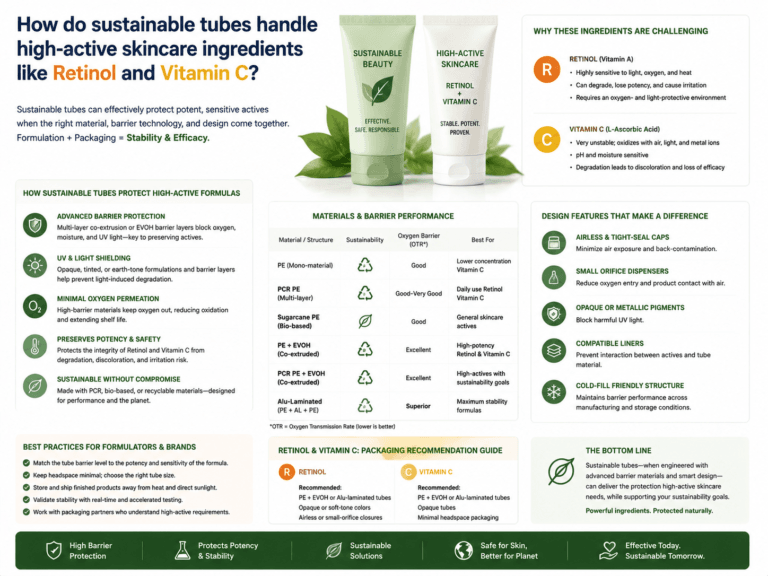
How do sustainable tubes handle high-active skincare ingredients like Retinol and Vitamin C

How do sustainable tubes handle high-active skincare ingredients like Retinol and Vitamin C?

Sustainable cosmetic tubes can safely handle high-active skincare ingredients such as Retinol and Vitamin C, but only when the packaging structure and material system are properly engineered for barrier protection and stability. Active ingredients like Retinol and Vitamin C are…

Read MoreHow do sustainable tubes handle high-active skincare ingredients like Retinol and Vitamin C?
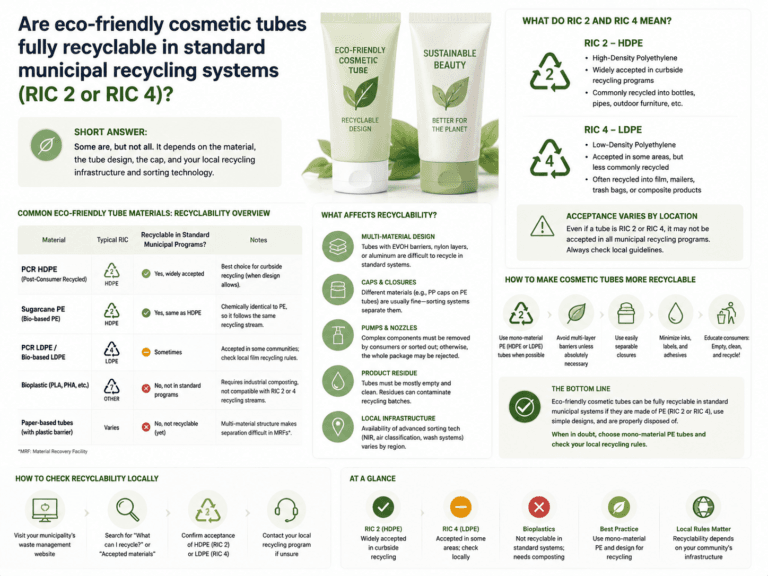
Are eco-friendly cosmetic tubes fully recyclable in standard municipal recycling systems (RIC 2 or RIC 4)

Are eco-friendly cosmetic tubes fully recyclable in standard municipal recycling systems (RIC 2 or RIC 4)?

Eco-friendly cosmetic tubes are not always fully recyclable in standard municipal recycling systems (RIC 2 or RIC 4). Their recyclability depends on the material structure, additives, and whether the tube is designed as a mono-material system. In general, pure PE…

Read MoreAre eco-friendly cosmetic tubes fully recyclable in standard municipal recycling systems (RIC 2 or RIC 4)?
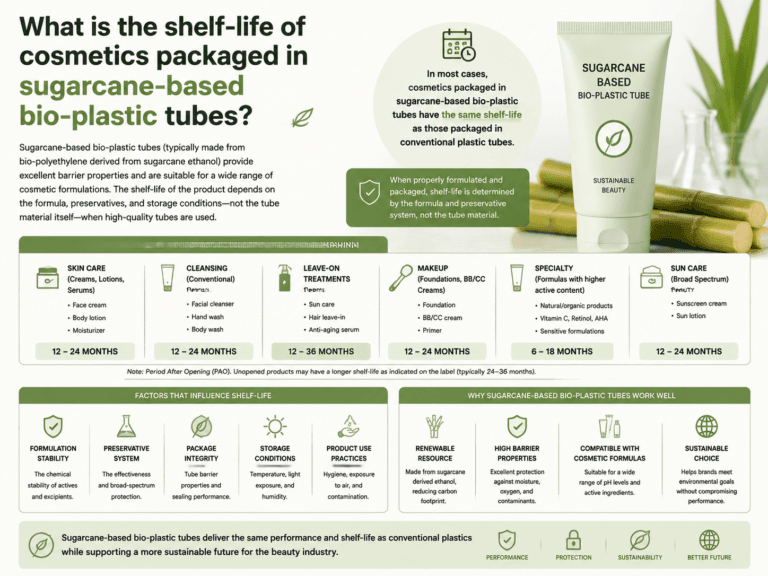
What is the shelf-life of cosmetics packaged in sugarcane-based bio-plastic tubes

What is the shelf-life of cosmetics packaged in sugarcane-based bio-plastic tubes?

The shelf-life of cosmetics packaged in sugarcane-based bio-plastic tubes is generally the same as conventional plastic tubes, typically ranging from 12 to 36 months depending on the product formulation, preservation system, and packaging structure. Sugarcane-based tubes are made from bio-based…

Read MoreWhat is the shelf-life of cosmetics packaged in sugarcane-based bio-plastic tubes?
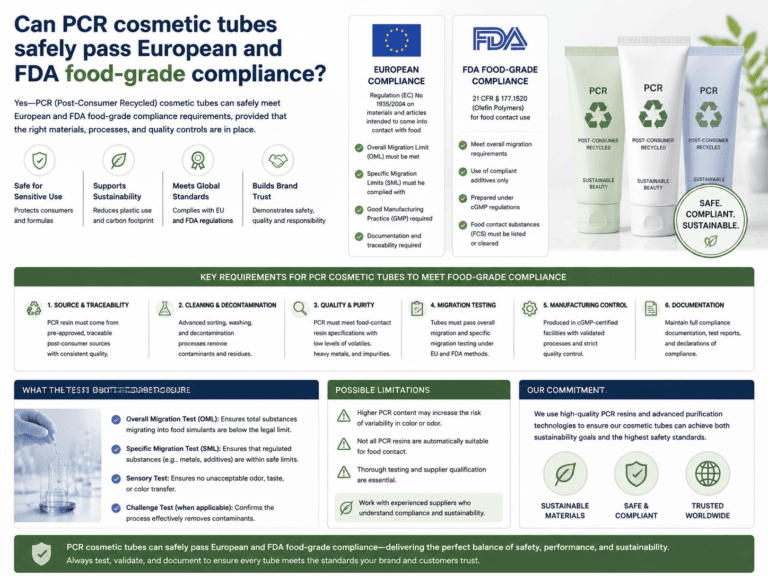
Can PCR cosmetic tubes safely pass European and FDA food-grade compliance

Can PCR cosmetic tubes safely pass European and FDA food-grade compliance?

PCR (Post-Consumer Recycled) cosmetic tubes can be designed to meet both European and U.S. regulatory requirements, but compliance depends on the full packaging system, material sourcing, and intended product use. In general, PCR tubes themselves are not automatically “food-grade certified”…

Read MoreCan PCR cosmetic tubes safely pass European and FDA food-grade compliance?
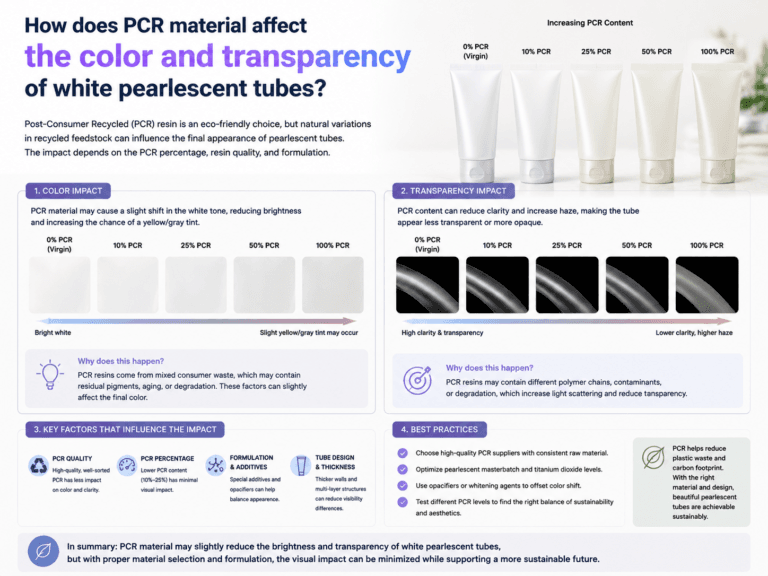
How does PCR material affect the color and transparency of white pearlescent tubes

How does PCR material affect the color and transparency of white pearlescent tubes?

PCR (Post-Consumer Recycled) material can significantly affect the color and transparency of white pearlescent cosmetic tubes. This is mainly due to the natural variation in recycled plastic feedstock, pigment interaction, and the reduced clarity compared to virgin resin materials. In…

Read MoreHow does PCR material affect the color and transparency of white pearlescent tubes?
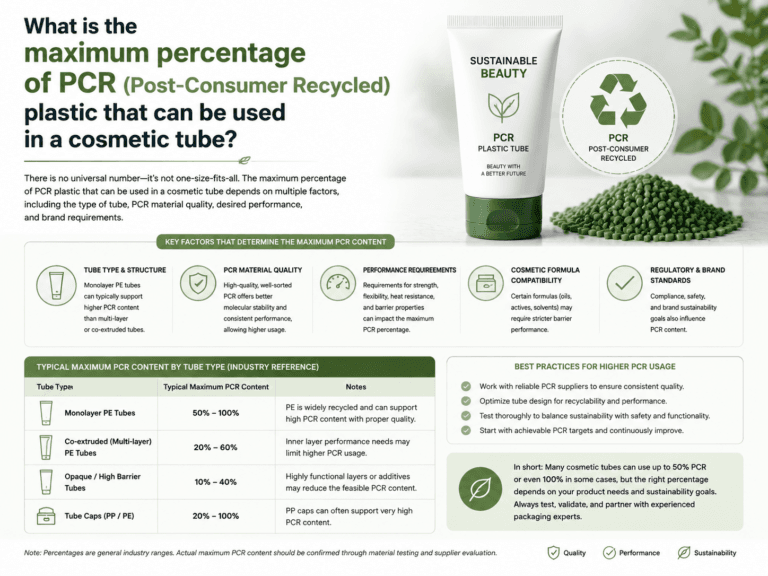
What is the maximum percentage of PCR (Post-Consumer Recycled) plastic that can be used in a cosmetic tube

What is the maximum percentage of PCR (Post-Consumer Recycled) plastic that can be used in a cosmetic tube?

The maximum percentage of PCR (Post-Consumer Recycled) plastic in cosmetic tubes typically ranges from 30% to 100%, depending on tube structure, product requirements, printing method, and performance needs. At Xinfly Packaging, we offer flexible PCR cosmetic tube solutions where the…

Read MoreWhat is the maximum percentage of PCR (Post-Consumer Recycled) plastic that can be used in a cosmetic tube?