Published: .
A clear window can make a face wash tube look beautifully straightforward: here is the product, right inside the pack. Buying that effect takes a more careful conversation. The gel may look different after filling, the tube wall may soften the view, and a tiny print shift can make an otherwise tidy window look uneven. Which differences should your team accept?
This face wash tube window appearance check helps you turn an attractive rendering into a filled-sample approval brief. It focuses on what the buyer sees and how that observation gets recorded. For the underlying pack options, start with Xinfly Packaging’s facial cleanser tube packaging. Then connect the selected material, decoration and formula to one agreed appearance reference.
Start with the Appearance Decision You Actually Need
Separate the Empty Tube from the Filled Presentation
An empty window shows you part of the packaging: its clarity, surface, shape and position. A filled window adds the formula’s color, consistency, bubbles and distribution inside the body. Approving the empty component cannot settle every question about the filled product. Ask for both stages when the visible formula is central to your design.
Keep these approvals distinct in the sample record. A supplier can receive a useful answer such as “empty window position accepted; filled presentation pending,” rather than an ambiguous “looks good.” That wording matters when artwork is ready but your filler has not yet produced representative samples. It also prevents a photograph of an empty tube becoming the reference for a filled production pack.
Define the Intended Window Effect
Do you want shoppers to recognize the gel’s color, see a broad product level, or simply notice a contrasting translucent panel? Those are different visual objectives. A natural PE wall can soften a view compared with a digital mockup. Discuss the desired effect with physical samples instead of asking for “perfect transparency” without defining what that means.
Write a Window Viewing Brief Before Comparing Samples
Use Repeatable Viewing Conditions
Agree the viewing conditions with the supplier and your quality team: lighting, background, viewing distance, tube orientation and the interval after filling. Record the conditions actually used. The aim is a fair comparison, not an elaborate laboratory claim. Two photographs taken in different rooms can make the same window look surprisingly different.
Keep One Reference Pack and One Photo Setup
Retain an identified reference pack alongside the approved images. Record its formula revision, tube revision and preparation date. When taking comparison photographs, use the same camera position and exposure approach where practical. Automatic camera adjustments can change the apparent gel color or make a slightly hazy window look clearer. Photographs support the physical reference; they do not replace every in-person judgment.
| Record item | What to identify | Why the buyer needs it |
|---|---|---|
| Tube construction | Material reference, body color and wall specification | A different wall can change the apparent view |
| Window artwork | Shape, location and decoration revision | Keeps the unprinted area tied to approved artwork |
| Formula | Formula revision and representative batch identification | Separates packaging differences from formula differences |
| Filling state | Fill method, sealing state and sample orientation | Makes compared packs meaningfully alike |
| Viewing setup | Light, background, distance and observation timing | Reduces avoidable disagreement between photographs |
| Acceptance record | Reference pack, observations and named decision owner | Makes approval traceable rather than subjective |
Choose the Window Construction Before Setting Appearance Limits
Understand an Unprinted Window on a Colored PE Tube
For an integral window made by leaving an area free of opaque decoration, the buyer is still looking through the tube wall. It is not a hole in the package or an inserted glass panel. Xinfly’s transparent window design on colored PE squeeze tubes explains the design approach. Confirm the actual construction proposed for your order; different routes should not share an acceptance description by assumption.
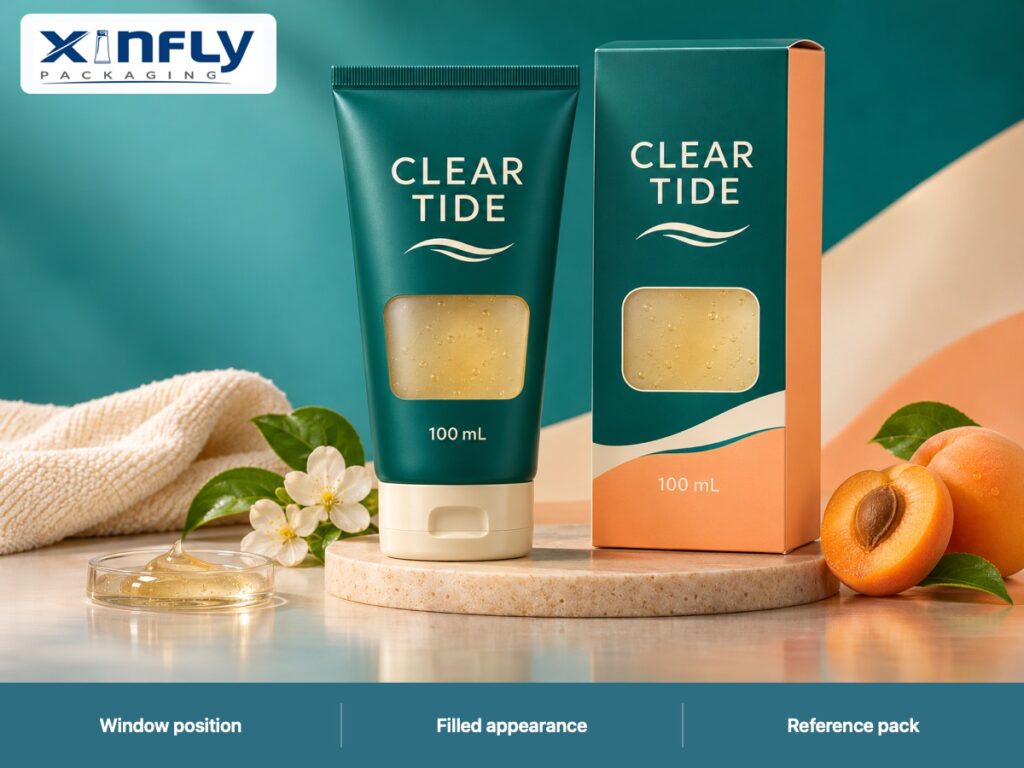
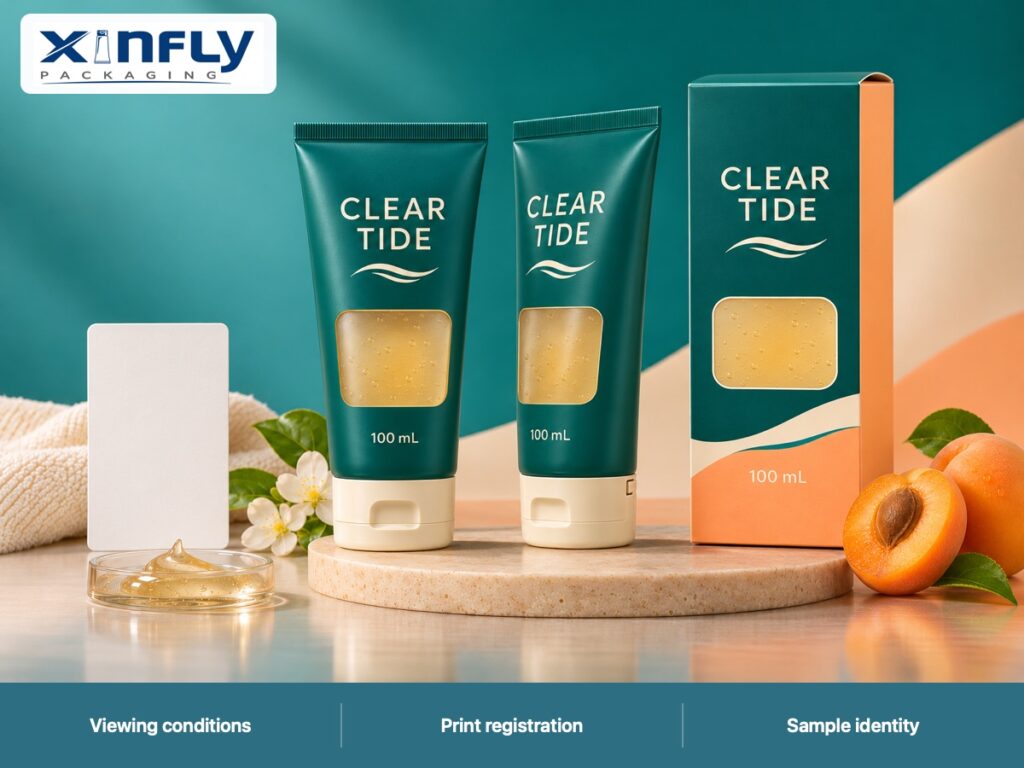
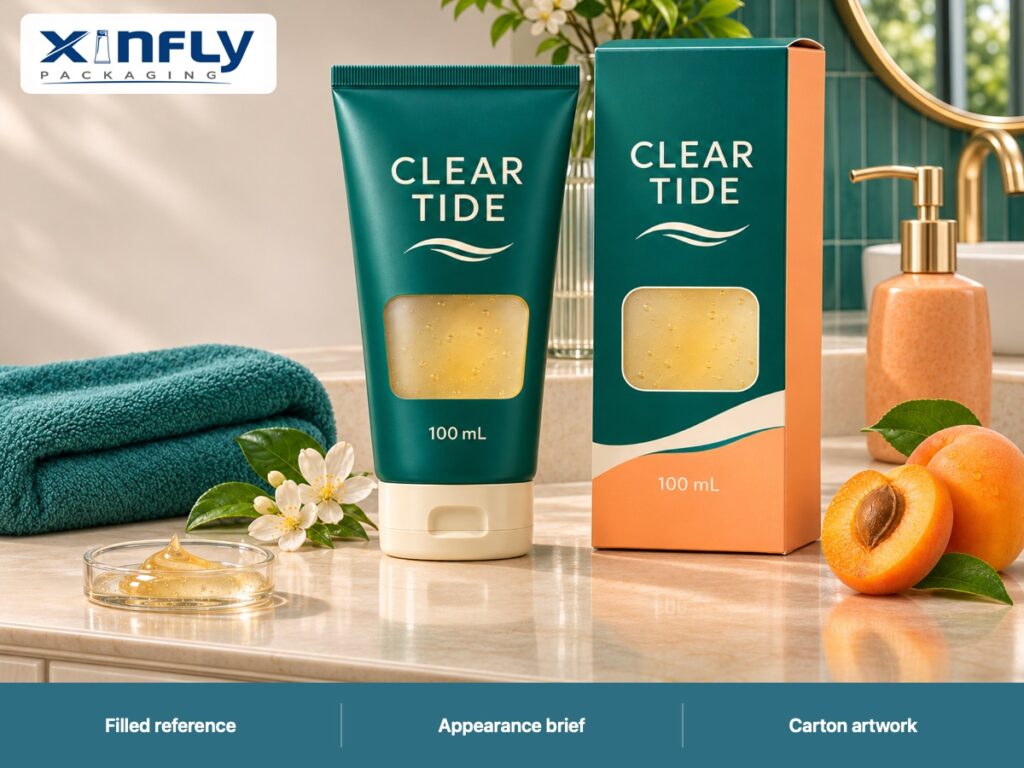
The CLEAR TIDE packaging illustrations here use a nominal 100 mL PE body, molded shoulder, straight sealed tail and ivory flip-top. A deep-teal field and cream lettering represent a two-color screen-print concept around an integral window. The matching carton carries a printed window illustration. These details describe the pictured design, rather than establish an available SKU or a validated formula-and-pack combination.
Review the Border, Corners and Print Registration
A window can be correctly located yet look unbalanced because the surrounding print moves relative to its border. Review the complete artwork, including any fine outline, product name and nearby graphics. Ask which features provide the inspection reference. A statement such as “centered window” is incomplete until the team agrees what center is measured against and how it will be assessed.
Do not create numerical tolerances from a marketing image. Discuss feasible controls with the decorator and document the approved limits on the drawing or inspection plan. If the design relies on a narrow border, explore that feature during tube printing and design development, before a small visual mismatch becomes an argument about finished goods.
Evaluate the Formula View Without Guessing at the Cause
Record Bubbles as an Observation First
Bubbles visible through a window can draw attention even when they would go unnoticed in an opaque pack. Record what you see, when you see it and how the sample was handled. Your formula and filling teams should determine the cause and whether it matters. An appearance review alone cannot diagnose stability, contamination or a material interaction.
Use a shared vocabulary: scattered small bubbles, a concentrated pocket, a streak beside the wall or a color difference from the reference. These descriptions give colleagues something concrete to examine. Avoid turning an unexplained observation into an automatic defect classification. The acceptance decision belongs in the project’s agreed quality criteria, supported by the appropriate investigation when needed.
Check Color Against the Right Reference
Compare a filled tube with a filled reference of the same approved construction and formula. A bulk beaker can provide context, but it presents the formula through a different path and container. It may therefore look different even when nobody changed the gel. Ask the relevant teams to separate the formula color requirement from the appearance through the selected tube wall.
Treat the Visible Level as a Separate Question
A visible product line is not a substitute for fill-weight control. Product distribution, tube shape and handling can affect what appears in the window. If a sample seems underfilled, send the observation to the filler and check the agreed measurement record. Do not approve or reject net quantity from the photograph alone, and do not convert the window height directly into milliliters.
Turn Observations into Decisions Your Supplier Can Use
Give Each Finding an Owner and a Next Step
The most useful appearance report fits on a short sheet. It identifies the sample, describes the observation, links the evidence and assigns the next decision. Keep supplier component checks, filler process checks and brand presentation choices separate enough that somebody can act on them. Otherwise, everyone sees the same photo and assumes another team is resolving it.
| Observation | Evidence to collect | Decision to agree |
|---|---|---|
| Window appears hazier than reference | Matched empty and filled packs under agreed viewing conditions | Confirm construction and acceptable appearance with packaging and brand teams |
| Border looks uneven | Artwork revision and consistent front-view photographs | Check decoration registration against the approved inspection reference |
| Visible bubbles differ between samples | Sample handling, formula identification and time after filling | Ask formula and filling owners to assess cause and acceptance |
| Gel color looks different | Matched filled reference and viewing setup | Distinguish formula color from packaging presentation |
| Visible level appears inconsistent | Filled-pack identification and filler measurement record | Review quantity separately from cosmetic appearance |
| Carton image looks clearer than the tube | Artwork proof beside representative filled pack | Adjust the illustration or expectations before approval |
Keep Decisions Specific to the Reviewed Sample
Write the scope beside the approval. Which tube revision, decoration, formula and filling condition did the team review? If one changes later, decide whether the appearance approval still applies. A window reference from one cleanser should not silently approve another formula with a different color or flow behavior, even when the external artwork remains identical.
Make the Carton and Online Images Match the Buying Brief
Avoid Promising a View the Pack Cannot Deliver
An illustration can make a gel look unusually luminous. Before approving the retail carton or product photography brief, compare that presentation with the representative filled sample. The practical question is whether the image sets a fair expectation. A printed carton window illustration should also be understood as artwork, rather than evidence of a physical opening or a different packaging structure.
For custom facial cleanser tubes sold across several channels, keep one approved pack reference available to purchasing, design and marketing. Each channel may need different photographs, but the underlying appearance expectation should stay connected to the same sample decision. That is easier to manage than correcting inconsistent images after the first deliveries arrive.
Request a Focused Sample Round from Xinfly Packaging
Send the Inputs Needed for a Useful Review
For a nominal 100 mL face wash tube with a flip-top cap, send the desired tube drawing or reference, proposed window layout, artwork files, intended formula information and filling partner’s requirements. Describe which appearance question remains unresolved. Xinfly Packaging’s sample development process is a relevant starting point for discussing what samples and approvals the project needs.
Ask the quotation to distinguish empty decorated samples from filled-pack work and identify who supplies formula, performs filling and records observations. Availability, quantities, costs and timing need a project-specific response. A clear division of responsibilities helps you compare offers without assuming every supplier has included the same development activities.
Close the Approval Loop Before Ordering
Collect the final drawing, artwork revision, physical reference identification, appearance criteria and responsible approvers in one release record. Record unresolved items explicitly. If you would like Xinfly Packaging to review a window-tube brief, send your packaging requirements together with the intended appearance and sample plan. A precise brief gives the discussion a useful starting point.
Frequently Asked Questions
Can I approve a window tube using an empty sample?
You can approve identified component features, such as the window shape and decoration, on an empty sample. If seeing the formula is part of the design objective, keep filled appearance pending until representative packs have been reviewed. State the limited scope of the empty-sample approval in writing.
Does a clear-looking window prove the package has suitable barrier performance?
No. Visual clarity does not establish barrier performance, light protection, compatibility or shelf life. Those questions need evidence for the actual construction and intended formula. Keep appearance approval separate from the technical qualification plan so neither decision is mistaken for the other.
Should every visible bubble mean rejection?
There is no universal rejection rule in this guide. Record the bubble appearance and sample conditions, then ask the formula, filling and quality owners to assess it against agreed project criteria. Do not infer the cause or product safety from a window photograph.
Why can the same gel look different in a tube and a beaker?
The container, viewing path, background and lighting differ. Use the approved filled tube as the packaging appearance reference and the formula team’s own controls for formula color. Comparing unlike containers without recording the viewing conditions can create a misleading packaging complaint.
What should I include in a window-tube RFQ?
Include the proposed material and pack size, cap, window drawing, print colors, artwork revision, intended formula and sample responsibilities. Add your viewing brief and identify the approval owner. Request confirmation of the supplier’s proposed construction and any development work included in the quotation.
Conclusion
A useful window approval connects the empty component, filled formula and intended presentation. Define the viewing conditions, retain an identified reference pack and give each observation a clear owner. With those basics in place, Xinfly Packaging and your filling team can discuss the same purchasing decision: whether this particular decorated tube delivers the appearance your project has agreed to accept.