Published: .
Technical review: pending.
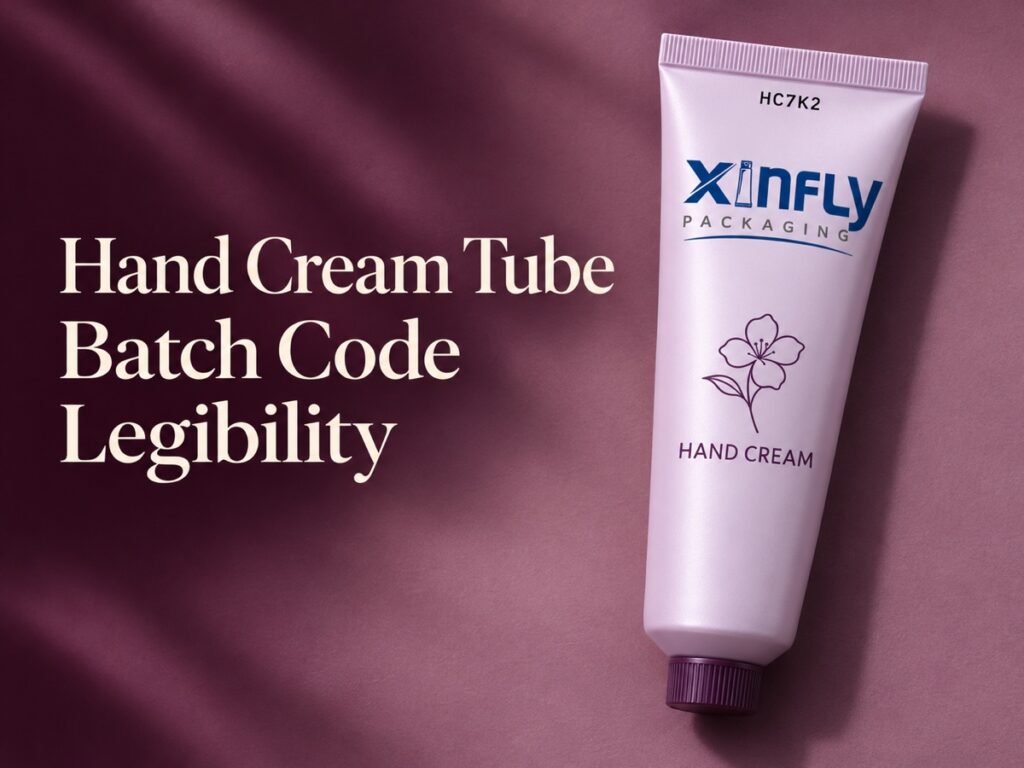
Approve hand cream tube batch code legibility on a filled, sealed tube before you place the first decorated order. Procurement needs to know whether receiving staff can transcribe the code, match it to the agreed batch record and tell where to look on each variant. A clear code surrounded by trim, varnish, seal ribbing or shifting print can become hard to read after packing. This guide compares two locations on the finished pack and gives buyers a way to approve the code as part of the packaging sample.
Start With a Finished Tube
Pick the Conditions the Warehouse Will See
Ask the buyer, filler and receiving lead to agree what the receiving check has to answer. The core task may be to read the exact characters, confirm the variant and match a case to the batch record while the cartons are held for receipt. A separate check can cover whether the code remains readable after handling between filling, pack-out and delivery. Use the real handling sequence for that project and state the point at which the reader verifies the pack.
Specify the Body and Closure
For a compact example, start with 30ml hand cream tubes for a travel or gift hand cream. The pictured proposal uses a lightly tinted round PE tube with a molded shoulder, a straight sealed tail and a short color-matched screw cap. Simple line art and a product name can be screen printed on the body. The variable batch code is added by the filler using the method and location selected for the project. Ask the supplier to provide the same body finish, decoration and cap as the configuration you plan to buy. Check each finish request independently when a range has matte and glossy variants.
Compare Code Positions
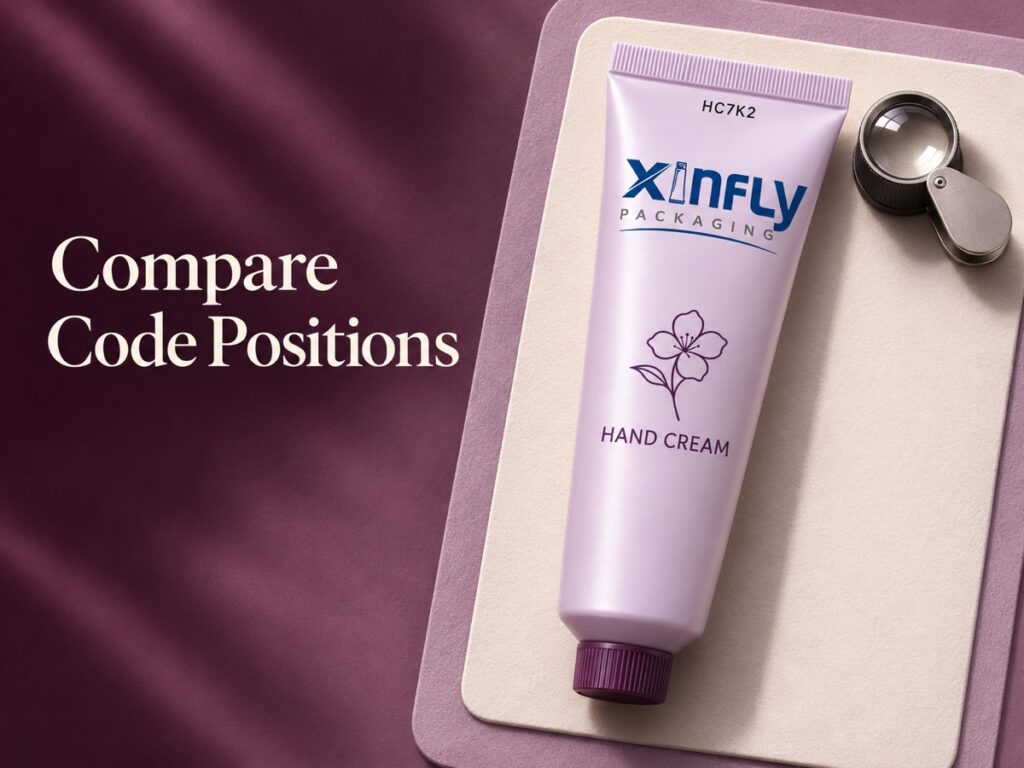
Compare a clear area near the sealed tail with a reserved back-panel area. Ask the filler which positioning and marking methods it can use. A code near the tail can be quick to find if that end is easy to turn toward the reader. On a back panel the tube may have more usable space, but curvature and glare can make some characters less clear from a straight view. Load cases and label layouts so the person checking both variants knows where to look.
Mark the Usable Space on the Sealed Sample
The critical clearance is the clear area that remains once the tube is filled and sealed. Mark the tail trim edge, seal impression and nearby static print. For the body, flag the background color, nearby varnish boundaries and how the tube rotates as the reader handles it. Draw the proposed code field on the final artwork only after the filler confirms the usable space. The tube print layout dimensions guide is useful when identifying where the reserved field and the principal decoration will sit.
| Option | What to request | Condition to challenge | Release evidence |
|---|---|---|---|
| Area just below the tail seal | Marked final seal position, trim edge and proposed code area | Code at the limit of the agreed placement window | Sealed trial units showing clear characters and enough space around the code |
| Reserved back-panel area | Artwork revision, background color and location relative to a known panel | Curvature and glare under the agreed receiving light | Unedited photo with the tube held at the expected viewing angle |
| Same position across shades | Printed samples with each approved background and finish | The darkest or most reflective approved variant | Blind readings for each finish and color group |
| Second position for a special variant | Annotated location change and variant identifier | People looking in the standard position first | Variant-specific receiving instruction and a physical reference |
Keep the Code and the Evidence Matched
Use a dummy code with the same number of positions and a similar character set as production. For example, HC7K2 can be a fictional sample mark used to demonstrate the location. Give the reader an unopened sample with the code hidden from the worksheet. Ask them to write what they see before comparing it with the reference value. Repeat under the agreed ordinary lighting and handling. Record different symptoms separately, including missing ink, a cropped character, weak contrast, smearing, or a character that can be read two ways.
Tie the Position to the Filling Operation
Confirm that the filler can reproduce the position on units sealed in the intended orientation. For an embossed mark the buyer may need to compare shadowed and front-lit views. For a printed mark ask the filler to explain what the mark looks like after the agreed drying or setting interval and the planned handling sequence. Record the actual print method if it matters to repeatability. The code example in this guide implies no particular coding machine or coding tolerance.
Read the Code at Receiving
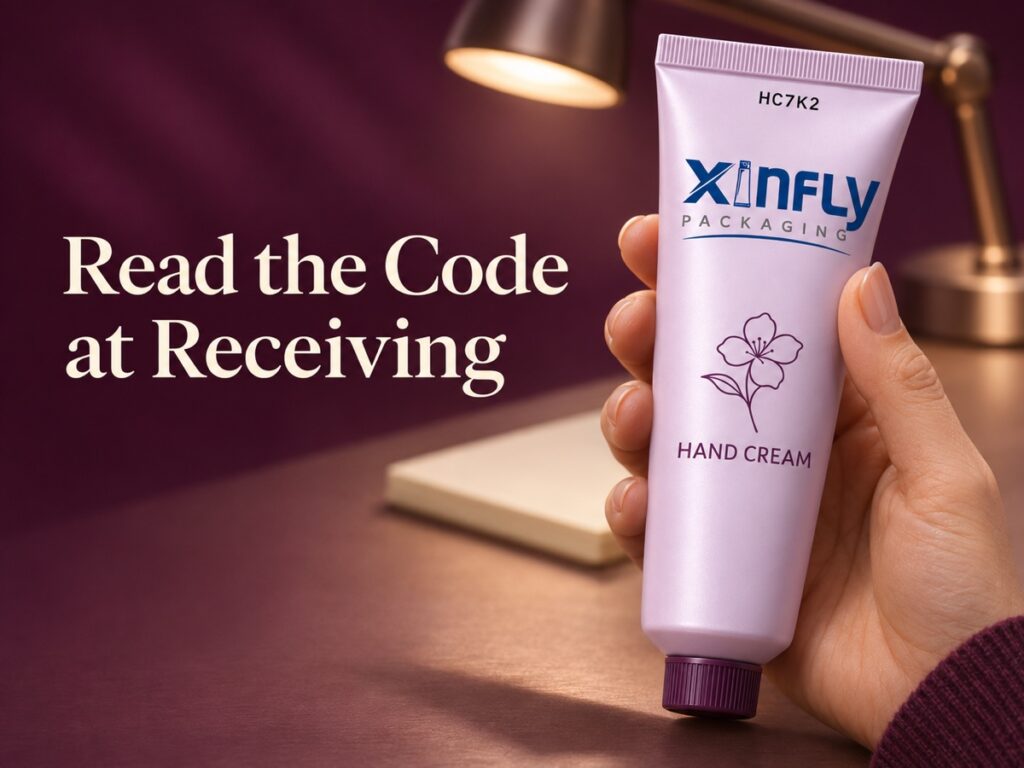
Have an independent reader check the filled samples at the same type of receiving station the buyer expects to use. Provide the SKU and variant information the operator would normally have. Record whether a sample can be read straight away, whether it needs a turn or second look, and whether it can be tied to the expected record. Agree on the permitted handling steps and light before the trial. The objective is a readable, traceable code in an ordinary receiving workflow.
Follow the Actual Route From Packing to Receipt
Identify when the units will first contact a carton, divider, liner or one another. Confirm how the marked area faces when tubes are packed. Have the filler and receiving team plan an approved simulation of normal transport and handling if those operations could smear, scuff or crease the code. Compare the same reference units before and after the agreed sequence when that helps show what changed. Log the conditions and keep an untouched reference unit for comparison.
| Checkpoint | Record during the check | What the buyer can decide |
|---|---|---|
| Identity | Tube sample and variant, fill date or trial ID, marking method and reference code | Which material and fill trial the observation covers |
| First reading | Reader transcription and lighting or handling when read | Whether each character matches the expected value |
| Placement | Photo of the viewed panel and position relative to seal or back-panel artwork | Whether the chosen location fits the receiving instructions |
| After handling | Same unit ID, handling route, observed mark or smear, second transcription | Whether the check needs another finish, zone or setting interval |
| Case match | Expected unit batch and corresponding receiving or case reference | Whether an unambiguous match can be made |
| Exception | Unreadable or ambiguous character, affected variant, hold decision and next owner | What action is needed before a packaging order is released |
Agree the Hold Rule Before the Trial
Have the buyer specify which mismatches or unreadable characters require a hold for the evaluated sample. When a mark is readable only at an angle or after wiping, document the effect and ask whether the receiving team can use that method consistently. If an issue appears only on one color, check the same finish and code position on another agreed unit of that color and keep the finding tied to that variant. A single readable unit is useful as a reference. The acceptance plan for a purchase needs a sample scope that the buyer and filler both recognize.
Document the Reader's Point of View
Record the position of the tube in the case or inner pack as the receiver first opens it. For example, if the tail is accessible first, a tail-area code may avoid handling several neighboring units. If every tube must be lifted to see the code area, include that step in the trial instead of presenting the pack already facing the reader. Ask the receiving lead which other identifiers are visible before a tube is removed, such as the case label or a variant name. Keep photos of that initial view and the normal view used for reading so the next shipment can be assessed under the same conditions.
Compare Supplier and Filler Proposals
Define Who Controls Each Variable
The converter controls the printed decoration and named code area within the approved hand cream tube packaging specification. The filler controls the applied variable mark and its equipment setup. Ask both parties to name their documents and responsibilities. A receiver can verify a code against the buyer's record when the two parties agree on which sample and drawing to use. Include the release and change approval responsibilities in the purchase record.
Approve One Master per Different Surface
For projects involving several fragrances, identify the actual artwork and finish of each option. A visual shade difference on the same material can change the contrast of the code. A switch in finish can change the appearance again. Retain one labeled, filled approval unit and an unedited record of the receiving read for each decision group. Use the supplier's available tube decoration and printing options to discuss the static artwork and finish before submitting the marked sample brief.
Frequently Asked Questions
Should I choose a code near the tail or on the back?
Choose the zone that the filler can mark and receiving staff can find in the normal handling sequence. Compare both on finished units if drawings alone leave doubt. A favorable location keeps readable contrast and space around the code for the approved variant after sealing and packing.
Can I approve a code placed on empty hand cream tubes?
An empty tube can help compare backgrounds and reserved artwork zones. Approve the actual applied mark on a filled and sealed production-intent tube. The filler can then account for seal position, trim, handling and the marking equipment used for the project.
Is it enough to keep a magnified image?
Keep a magnified image for diagnosis if needed. Base the release observation on the reading method the receiving team will actually use. Record whether it was possible to read each character directly and keep a normal-view photo to show the relevant angle and position.
What if the printed design changes after the code is approved?
Check whether the update changed the contrast, usable space or receiving instructions. Have the supplier and filler confirm the same reserved area, then repeat the parts of the receiving check affected by the change. Retain the original sample and label the new drawing and sample with distinct revisions.
What goes in an RFQ for custom hand cream tubes?
Provide the target fill, cap, body finish, latest artwork, proposed code area and responsibilities for applying the mark. Request compatible decorated samples for the filler to trial. Ask the supplier how any finish or artwork change will be identified so the brand knows when to repeat the legibility check.
Conclusion
Decide where the batch code belongs on the finished tube and verify the choice in the receiving workflow. Use a filled sample to record the code location, independent reading, after-handling observation and match to the batch record. Give Xinfly Packaging the finish and artwork revisions, filler notes and receiving conditions when you request a quote for hand cream tube samples. The converter and filler can then compare code zones before the decorated order is released.