Published: .
Your designer approves a rose-coloured lip gloss tube beside a window. The purchasing manager opens the parcel under an office lamp and asks for a correction. The supplier sends a phone photograph that seems to show a third shade. Before anyone changes the artwork or resin request, what exactly are these three people comparing?
A lip gloss tube colour viewing conditions brief gives the approval conversation a common reference. It identifies the specimen, the part being judged and the arrangement used to view it. This guide offers a buyer’s record for that conversation. It does not set a colour tolerance, certify a viewing environment or report a measured difference between actual Xinfly Packaging samples.
Identify the Colour Decision Before Opening the Parcel
Separate Body Colour from Printed Ink
For 10ml lip gloss squeeze tubes, name the feature you want approved. It could be the body colour, the cap colour or a printed graphic. Those are different entries in the specification. “Make it more pink” leaves the supplier guessing which entry should change. Mark the relevant area on the artwork or sample photograph and give it an identifiable reference.
A colour observation should stay attached to the proposed construction. Record the body material description, decoration process, surface finish and specimen revision. A printed mock-up can be useful for layout discussion while representing a different substrate or process from production. Ask the supplier to identify that difference before treating the mock-up as the final colour reference.
Name the Physical Reference
Identify the approved sample, master or other agreed reference by its actual document or specimen identity. Record who holds it and which version the supplier is using. A description such as “the sample we liked last month” is difficult to reproduce when several parcels arrived. Preserve a photograph for identification, while keeping its role separate from the physical comparison itself.
Agree a Viewing Arrangement Everyone Can Describe
Record the Lighting Used for the Decision
Ask the responsible design and printing parties to agree the viewing conditions appropriate to the project. Record the identified light source or viewing equipment and any relevant settings in their agreed method. “Daylight” without further explanation may leave the participants using different arrangements. Do not declare that a room meets a standard simply because its lighting looks neutral.
Use the Relevant Standard Only Within Its Scope
The official ISO 3664:2025 abstract describes viewing conditions for images on reflective and transmissive media in graphic technology and photography. It does not provide a tube-specific acceptance tolerance in its public abstract. If your project invokes a standard, have the responsible parties confirm the applicable edition, scope and implementation. This guide does not claim that the illustrated packaging or its photography follows that standard.
Describe Position and Surroundings
Record the reference and sample positions, viewing direction and relevant surrounding background in the agreed arrangement. Curved printed tubes are physical objects, so identify which area is being compared. Avoid an instruction that asks one person to judge a broad front panel while another judges the edge of a highlight. Let the technical parties establish the appropriate procedure and preserve their description.
| Field | Information to record | Question it resolves |
|---|---|---|
| Feature under review | Body, cap or named printed area | Which colour decision is being made? |
| Specimen identity | Sample, construction and revision | Which physical pack was examined? |
| Reference identity | Agreed master or approved specimen | What was the comparison based on? |
| Lighting arrangement | Identified source or equipment and applicable settings | Were the parties using the agreed conditions? |
| Position | Sample area, orientation and viewing arrangement | Were comparable surfaces being examined? |
| Surroundings | Relevant background and nearby influences | Was the comparison arranged consistently? |
| Decision record | Reviewer, date, observation and scope | What was actually approved or queried? |
Keep the Reference and Proposed Pack Comparable
Check What Each Specimen Represents
When reviewing custom lip gloss tubes, ask whether the reference and new specimen share the proposed material, colour construction and finish. If they differ, list the differences rather than hiding them behind the same product name. The reviewer can decide whether the reference is suitable for the intended decision or whether another sample is needed.
Separate Empty-Pack and Filled-Pack Observations
State whether each specimen is empty or filled, and identify the formula where relevant to the appearance discussion. Do not assume a filled sample and an empty mock-up represent the same review condition. Your team should decide what specimen state it needs. Purchasing can then request that state and record it without claiming that a particular fill changes the colour by a known amount.
Use Photographs for Clearly Named Purposes
Photograph the Comparison for Identification
A photograph can show the sample identities, their positions and the area being discussed. Ask the person taking it to identify those details and the capture date. If the image is only a communication aid, label that role in the approval record. Do not silently replace an agreed physical master with a compressed attachment from a messaging app.
Establish a Digital Workflow When One Is Intended
If remote digital review is part of the project, ask the responsible parties to define that workflow and its limitations. Capture, processing and viewing conditions need to be understood by the people making the decision. A phone image is not automatically a calibrated colour reference. Keep the approved digital method, if any, connected to the specific question it is intended to answer.
Write an Observation Before Requesting a Correction
Describe the Area and Comparison
Instead of “the colour is wrong,” record which specimen and feature differ from which reference under the stated arrangement. Add the reviewer’s actual description. Do not manufacture an instrument reading from a visual impression. If measurement is required, ask the relevant specialist to define the method, equipment, reporting conditions and agreed acceptance basis for the selected surface.
Keep the Cause Open Until Reviewed
An appearance concern does not identify its cause by itself. Send the supplier the specimen references and observation, then ask what information is needed to investigate. Avoid instructing a resin, ink or finish change before the affected feature and construction are clear. That preserves a useful distinction between the reported concern and the proposed correction.
Connect the Discussion to the Printing Request
Preserve the Selected Process and Artwork Revision
Use the printing and artwork service to discuss the proposed decoration and colour reference. A solid screen-printed emblem and a full-colour tonal image create different production discussions. Ask what sample or proof can represent the selected process. Keep artwork, colour references and surface finish together so a correction request does not detach the design from its production brief.
Ask for the Right Sample Stage
Through sample development, identify whether you need an appearance mock-up, material reference or representative pre-production sample. Confirm the sample’s differences from the proposed order. Early specimens can help narrow choices, but give them a defined role. The record should show which later decision still needs a sample that represents the final construction.
Resolve Differences with a Clear Approval Trail
| Reported situation | Clarification needed | Record to preserve |
|---|---|---|
| Buyer and supplier disagree | Same feature, specimen and viewing arrangement? | Both observations with their conditions |
| Only a phone image is available | What decision can that image support? | Capture identity and agreed digital-review scope |
| Reference and sample use different finishes | Is that reference appropriate for the requested comparison? | Construction differences and reviewer disposition |
| Body and cap seem different | Is a relationship between their colours specified? | Separate component references and intended appearance |
| A correction is proposed | Which specification entry changes? | Authorised revision and replacement sample identity |
| A new sample is accepted | What scope does the acceptance cover? | Reviewer, conditions and released reference set |
Record Component Relationships Deliberately
Body and cap may be intended to match closely or to contrast. Write the intended relationship into the design brief. Do not assume that the same colour name supplies a complete appearance specification for both components. Ask the supplier what references and review conditions are appropriate for the proposed materials and finishes, then preserve the decision for each relevant feature.
Identify What Reopens the Decision
On a reorder, compare the proposed construction, artwork and colour references with the released set. If the supplier identifies a relevant change, have the affected appearance decision reviewed. Preserve superseded references without presenting them as the current master. A useful archive tells the next purchaser which specimen and conditions support the current choice.
Make Conditional Approval Specific
A reviewer might accept the body colour while asking for another printed-ink sample. Record those two outcomes separately. Identify which feature is accepted, which remains open and which reference supports each outcome. A general “approved” stamp across the whole project can conceal that distinction. Send the supplier a consolidated response that preserves the individual decisions and names the next sample or clarification required.
An annotated identification photograph can help point to the area discussed. Label it with the specimen reference and retain the unannotated original for context. Explain whether an arrow identifies the body, a printed area or a reflection that prompted a question. The annotation helps locate the observation; it does not turn the photograph into a colour measurement or expand the scope of the reviewer’s approval.
Keep the Posters in Their Proper Role
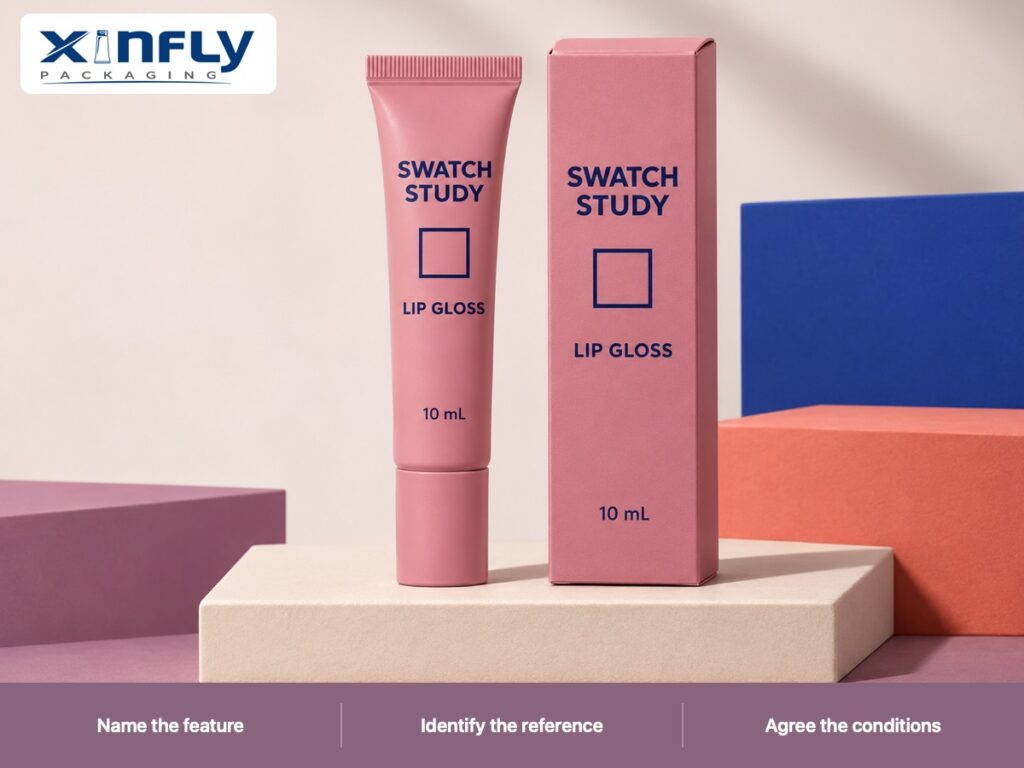
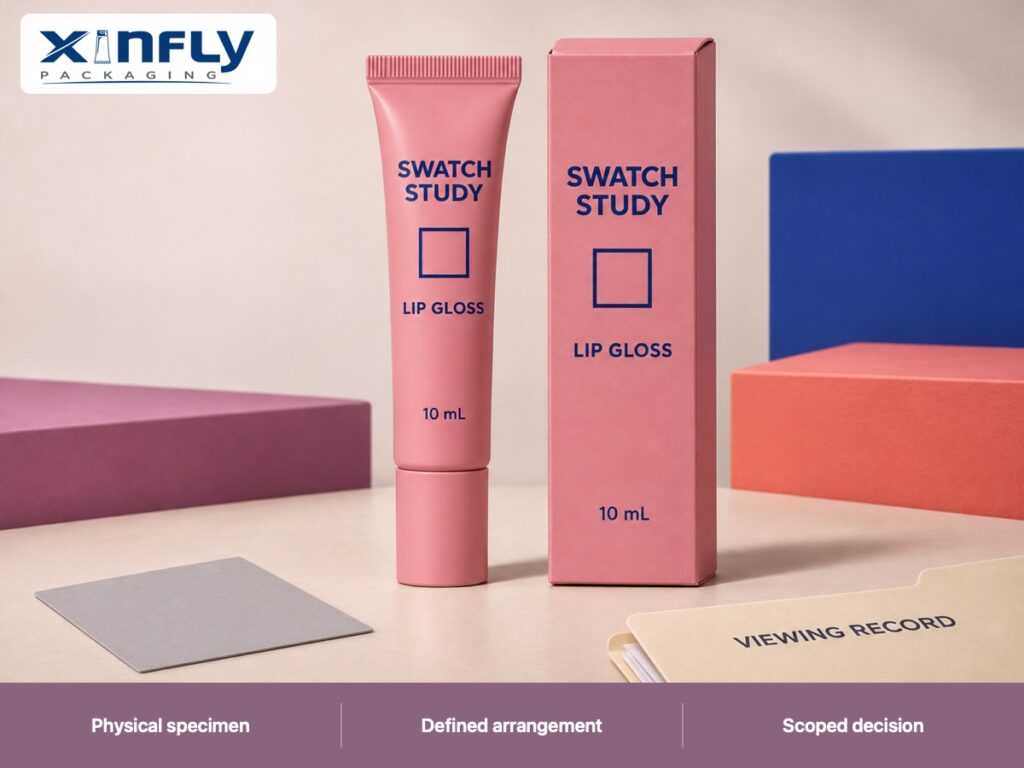
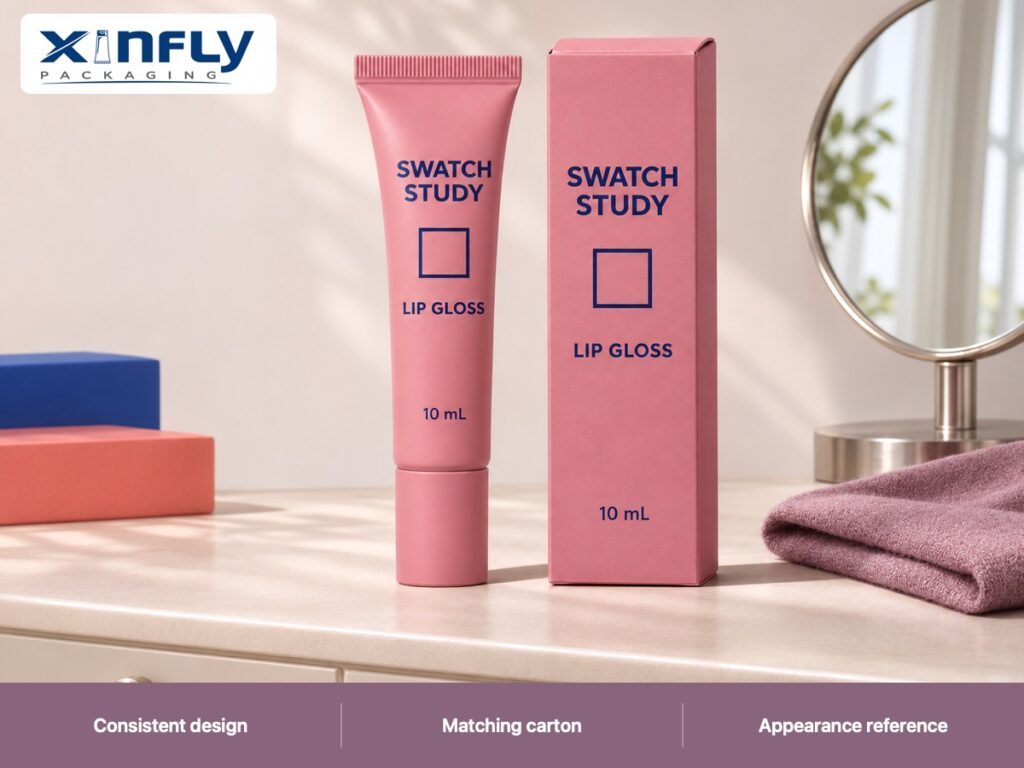
The fictional SWATCH STUDY design uses a dusty-rose PE-style round body with a moulded shoulder, straight crimped display tail and matching cylindrical screw cap. Navy single-colour screen-print-style words and an outlined square coordinate with the printed carton. The posters show one consistent design across product, review-desk and vanity settings. They are packaging illustrations, not physical colour standards or evidence of a measured match.
For lip gloss squeeze tubes, send Xinfly Packaging the proposed capacity, material, closure, artwork, finish and quantity. Include the colour feature you need to approve, your identifiable reference and the proposed review arrangement. Ask which representative samples and documentation can be supplied for the actual project, and confirm the applicable quote and responsibilities.
Frequently Asked Questions
Can We Approve Colour from a Phone Photograph?
Define what that photograph is intended to establish. If digital review is part of the project, the responsible parties should agree its method and limitations. Do not assume an ordinary phone attachment replaces a physical master or a defined colour-review workflow.
Should the Cap and Body Use One Approval Entry?
Identify them separately and record their intended appearance relationship. Different component references may need different material or finish information. The reviewer can then state whether the decision concerns one component, the relationship between them or both.
Does a Visual Difference Prove the Ink Is Incorrect?
A visual observation alone does not identify the cause. Record the feature, specimen, reference and viewing conditions, then ask the supplier and responsible reviewer to investigate before changing the relevant material, ink or finish specification.
What Does ISO 3664 Establish for This Article?
Its public abstract provides context about viewing conditions in graphic technology and photography. This article does not reproduce its full requirements, claim a compliant viewing installation or set an acceptance tolerance for a cosmetic tube.
What Should Be Saved After Colour Approval?
Keep the current specimen and reference identities, construction and artwork revisions, agreed viewing arrangement, reviewer and decision scope together. Identify which changes require another review so the same colour discussion does not restart from an unidentified image on the next order.
Conclusion
Colour approval becomes easier to discuss when everyone names the same feature, specimen, reference and viewing conditions. Record those fields before requesting a correction. Xinfly Packaging can review a focused appearance brief and sample request while your responsible design and technical parties establish the comparison and authorise the resulting specification.