Published: .
The purchase order says PCR cosmetic tubes. A material document sits in one folder, a packing list in another, and the carton delivered to your warehouse carries a different reference. Each document may be useful. The unanswered question is whether you can connect them to the same goods.
PCR cosmetic tube lot traceability records help a buyer follow those connections without treating a familiar product name as evidence. Begin with the proposed PCR cosmetic tubes, then ask how the supplier identifies the relevant materials, components and delivered quantities. This guide provides a document-scope matrix and a reverse-lookup worksheet. It does not certify recycled content, establish a legal claim or prove performance for any particular order.
Start with the Question the Record Must Answer
Identify the Goods Being Investigated
“Our PCR tube order” is too broad for a useful lookup. Record the purchase reference, intended item, received packing identification and quantity concerned. If the question relates to a particular carton, sample or delivery, preserve that identity. A clear starting point lets the supplier explain which records actually connect to the goods.
Keep the nature of the question separate from its suspected cause. You might be checking a material reference, a documentation gap or an observed difference. Do not label a lot incorrect before the relevant information has been reconciled. The lookup should establish what is known and what still needs an answer.
Distinguish Item References from Lot References
An item reference describes what is ordered. A lot reference identifies a group within the supplier's record system. Ask how those references relate in the proposed supply arrangement. Do not assume that a product code, order number and production lot are interchangeable simply because they appear near each other on a document.
One purchase can involve more than one relevant lot, and one lot can be associated with more than one dispatch. Ask the supplier to describe the actual relationship. Your record needs enough structure to retain that answer instead of forcing every event into a convenient one-order, one-lot assumption.
Define Which Components the PCR Proposal Covers
Keep the Body and Closure Identifiable
Ask where the proposed PCR material is used and which component or layer the statement concerns. Identify the closure separately when it has a different material proposal. A body-related document should not silently become a statement about the cap, decoration, carton or complete package.
For custom PCR cosmetic tubes, retain the agreed construction reference alongside the material description. If the supplier cannot provide a particular underlying document directly, ask what applicable identification or confirmation can be supplied through the agreed commercial process. Do not fill the gap with an inferred material history.
Keep Content Calculations Separate from Lot Connections
A calculation asks what quantity or weight basis a proposed content figure uses. Traceability asks how a record connects to the identified goods. Both can matter, but answering one does not automatically answer the other. A carefully calculated percentage is not a substitute for linking the applicable material statement to the supplied item.
Use a separate PCR tube content weight-basis record when that calculation is part of the project. Keep the component scope and document references consistent between the two records. Avoid carrying a percentage into packaging artwork merely because it appears in an unrelated commercial presentation.
Ask What Each Document Actually Identifies
Read the Scope Before Filing the Document
A document title alone does not establish applicability. Look for the named organization, item or material reference, date or revision, and the scope of the information. Ask the supplier to explain the connection if its reference differs from the one on your component specification or delivery paperwork.
Do not equate every useful document with a certificate or test report. A declaration, production record, packing list and photograph answer different questions. Keep each in its own role so the purchasing file does not become a collection of impressive-looking attachments with no clear relationship to the order.
| Record type | Connection to request | What it does not establish on its own |
|---|---|---|
| Material statement | Identified material reference and applicable component scope | That every part of the finished pack uses that material |
| Component specification | Body, shoulder, closure and relevant construction revision | Which specific delivered quantities were produced against it |
| Body production identification | Supplier's link between item, relevant material records and body lot | A performance result or a complete environmental claim |
| Closure identification | Applicable cap reference and supplier's lot relationship | That body-related PCR information applies to the cap |
| Decoration record | Artwork revision linked to the relevant decorated goods | Recycled content from the printed wording or appearance |
| Packing and dispatch record | Delivered quantity and packing references connected to the identified goods | Independent verification of every upstream statement |
Ask About Scope Gaps Directly
If a document names a material grade but the purchase names a tube SKU, ask how the supplier connects them. Record the answer and any supporting reference. Avoid renaming files to make two different identifiers look the same. A clear cross-reference preserves more information than a tidy but misleading folder label.
If a certificate or test report is provided, ask the responsible reviewer to assess its issuer, date, subject and applicability to the actual question. This guide does not treat possession of such a document as certification of the complete order. Public claims need their own applicable evidence review.
Try a Reverse Lookup Before the Order Becomes Urgent
Start from a Delivered Packing Reference
Ask the supplier to demonstrate how an agreed packing reference would lead back to the relevant item and lot information. Use a proposed exercise or a clearly identified existing record as appropriate. The exercise should expose missing links while there is time to clarify them, rather than wait for a disputed shipment.
Specify what you want returned: the item reference, applicable component revision, identified lot relationship and relevant document references. Do not invent a universal response-time requirement. Agree the communication route and expected information for your project with the supplier and your own responsible team.
Keep an Illustrative Chain Explicitly Illustrative
The worksheet below uses placeholder references to show the logic. P1, B1 and M1 are invented identifiers, not Xinfly Packaging production records. A real supplier's system may use different relationships, terminology or levels of detail. Replace the example with the actual explanation rather than demanding these exact codes.
| Starting reference | Connection to request | Answer or open point to record |
|---|---|---|
| Packing reference P1 | Which item and quantity does this identify? | Actual item reference and packing scope |
| Item reference I1 | Which approved specification applies? | Component and artwork revisions |
| Body lot B1 | Which material statement applies to this body lot? | Applicable material reference M1 and scope |
| Closure reference C1 | How is the supplied closure identified? | Separate closure connection or stated gap |
| Material reference M1 | Which document supports the proposed statement? | Identified document, revision and applicability |
| Open connection | Who can explain a missing relationship? | Named follow-up owner and unresolved question |
Preserve a Many-to-Many Relationship When Needed
If the explanation includes several lots or dispatches, keep them visible. Do not collapse them into one artificial code for convenience. Ask which quantities or packing references each relationship covers. Where the available information cannot isolate a smaller group, record that limitation instead of claiming more precision than the records support.
Connect the Record to Physical Samples Carefully
Keep Sample Identity with the Observation
When you retain or send a sample for review, record its source and the identification available at the time. Ask the supplier which lot relationship can be established. A sample bag labeled only “PCR lotion tube” may communicate the product family but leave the relevant production reference uncertain.
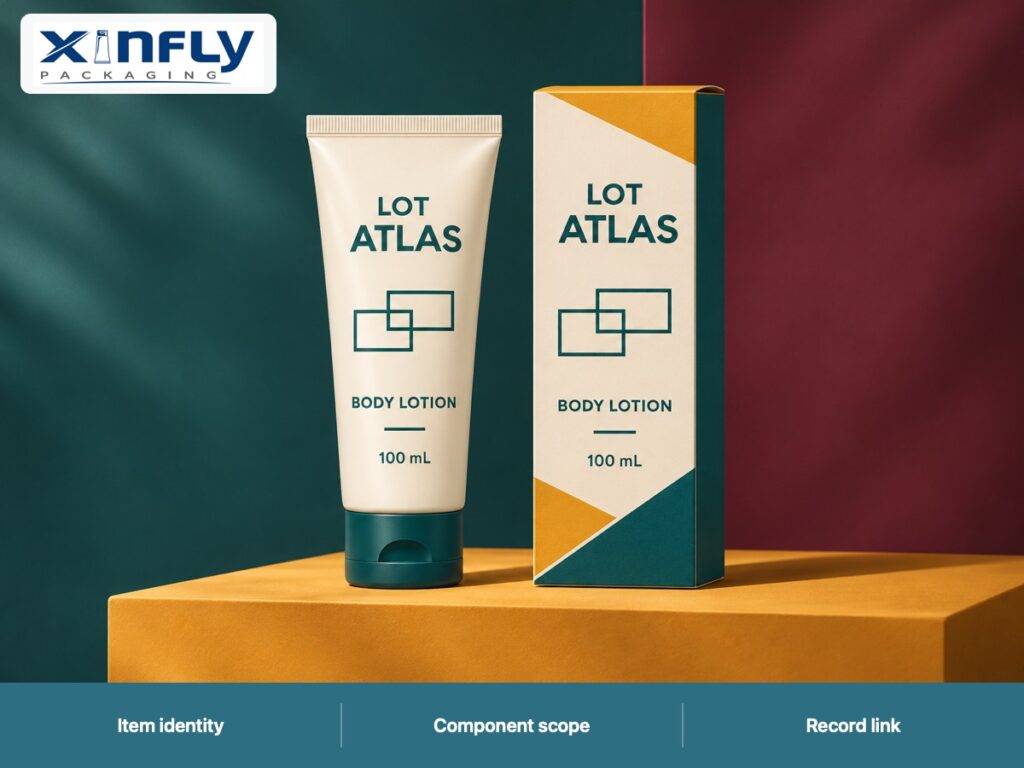
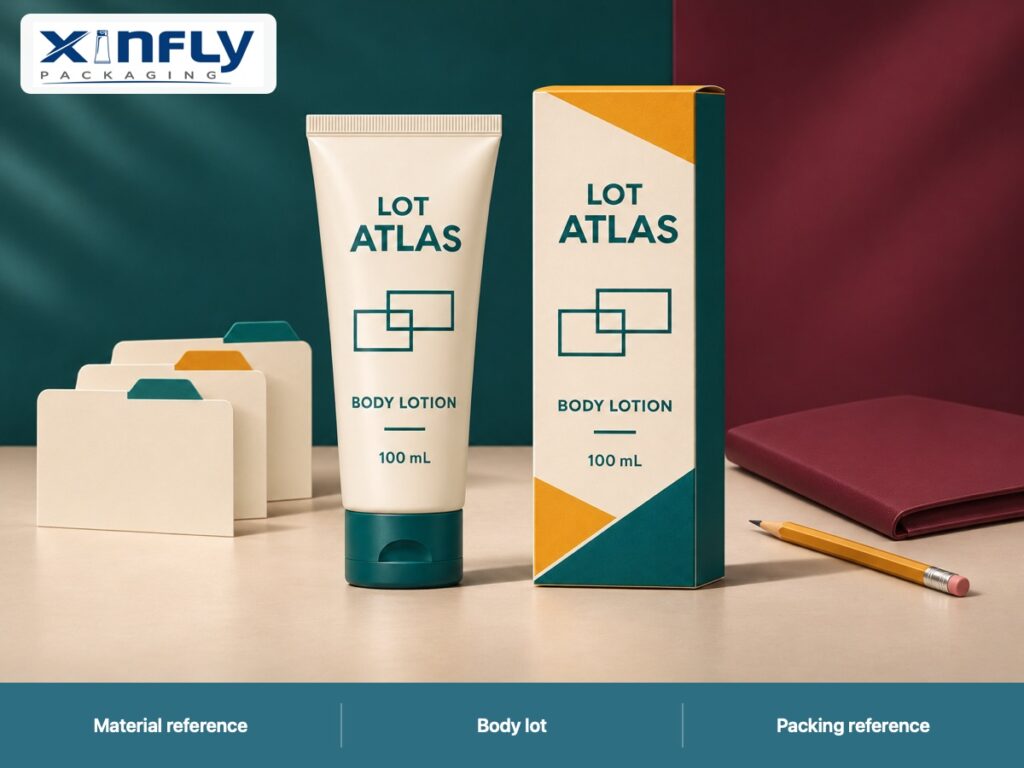
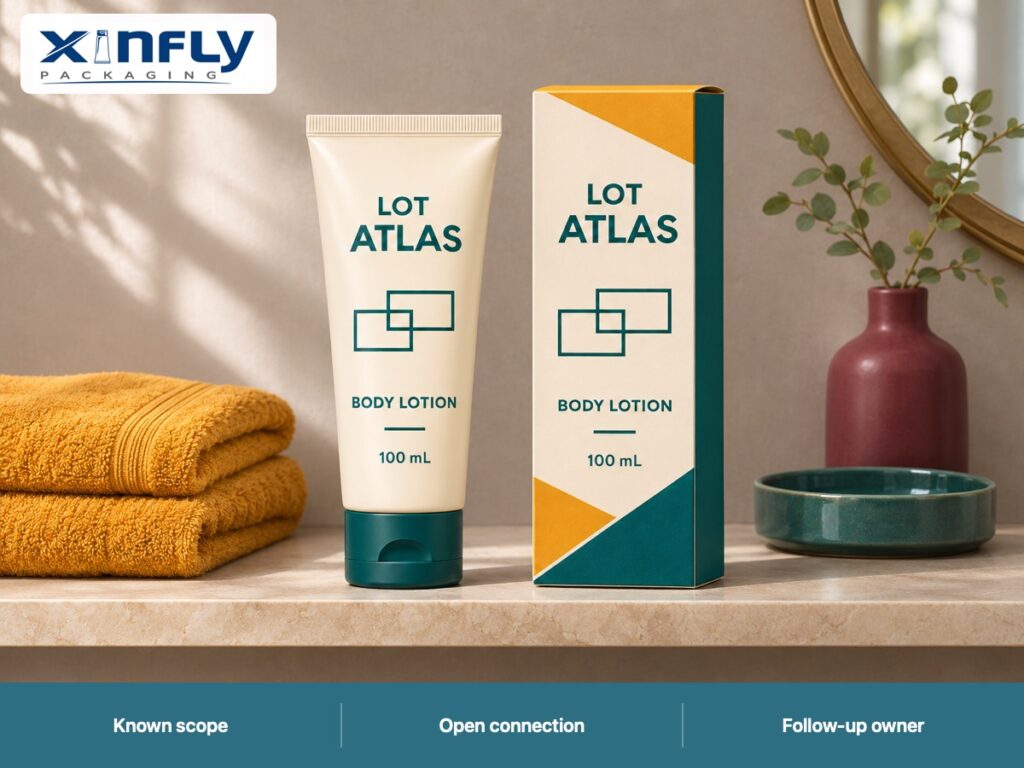
Appearance alone does not identify recycled content. The LOT ATLAS illustration shows an ivory PE-style body, molded shoulder, straight crimped display tail, teal flip-top and teal screen-printed rectangular motif with a matching ochre/teal carton. Its color and external texture do not demonstrate PCR content, a particular construction or a real batch history.
Avoid Replacing Identity with a Test Conclusion
If the project includes physical evaluation, keep the specimen identification connected to the resulting record. Do not assume that a result from an earlier or differently identified sample automatically applies to a later shipment. Ask the relevant technical reviewer which scope is supported and what further confirmation is required.
Discuss the proposed quality assurance records with the supplier before release. Identify which records will be available for the actual item and delivery. A general quality description is useful context, but it does not itself provide the missing lot connection.
Manage Changes Without Losing the Original Reference
Record a Revised Material Proposal as a Change
If the proposed material or construction changes, ask for the revised component reference and affected scope. Keep the earlier proposal as history. A file with the same familiar name should not hide a changed material basis from the people reviewing appearance, formula compatibility or purchasing requirements.
Ask which orders, samples or quantities the change affects. Do not assume the answer is either all stock or none of it. The change record should follow the supplier's actual identification of the affected goods and leave unanswered points open for confirmation.
Keep the Evidence Discussion Distinct from Marketing Copy
The team preparing PCR cosmetic packaging artwork needs a reviewed statement, not a raw collection of supplier attachments. Share the component scope and unresolved limitations with the responsible reviewer before making a public declaration. This article does not prescribe an environmental claim or a market-specific legal threshold.
The sustainable material options page can help frame the material discussion, while the actual project file should identify the selected proposal and supporting references. Keep PCR, other material attributes and performance questions separately defined instead of allowing one to stand in for all the others.
Send a Focused Traceability Request
Ask for Connections, Not an Unsorted Document Bundle
Provide the purchase, item and packing references you have, describe the question, and ask the supplier to map the applicable connections. State which information is missing from your file. A focused request gives the supplier a better starting point than asking for “all certificates” without identifying the goods or the decision.
You can send Xinfly Packaging a PCR tube documentation brief covering component scope, proposed material information and the lot relationships you need explained. Confirm document availability and any agreed information-sharing process for the actual project. Do not assume a particular document, certification or traceability arrangement is available from a product photograph.
Frequently Asked Questions
Is a Purchase Order Number the Same as a Production Lot?
Ask how the supplier uses each identifier. A purchase reference identifies the commercial transaction, while production and packing references may identify other groupings. Record the actual relationships rather than assuming one order always corresponds to a single lot or dispatch.
Does a PCR Body Statement Cover the Closure?
Confirm the scope separately. Identify which component or layer the statement addresses and request the applicable information for the closure when needed. Do not extend a body-related statement to the complete pack without an appropriate basis connecting the proposed components and evidence.
Can I Confirm PCR Content from the Tube's Color?
External color and appearance do not establish the material history or a recycled-content figure. Ask for the proposed construction and applicable material documentation, then have the responsible reviewer assess the intended statement. The illustrations in this article provide no recycled-content evidence.
What Should I Do When Two Documents Use Different Codes?
Ask the supplier for the cross-reference and keep both original identifiers. Record what the connection covers and any remaining limitation. Do not change filenames or manually substitute codes in a way that makes an unverified connection appear established.
Does a Complete Traceability File Prove Package Performance?
Traceability records connect identified goods and information. Performance, formula compatibility and public claims need their own applicable evidence and review. Keep specimen identity attached to any evaluation so the result's scope can be assessed without assuming that documentation completeness proves every product requirement.
Conclusion
A useful PCR tube file shows how the received goods connect to the relevant component and material information. Distinguish item, lot and packing references; identify body and closure scope; and test the lookup logic before an urgent question arises. Preserve gaps honestly. Xinfly Packaging can review your documentation request against the proposed project, while actual content statements, evidence availability and technical acceptance remain subject to appropriate confirmation.