Published: .
A hair mask tube looks tidy after filling, but your filler notices product near the area that will become the tail seal. The tempting response is to adjust a machine setting and try again. Purchasing needs a better record first. Which tube, formula, filling condition and sample stage produced that observation? Without them, the next sample may answer a different question.
This hair mask tube tail area trial record helps brands organize that handoff. It focuses on visible product near the intended sealing zone and the evidence needed for follow-up. Begin with the proposed hair mask tube packaging, then connect the exact drawing and formula to your filler’s trial plan. An observation worksheet supports that plan; it is not a universal sealing specification.
Separate the Observation from the Cause
Describe Where Product Was Seen
Use a marked drawing or identified photograph to locate the observation. Was material visible on the outside of the tube, inside the intended sealing zone or elsewhere near the open filling end? Those descriptions are more useful than “dirty tail.” Avoid using one phrase for locations that may need different investigations and acceptance decisions.
Describe the appearance plainly: a streak, spot, film or another visible feature. Record whether it was observed before sealing, after sealing or after handling. Do not assign a cause simply because the formula is thick. The filling and packaging teams need the relevant sample and process information before deciding what happened and how to address it.
Keep Tail Sealing Separate from Cap Residue
Product around the dispensing cap concerns a different part of the package. If a trial includes both observations, create separate entries. Otherwise, a report may combine first-use dispensing behavior with a filling-end issue and make both harder to investigate. Give each location an identifier so the supplier and filler can follow the same sample history.
Start with the Drawing and Delivered State
Identify the Open Filling End
Ask the supplier which dimensions describe the empty open tube and which describe the finished sealed pack. The drawing should identify the proposed sealing area and relevant decoration boundaries for the actual project. A nominal 200 mL capacity alone cannot establish how much working space the filler needs at the open end.
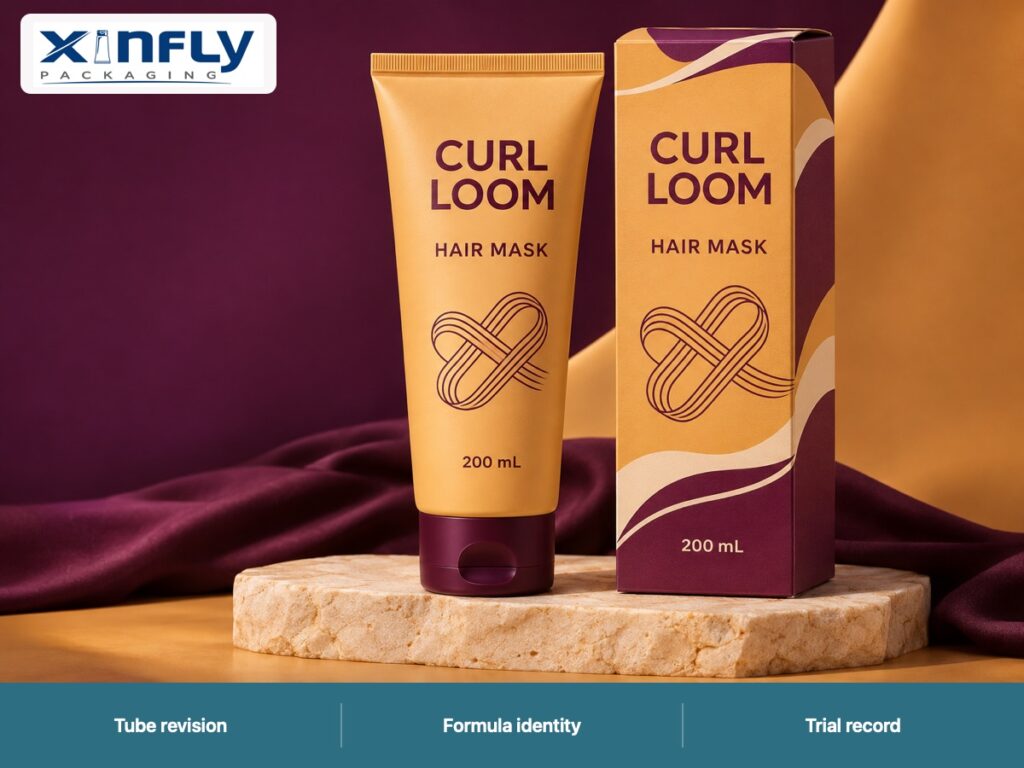
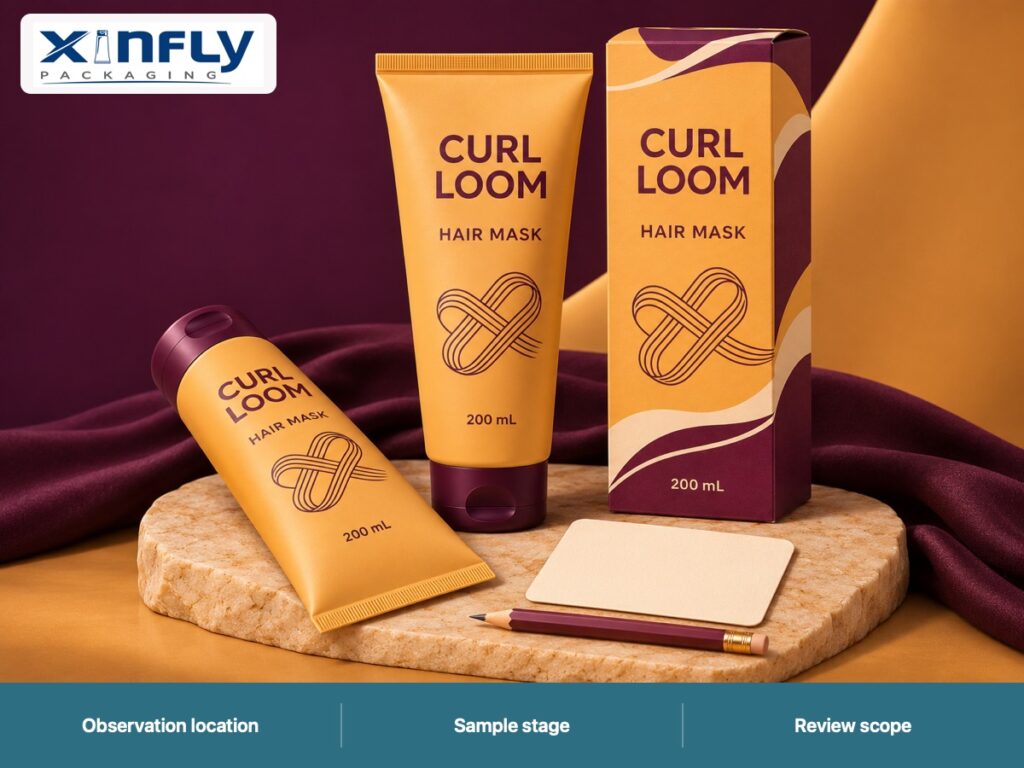
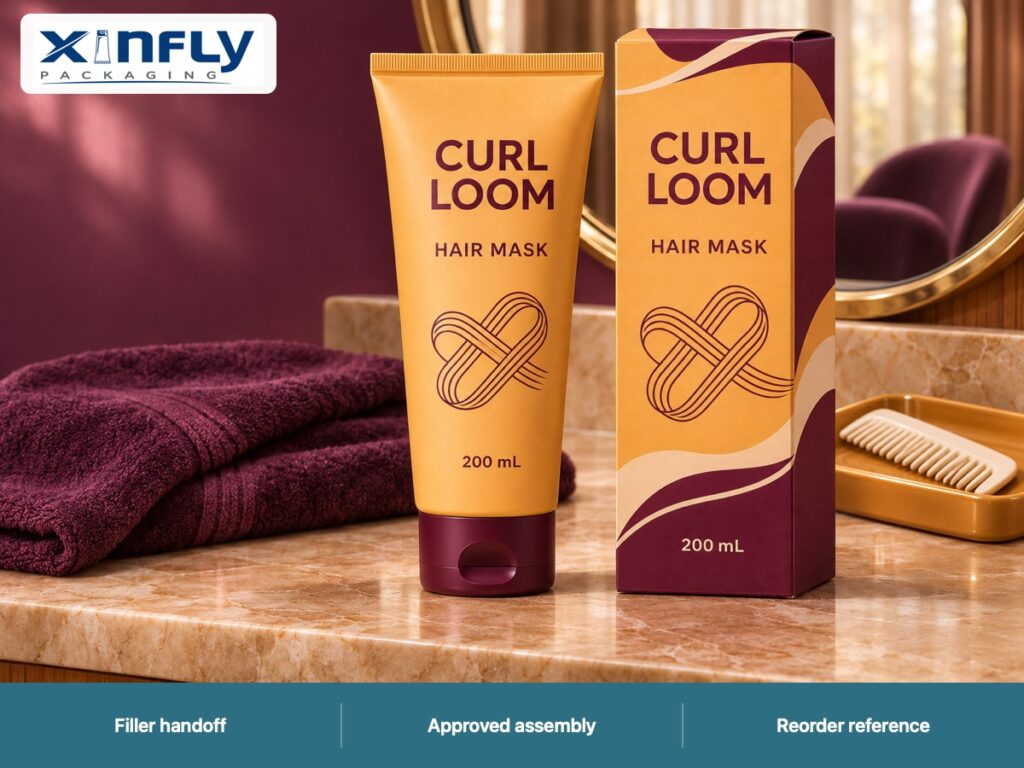
The CURL LOOM illustrations show an ochre PE body, molded shoulder, plum flip-top and straight sealed display tail, with a plum one-color screen-printed woven motif. The matching carton repeats that artwork. These finished-pack illustrations explain the design context. They do not show the empty delivery state, an approved sealing-zone dimension or results from a filling trial.
Confirm Which Surface Features Need Review
Ask the supplier to identify material and decoration information relevant to the proposed sealing process. Let the responsible teams decide which features belong in the trial plan. If the tube construction, drawing or finishing process changes, record the revision before comparing samples. A change that is invisible in a marketing image may still matter to the review.
Use a Shared Location Reference
Mark the observation location against an agreed drawing feature instead of an improvised ruler position in a phone photograph. If dimensional checks are needed, have the packaging and filling owners define the method and limits. This guide intentionally does not prescribe a universal distance from the open end or an allowable amount of formula in a sealing zone.
| Field | Information to retain | Purpose in the review |
|---|---|---|
| Tube identity | Supplier reference, drawing and material revision | Keeps the observation tied to the reviewed construction |
| Formula identity | Formula revision and representative batch reference | Separates formula changes from packaging changes |
| Sample stage | Before sealing, after sealing or after handling | Identifies when the feature became visible |
| Observation location | Marked drawing or identified image | Gives supplier and filler the same location reference |
| Process reference | Trial run, relevant equipment record and preparation conditions | Allows the filling owner to review the actual operation |
| Disposition | Pending investigation, trial follow-up or approved scope | Prevents an unresolved observation becoming a release by default |
Plan the Trial with the Actual Formula
Record the Conditions That Could Change the Comparison
Ask the filler which preparation and process conditions are relevant to the trial. Formula temperature, preparation history, filling setup and handling may need to be recorded, depending on the project. Use the actual conditions identified by the responsible teams. Do not copy a generic viscosity value or assume that two creams behave alike because both are sold as hair masks.
For custom squeeze tubes for keratin hair masks, identify the actual formula revision rather than treating “keratin” as a technical filling specification. The product name may help organize an inquiry, but it does not define every ingredient, flow behavior or process requirement. Send enough information for the filler and packaging supplier to discuss the intended assembly meaningfully.
Keep Trial Variants Traceable
If the team compares different fill conditions or tube proposals, give each variant a clear code. State which factors changed and which remained the same. Avoid changing several inputs without a record and then attributing an improved appearance to one of them. A short comparison matrix can be more useful than a long sequence of unlabeled sample photographs.
Do not choose trial quantities or acceptance sampling rules from this article. Those need to reflect the project and the responsible quality team’s plan. Retain the sample selection method and the number actually reviewed. A handful of development samples should not be described as proof that every future production tube will behave identically.
Connect Appearance Checks to the Sealing Review
Define What the Visual Check Can Answer
A visual check can document whether a specified feature was observed under the agreed conditions. It does not, by itself, establish seal strength or finished-pack integrity. Ask the quality and filling owners what additional checks are required for the proposed construction, formula and distribution plan. Keep each result connected to the method actually used.
When the team needs broader investigation context, Xinfly’s cosmetic tube tail-sealing troubleshooting guide is a relevant discussion resource. Its general guidance should not replace the filler’s equipment instructions or a project-specific trial plan. Use the identified issue and records to decide which parts of that discussion apply.
Record a Result Without Expanding Its Meaning
If a particular sample passes the agreed check, state the method, sample and scope. Do not turn “no visible residue in the reviewed samples” into “leak-proof packaging.” Similarly, a failed check needs investigation rather than an immediate assumption that the tube material is defective. Keep the observation, test outcome and proposed cause in separate fields.
| Finding | Follow-up evidence to request | Decision to document |
|---|---|---|
| Visible product near the intended sealing zone before sealing | Identified sample and filling-run reference | Filling owner reviews how the sample was prepared |
| Similar appearance across different trial conditions | Controlled comparison record and unchanged inputs | Team assesses which differences remain unresolved |
| Unexpected appearance after sealing | Before-and-after sample identity and relevant process record | Packaging and filling owners define the investigation |
| Visual appearance accepted but integrity work incomplete | Remaining qualification plan and responsible owner | Approval stays limited to the reviewed appearance items |
| Construction or artwork revision changed | Updated drawing, material and decoration references | Team decides which trial observations need repeating |
| Trial record complete | Findings, required checks and written disposition | Authorized owner defines the released scope |
Keep Outlet Selection in the Right Part of the Brief
A Wide Outlet Does Not Set the Tail-Sealing Conditions
Wide-orifice squeeze tubes for hair masks can be part of a dispensing discussion. The dispensing opening and the open filling end still need their own specifications and checks. Do not assume that choosing a larger outlet resolves a filling-end observation. Ask how the complete pack fits the formula, process and intended use, and keep those decisions separately traceable.
Record the body, shoulder, cap and outlet combination the supplier will actually quote. Mixing a cap from one sample with a body from another can create a specification nobody has reviewed as a complete assembly. The trial record should preserve that assembly identity even when the immediate investigation concerns the opposite end of the tube.
Agree the Supplier and Filler Handoff
Send an Evidence Pack That Can Be Reviewed
Use a compact folder containing the drawing, formula reference, observation sheet, identified images and relevant trial records. State the open question at the top. For example, ask the filler to review the recorded filling condition while the tube supplier confirms the proposed construction reference. Avoid sending a photograph with only “please improve sealing” as the instruction.
Xinfly Packaging’s sample development process is a starting point for discussing which components and sample states the project needs. Confirm who fills the samples, who carries out each check and who retains the physical reference. Costs, quantities, timing and any repeat trial need confirmation for the actual proposal.
Define the Decision Needed Before Production Release
The release owner should see which observations are resolved, which checks are complete and which questions remain. Connect the final decision to the relevant order, sample and specification revision. If approval is conditional, write the condition clearly. A schedule deadline does not explain whether a technical question was answered, and an email acknowledgement does not automatically close it.
Turn the Trial Record into a Reorder Reference
Retain More Than a Finished-Pack Photograph
A reorder file should identify the approved assembly, formula scope, artwork, relevant trial record and release decision. Keep retained samples identified according to the project’s agreed process. If the filler, construction or preparation route changes later, ask the responsible owners whether the earlier observations still apply. That makes a repeat order a controlled continuation of the approved project.
For a hair mask tube proposal, send Xinfly Packaging the drawing and trial question together with the filling partner’s requirements. Where production inspection is part of the discussion, refer to the company’s quality assurance information and agree the actual project criteria. A precise handoff helps each party investigate the question within its responsibility.
Frequently Asked Questions
Does visible product near the tail prove that the seal is weak?
The visual observation alone does not establish seal strength. Record its location and sample stage, then have the responsible teams review it alongside the required sealing and integrity evidence. Avoid diagnosing the cause or acceptance outcome from a photograph alone.
Can I use a finished sealed tube to define the empty delivery dimensions?
Use the supplier’s drawing for the actual delivered state. A finished sample can support appearance discussions, but it may not show the open filling end or the working area needed by the filler. Keep both references clearly identified.
Should I prescribe a universal clean-zone distance in the RFQ?
Ask the packaging supplier and filler to define the relevant dimensions and acceptance criteria for the actual construction and process. This guide provides a record structure, not a universal distance or a substitute for equipment-specific requirements.
Is a dispensing trial enough to approve tail sealing?
No. Dispensing behavior and tail-sealing qualification answer different questions. Connect both to the same complete assembly while preserving their separate methods, conditions and approval scopes. A positive result in one should not silently approve the other.
What information helps a supplier investigate the observation?
Send the tube and formula identities, marked location, sample stage, trial conditions, identified images and the specific decision needed. Include the filling owner’s relevant process record where available. State missing information explicitly so the team can plan the next useful step.
Conclusion
A tail-area observation becomes useful when it has a location, sample identity and process context. Record what you saw, let the responsible teams assess the cause and keep appearance separate from integrity qualification. That gives Xinfly Packaging and your filler a practical basis for deciding which hair mask tube samples and conditions support the next production release.