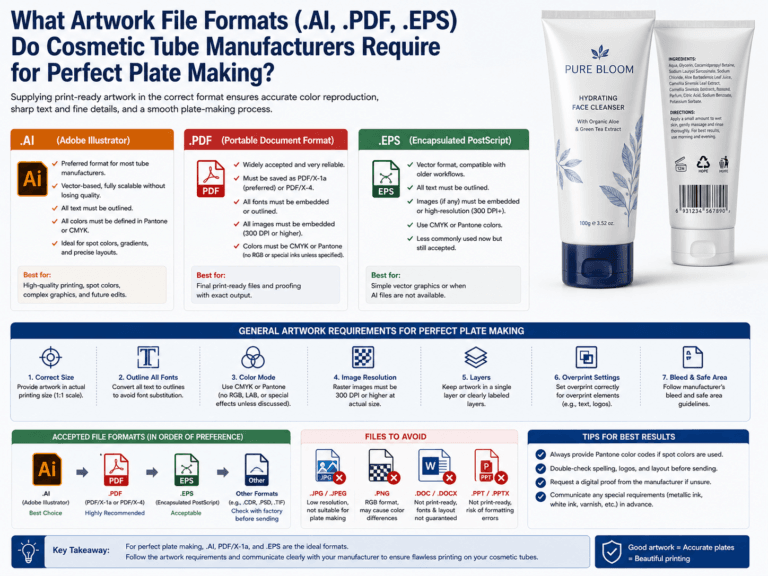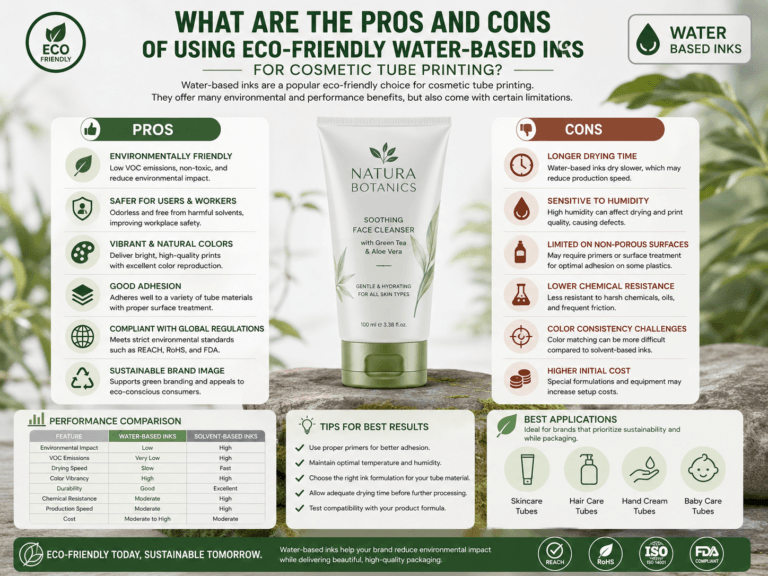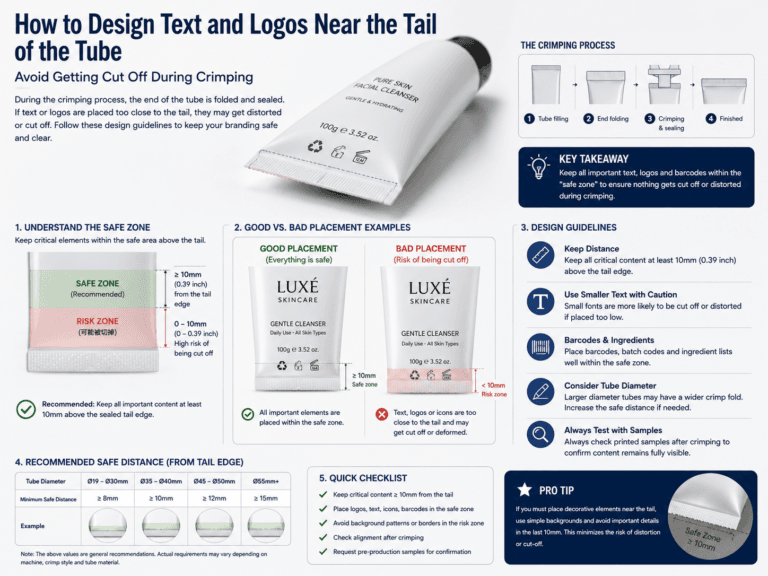

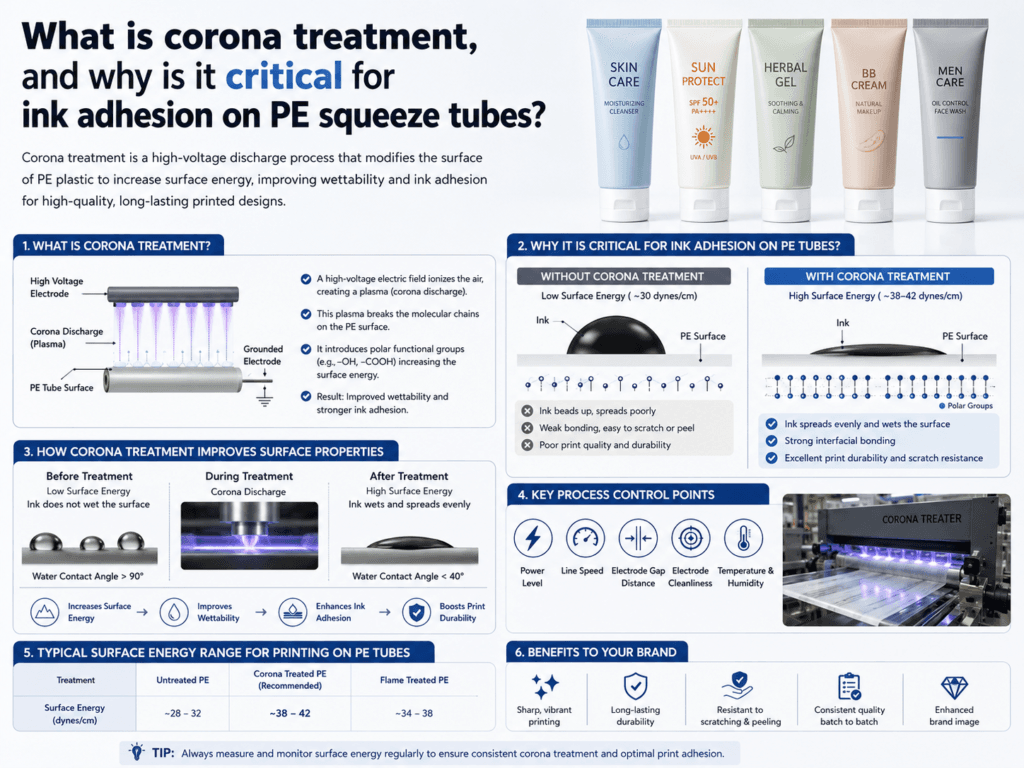
Corona treatment is a surface-activation process used to improve the printability of PE squeeze tubes. It works by exposing the plastic surface to a high-voltage electrical discharge, which increases the surface energy of the tube and makes it easier for ink, coatings, and adhesives to bond properly.
This treatment is critical for PE squeeze tubes because polyethylene naturally has low surface energy. Without surface activation, ink may sit on the tube instead of spreading and anchoring correctly. That can lead to poor print quality, weak adhesion, easy scratching, or peeling during handling, transport, or consumer use.
What Corona Treatment Does
| Function | Effect on PE Tube Surface | Why It Matters |
|---|---|---|
| Raises surface energy | Makes PE surface more receptive to ink | Improves wetting and bonding |
| Changes surface chemistry | Creates polar groups on the plastic surface | Helps ink attach more strongly |
| Improves print stability | Reduces peeling and flaking risk | Supports long-term decoration durability |
Why PE Squeeze Tubes Need Corona Treatment
- PE is naturally low-energy: Ink does not bond easily to untreated polyethylene.
- Printing durability matters: Cosmetic tubes are squeezed, rubbed, shipped, and stored, so weak ink adhesion creates visible defects.
- Supports multiple decoration methods: Corona treatment helps silk screen printing, offset printing, labeling, and some coatings perform better.
- Improves premium appearance: Better adhesion means cleaner logos, sharper text, and longer-lasting surface quality.
What Happens If a PE Tube Is Not Properly Treated?
| Problem | Typical Result |
|---|---|
| Poor ink wetting | Ink may bead up or look uneven |
| Weak adhesion | Printing may peel or scratch off easily |
| Low tape-test performance | Printed graphics fail adhesion checks |
| Unstable long-term durability | Design looks fine initially but degrades later |
Corona Treatment vs. Flame Treatment
| Method | Main Feature | Typical Use |
|---|---|---|
| Corona treatment | Electrical discharge surface activation | Common for film, labels, and some plastic tube printing lines |
| Flame treatment | Heat-based surface activation | Often used on plastic tubes before direct printing |
Both methods aim to improve ink adhesion by raising surface energy. In cosmetic tube manufacturing, the preferred method depends on tube material, print method, production speed, and finishing requirements.
Why Corona Treatment Is Critical for Ink Adhesion
- It helps ink spread evenly across the tube surface
- It increases bond strength between the ink and PE substrate
- It improves resistance to rubbing, tape testing, and handling damage
- It reduces the risk of peeling on matte or difficult-to-print PE surfaces
- It supports more reliable batch-to-batch print quality
Best Practice for Cosmetic Tube Printing
- Use properly controlled corona or flame treatment before printing
- Print within the effective treatment time window
- Match the ink system to the treated PE substrate
- Confirm adhesion through tape, scratch, and abrasion testing
- Keep the tube surface clean and free of oil, silicone, or dust
Summary
Corona treatment is a surface-activation process that increases the surface energy of PE squeeze tubes so ink can bond more effectively. It is critical because untreated PE is difficult to print reliably, and poor adhesion can lead to peeling, scratching, and short-lived decoration quality.
In cosmetic tube production, corona treatment helps ensure stronger ink adhesion, cleaner print results, and better long-term packaging performance.
Learn more: Printing Options, Silk Screen Printing Tubes, Offset Printing Tubes, Surface Finishing, PE Tubes.
Need Better Ink Adhesion on PE Squeeze Tubes?
Xinfly Packaging helps brands optimize PE tube decoration through proper surface treatment, printing-process control, and quality testing for more durable cosmetic packaging.