
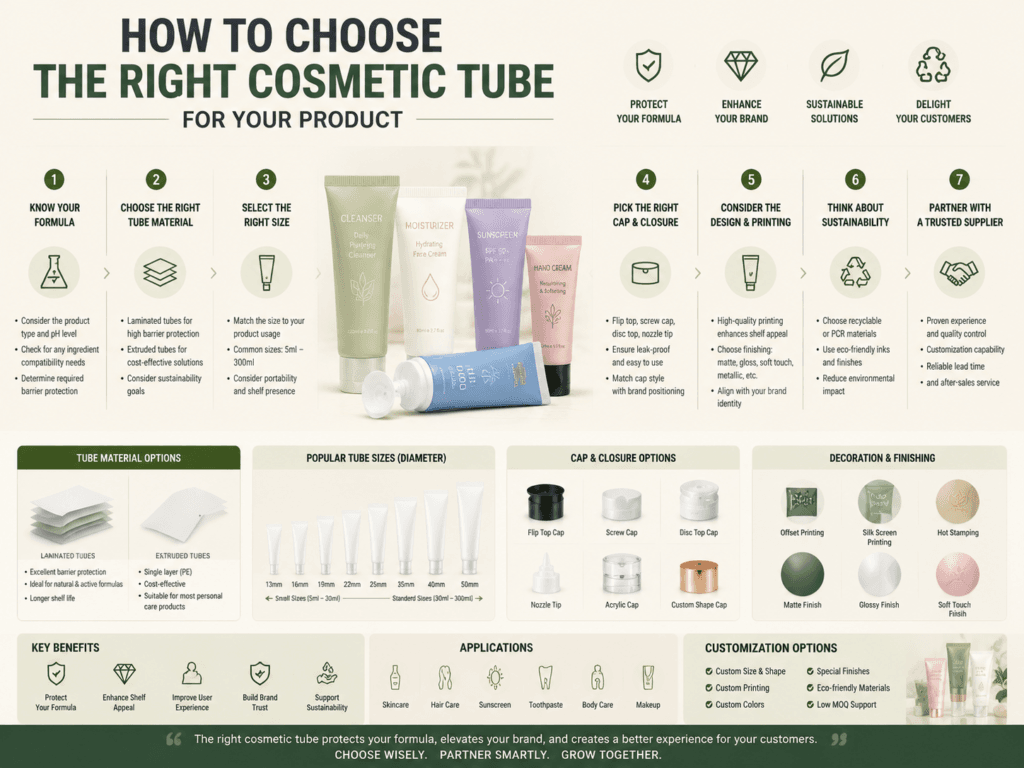
When you choose the right cosmetic tube, you ensure it aligns perfectly with your product. The tube should complement your product’s formula and its viscosity. Additionally, the packaging must reflect your brand’s values. It’s essential to consider whether the formula is compatible with the tube. You should explore the various materials available for use. Selecting the right size and shape is crucial as well. The closure type is significant too. Decoration plays a role, and so does the overall cost. Furthermore, you need to consider the environmental impact of the tube. The color and material of the packaging can influence consumer perception of your product. Effective tube packaging can narrate your brand’s story and foster trust among consumers. Testing the tube and assessing how it feels in your hand are vital steps. These considerations help you avoid potential mistakes. Seeking guidance from experts like Xinfly Packaging can be beneficial. Additionally, using a checklist before making your final decision can ensure you choose the right cosmetic tube.
Key Takeaways
- Pick a tube that works well with your product’s formula and thickness so it is easy to use. Test your tube with your product to make sure it is safe and works well together. Think about using eco-friendly materials to help the environment and get more customers. Choose the right size and shape of the tube to make your brand look better. Use a checklist so you do not make common mistakes when picking cosmetic tubes.
Choose the Right Cosmetic Tube: Formula and Compatibility
Product Consistency and Tube Diameter
First, look at how thick your product is. The thickness tells you what tube diameter to pick. Thick creams need a bigger tube. This makes it easier to squeeze out the cream. It also helps customers use the right amount. Lighter lotions or gels fit better in small tubes. Small tubes help you use just what you need and waste less.
- The viscosity of a cosmetic product changes which tube diameter you need.
- Thicker creams need bigger tubes for easy use.
- Lighter formulas work well in smaller tubes.
- Knowing your product helps you pick the right packaging.
- The viscosity is important for choosing the best tube diameter.
Always match the tube size to how your formula flows. This makes the product easy to use and keeps customers happy.
Formula Ingredients and Material Interaction
Some ingredients in your formula can react with different tube materials. You need to check how your formula works with each material. Some formulas need extra protection from air, light, or water. Others need a tube that does not react with oils or smells. The table below shows how different tube materials work with formulas:
| Tube Material | Interaction with Formula | Best For |
|---|---|---|
| Polyethylene (PE) | Good moisture barriers but limited oxygen protection | Water-based formulas and essences |
| Aluminum | Exceptional barrier against oxygen, light, and moisture; prevents air from entering | Highly sensitive formulas like vitamin C serums |
| Laminate tubes | Superior protection against light, oxygen, and moisture for sensitive ingredients | Ointments and serums with active ingredients |
Aluminum does not react with oils or smells. Standard plastic is usually safe, but oily formulas can pull out plasticizers unless there is a special layer. Laminated tubes go back to shape after squeezing. Aluminum tubes can stay squished. Always think about these things when you choose the right cosmetic tube for your product’s safety and look.
Testing Tube Packaging for Performance
Testing your tube is very important before you decide. You must check if your formula and tube material work well together. There are rules that say you must check for chemical safety, safe materials, and strong packaging. The table below shows these important points:
| Aspect | Description |
|---|---|
| Chemical Compatibility | Testing for chemical migration and contamination prevention through migration testing. |
| Material Safety | Emphasis on non-toxic materials, requiring compliance verification through declarations or safety data. |
| Packaging Integrity | Ensures packaging does not interact negatively with the product, maintaining quality and safety. |
If you skip testing, your product might fail. You could see color changes, swelling, pump problems, leaks, or changes in texture. Airless pump packaging can fail if you do not check for compatibility. Brands sometimes care more about looks than safety. Always test your packaging to stop these problems and keep your formulas safe.
Tip: Always test your cosmetic tube with your real product before you sell it. This helps you avoid big mistakes and makes sure your packaging is safe and easy to use.
Material Options for Tube Packaging
You need to know what each material can do. The material you pick changes how well your product is protected. It also affects how easy the tube is to use. Cost and sustainability matter too. Your packaging should fit your brand’s style and decoration needs. Here are the main choices for tube packaging.
Plastic Tubes: PE, PP, and More
Plastic tubes are used a lot in cosmetics. They are light and flexible. They do not cost much. PE and PP are the main types. Each has special features.
| Property | PE Tubes | PP Tubes | Other Plastic Tubes |
|---|---|---|---|
| Barrier Properties | Works for most creams and gels; may need extra layers for sensitive actives | Better protection, good for antioxidants and sunscreens | N/A |
| Chemical Resistance | Handles most formulas; resists oils and solvents | Strong resistance, especially against moisture; resists oils and solvents | N/A |
| Recyclability | Easy to recycle; accepted in many places; PCR PE options | Recyclable but less collected; mono-material options getting better | N/A |
| Cost | Cheap, good for everyday products | Costs more; used for luxury products with a shiny, firm look | N/A |
PE tubes are good for creams and gels. They are easy to recycle. Some are made from PCR. PP tubes feel firmer and protect sensitive formulas. They cost more and are used for luxury products. Both types can be decorated in many ways.
Jiangsu Xinfly Packaging Co., Ltd. makes custom PE and PCR tubes. They have certifications like ISO, RoHS, SGS, and GRS. This means you get safe and tested materials for your cosmetic tube.
Aluminum Tubes
Aluminum tubes protect against light, oxygen, and moisture. This keeps your product safe and fresh. Use aluminum tubes for formulas that are sensitive to light or air.
| Benefit | Description |
|---|---|
| Light Protection | Aluminum blocks light and keeps your product safe. |
| Oxygen Barrier | Stops oxygen from getting in and hurting your formula. |
| Moisture Resistance | Keeps moisture out and helps your product last longer. |
Aluminum tubes look fancy and feel strong. They are easy to recycle. They help with sustainability. The main problem is they dent easily and cost more than plastic tubes.
Laminate Tubes
Laminate tubes have layers of plastic and aluminum. This gives strong protection and a smooth look. They are good for products that need extra safety but not a full metal tube.
| Tube Type | Advantages | Disadvantages |
|---|---|---|
| Laminated Tubes | 1. Strong protection against light, oxygen, and moisture. | 1. Hard to recycle and needs special places. |
| 2. Cheaper to make than aluminum tubes. | 2. Can cause waste if not thrown away right. | |
| 3. Great for printing and branding. | 3. May not look as fancy as aluminum. | |
| 4. Lasts longer and resists damage. |
Laminate tubes can be decorated with bright colors. They cost less than aluminum tubes. They last longer than regular plastic tubes. Recycling is hard because they need special places.
Airless Tubes
Airless tubes use a pump to keep air out. This keeps your product fresh and safe. You do not touch the product, so it stays clean. Airless tubes are good for sensitive formulas.
- No need to touch the product directly.
- Lowers the risk of germs.
- Keeps the product safe and effective for longer.
| Factor | Traditional Packaging | Airless Pump Packaging |
|---|---|---|
| Oxygen Exposure | High – air gets in every time you use it | None – airtight system stops oxidation |
| Bacterial Contamination | High – fingers or tools touch the product | Low – no direct contact with the formula |
Airless tubes let you use just the right amount. This makes them easy to use and keeps your cosmetic tube clean.
Sustainability and Eco-Friendly Packaging
Sustainability is important now. You want materials that help the planet and protect your product. Here are some eco-friendly choices:
| Material Type | Environmental Impact |
|---|---|
| Post-consumer recycled (PCR) | Lowers greenhouse gas emissions by 30-70%, supports recycling, but may change color and strength. |
| Recycled glass and aluminum | Saves energy by 20-95% and keeps quality high, making them good for sustainability. |
| Bio-based plastics | Uses less fossil fuel and lowers carbon footprint, but costs more and is harder to find. |
| Fiber-based packaging | Cuts plastic use but is not good for direct contact with creams or gels because it absorbs moisture. |
PCR plastic tubes help lower emissions and support recycling. Recycled aluminum saves energy and keeps quality high. Bio-based plastics use less fossil fuel but cost more. Fiber-based packaging is good for boxes, not for holding creams or gels.
You can get custom eco-friendly tubes at Xinfly Packaging. They offer PCR, ABL, and PBL tubes with testing and certifications. This helps you reach your sustainability goals and show customers you care about the environment.
Tip: Always pick the cosmetic tube material that fits your product’s needs. Think about protection, cost, design, and sustainability before you choose.
Tube Packaging: Size, Shape, and Closures
Selecting Tube Size for Product Volume
You should pick a tube size that matches your product amount. Small tubes are good for eye creams or travel kits. Big tubes are better for body lotions or shampoos. The right size helps people use the right amount. It also cuts down on waste and helps the planet. Picking the right tube makes sure your packaging fits your formula and your brand.
Shape Choices: Round, Oval, Irregular
The shape of the tube is important for design. The shape you choose can make your brand special. Here is a table to compare common shapes:
| Shape Type | Typical Use Cases | Pros | Cons |
|---|---|---|---|
| Cylindrical | Lotions, creams, serums | Easy to hold, common, efficient | Can roll, less space-efficient |
| Square/Rectangular | Palettes, compacts, soap bars | Space-efficient, stackable, modern | Less ergonomic for handheld bottles |
| Oval | Foundations, body lotions, shampoo | Soft look, good grip, stable | Slightly less space-efficient |
| Custom/Irregular | Luxury perfumes, special editions | Distinctive, strong brand identity | Higher cost, complex manufacturing |
The tube’s shape changes how people see your brand. Sleek shapes look new and modern. Round or special shapes can look fancy. Unique shapes help your product stand out in stores.
Mini Tubes for Small Quantities
Mini tubes have lots of good points for brands and customers:
- Easy to carry anywhere.
- Good for trying new products or as gifts.
- Allowed on planes and meet travel rules.
- Light and great for trips.
- Cute designs that get noticed.
Mini tubes are great for samples or travel-size products. They also make things easier and more fun for your customers.
Closure Types: Flip-Top, Screw Cap, Others
The closure type changes safety and how easy it is to use. Here is a quick look at the main types:
| Comparison Item | Screw Cap Tubes | Flip Cap Tubes |
|---|---|---|
| Closure Structure | Threaded screw closure, removable cap | Hinged flip-top, one-hand opening |
| User Experience | Secure sealing, controlled dispensing | Quick-open, easy for daily use |
| Leakage Protection | Excellent for travel and pharma products | Reliable for regular cosmetic use |
| Best Product Types | Eye cream, ointment, treatment cream, travel-size | Facial cleanser, lotion, shampoo, sunscreen |
| Dispensing Control | Precise dosage for creams and serums | Fast, convenient for frequent use |
| Convenience | Needs twisting open and close | Easy one-hand operation |
There are also snap-on, disc-top, and pump closures. Picking the right closure makes your product easy to use and keeps it safe.
Tactile Experience and Customer Perception
How the tube feels in your hand is important. Texture, weight, and decoration change what people think about your product. A smooth, heavy tube can feel fancy. A light, soft tube can feel gentle and simple to use. How the tube feels can make people trust your brand and want to buy again.
Note: Packaging is not just a container. It also changes how people feel about your product and your brand.
Jiangsu Xinfly Packaging Co.,Ltd. has custom tube packaging with many shapes, sizes, and closures. They use certified materials and help with your design and eco-friendly goals.
Decoration and Branding in Packaging
Printing and Labeling Techniques
There are many ways to decorate and print on cosmetic tubes. Foil stamping makes logos and designs shiny. Textured pressing gives the tube a fancy feel. Varnishing keeps prints safe and smooth. Waterproof vinyl labels stick well and last a long time. BOPP labels do not let water in and show clear pictures. Polyester labels stay strong and do not scratch easily. Custom paper labels look real and help the planet, which is good for organic brands. Lamination puts a film over the tube and makes it stronger. Embossing and debossing make the tube look special. Spot UV makes parts of the tube glossy and bright.
Enhancing Shelf Impact
Decoration is very important for tubes. It changes how people see your brand and product. Digital printing makes tube decoration better. It gives bright and clear pictures.
Decoration helps your product get noticed in stores. Bright colors and cool designs make your tube stand out. Using new decoration and printing shows your brand is creative and high quality. Customers like packaging that looks and feels nice. This can help you sell more and build brand loyalty.
Customization with Xinfly Packaging
Jiangsu Xinfly Packaging Co.,Ltd. makes custom cosmetic tubes for beauty brands all over the world. You can pick PE, PCR, ABL, or PBL tubes. The company has ISO, RoHS, SGS, and GRS certifications. You can check their certification details here and verify online here.
| Customization Aspect | Details |
|---|---|
| Material Selection | Many materials for tubes to fit your brand. |
| Decoration Methods | You can choose colors, soft-touch, and matte finishes. |
| Printing Techniques | You can pick hot stamping, silkscreen, or offset printing. |
| Custom Caps | Special closures to match your brand style. |
You can pick materials, decoration, and printing to match your brand. Custom caps make your product look different. Xinfly Packaging gives you lots of choices to make designs that fit your brand and help the planet.
Cost, Sustainability, and Common Mistakes
Balancing Budget and Quality
You have to think about both price and quality. Many brands do not have a big budget for packaging. Good packaging can help you sell more products. But it can also cost a lot. You should check how much it costs to make the tube. You also need to see if the material is strong. Try out samples before you choose one. This helps you not make mistakes. You can look at different suppliers to find better prices. Testing samples shows if the tube is safe and easy to use for a long time.
- Your budget is important when picking tube materials.
- Nice packaging can get more customers.
- Check how much it costs and how long it lasts.
- Try samples so you do not make mistakes.
- Compare suppliers to get the best deal.
Eco-Friendly Tube Packaging Choices
Many brands want eco-friendly packaging to help the planet. Here are some popular choices in the table below:
| Material Type | Description | Pros | Cons |
|---|---|---|---|
| PHA | A natural plastic that breaks down on its own. | 100% natural, breaks down in many places. | Needs special composting, costs more, not much supply. |
| PLA | A plastic made from plants for soft tubes. | Uses less oil, better for the earth. | Cannot be recycled with normal plastics. |
| Aluminum | Can be recycled again and again. | Best for recycling. | Most cosmetic plastics get thrown away or made into lower quality things. |
| Paper | Can be recycled or turned into compost. | Good for the end of its life. | Coatings can make it hard to recycle. |
Mono-material plastic tubes are also becoming more popular for the environment.
Mistakes to Avoid When Choosing Tubes
You can stop common mistakes by planning early. Some people pick materials that do not work with their formula. Others forget to check if the cap fits right. Some do not think about barrier layers. Some skip testing the tube with filling machines. Problems can also happen with shipping and order size. Work with your supplier from the start to avoid these problems.
- Do not pick materials that react with your formula.
- Always check if the cap fits well.
- Make sure the tube has the right barrier layers.
- Test the tube with your filling machines.
- Think about shipping and how many you need.
Final Checklist for Tube Selection
A checklist helps you pick the best tube for your product. It makes sure you do not forget anything important.
- Formula compatibility: The tube must work with your formula.
- Shelf life: Pick a tube that keeps your product safe.
- Brand look: Choose packaging that matches your brand.
- Cost: Find a good balance between price and quality.
- Sustainability: Pick options that are good for the planet.
Jiangsu Xinfly Packaging Co.,Ltd. has safe, custom, and eco-friendly tube packaging for brands.
Choosing the right cosmetic tube helps you protect your product, meet rules, and show your brand’s style. You can avoid mistakes by using the checklist and tips in this guide. When you work with experts like Xinfly Packaging, you get help with materials, decoration, and quality.
- You match your tube to your formula and brand goals.
- You improve your product’s look and market success.
- You support eco-friendly choices.
| Why Choose Xinfly Packaging? | What You Get |
|---|---|
| Certified materials (ISO, RoHS, SGS, GRS) | Safe, tested tubes |
| Custom solutions | Tubes that fit your needs |
You can make smart packaging choices with expert support.
How to Choose the Right Cosmetic Tube for Your Product
A complete buyer guide for cosmetic tube packaging selection, covering PE, PCR, ABL, PBL and EVOH structures, helping brands choose the right material based on formula, branding, sustainability and cost.
What is the best material for cosmetic tubes?
How do I choose between PE and PCR cosmetic tubes?
When should I use ABL or PBL laminated tubes?
What is EVOH in cosmetic tubes?
Which cosmetic tube is best for sunscreen?
What cosmetic tube is best for hand cream or lotion?
Can I customize cosmetic tube packaging?
What is the difference between 2-layer and 5-layer tubes?
Are cosmetic tubes recyclable?
What factors should I consider when choosing cosmetic tubes?
What is MOQ for custom cosmetic tubes?
Why choose Xinfly Packaging for cosmetic tubes?
Need Help Choosing the Right Cosmetic Tube?
Xinfly Packaging helps global beauty brands select the best cosmetic tube structure based on formula stability, branding strategy and sustainable packaging requirements.