Published: .
You pick up a sunscreen tube with its printed front facing you, reach for the flip-top tab, and discover that the opening is on the other side. It is a small irritation in use and a surprisingly awkward problem in purchasing. The artwork, cap and tail can each look acceptable on their own while their relationship is wrong for the finished pack.
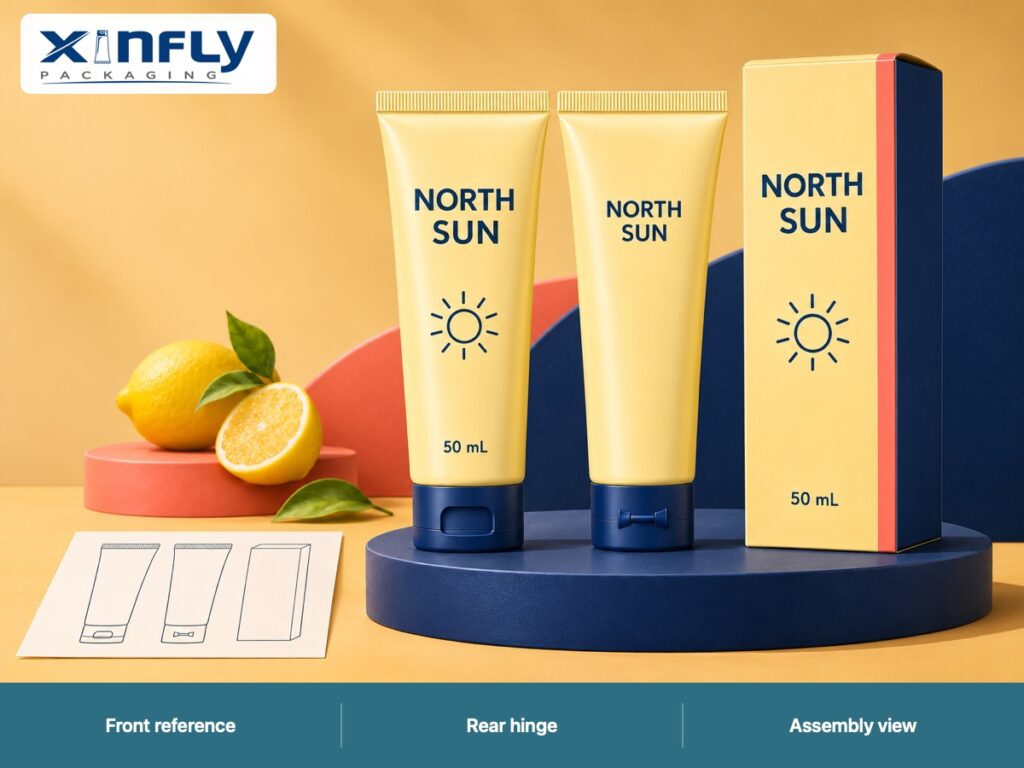
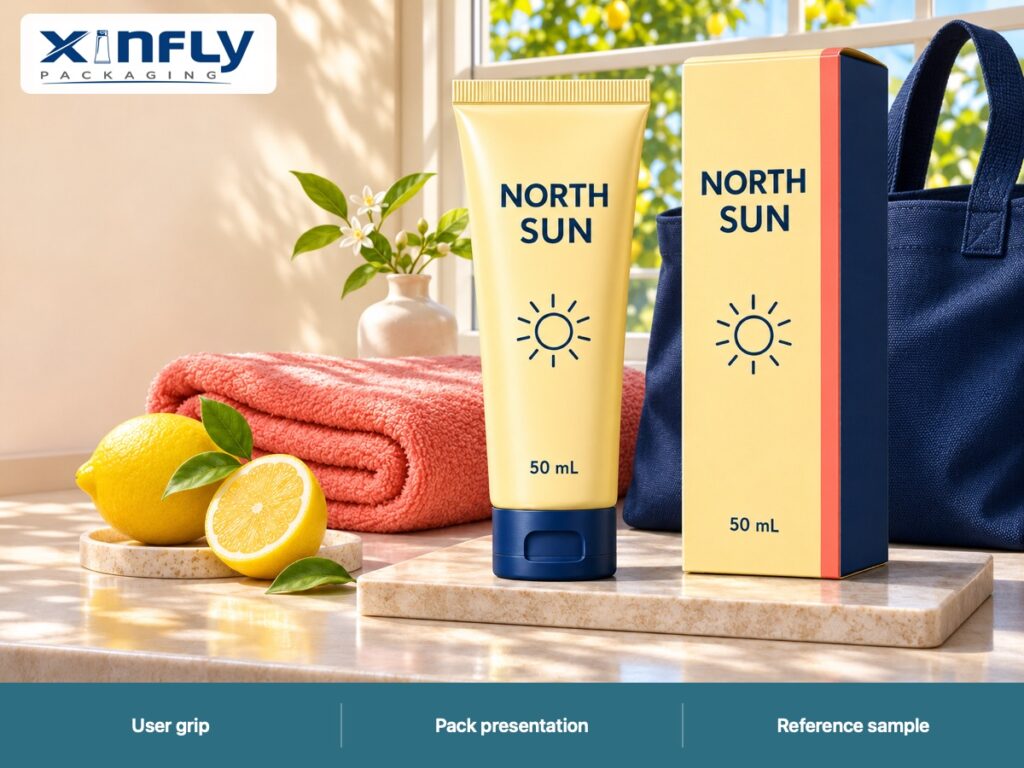
A sunscreen tube cap orientation check makes that relationship explicit before production. This guide uses an illustrated 50 mL NORTH SUN concept: pale-lemon extruded PE body, molded shoulder, straight heat-sealed tail, navy hinged cap and navy one-color screen print. Its printed carton repeats the name and sun motif. The concept carries no SPF or formula-performance claim and is not a stock SKU or trial result. Start with the sunscreen tube packaging configuration, then specify how the cap, printed front and finished tail should face.
Define What the Buyer Means by Front
Choose a Physical Reference View
The word front can mean the brand panel, the cap's thumb recess, the presentation in a carton, or the side facing a filling-line camera. Choose one reference view and label the others on a drawing. For a cap-down display pack, a useful starting view is the upright tube with the principal artwork facing the observer. Ask the brand whether the opening tab should face the same observer.
Do not leave that choice to the supplier's idea of normal. Some brands want a different relationship for handling or display. The purchasing decision is to agree the intended arrangement and a way to inspect it. A photograph of the desired assembled pack is often more useful than a sentence saying cap and print aligned.
Mark the Cap Opening and Hinge Separately
A flip-top has an opening side and a hinge side. Identify both. If the cap is photographed from the rear, the visible hinge should not be mistaken for the thumb recess. Ask the supplier to mark the cap drawing and assembled sample. This is especially helpful when a decorative cap makes the opening feature less obvious.
Keep the closed and open views together. An open lid can obscure the very reference you are trying to inspect. Use a closed-pack photograph to show front alignment and a separate open view to show the opening motion. Neither photograph alone describes the complete orientation requirement.
Distinguish Rotation From Tilt
A cap rotated relative to the print is a different observation from a cap that sits unevenly on the shoulder. Record the two separately. Rotation concerns where features face around the tube. Tilt concerns how the cap seats. A new artwork position cannot correct an assembly that is not seating as intended.
| Reference | What to mark | Buyer decision |
|---|---|---|
| Printed front | Centerline or approved principal panel | Which side represents the brand front? |
| Cap opening | Thumb recess and opening direction | Should it face the printed front? |
| Cap hinge | Rear feature and open-lid view | Is the reference unambiguous? |
| Tail seal | Finished seal direction and front view | How should the flattened tail present? |
| Line reference | Agreed registration feature | Can the filler reproduce the arrangement? |
Confirm How the Assembly Will Be Made
Ask Which Features Are Fixed by the Parts
Have the supplier explain how the cap engages the neck and how its final position is established. A particular closure arrangement may constrain orientation differently from another. Ask what is controlled by the component geometry and what is controlled during assembly or printing. Avoid assuming that any cap can simply be rotated to the preferred position without changing another requirement.
For 50ml sunscreen tubes with flip-top caps, request the actual shoulder, neck and closure drawing. Nominal capacity does not identify those parts. Two tubes holding the same fill can have different cap diameters, neck connections and assembly routes. Compare identified assemblies instead of a generic 50 mL description.
Keep Closure Engagement Independent of Appearance
Ask the supplier to define the intended assembly method and relevant checks. Do not instruct an operator to stop closing a cap early merely to make the front look aligned. A visually pleasing position must also be consistent with the closure's proper engagement. If the two cannot be achieved together, return the design question to the supplier.
The caps and closures range can help identify candidate formats, but the selected part references and assembly proposal belong in the purchase specification. If a bidder proposes a substitute cap, ask for its own drawing and sample rather than carrying over the original orientation approval automatically.
Identify the Artwork Application Stage
Ask when the decoration is applied relative to cap assembly and tube forming. The relationship matters because the printer and assembler may use different reference features. Share one controlled drawing with both parties. Confirm how the desired front is communicated from the artwork file to the physical assembly.
Use the tube printing process discussion to establish the printable area and reference orientation. A flat file should label the intended front center and its relationship to the cap. An unlabeled logo on a rectangular artboard leaves too much interpretation to the next person in the workflow.
Inspect the Printed Empty Tube
Use a Simple Viewing Fixture
Place the tube in a repeatable upright position and inspect it from the agreed reference view. A basic holder or reference photograph can help the team avoid judging a rotated tube by eye from a different angle each time. The fixture should support the pack without forcing the cap or twisting the body into the desired position.
If the project needs a numerical rotational tolerance, ask the supplier and quality team to agree the datum, measurement method and acceptable range. Do not borrow a universal degree limit from another package. The importance of a deviation depends on the cap feature, artwork and intended presentation. Record the method before comparing samples.
Compare the Body, Shoulder and Cap Together
Photograph the front, side and rear of an identified assembled sample. Look for the relationship among the print, shoulder, opening tab and hinge. Record cap seating as a separate observation. If a cap appears aligned only after you twist the flexible body, retain the original position and discuss why the pack needed manipulation.
A short description beside the photograph should say what was checked. For example, principal panel faces the same direction as the thumb recess is clearer than approved appearance. The latter gives a repeat-order buyer little information about what the original team actually accepted.
Do Not Treat a Rendering as the Approval Sample
The NORTH SUN illustrations show an intended arrangement and matching carton design. They do not establish an attainable manufacturing tolerance or a tested closure. Request a representative physical sample using the proposed body and cap. A digital image can support discussion, while the identified assembly provides the reference for the purchasing decision.
Repeat the Check After Filling and Sealing
Bring the Filler Into the Orientation Brief
The empty tube may rotate during loading, filling or tail sealing. Ask the filler to review the same reference drawing used by the tube supplier. Identify the registration feature and how it relates to the print and cap. Confirm whether the filler needs a specific mark location or contrast before the artwork is released.
Do not add an extra mark to production artwork without approval from the printer and filler. It could interfere with another graphic or detection step. Ask each party to acknowledge the final file version. An orientation problem often begins as a handoff problem between otherwise competent suppliers.
Inspect the Finished Tail in the Same View
After filling and sealing, inspect the cap, artwork and flattened tail together. The final tail should be assessed in its actual trimmed form. Compare the sealed pack with the agreed reference rather than with an unsealed cylindrical sample. If the front appears displaced, record where each feature actually sits before assigning the cause to printing or cap assembly.
Retain samples from the relevant setup stages. A pre-fill sample and a finished pack can help show when the relationship changed. Ask the supplier and filler to review the evidence together if the cause is unclear. Changing the artwork immediately may conceal a repeatability issue elsewhere in the process.
Check the Pack in Its Carton
Put the sealed tube into the proposed printed carton and remove it as a user would. Observe how the tube is presented and whether the opening tab is accessible in the expected grip. The carton may orient the pack differently from a loose retail display. Keep those presentation requirements in the same brief rather than deciding them after the tube has been approved.
If the brand changes the tube's front to improve carton presentation, review the cap relationship again. A small art rotation can solve one viewing problem while creating another. The acceptance record should describe the whole pack and the intended handling sequence.
| Stage | Evidence to retain | Question before release |
|---|---|---|
| Component selection | Body, shoulder and cap drawing revisions | Does the assembly support the intended relationship? |
| Artwork approval | Front center and reference-feature labels | Are printer and assembler using the same view? |
| Empty-pack review | Front, side and rear sample photographs | Are rotation and seating checked separately? |
| Filler trial | Setup reference and finished sealed sample | Is the relationship retained after processing? |
| Packout approval | Tube in the actual folded carton | Does the final presentation match the brief? |
Make the Requirement Repeatable on Reorders
Write the Exception Into the Quote
If precise orientation requires a particular component, process or additional inspection, ask for that scope in the quotation. Compare suppliers against the same requirement. A basic assembly and an assembly with an agreed orientation-control method are different offers, even if their front photographs look alike.
Request the proposed sample route, tooling assumptions and any additional development work as separate items. Do not infer MOQ, price or lead time from the illustration. The commercial discussion should follow the chosen body, cap, printing and inspection scope. A clear exception list is more useful than an unqualified promise of perfect alignment.
Define Changes That Require Another Sample
Review the orientation requirement when the cap, shoulder, neck, body dimensions, print position or filling setup changes. Ask which changes affect the approved relationship and what needs repeating. Keep a signed physical pack, drawing and artwork version with the purchase order. A sample retained without its part references becomes harder to interpret over time.
At incoming inspection, compare the delivery with the same reference view. Record the observed issue and sample identity rather than asking for the old look. This gives the supplier a specific condition to investigate and helps a new buyer understand why the requirement was included.
Send Xinfly Packaging the Complete Reference
Share the formula type, nominal fill, target dimensions, cap preference, desired front-to-tab relationship, artwork and filler information. Ask for an identified sample through Xinfly Packaging's sample development process. Send the packaging team your orientation brief with a marked front and rear view. For 50ml sunscreen tubes, the most useful RFQ explains both how the pack should look and how its closure will be assembled.
Frequently Asked Questions
Does a front-facing logo guarantee a front-facing opening tab?
No. Specify their relationship on the assembly drawing and inspect the selected physical pack. A flat artwork file does not establish the final cap position.
Can the cap be left slightly loose to improve alignment?
Use the supplier's proper engagement method. If the intended appearance conflicts with correct closure assembly, review the components or process rather than accepting an insecure-looking compromise.
Should orientation be checked before or after filling?
Check both stages. The empty sample establishes the supplied arrangement; the finished pack shows what remains after loading, registration, sealing and trimming.
Is there one acceptable rotation tolerance for every tube?
No universal number is proposed here. Agree the reference, measurement method and project limit with the supplier and quality team for the selected assembly.
What should trigger a new orientation approval?
Review changes to cap, shoulder, neck, artwork, tube dimensions or filler setup. Repeat the affected checks and identify the revised sample separately.
Conclusion
A sunscreen tube cap orientation check turns an easily missed visual preference into a controlled purchasing requirement. Define the front, opening tab, hinge and tail; confirm how the parts engage; and inspect the relationship after filling and packout. Xinfly Packaging can review the proposed structure and sample route when your brief includes the actual reference views and the filler handoff.