

Makeup Tube Packaging Guide: Materials, Sizes & Applicator Options
Makeup tube packaging must do more than hold a formula. It needs to support precise dispensing, product protection, color-brand presentation, premium shelf appeal and a smooth consumer experience for foundation, BB cream, CC cream, concealer, primer, contour and liquid makeup products.
This guide helps beauty brands and purchasing teams choose the right makeup tube material, size, closure, nozzle, applicator and decoration method for different cosmetic formulas and market positions.
- PE, PCR, Multi-Layer & Airless Options
- 5ml, 10ml, 15ml, 30ml & 50ml Sizes
- Nozzle, Sponge, Brush & Pump Applicators
- OEM / ODM Custom Printing Support
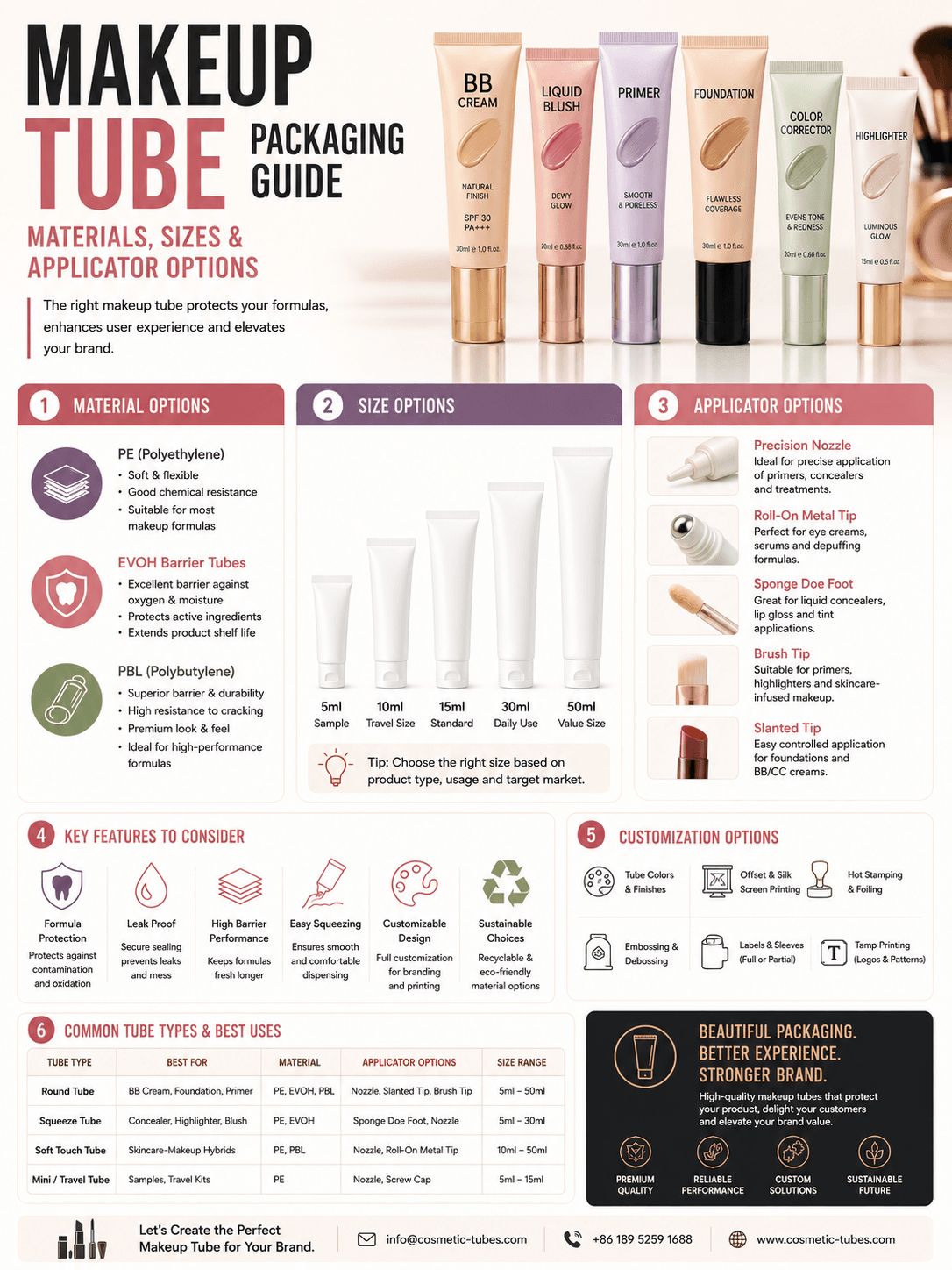
What This Makeup Tube Packaging Guide Covers
Why Makeup Products Require Specialized Tube Packaging
Makeup formulas are different from standard skincare lotions. They often contain pigments, oils, film formers, powders, emulsifiers and active skincare ingredients. The packaging must support both formula performance and beauty-brand presentation.
Formula Viscosity
Foundation, BB cream, concealer, primer and liquid makeup can have very different viscosities. A tube that works for a light tinted moisturizer may not work well for a dense concealer or contour cream.
Precise Dispensing
Makeup users expect controlled output. Nozzles, small outlets, sponge tips, brush applicators and airless pumps can reduce waste and improve the daily application experience.
Premium Appearance
Makeup packaging is highly visual. Color matching, metallic details, matte surfaces, soft-touch coating and accurate printing can strongly influence perceived product value.
Makeup Tube Materials: PE, PCR, Multi-Layer, ABL, PBL and Airless Options
Material selection affects squeeze feel, formula protection, decoration performance, sustainability and cost. For a broader material comparison, review how to choose cosmetic tube materials, PE tubes vs PCR tubes, PE tubes vs laminated tubes and 2-layer vs 5-layer plastic tubes.
PE Makeup Tubes
PE tubes are widely used for BB cream, CC cream, primer, tinted moisturizer, liquid highlighter and daily makeup products. They provide a soft squeeze feel, good decoration flexibility and cost-effective production for both startup brands and established beauty lines.
PE makeup tubes are suitable when the formula is stable, the barrier requirement is moderate and the brand needs flexible customization. Related pages: PE tubes and cosmetic plastic tubes.
PCR Makeup Tubes
PCR makeup tubes are suitable for clean beauty, sustainable makeup and eco-conscious cosmetic brands. PCR material can support foundation, BB cream, CC cream and primer packaging when formula compatibility, color control and decoration quality are confirmed during sampling.
For sustainable beauty brands, PCR can be combined with matte finishing, minimalist artwork and recyclable cap choices. Related pages: PCR tubes, PCR cosmetic tubes manufacturer and how to choose sustainable cosmetic tubes.
Multi-Layer Makeup Tubes
Multi-layer tubes are useful when makeup formulas require improved protection, better structure stability or a more premium packaging feel. They can be considered for high-end foundation, skincare-makeup hybrids, long-wear liquid makeup and formulas containing sensitive actives.
Related pages: multi-layer cosmetic tubes, multi-layer tubes manufacturer and high barrier cosmetic tubes manufacturer.
ABL and PBL Makeup Tubes
ABL and PBL tubes are suitable for formulas that need stronger barrier protection or a more structured laminate appearance. Although they are more common in sunscreen, toothpaste and pharmaceutical-style packaging, they can also be used for premium foundation, long-wear complexion products and specialty color cosmetics.
Related comparisons: ABL tubes vs PBL tubes, ABL tubes manufacturer and PBL tubes manufacturer.
Airless Makeup Tubes
Airless pump tubes are an excellent option for premium makeup formulas that require controlled dispensing, reduced air exposure and a more luxury user experience. They are especially suitable for foundation, primer, skincare-makeup hybrids and active makeup formulas.
Related pages: airless pump tubes, airless tubes and cosmetic tube with pump.
| Material / Structure | Best For | Key Advantages | Buyer Notes |
|---|---|---|---|
| PE Tubes | BB cream, CC cream, primer, tinted moisturizer | Flexible, cost-effective, good printing compatibility | Best for stable formulas with moderate barrier needs |
| PCR Tubes | Clean beauty makeup, sustainable makeup products | Reduced virgin plastic, strong sustainability story | PCR percentage, color and printing should be confirmed |
| Multi-Layer Tubes | Foundation, long-wear makeup, skincare-makeup hybrids | Improved protection and structure stability | Useful for formulas with higher performance claims |
| ABL / PBL Tubes | Premium foundation, specialty complexion products | Stronger barrier and laminated appearance | Good for premium or technical makeup formulas |
| Airless Tubes | Foundation, primer, active makeup formulas | Controlled dispensing and premium user experience | Best for higher-end products and sensitive formulas |
Formula Compatibility: Why Makeup Tubes Must Match Product Texture
Makeup formulas vary greatly in viscosity, pigment load, oil content and dispensing behavior. Before confirming a tube structure, buyers should evaluate the actual formula and filling process.
Light Fluid Formulas
Tinted moisturizer, lightweight foundation and liquid primer usually need controlled outlets to prevent over-dispensing. Nozzle tubes or airless pump tubes are often suitable.
Medium Cream Formulas
BB cream, CC cream and cream foundation need a balance of squeeze softness and outlet control. PE or multi-layer tubes are commonly used.
Dense Pigmented Formulas
Concealer, contour cream and color corrector may need small controlled outlets, sponge applicators or brush tips to support precise application.
Recommended Makeup Tube Sizes by Product Type
Makeup tube size should match the formula texture, dosage, application area and retail positioning. A 5ml concealer tube and a 50ml tinted moisturizer tube serve completely different usage scenarios.
If your team is comparing tube diameter, fill volume and artwork area, review our tube capacity, diameter, length and thickness guide and design area dimensions guide.
| Capacity | Common Application | Recommended Tube Style | Buyer Notes |
|---|---|---|---|
| 5ml - 8ml | Concealer, eye corrector, color corrector | Small nozzle, sponge tip, brush applicator | Best for precise application and high-value formulas |
| 10ml - 15ml | Primer, contour cream, highlighter, travel makeup | Nozzle tube or applicator tube | Good for compact makeup SKUs and trial-size products |
| 20ml - 25ml | BB cream, CC cream, liquid makeup | PE tube, multi-layer tube, nozzle tube | Suitable for daily complexion products |
| 30ml | Foundation, primer, tinted moisturizer | Nozzle tube or airless pump tube | One of the most common sizes for foundation packaging |
| 40ml - 50ml | Tinted moisturizer, body makeup, hybrid skincare makeup | PE tube, PCR tube, airless tube | Best for higher-volume complexion products |
5ml - 10ml Makeup Tubes
Small makeup tubes are commonly used for concealer, eye corrector, lip color, color corrector and high-pigment formulas. These products need precise dispensing because consumers usually apply a small amount at a time.
15ml - 25ml Makeup Tubes
Mid-size tubes are suitable for primer, BB cream, CC cream and travel-size foundation. They are portable, cost-efficient and allow enough decoration area for product claims, shade names and brand messaging.
30ml Foundation Tubes
30ml is one of the most common capacities for foundation tube packaging. It balances daily use, portability and premium retail presentation. For dedicated sourcing, visit foundation tubes manufacturer.
Makeup Tube Applicator Options: Nozzle, Sponge, Brush and Airless Pump
Applicator design is one of the most important differences between makeup tubes and standard skincare tubes. The right applicator improves dosage control, hygiene, precision and product experience.
Standard Nozzle Tubes
Nozzle tubes are suitable for foundation, primer, BB cream, CC cream and liquid makeup. They help control output and reduce product waste. Related page: nozzle tubes.
Fine Tip Nozzle Tubes
Fine tip nozzles are suitable for concealer, color corrector and detail makeup products where precise placement matters. They are useful for formulas applied around the eyes, nose or targeted facial areas.
Sponge Applicator Tubes
Sponge applicators are suitable for concealer, under-eye corrector and cushion-style liquid makeup. They create a soft application feel and can improve convenience for direct-to-skin use.
Brush Applicator Tubes
Brush applicator tubes work well for liquid highlighter, contour, primer and targeted complexion products. They support controlled spreading and a more professional application experience.
Airless Pump Tubes
Airless pump tubes are recommended for premium foundation, skincare-makeup hybrids and active makeup formulas. They provide consistent dosage and a high-end user experience. Related: airless pump tubes.
Flip Cap Makeup Tubes
Flip caps can be used for BB cream, CC cream, tinted moisturizer and body makeup where fast daily use matters. Related: flip top cap tubes manufacturer.
Makeup Tube Packaging by Application Scenario
This page can serve as the main Makeup Tube Packaging Hub. From here, buyers can continue to more specific product pages based on formula type, user experience and packaging requirements.
Foundation Tubes
Foundation tubes should provide controlled dispensing, clean decoration and strong shelf appeal. Nozzle tubes and airless pump tubes are common choices for liquid foundation. View: foundation tubes manufacturer.
BB Cream Tubes
BB cream tubes usually use 20ml, 30ml or 50ml sizes with PE, PCR or multi-layer structures. They often emphasize skincare-makeup hybrid benefits. View: BB cream tubes.
CC Cream Tubes
CC cream tubes need clean dispensing, excellent print quality and cosmetic-grade appearance. Shade range management and product claims should be considered in artwork design. View: CC cream tubes manufacturer.
Concealer Tubes
Concealer tubes often require smaller capacity, precise output and optional sponge or brush applicators. They are ideal for targeted makeup application. View: concealer tubes.
Liquid Makeup Tubes
Liquid makeup tubes cover foundation, primer, tint, highlighter and complexion products. Tube softness, outlet size and formula compatibility are important. View: liquid makeup tubes.
Makeup Tubes Manufacturer
When buyers finish evaluating materials, sizes and applicators, they can move to the commercial sourcing page: makeup tubes manufacturer.
Lip Gloss Tubes
Lip gloss tubes require different applicator and packaging structures from complexion tubes, but they belong to the broader makeup packaging ecosystem. View: lip gloss tubes manufacturer.
Cosmetic Tube with Pump
Pump tubes are suitable for premium foundation, primer and active makeup formulas where controlled dosage and high-end dispensing matter. View: cosmetic tube with pump.
Private Label Makeup Tubes
Private label makeup brands often need low MOQ, flexible decoration and fast sampling support. View: private label tubes manufacturer.
Printing and Decoration Options for Makeup Tube Packaging
In the makeup industry, packaging appearance is often as important as formula performance. Consumers evaluate quality, luxury, shade positioning and brand credibility within seconds. A well-designed makeup tube can significantly improve shelf impact and conversion rates.
Makeup packaging frequently uses premium printing technologies and specialty surface finishes to create a stronger visual identity. Decoration decisions should be made together with material selection, applicator type and target market positioning.
Offset Printing
Offset printing supports gradients, detailed graphics, shade illustrations and complex artwork. It is commonly used for BB cream, CC cream, foundation and retail makeup products.
Related: offset printing tubes.
Silkscreen Printing
Silkscreen printing delivers excellent opacity and sharp logo reproduction. It is often selected for luxury makeup brands, professional cosmetics and minimalist packaging.
Related: silkscreen printing tubes.
Hot Stamping
Gold, silver and metallic foil accents are commonly used for premium foundation, luxury concealer and prestige makeup collections.
Related: hot stamping tubes.
Matte Finish
Matte finishes are widely used in clean beauty, luxury cosmetics and modern makeup brands. They create a sophisticated appearance and help products feel more premium.
Related: matte finish tubes manufacturer.
Soft-Touch Coating
Soft-touch coatings create a velvet-like tactile experience and are often selected for prestige foundation, luxury BB cream and premium complexion products.
Related: soft touch tubes.
Custom Color Matching
Tube and cap colors can be matched to Pantone standards, shade collections and brand guidelines, helping maintain consistent packaging identity across product lines.
Additional resources: tube decoration, surface finishing, printing options and matte vs glossy vs soft-touch tubes .
How Procurement Teams Should Evaluate Makeup Tube Suppliers
A professional makeup tube supplier should provide more than manufacturing capacity. They should understand cosmetic formulas, applicator compatibility, decoration technologies, sustainability options and retail market requirements.
| Evaluation Point | Why It Matters | What Buyers Should Confirm |
|---|---|---|
| Formula Compatibility | Different makeup formulas require different packaging structures | Viscosity, pigment content, filling temperature and stability |
| Applicator Capability | Impacts consumer experience and product positioning | Nozzle, sponge, brush and pump options |
| Printing Technology | Directly influences shelf appeal | Offset, silkscreen, hot stamping and surface finishes |
| MOQ Flexibility | Important for emerging beauty brands | Stock MOQ, custom MOQ and sampling costs |
| Sustainability Options | Increasingly important for global cosmetic brands | PCR, recyclable structures and bio-based materials |
| Quality Assurance | Ensures consistency and regulatory confidence | ISO systems, SGS testing and production controls |
Additional resources:
Related Makeup Tube Packaging Projects
Reviewing real packaging projects helps beauty brands understand how material structures, applicators, decoration methods and filling requirements are applied in commercial production.
Foundation Tube Packaging Solutions
Premium foundation packaging with controlled dispensing, luxury decoration and retail-ready presentation.
BB Cream Tube Packaging
Packaging solutions for BB cream formulas combining skincare benefits with complexion enhancement.
CC Cream Tube Packaging
Tube packaging developed for color-correcting skincare and complexion products.
Why Beauty Brands Choose Xinfly Packaging
15+ Years Experience
Supporting beauty, skincare, personal care and makeup brands worldwide.
60 Million Tubes Annually
Stable production capacity for both growing beauty brands and large-volume cosmetic projects.
OEM & ODM Services
End-to-end packaging support from concept development to production.
Applicator Tube Expertise
Experience with nozzle tubes, pump tubes, sponge applicators and specialty cosmetic packaging.
Sustainable Packaging Options
PCR tubes, recyclable structures and eco-friendly material solutions available.
Global Export Experience
Serving beauty brands across North America, Europe, Australia and emerging cosmetic markets.
Learn more about our OEM & ODM services, certifications, factory, R&D capabilities and manufacturing expertise .
Frequently Asked Questions About Makeup Tube Packaging
What material is best for foundation tubes?
PE, PCR, multi-layer and airless tube structures are commonly used for foundation packaging. The ideal option depends on formula viscosity, brand positioning and dispensing requirements.
Are airless tubes suitable for makeup products?
Yes. Airless tubes are especially suitable for premium foundation, primer and active makeup formulas because they offer controlled dispensing and reduced air exposure.
What size tube is most common for foundation?
30ml is one of the most common foundation tube sizes, while BB cream and CC cream often use 20ml to 50ml formats.
Which applicator is best for concealer?
Fine-tip nozzles, sponge applicators and brush applicators are commonly used for concealer packaging because they support precise application.
Can makeup tubes be made with PCR plastic?
Yes. PCR tubes are increasingly used by sustainable beauty brands seeking to reduce virgin plastic consumption.
What is the MOQ for custom makeup tubes?
MOQ depends on material, applicator type, printing method and customization level.
Can makeup tubes support custom printing?
Yes. Offset printing, silkscreen printing, hot stamping, matte finishing and soft-touch coating are available.
Can samples be provided before production?
Yes. Stock samples and custom development samples can be supplied for evaluation before mass production.
Looking for Custom Makeup Tube Packaging?
Whether you need foundation tubes, BB cream tubes, CC cream tubes, concealer tubes, PCR makeup tubes, applicator tubes or complete OEM solutions, Xinfly Packaging can help bring your cosmetic product to market.