

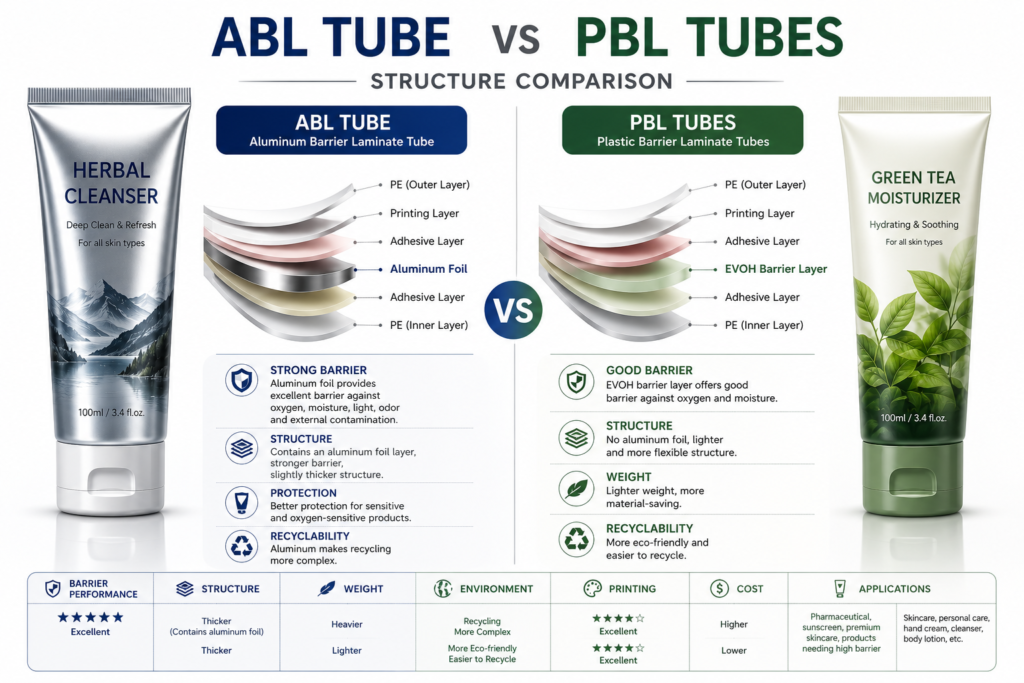
You need to decide between ABL Tubes vs. PBL Tubes for your product. ABL tubes work best for creams and gels that require high-barrier protection. PBL tubes suit products where budget and recyclability matter most. Matching the tube type to your product needs, sustainability goals, and cost helps you get the best results. The market shows PBL tubes hold 58.4% share, while ABL tubes have 41.6%. The right choice depends on your priorities. This guide gives you a clear decision path.
| Tube Type | Market Share (%) |
|---|---|
| ABL Tubes | 41.6 |
| PBL Tubes | 58.4 |
ABL Tubes vs. PBL Tubes Overview
What Are ABL Tubes
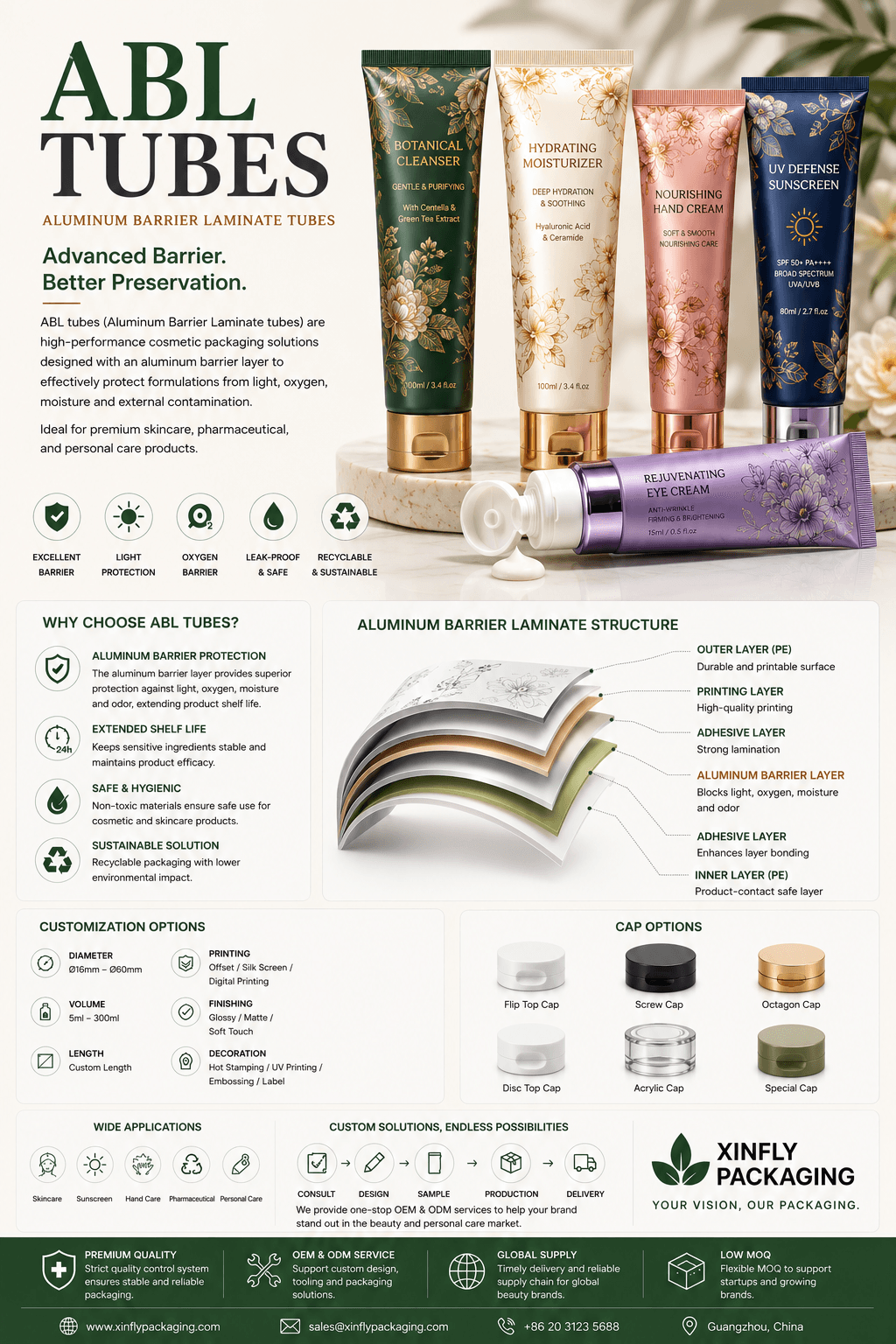
You can find ABL tubes in many creams and medicines. These tubes have many layers. They use plastic and a thin piece of aluminum foil. The aluminum layer stops water, air, and light from getting in. This helps keep products safe and fresh. People use ABL tubes for eye creams, face lotions, hair dyes, and ointments. The layers make the tube stay squeezed after you press it. It does not pop back to its old shape.
Common materials in ABL tubes:
| Material Type | Description |
|---|---|
| Plastic | Polyethylene, polypropylene, and other polymers for flexibility and barrier properties. |
| Metal | Aluminum for strong protection against UV light and oxygen. |
| Others | Hybrid materials for special uses. |
- Eye cream packaging tubes
- Face cream and lotion tubes
- Cosmetic samples and travel tubes
- Pharmaceutical ointment tubes
- Hair color and dye packaging
Tip: Pick ABL tubes if your product needs the best shield from air, water, or light.
What Are PBL Tubes
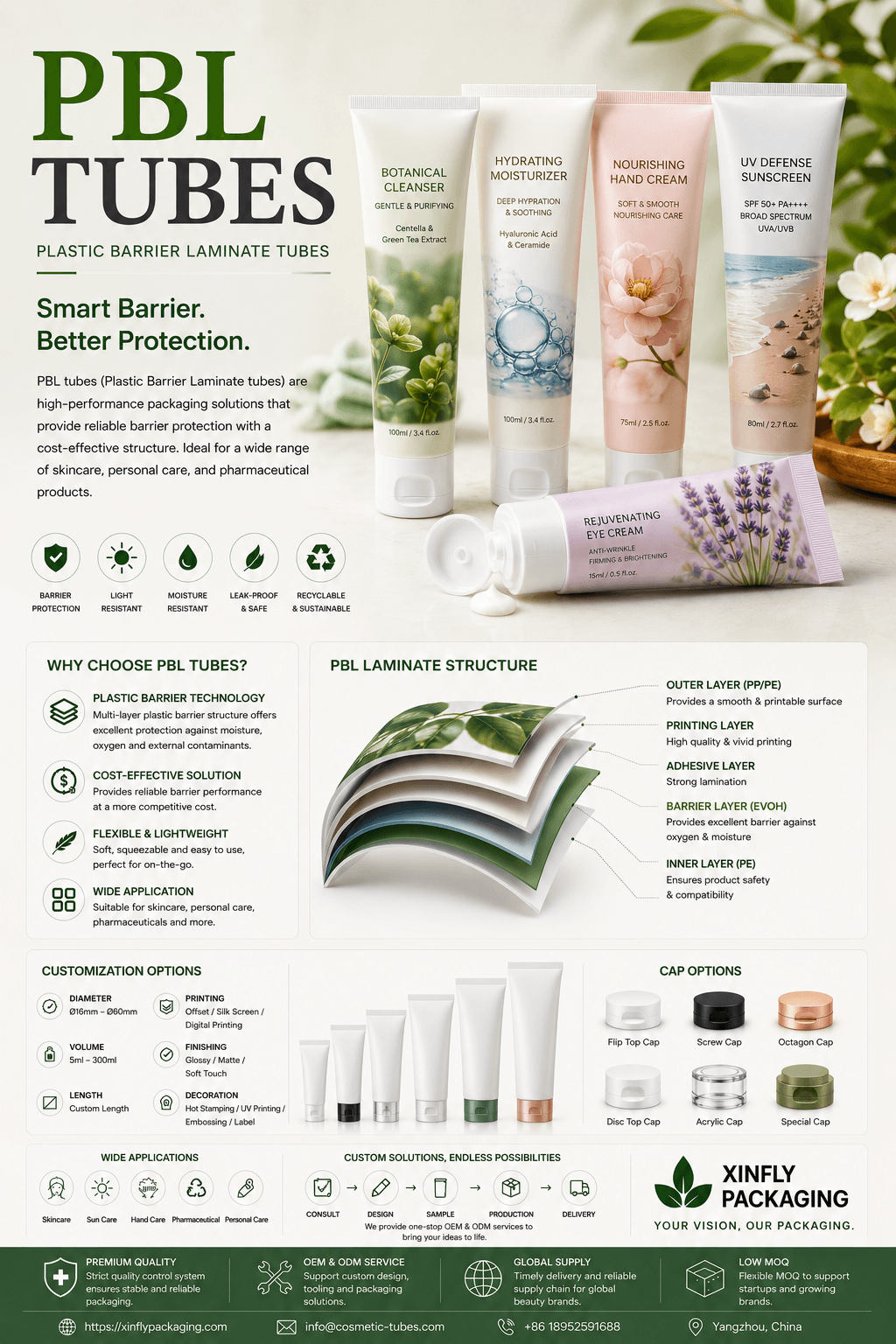
PBL tubes are made with only plastic layers. They do not have any aluminum inside. The main plastics are polyethylene (PE), polypropylene (PP), and EVOH. EVOH is used to block air and oils. This makes PBL tubes easy to recycle. You see PBL tubes in personal care and food items. These products do not need the strongest barrier. PBL tubes bounce back to their shape after you squeeze them.
Materials used in PBL tubes:
| Material Type | Description |
|---|---|
| Plastic Laminates | Multiple layers for durability. |
| PE (Polyethylene) | Common plastic for the main layer. |
| PP (Polypropylene) | Adds strength and flexibility. |
| EVOH | Used as a barrier to block oxygen and oils. |
Common applications for PBL tubes:
| Application Type | Examples |
|---|---|
| Food Industry | Honey sticks, condiment samples, nutritional gels and supplements |
Note: PBL tubes are good if you care about recycling and price.
Key Differences
It is important to know how ABL Tubes and PBL Tubes are not the same. The table below shows the main ways they are different:
| Feature | ABL Tubes | PBL Tubes |
|---|---|---|
| Barrier Layer | Aluminum foil | Plastic (EVOH) |
| Protection Level | Almost absolute | Excellent but slightly less |
| Physical Property | Dead-fold (does not spring back) | Bounce-back (returns to shape) |
| Material | Aluminum + plastic | All-plastic |
| Recyclability | Not fully recyclable | Fully recyclable |
| Best For | Sensitive products needing high barrier | Products where cost and recycling are key |
- Choosing between ABL Tubes and PBL Tubes depends on what you need. If you want the best barrier, pick ABL tubes. If you want to recycle and save money, choose PBL tubes.
ABL Tubes vs. PBL Tubes: Comparison
Barrier Protection
Moisture and Oxygen
When you look at ABL Tubes vs. PBL Tubes, barrier protection is very important. You want your product to stay safe from air and water. The table below shows how each tube type works:
| Feature | ABL Laminate Tubes | PBL Laminate Tubes |
|---|---|---|
| Oxygen Barrier | Excellent – Blocks 99%+ oxygen | Very good – EVOH barrier resists oxygen well but slightly less than ABL |
| Light Protection | Superior – strong aluminum foil | Moderate – EVOH offers less UV/light defense |
| Water Vapor Barrier | Strong – low WVTR values | Good – slightly higher WVTR compared to ABL |
Pick ABL tubes if your product is hurt by oxygen or moisture. These tubes are great for medicated creams, hair dyes, and ointments. PBL tubes still protect well, but they work best for things like organic serums, lotions, or food pastes that do not need the highest barrier.
Chemical Resistance
You should think about chemical resistance if your product has strong ingredients. ABL tubes have an aluminum layer that gives extra safety from harsh chemicals. This makes them a good choice for products with active ingredients, like medicated gels or hair colorants. PBL tubes use EVOH and plastic layers. These layers block many chemicals but may not be as strong as ABL tubes for very tough formulas.
Tip: If your formula is strong or sensitive, ABL tubes help keep it safe.
Sustainability
Recyclability
Recyclability is a big deal today. When you compare ABL Tubes vs. PBL Tubes, you see a big difference. PBL tubes are made of only plastic, so most recycling programs take them. ABL tubes have an aluminum layer, which makes recycling harder. The table below shows how often ABL tubes get recycled over time:
| Year | Recyclability Rate for ABL Tubes | Recyclability Rate for PBL Tubes |
|---|---|---|
| 2025 | 22% | N/A |
| 2034 | 50% | N/A |
PBL tubes are better for recycling. If your brand cares about the environment, PBL tubes are a smart pick.
Environmental Impact
You should also think about the full effect on the environment. Here is a breakdown:
- Raw Material Extraction: ABL tubes need bauxite ore for aluminum. PBL tubes use petroleum for plastic.
- Manufacturing: ABL tubes use more energy for lamination and forming. PBL tubes use extrusion, which takes less energy.
- Transportation: ABL tubes can be lighter than thick PBL tubes, which may lower shipping pollution.
- Use Phase: ABL tubes keep products fresh longer, which helps cut waste.
- End-of-Life: Recycling rates and how you throw away tubes change the final impact.
Note: PBL tubes are easier to recycle, but ABL tubes can help stop waste by keeping products fresh.
Cost Factors
Production and Supply
Cost is important for every business. Both ABL and PBL tubes cost more than simple plastic tubes because they have many layers. On average, laminate tubes are 15–20% more expensive than regular polyethylene tubes. You should also watch out for supply chain problems. Delays in getting materials or price changes for plastics and metals can make costs go up. Making tubes in other countries can lower costs by 15-25%, but hidden costs and risks can take away the savings. World events and shipping problems can also cause delays and extra costs.
Tip: If you want to save money and avoid supply chain problems, talk to your supplier about local options and backup plans.
Case Study 1: Medicated Eye Cream
A skincare company wanted to sell a medicated eye cream. The formula was sensitive to air and light. The team picked ABL tubes because they needed the best barrier. The product stayed fresh longer, and customers said it worked better.
Case Study 2: Natural Hand Lotion
A brand selling natural hand lotion wanted eco-friendly packaging. They chose PBL tubes because these tubes are fully recyclable and match their green image. The switch helped the brand get new customers who care about the environment.
When you compare ABL Tubes vs. PBL Tubes, you see that each type has its own strengths. Your choice depends on what matters most for your product—barrier, sustainability, or cost.
Customization
Printing and Design
You want your product to get noticed in stores. Both ABL tubes and PBL tubes let you change how your packaging looks and feels. You can pick different ways to print on the tubes. Each printing method has its own good points. Here is a simple table:
| Printing Method | Color Options | Description |
|---|---|---|
| OFFSET PRINTING | Up to 8 Colors | Good for detailed art with lots of colors. |
| SILK SCREENING | Up to 6 Colors | Makes designs feel raised and bold. |
| FLEXOGRAPHIC PRINTING | CMYK + 6 spot colors | Gives sharp pictures and clear images. |
You can also choose these design styles:
- Silk screen printing for bright colors and a bumpy feel.
- Flexo printing for big orders with steady results.
- Digital printing for small runs or special tubes.
- Offset printing for matching colors exactly.
- Hot and cold stamping for shiny or raised logos.
Both tube types let you print all over the tube. Your brand can cover the whole tube with pictures and designs. You can add shiny effects, matte or glossy looks, and even features that feel cool to touch.
Tip: If you want your product to look fancy, use silk screen printing with metallic stamping.
Case Study: A beauty brand wanted to sell a special face cream. They picked PBL tubes with digital printing and gold hot stamping. The tube looked different and caught shoppers’ eyes. Sales went up during the sale, and customers posted photos online.
User Experience
Squeezability
How a tube feels when squeezed is important to buyers. ABL tubes feel firm and strong. They keep their shape after pressing, which helps with careful use. PBL tubes feel soft and bounce back after squeezing. This makes them easy to use and gives a nice touch, especially for creams.
| Factor | ABL Tubes | PBL Tubes |
|---|---|---|
| Tactile Feel | Firm, sturdy | Soft, flexible |
| Shape Memory | Dead-fold (holds shape) | Bounce-back (returns) |
Note: If you want a tube that is soft and easy to squeeze, PBL tubes are best.
Dispensing
You want customers to use all the product inside. The tube’s material changes how well it works for thick or thin products. ABL tubes are good for slow, careful use, like medicated creams. PBL tubes are better for quick and easy use, like lotions or gels.
Case Study: A company selling kids’ toothpaste switched to PBL tubes. Parents said kids could squeeze them easier, so less toothpaste was wasted. The brand got good reviews and more repeat buyers.
Case Study: A medicine brand used ABL tubes for a prescription ointment. The firm tube helped patients use the right amount. This stopped overuse and made the medicine last longer.
When you compare ABL tubes vs. PBL tubes, think about how people will use your product. Picking the right tube can make customers happy and help your brand grow.
Pros and Cons Table
ABL Tubes Pros and Cons
You might wonder if ABL tubes are right for your product. Here is a simple look at what they do well and what they don’t.
| 👍 Pros | 👎 Cons |
|---|---|
| Great barrier against oxygen, moisture, and light | Hard to recycle because of many layers |
| Flexible and strong—does not dent like pure aluminum | Needs special recycling places to separate layers |
| Lets you print colors right on the tube—no labels needed | Often ends up as single-use trash |
| Costs less than pure metal tubes but still protects well | Not as eco-friendly as all-plastic tubes |
Tip: Pick ABL tubes if your product needs strong protection from air, water, or light.
Case Study:
A medicine company used ABL tubes for a prescription ointment. Customers said the medicine stayed fresh longer. The strong barrier kept the formula safe from air and light.
Case Study:
A hair dye brand switched to ABL tubes. The tubes stopped leaks and kept the color from fading. Customers saw better results and gave good reviews.
PBL Tubes Pros and Cons
PBL tubes have their own good points and bad points. They might be better if you care about recycling and saving money.
Pros:
- Fully recyclable in most places
- Soft and easy to squeeze
- Good barrier for most lotions, gels, and food pastes
- Supports bright, full-color printing
Cons:
- Slightly less barrier protection than ABL tubes
- Not great for products needing strong chemical resistance
- May not block all light or oxygen for very sensitive formulas
Note: Choose PBL tubes if you want eco-friendly packaging and your product does not need the highest barrier.
Case Study:
A natural skincare brand picked PBL tubes for their hand cream. The tubes matched their green image and attracted shoppers who care about the environment. Sales went up after the switch.
Quick Reference Table
This table helps you compare ABL and PBL tubes quickly:
| Feature | ABL Tubes | PBL Tubes |
|---|---|---|
| Barrier Protection | ⭐⭐⭐⭐⭐ (Best) | ⭐⭐⭐⭐ (Very Good) |
| Recyclability | ⭐ (Low) | ⭐⭐⭐⭐⭐ (High) |
| Cost | ⭐⭐⭐ (Medium) | ⭐⭐⭐⭐ (Lower) |
| Squeezability | ⭐⭐⭐ (Firm) | ⭐⭐⭐⭐⭐ (Soft, flexible) |
| Printing Options | ⭐⭐⭐⭐⭐ (Full-color, premium) | ⭐⭐⭐⭐⭐ (Full-color, premium) |
| Best For | Medicated creams, dyes | Lotions, gels, food pastes |
If you need the best barrier, pick ABL tubes. If you want easy recycling and a soft feel, PBL tubes are the best choice.
Choosing the Right Laminate Tube
Assess Product Needs
Product Type
Start by thinking about what your product is. Different products need different packaging. Creams, gels, and ointments need tubes that block air and water. Food pastes and lotions need tubes that are easy to squeeze and recycle.
- ABL tubes are good for products that need strong chemical resistance.
- PBL tubes are best when you want nice printing and care about the environment.
Think about how the tube will handle pressure and heat. The quality of the material is important. Make sure the tube stays strong and flexible when used.
Barrier Requirements
Barrier needs help you pick the right tube. If your formula is hurt by air, water, or light, you need a tube with a strong barrier. ABL tubes give almost perfect protection. They keep out air, water, and light. PBL tubes protect well but may not block everything for very sensitive products.
- Pick tubes with seals that keep things fresh and stop leaks.
- Use tamper-proof seals if you need extra safety.
- Make your tube look good and work well. Custom designs can help your product stand out and stay safe.
Tip: Always match the barrier to your product’s needs. High-barrier tubes keep sensitive products fresh and safe.
Case Study: Medicated Eye Cream Selection
A skincare company wanted to sell a medicated eye cream. The cream was sensitive to air and light. The team picked ABL tubes for the best barrier. They also chose tamper-proof seals to stop leaks. The cream stayed fresh longer, and customers saw better results.
Sustainability Goals
Recycling and Regulations
Think about your green goals when picking laminate tubes. Many brands want to use less plastic and more recyclable materials. PBL tubes are made from all-plastic layers and are easier to recycle. Some companies use only one type of plastic, like polyethylene or polypropylene. This makes recycling simple.
- Using recycled materials helps cut down on new plastic use.
- Lighter tubes lower shipping pollution and make shipping easier.
- Lighter tubes also help your company follow green rules.
Note: Check your local recycling rules. Some places only take certain plastic tubes. Make sure your tube matches your green goals and follows recycling laws.
Case Study: Natural Hand Lotion Selection
A natural skincare brand wanted green packaging for their hand lotion. They picked PBL tubes made from one kind of plastic. The tubes were easy to recycle and light. The brand also used recycled plastic. This lowered shipping pollution and fit their green image. Customers liked it, and sales went up.
Budget Considerations
Your budget matters when you pick a tube. ABL tubes cost more because they protect better and look fancy. These tubes are good for expensive products. PBL tubes cost less. They are flexible and protect well, so they are good for brands with less money.
- Think about what your product needs, how long it lasts, and your brand style.
- Pick a tube that fits your budget and still works well.
- The right tube can help your product last longer and get more buyers.
Tip: If you want strong protection and a fancy look, pick ABL tubes. If you want to save money and help the planet, choose PBL tubes.
Case Study: Food Paste Packaging Decision
A food company needed tubes for a new gel. They wanted to spend less and help recycling. The team picked PBL tubes. These tubes gave enough protection and allowed bright, full-color printing. The choice fit their budget and green goals.
When you compare ABL Tubes vs. PBL Tubes, think about your product, green goals, and budget. This step-by-step plan helps you pick the best tube for your brand.
Branding Needs
Your packaging tells your brand story before anyone tries your product. You want your tube to stand out on the shelf and in photos. Both ABL and PBL tubes give you strong options for design and customization.
Here is a quick look at how each tube type helps your brand:
| Tube Type | Customization Features | Branding Benefits |
|---|---|---|
| ABL | High-quality graphics, logos | Enhances brand image, eye-catching look |
| PBL | High-quality graphics, logos | Sleek surface for high-definition print |
You can print bold colors, sharp logos, and special effects on both types. ABL tubes give your product a premium feel. The graphics look rich and bright. This helps you attract buyers who want luxury or high-end products. PBL tubes offer a smooth surface. You get clear, detailed images and a modern look. This works well for trendy or eco-friendly brands.
Tip: Use metallic stamping or glossy finishes on ABL tubes for a luxury effect. Choose PBL tubes for a clean, modern style with bright colors.
Case Study: Premium Skincare Launch
A luxury skincare brand wanted to launch a new anti-aging cream. The team chose ABL tubes with gold foil stamping and embossed logos. The packaging looked elegant and expensive. Customers said the tube made the cream feel special and worth the price.
Case Study: Youthful Toothpaste Rebrand
A toothpaste company wanted to attract teens. They picked PBL tubes with neon colors and high-definition graphics. The new look was fun and fresh. Sales increased as more young people noticed the brand.
Case Study: Eco-Friendly Lotion
A natural lotion brand wanted to show their green values. They used PBL tubes with simple, earth-tone designs and a matte finish. The packaging matched their eco-friendly message. Shoppers who cared about the environment chose their product.
Decision Checklist
You can use this checklist to help you pick the right laminate tube for your product:
- Product Sensitivity: Does your product need strong protection from air, water, or light? Choose ABL tubes for the best barrier.
- Cost and Budget: Do you need to keep costs low? PBL tubes are usually more affordable.
- Brand Image: Do you want a premium or luxury look? ABL tubes give a high-end feel. Want a stylish look at a lower cost? PBL tubes work well.
- Sustainability: Is recycling important for your brand? PBL tubes are easier to recycle. ABL tubes also offer some sustainable options.
- Volume and Product Type: Are you making large batches? PBL tubes are cost-effective for big orders. For small, high-value products, ABL tubes are a smart choice.
Note: Review each point on this checklist. Match your answers to the tube features. This helps you make the best choice for your brand and your customers.
You should pick a tube that fits your product, your green goals, and your budget. ABL tubes protect your product very well. PBL tubes are easier to recycle and cost less money. Experts say you should:
- Pick eco-friendly materials if you can.
- Make sure the tube can be recycled easily.
- Think about price and quality so your product does not leak or break.
If you are not sure what to do, ask your supplier or a packaging expert for help.
Frequently Asked Questions About ABL Tubes vs PBL Tubes
Learn the difference between ABL tubes and PBL tubes for cosmetic tube packaging, including laminated cosmetic tubes, barrier protection, recyclable cosmetic packaging, custom cosmetic tubes, skincare tube packaging and OEM cosmetic tube manufacturing solutions.
What is the difference between ABL tubes and PBL tubes?
What are ABL tubes?
What are PBL tubes?
Which has better barrier protection, ABL tubes or PBL tubes?
Are PBL tubes more sustainable than ABL tubes?
What products are suitable for ABL tubes?
What products are suitable for PBL tubes?
Can ABL tubes and PBL tubes be customized?
What printing options are available for laminated cosmetic tubes?
How do I choose between ABL tubes and PBL tubes?
Can ABL and PBL tubes support OEM cosmetic packaging?
Why choose Xinfly Packaging for ABL and PBL tubes?
Need Help Choosing ABL Tubes or PBL Tubes?
Xinfly Packaging helps skincare, oral care and beauty brands compare ABL tubes and PBL tubes based on barrier performance, formula compatibility, sustainability goals, custom printing requirements and OEM cosmetic packaging needs.
