
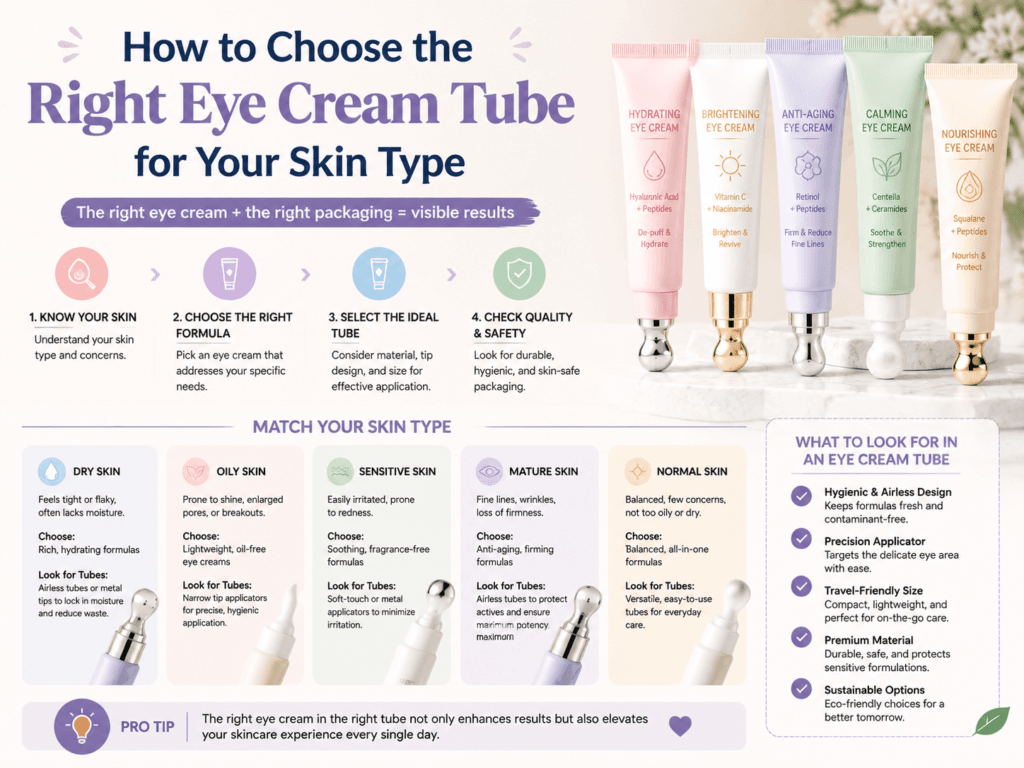
You want your under-eye area to look its best, so start by figuring out your skin type and main concerns. Maybe you deal with dryness, dark circles, or early wrinkles. Tailoring eye cream choice helps you target these issues. Look for ingredients like hyaluronic acid for hydration, vitamin E for smoother skin, and niacinamide for better elasticity. When picking an eye cream tube, think about both the formula and the packaging. A well-formulated eye cream in a tube keeps things clean and boosts results. Preventive eye cream works best when you match it to your needs. A good eye cream can make a big difference.
Key Takeaways
- Figure out your skin type and what problems you have. This helps you pick the best eye cream for you. You will get better results this way.
- Check the ingredients in the eye cream. Pick one that helps with your problem. If you have dark circles, use creams with vitamin C or caffeine. If you have wrinkles, choose retinol or peptides.
- Think about how the eye cream is packaged. Tubes are clean and keep the cream fresh. Jars can let air in and may not protect the cream.
- Put on eye cream gently with your ring finger. This puts less pressure on the skin near your eyes. It also helps the cream soak in better.
- Do not make mistakes like using too much cream or forgetting to use it. Use your eye cream every day for the best results.
Identify Skin Type & Concerns
Choosing the right eye cream starts with knowing your skin type and what bothers you most about your under-eye area. You might notice dryness, oiliness, or sensitivity. Maybe you see dark circles, puffiness, or fine lines. Each of these concerns needs a different approach. When you match your eye cream tube to your skin type and concern, you get better results and avoid irritation.
Sensitive, Dry, or Oily Skin
You can figure out your skin type with a simple test. Wash your face and wait about 30 minutes. If your skin feels tight or looks flaky, you probably have dry skin. If your skin looks shiny all over, you likely have oily skin. If you see shine only on your forehead and nose, you may have combination skin. If your skin feels balanced and clear, you have normal skin. If you notice redness, burning, or irritation after using products, your skin is sensitive.
Here’s a quick table to help you spot your skin type:
| Skin Type | Characteristics |
|---|---|
| Normal | Balanced, healthy skin; clear, not prone to breakouts or sensitivities. |
| Sensitive | Easily irritated; prone to inflammation, redness, and pain. |
| Dry | Produces less sebum; feels tight, appears dull and scaly. |
| Oily | Excess oil; shiny appearance, prone to acne and enlarged pores. |
| Combination | Oily in T-zone and dry in other areas; varies with seasons. |
Sensitive skin around your eyes can show redness, dryness, swelling, or itchiness. Dry skin often feels tight and may look scaly. Oily skin can sometimes cause irritation, especially if you use the wrong products. Picking a well-formulated eye cream that matches your skin type helps you avoid these problems.
Tip: If you have sensitive skin, avoid eye creams with strong fragrances or harsh preservatives. These can cause redness and itching.
Managing Dark Circles, Puffiness, Wrinkles
You might wonder why you have dark circles, puffiness, or lines under your eyes. Many things can cause these issues. Lack of sleep, stress, and even your genes play a role. Aging slows down blood flow and breaks down collagen, which leads to dullness, sagging, and wrinkles. Water retention from salty foods or not enough sleep can make your eyes look puffy. Smoking, dehydration, and sun exposure can make dark circles worse.
To figure out your main concern, look closely at your under-eye area. Do you see shadows or a purple tint? That points to dark circles. Do your eyes look swollen in the morning? That’s puffiness. Are there fine lines or crow’s feet? Those are signs of aging skin.
Dermatologists use different methods to check these concerns:
| Method | Description |
|---|---|
| Clinical Scoring | Rates dark circle intensity on a scale under the same lighting. |
| Colour Analysis | Uses photos to measure color changes and spot dark circles. |
| Ultrasound Imaging | Checks how thick the skin is under your eyes. |
| Videocapillaroscopy | Looks at the blood vessels under your eyes. |
| Multispectral Imaging | Measures melanin and blood levels to assess dark circles. |
You don’t need fancy tools at home. Just pay attention to how your under-eye area looks and feels. If you want to reduce puffiness, look for an eye cream with caffeine. To brighten dark circles, try one with vitamin C or niacinamide. If you want to smooth lines, pick a product with retinol or peptides. The right eye cream can target your main concern and help you look more refreshed.
Note: Different concerns need different ingredients. Using an eye cream tube that matches your needs helps you see better results and keeps your skin happy.
Eye Cream Tube Ingredients
When you pick the best eye cream, you should know what is inside the tube. The right ingredients help with your main problems. You might want to smooth lines, make dark circles lighter, or stop puffiness. Let’s look at what you need in a good eye cream.
Best Eye Cream for Sensitive Skin
If you have sensitive skin, it can be hard to find an eye cream that does not cause redness or itching. Many people with sensitive skin react to things like fragrances, dyes, and preservatives. You should stay away from these common triggers. Instead, choose gentle moisturizers and calming formulas.
Here’s a table of ingredients that dermatologists suggest for sensitive under-eye skin:
| Ingredient | Benefits |
|---|---|
| Squalane, Glycerin, Ceramides, Antioxidants | Hydrate and protect delicate skin |
| Hyaluronic Acid | Locks in hydration and prevents dryness |
| Vitamin C | Fights sun damage and brightens skin |
| Retinol, Niacinamide, Peptides, Vitamin K | Target lines, dark circles, and puffiness |
| Mineral-based Sunscreen | Shields skin from UV rays |
You should know that allergic reactions to eye cream ingredients are pretty common. About 10% of people get side effects or irritation from cosmetics. Fragrances, dyes, and preservatives are the biggest problems. If you have sensitive skin, always check the label and do a patch test before using something new.
Tip: Pick an eye cream tube with a short ingredient list. Fewer ingredients mean less chance of irritation.
Key Ingredients for Managing Dark Circles
Dark circles can make you look tired, even if you feel okay. The best eye cream for dark circles uses ingredients that brighten and make the skin under your eyes stronger. Some ingredients lighten dark spots, while others make the skin thicker or help blood flow.
Here’s a table of ingredients that help with dark circles:
| Ingredient | How It Helps |
|---|---|
| Vitamin K | Reduces blood vessel appearance and calms inflammation |
| Hydroquinone, Kojic Acid, Arbutin | Lighten dark circles by blocking melanin production |
| Caffeine | Shrinks blood vessels and reduces melanin, making circles less visible |
| Vitamin C | Thickens skin and fades discoloration |
You can also look for niacinamide. It helps brighten dark circles and makes skin texture better. To see results, use your eye cream every day. Doing it often is important.
Note: If you want to brighten dark circles, choose an eye cream tube with vitamin C, caffeine, or niacinamide.
Anti-Aging Ingredients for Right Eye Cream
Fine lines and wrinkles show up as you get older, but the right eye cream can help. Anti-aging eye creams use strong ingredients to smooth lines, boost collagen, and keep your skin firm.
Here is a table of top anti-aging ingredients and what they do:
| Ingredient | Benefits |
|---|---|
| Retinol | Speeds up skin renewal and boosts collagen to reduce lines and wrinkles |
| Hyaluronic Acid | Draws in moisture, plumps skin, and smooths fine lines |
| Niacinamide | Improves elasticity, smooths lines, and evens out skin tone |
| Peptides | Stimulate collagen and elastin for firmer, younger-looking skin |
| Vitamin C | Protects against damage and helps skin make more collagen |
| Vitamin E | Heals skin and reduces roughness |
| Ceramides | Strengthen the skin barrier and lock in moisture |
| Caffeine | Reduces puffiness and supports skin firmness |
Retinol and peptides are two of the best ingredients for fighting lines and wrinkles. They help with crow’s feet and make skin texture better. Hyaluronic acid and ceramides keep your skin soft and smooth. If you want to smooth lines, pick a good eye cream with these ingredients.
Tip: If you are new to anti-aging eye creams, start with a lower amount of retinol. This helps your skin get used to it and lowers the chance of irritation.
When you pick an eye cream tube, think about your main problem. Do you want to make dark circles lighter, stop puffiness, or smooth lines? Choose the best eye cream with the right ingredients for you. Using the right eye cream every day can help you look fresh and keep your under-eye area healthy.
Choosing Eye Cream Tube Packaging
Tube vs. Jar for Eye Cream
When you pick an eye cream, you might wonder if a tube or a jar works better. Each has its own pros and cons. Jars with airtight seals do a good job of keeping bacteria out and protecting the formula from oxidation. Some jars even have double walls, which help shield sensitive ingredients like retinol and vitamin C from air and light. Tubes, on the other hand, make it easy to squeeze out just what you need. You get less mess and more control. However, tubes may not always protect against air as well as double-wall jars.
Here’s a quick look at the differences:
- Jars (especially airtight or double-wall): Great for keeping out air and germs, best for sensitive ingredients.
- Tubes: Easy to use, less mess, but may let in a little more air.
Hygiene & Effectiveness of Eye Cream Tube
You want your eye cream to stay fresh and safe. Tubes help with that. They cut down on how much air gets in, which means less chance for bacteria to grow. You don’t have to dip your fingers in, so you keep germs out. Some tubes use airless pump technology, which blocks air and keeps your cream clean. Jars need you to use your fingers, which can bring in bacteria and lower the quality of your cream.
Tip: Choose an eye cream tube with an airless pump if you want the best protection for your ingredients.
Packaging matters for more than just hygiene. It also keeps your ingredients strong. Sensitive compounds like vitamin C, retinol, niacinamide, and peptides can break down when they touch air or light. Good packaging, like a tube or airless pump, helps your eye cream last longer and work better. You get more out of your hydration, reduce puffiness, and smooth fine lines.
Xinfly Packaging Options
If you want a smart choice for your eye cream tube, check out Xinfly Packaging. Jiangsu Xinfly Packaging Co.,Ltd. is a professional supplier for beauty brands around the world. They offer custom PE, PCR, ABL, and PBL tubes. Their tubes come with a cooling metal zinc alloy applicator, which feels great and keeps things clean. You don’t need to touch the cream with your fingers, so you lower the risk of germs. The cooling tip also helps reduce puffiness and makes application easy.
Here’s how Xinfly compares to traditional packaging:
| Feature | Xinfly Eye Cream Tube | Traditional Packaging |
|---|---|---|
| Applicator Type | Cooling Metal Zinc Alloy | Squeeze Tubes / Jars / Pumps |
| Hygiene | No finger contact, less contamination | Finger contact, higher contamination |
| User Experience | Cooling effect, easy application | Can be messy, less effective |
Xinfly Packaging holds certifications like ISO, RoHS (RoHS No.: NTS2405005R), SGS (Test Report No.: GZHL24050181970T), and PCR Plastic GRS (GRS-Certificate No.: ITS-TE-00059997-GRS-G). They also pass third-party testing. You can find more details and verification links on their official website.
Note: Choosing the right packaging helps your eye cream stay fresh, safe, and effective for your skin concerns.
Application Tips & Mistakes
How to Apply Eye Cream Tube
You want your eye cream to work its best, so using the right application technique matters. The skin under your eyes is thin and delicate. Treat it with care to avoid irritation and help your ingredients absorb well. Start with clean, dry skin. Squeeze a small amount from your eye cream tube onto your ring finger. This finger uses less pressure, which helps protect the area.
Follow these simple steps for gentle application:
- Dab the cream in small dots under your eyes, starting from the inner corner and moving outward.
- Use a light tapping motion, not rubbing or pulling.
- Apply a little on the upper eyelid if the product directions say it is safe.
- Let the cream absorb before adding other products.
Tip: Gentle application helps your skin soak up hydration and nutrients like retinol, peptides, and antioxidants. This can smooth fine lines and decrease puffiness over time.
Common Mistakes with Eye Cream
Many people make mistakes with eye cream application that can lower its effectiveness. You can avoid these common errors:
- Using the wrong formula for your skin type or concern.
- Applying eye cream to dry skin instead of damp skin.
- Using too much product, which can cause buildup.
- Skipping eye cream in your morning or night routine.
- Rubbing or pulling the skin, which can lead to irritation.
- Rushing the application process.
- Using eye cream inconsistently.
If you want the best results, stick to a routine and use the right amount. Always check the directions for your eye cream tube. Remember, gentle application and the right eye cream application techniques help your ingredients work better and keep your under-eye area looking fresh.
Choosing the right eye cream tube starts with knowing your under-eye concern. You might see fine lines, puffiness, dark circles, or dryness. Pick ingredients that match your needs. For example, use peptides for lines or caffeine for puffiness. Match the formula to your skin type. Look for packaging that keeps your eye cream fresh and easy to use. Review your routine and try a new eye cream if you want better results. If you feel unsure, talk to a skincare professional.
FAQ: How to Choose the Right Eye Cream Tube for Your Skin Type
A complete guide to selecting eye cream tube packaging with applicators, material systems and dispensing technologies designed for anti-aging, hydration and sensitive eye-area skincare formulas.
What is the best packaging for eye cream?
What applicators are used in eye cream tubes?
Why use metal applicators for eye cream?
What materials are best for eye cream tubes?
What is the difference between airless and squeeze eye cream tubes?
What size is ideal for eye cream packaging?
Are eye cream tubes recyclable?
What causes eye cream leakage issues?
Can eye cream tubes be customized?
What is the MOQ for eye cream tubes?
How long is production lead time?
Why choose Xinfly Packaging?
Upgrade Your Eye Cream Packaging
Xinfly Packaging helps skincare brands design premium eye cream tubes with metal applicators, airless systems and fully customized OEM/ODM solutions.