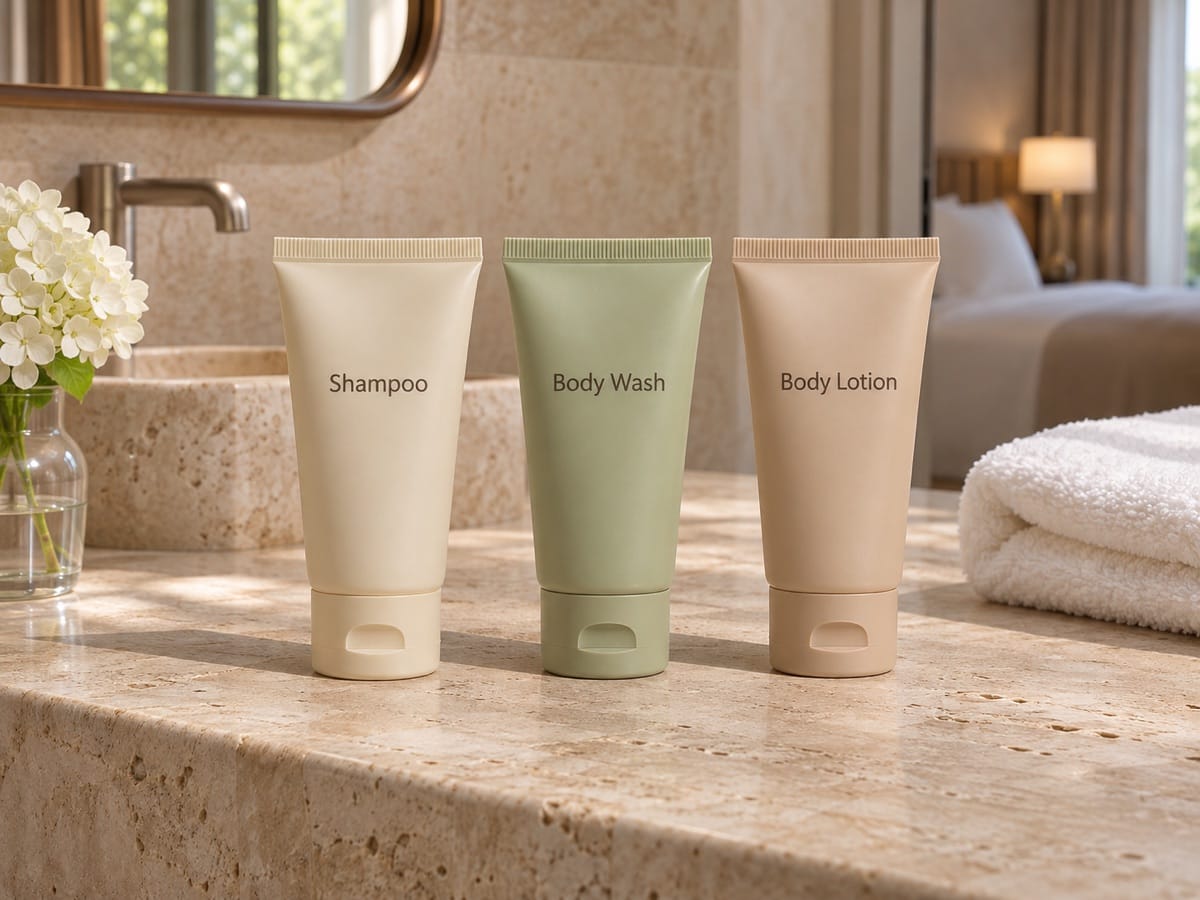
A guest reaches for the shampoo with wet hands. The cap opens easily, the tube gives them just enough product, and they get on with their morning. That’s the goal. If the shampoo shoots across the shower or the tube arrives sticky at the cap, the guest notices the packaging for all the wrong reasons.
Choosing cosmetic tubes for hotel amenities means matching the formula, the dose, the closure, and the way your property stocks its rooms. This guide walks hotel buyers, amenity distributors, and private label teams through those decisions. Use it to build a sample brief, compare supplier quotes, and catch problems before cartons land at your loading dock.
Key Takeaways
- Sample different fill volumes for shampoo, conditioner, body wash, and lotion.
- Choose the body stiffness, cap, and dispensing opening with the actual formula in hand.
- Approve a filled and sealed sample, then compare your quotes by cost per occupied room.
Start With the Guest’s Routine
Choose a Fill Size for Each Toiletry
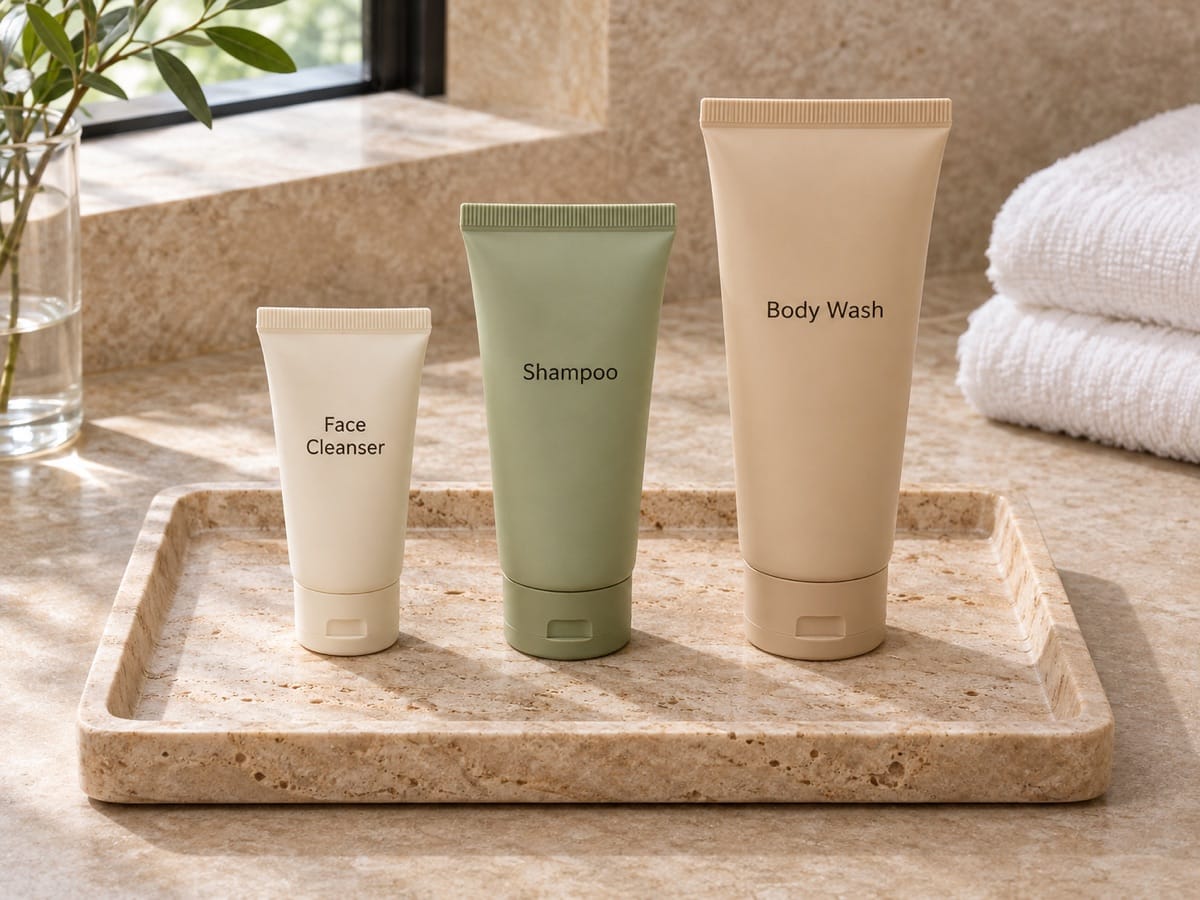
Start with how much a guest will actually dispense. A 30 mL hotel shampoo tube may be a useful sample for a short stay, but someone with long hair might use more than you expect. The same guest may barely touch the body lotion. If you give every product the same fill size just to make the set look tidy, you can end up paying for lotion that gets left behind while housekeeping fields requests for more shampoo.
| Product | Fill sizes to sample | What to check with the filled tube |
|---|---|---|
| Shampoo | 20–30 mL | Can guests dispense one wash without the product running out of the opening? |
| Conditioner | 20–30 mL | Is it easy to squeeze the thicker formula out when the tube is nearly empty? |
| Body wash | 30–50 mL | Does the opening deliver a controllable dose rather than a sudden burst? |
| Body lotion | 15–30 mL | Does the lotion come out in a clean bead without pooling in the cap? |
| Facial cleanser | 10–20 mL | Can the guest dispense a small amount, and is there enough room for readable copy? |
Xinfly Packaging lists 15 mL, 20 mL, and 30 mL as examples in its hotel range. Use the table to pick initial samples and adapt the sizes to your property. Give filled samples to a small test group and weigh them before and after use. Record how many uses each guest got and how much product remained. Ask housekeeping how often opened packs are replaced. These observations tell you more about the right size than a comparison of two empty tubes ever will.
Check the Filled Dimensions, Too
Ask for the finished height, body diameter, cap width, and maximum footprint after sealing. Two travel size cosmetic tubes can hold the same volume and fit very differently on a narrow vanity tray. Bring the trial set to an actual guest room. A cap that seems wide enough on a drawing can wobble on the tray’s raised lip, and a tall, slim tube can disappear behind a folded towel.
When to Sample 30 mL Squeeze Tubes for Hotel Amenities
For a boutique hotel welcome kit or a short-stay room program, 30 mL squeeze tubes for hotel amenities are a useful size to trial. Compare them with a smaller and a larger fill using the same shampoo and closure. Then sample conditioner tubes separately. Matching hotel shampoo and conditioner tubes can share a cap profile, while each formula gets its own outlet size and fill target. Ask housekeeping to check the tubes in the actual tray before approving the set.
Decide Where Minis Make Sense
Room dispensers, mini bottles, sachets, and squeeze tubes solve different problems. A tube is useful in a portable spa kit or welcome set when you want guests to take the product with them and close it again between uses. A dispenser may make more sense for routine shower products in a property set up to service it. A sachet can work for a single measured application. Compare the trade-offs between hotel amenity tubes and sachets if you’re sourcing both formats.
Match the Tube to the Formula
Use PE as a Baseline for Squeeze Performance
For many shampoos, shower gels, and lotions, a flexible polyethylene tube is a sensible starting sample. Ask to try two body stiffnesses with the same formula and cap. A firmer wall can feel substantial when full but frustrating when there’s only one wash left. An overly soft wall paired with a large opening may send thin shampoo out faster than the guest expects. Compare the options in Xinfly Packaging’s PE tube range and judge the samples in the shower, where wet hands make the differences obvious.
Request a Barrier Structure When the Formula Needs It
If your formulator is concerned about fragrance loss, oxygen exposure, or moisture transfer, ask which change they need the package to prevent. That answer narrows the choice between a standard PE tube and a barrier structure such as a plastic barrier laminate tube. Compare the actual proposed constructions with the same formula under agreed storage conditions. Check scent, appearance, and dispensing over time. A stronger barrier has a purpose when it solves a demonstrated formula problem.
Specify PCR Content by Component
When you source post-consumer recycled (PCR) cosmetic tubes, ask where the recycled material sits and how the percentage is calculated. A percentage for the tube body may exclude the shoulder and cap. Request documentation for the exact configuration being quoted and review decorated samples for color variation and how they feel in use. If recyclability matters to your hotel, verify whether the complete pack is accepted in the collection system at the destination. Small components and mixed materials can change the answer.
Choose a Closure Guests Can Use in the Shower
Compare Flip-Top and Screw Caps With Wet Hands
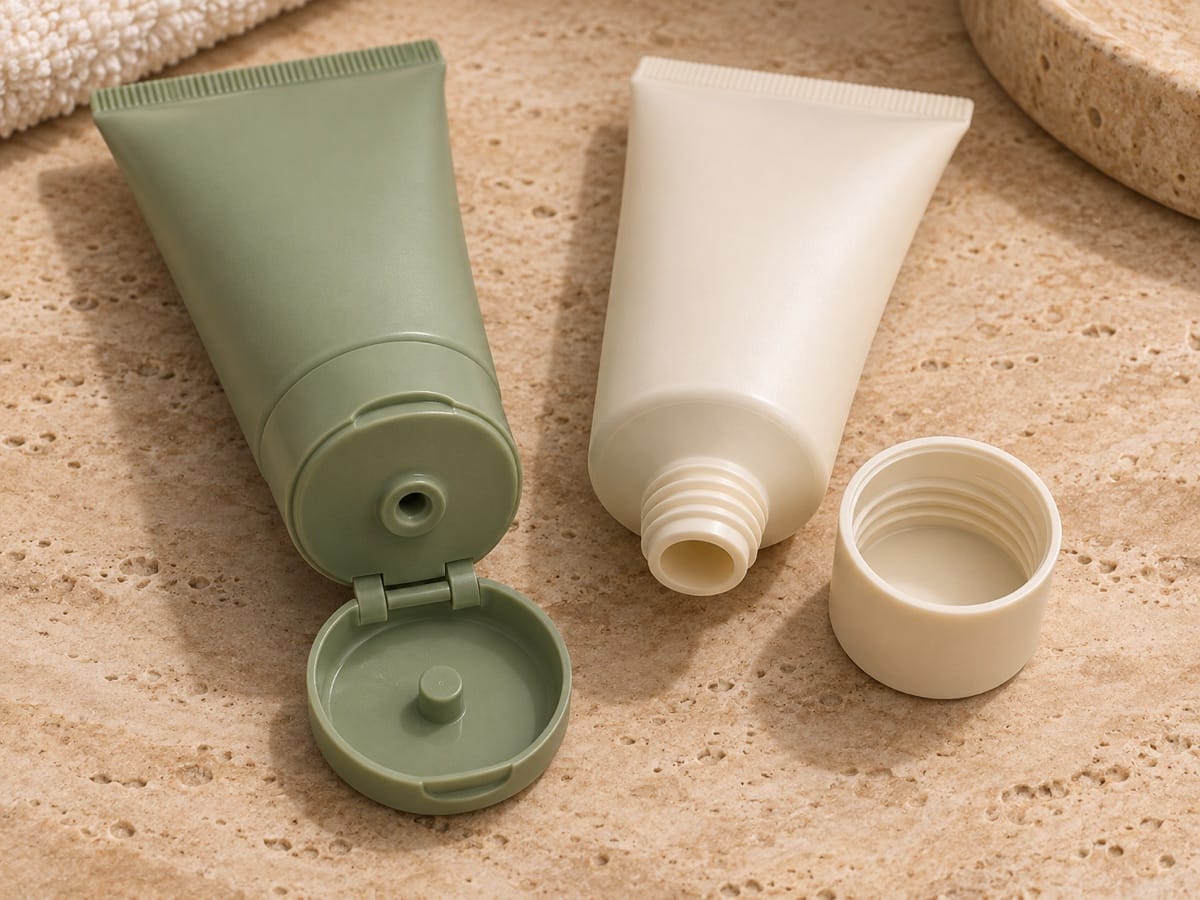
A flip-top cap stays attached, so it’s a useful option when guests need one hand free. Test how much force it takes to lift the tab, whether the lid stays out of the way as you dispense, and how clearly it clicks shut. A screw cap may suit a slim travel kit or a design with a specific neck finish. Check that guests can grip it, start the threads cleanly, and close it without guessing. Xinfly Packaging’s tube caps and closures guide can help you narrow down the options before requesting samples.
Tune the Orifice Separately for Shampoo and Conditioner
The orifice is the opening that meters the product. A thin gel and a dense conditioner rarely feel right through the same opening. Try dispensing from a full tube, then repeat when it’s nearly empty. If you want the same cap silhouette across your hotel line, ask whether that closure family can take different opening sizes. The guest sees a coordinated set, and your filler gets a specification that makes sense for each product.
Approve a Filled Sample Before the Production Run
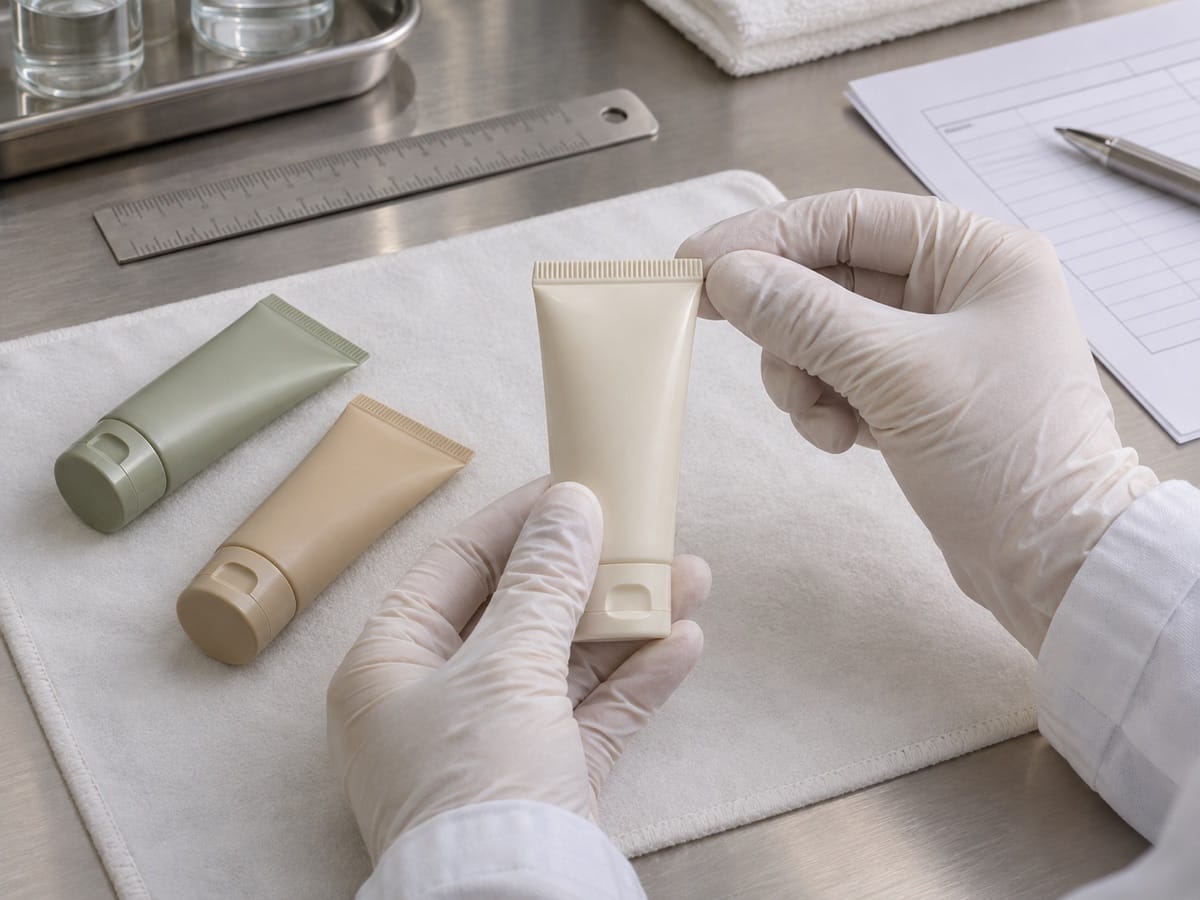
Empty samples help you judge the fit and appearance. For approval, ask your filling partner to run a small batch using the actual formula, cap, tube body, and proposed sealing settings. Agree on the test methods and pass criteria before you start. Record what changed whenever you revise a component, and repeat any checks that change could affect.
| Check | What to do | What a failure can reveal |
|---|---|---|
| Cap and tail leaks | Store filled units upright, sideways, and cap down under the agreed test conditions. Inspect both ends separately. | A poor fit at the closure, a compromised tail seal, or residue trapped in the seal area. |
| Dose and repeat use | Open, squeeze, and reclose with wet hands. Repeat on a nearly empty tube. | A stiff body, inconsistent dose, weak hinge, or difficult closure. |
| Formula compatibility | Compare stored samples with a reference using the formulator’s agreed checks for appearance, odor, and flow. | A formula or pack change that merits investigation before approval. |
| Artwork durability | Inspect the printed tube after handling, wet rubbing, and contact with a small spill of the formula. | Scuffing, poor legibility, or decoration that needs adjusting. |
| Carton handling | Use the intended carton and dividers for a transport trial. Inspect the contents on arrival. | Crushed caps, scratched printing, or damage that a sample sent by itself won’t show. |
Give the Filler a Drawing They Can Work With
Confirm the tube diameter, open tail length, fill target, and the clear space needed for sealing and batch coding. A shorter tube may look better on the tray and still leave too little room above the fill for the jaws to make a clean seal. Share the drawing and dieline with your filler before the artwork is final. Xinfly Packaging’s tube print area guide shows why the available design space changes with tube dimensions. Keep an approved filled sample that purchasing, quality, and the supplier can all refer to when they inspect later batches.
If your team is still choosing between two configurations, use sample development to isolate one change at a time. Keep the cap and formula the same when you compare tube wall stiffness. Keep the body the same when you compare opening sizes. Otherwise, a better result tells you that one combination works, but leaves you guessing which part made the difference.
Plan Branding, Stock, and Reorders Together
Make the Product Name Easy to Read
Custom printed hotel toiletry tubes look good as a set, but the bottles and tubes sit under all sorts of lighting. Make “Shampoo,” “Conditioner,” and “Body Wash” easy to distinguish at arm’s length. Use clear names as well as color; two tones of sage green can look nearly identical through a fogged shower screen. Reserve space for product information and batch coding, and approve an actual printed tube rather than relying on a flat digital proof. If your hotel uses a specific brand color, compare samples on the proposed tube material and with the final finish. The same ink can look different on an opaque white tube and a tinted body under bathroom lighting.
Approve Custom Printed Hotel Toiletry Tubes as a Set
For a private label hotel toiletry packaging program, put the real shampoo, conditioner and body wash samples next to one another. Check which product guests can identify without picking it up, whether the logo stays clear around the curved body, and whether the print holds up after a damp rub. Ask the tube maker to compare cosmetic tube printing options on the specified body color before you quote separate artwork for each property.
Compare the Cost per Occupied Room
A quote for empty tubes gives you one piece of the budget. Add closures, decoration, filling, freight, and the expected units used per occupied room. For example, a filled mini that costs 24 cents and averages 1.3 units per occupied room costs about 31 cents per room for that product. A 30-cent mini used at one unit per room costs 30 cents. Those figures are illustrative; track replacements and unopened stock during a pilot so you know which size really costs less at your property.
Ask What the Minimum Order Applies To
Is the minimum order quantity set per tube size, cap color, artwork, or finished product? A single hotel collection can turn into separate orders for each formula and each property logo. Ask your hotel amenities tube supplier to quote both a shared tube format with different artwork and fully custom tubes for every product. Then check how long repeat orders take once the artwork is approved, and how much stock you can store without crowding the housekeeping room or exceeding its usable shelf life.
Send Xinfly Packaging a Brief That Gets You Comparable Quotes
List the formulas, target fills, desired cap action, number of artworks, forecast quantity by product, delivery market, and who will fill and seal the tubes. Include your vanity tray dimensions or kit insert drawing if space is tight. Start with Xinfly Packaging’s custom hotel amenity tubes and send the packaging team your brief. Ask for the proposed tube and cap specifications alongside the price so you can compare like for like.
Frequently Asked Questions
Can shampoo and lotion share one tube size?
Yes, if both formulas dispense well at that size and the fill quantities make sense for guests. You can also keep the same body diameter and cap profile while varying tube length or the dispensing opening. Ask your filler which combination works on their line.
Should we add a seal under the cap?
Consider it if you need a visible sign that the product hasn’t been opened. Ask whether the chosen neck and closure support the seal you want, then test whether guests can remove it with wet hands. Check that it won’t interfere with the cap’s ability to close afterward.
How can we tell whether a leak comes from the cap or the tail?
Clean and dry the outside before testing. Mark the cap and tail ends, store the tube in different orientations, and inspect them separately for fresh residue. Share photos and lot details with the filler and tube supplier so they can trace which part of the pack failed.
Can a hotel chain order the same tube with different property logos?
Often, yes. Ask for a shared construction and separate artwork versions, with the minimum and setup costs broken out by version. Agree on carton labels that clearly identify the property and product so the right amenities reach the right hotel.
Does Xinfly Packaging supply filled hotel toiletries?
This guide and the linked product page cover cosmetic tube packaging. When requesting a quote, specify who supplies the formula and who fills and seals the tubes. If you need a finished toiletry kit, confirm the scope and responsibilities before comparing it with an empty-tube quote.
Conclusion
The right cosmetic tube for hotel amenities should dispense cleanly, fit the room, and be straightforward to reorder. Start with the formula and the guest’s likely dose. Then test the closure with wet hands, approve the filled pack with your filler, and compare costs using what your property actually uses. Bring those details to Xinfly Packaging so your first samples answer the questions that matter before you commit to a production run.