
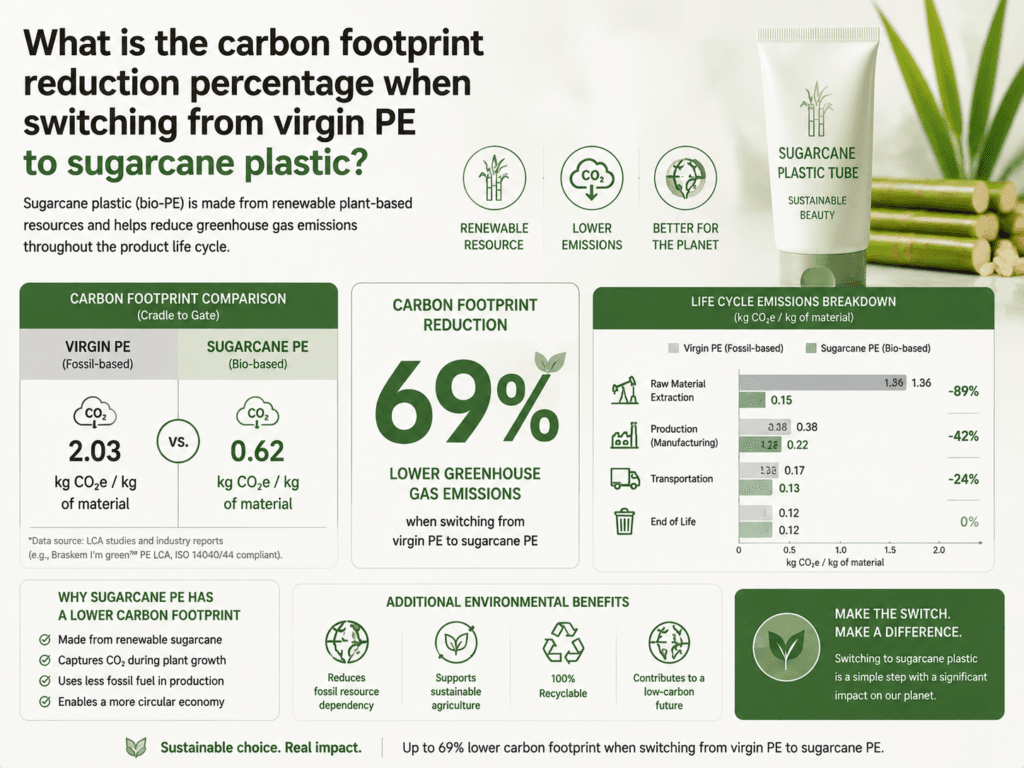
The carbon footprint reduction when switching from virgin PE to sugarcane-based PE typically ranges from 50% to 80%, depending on the production process, energy mix, and supply chain conditions.
This reduction is mainly achieved because sugarcane PE is a bio-based polymer that uses renewable plant resources instead of fossil fuels, significantly lowering upstream greenhouse gas emissions.
Typical Carbon Footprint Reduction Range
| Material Type | Relative CO₂ Emissions | Carbon Reduction vs Virgin PE |
|---|---|---|
| Virgin PE (fossil-based) | 100% baseline | 0% |
| Sugarcane PE (bio-based PE) | 20%–50% of baseline | ≈ 50%–80% reduction |
Why Sugarcane PE Has Lower Carbon Footprint
- Renewable feedstock: Sugarcane absorbs CO₂ during growth, offsetting part of emissions
- Bio-ethanol route: Converts plant-based ethanol into ethylene instead of crude oil
- Reduced fossil extraction: Less dependency on petroleum refining
- Efficient agricultural cycles: High-yield crops reduce land-use impact per kg resin
Where Emissions Still Come From
- Sugarcane farming (fertilizer, irrigation, harvesting)
- Transportation of raw materials
- Polymer conversion and polymerization energy use
- Packaging tube extrusion and finishing processes
Important Insight: Carbon Reduction ≠ Biodegradability
| Property | Sugarcane PE | Virgin PE |
|---|---|---|
| Carbon footprint | Much lower | Higher |
| Recyclability | Same as PE (RIC 2 / RIC 4) | Same (PE standard) |
| Biodegradability | Not biodegradable | Not biodegradable |
Real-World Variations in Reduction Rate
- Best case (optimized supply chain): up to ~80% reduction
- Typical industry average: 60%–70% reduction
- Less efficient logistics: ~40%–50% reduction
What Influences the Final Carbon Savings
- Type of sugarcane farming practices (rain-fed vs irrigated)
- Energy source used in polymer production (renewable vs fossil energy)
- Transport distance from bio-refinery to tube factory
- Blending ratio with other materials (e.g., PCR or additives)
Summary
Switching from virgin PE to sugarcane-based PE typically reduces carbon emissions by 50% to 80%, making it one of the most effective drop-in solutions for brands seeking lower environmental impact without changing existing recycling streams or packaging performance.
However, the exact reduction depends heavily on supply chain efficiency and production energy sources rather than the material alone.
Learn more: Sugarcane Tubes, Sustainable Packaging, PCR Tubes, Cosmetic Tube Materials.
Looking for Low-Carbon Packaging Solutions?
Xinfly Packaging offers sugarcane-based cosmetic tubes designed to significantly reduce carbon footprint while maintaining full PE performance and recyclability.