Published: .
Technical review: pending. Coating feasibility, component scope, sample acceptance and any required performance evaluation must be confirmed by the responsible project team.
A quotation says “soft touch,” and the design team expects the whole tube-and-cap assembly to have the same finish. The sample arrives with a low-gloss body and a different-looking cap. Before treating that difference as a defect, check what the supplier actually quoted and which surfaces the team approved.
A soft touch tube coating coverage map turns a finish description into a defined enquiry. It identifies the requested component surfaces, their boundaries, the proposed exclusions and the physical references needed for review. The buying decision is which scope to request and approve, subject to supplier confirmation. This article does not promise that any particular zone can be coated or that a visual finish proves a tactile or durability result.
Begin with the Supplied Assembly
Identify the Body, Shoulder and Closure Separately
The commercial soft touch tubes description introduces a finish category. Your project brief should identify the actual tube body, shoulder and closure references to which that description will apply. Record the drawings, revisions, intended application and supplied assembly state.
A cap with a similar colour may have a different proposed surface treatment from the body. Ask for that distinction in the quotation rather than assuming a common colour name means a common coating scope. Keep the body and cap colour references connected to their own component records and review samples.
Ask What the Finish Line Includes
Ask your soft touch tube manufacturer to explain which component surfaces the proposed line item covers. Request a written response to your coverage sketch, including exclusions and any areas that require further development. Mark unconfirmed requests as pending options in the enquiry.
Avoid wording such as “coat everywhere” without a component list and a supplier-reviewed boundary description. It may leave both sides with different interpretations of exposed, hidden and functional surfaces. Purchasing should make that ambiguity visible before the team compares prices or signs a sample approval.
Draw a Coverage Map for Discussion
Use Named Views and Landmarks
Use the current component drawing or a supplier-confirmed outline. Name the front, rear and side views and identify landmarks that both teams can recognise. If the shoulder is obscured by the closure in an assembled view, request a separate approved reference rather than guessing its hidden geometry.
Use clear zone names such as body exterior, exposed shoulder and cap exterior. These are discussion labels, not a manufacturing recipe. The supplier must confirm how the proposed finish scope can be represented on the actual construction and whether your requested boundaries are feasible.
Distinguish Requested, Confirmed and Excluded Areas
Keep these statuses visible on the map. A requested zone has not yet become a supplier commitment. A confirmed zone should point to the relevant quotation or response. An excluded area should state what the supplier proposes instead, where that information is available and relevant.
Do not use an attractive presentation rendering as the only coverage record. A rendering can communicate appearance while leaving component boundaries ambiguous. Retain the agreed written scope and physical sample references so the procurement decision can be recovered without interpreting image highlights.
Build the First Coverage Worksheet
| Zone to discuss | Information to identify | Supplier response needed |
|---|---|---|
| Body exterior | Body reference, views and proposed finish extent | Confirmed scope or development limitation |
| Exposed shoulder | Shoulder reference and the visible area under discussion | Whether included, excluded or unresolved |
| Cap exterior | Exact closure reference and requested finish description | Separate cap treatment and sample scope |
| Decorated region | Artwork revision and relevant finish request | Proposed decoration and finish combination |
| Boundary area | Drawing landmark and requested transition description | Feasibility and a controlled sample reference |
| Functional or hidden surfaces | Supplier-identified interfaces relevant to the request | Explicit exclusions or technical review questions |
| Incoming component state | Empty tube, loose closure or fitted assembly | Which state the quotation and sample represent |
Complete this worksheet with the actual supplier. It deliberately supplies no boundary dimension, coating thickness or process sequence. Those details require the project’s technical specification and confirmed manufacturing proposal. An unanswered row should stay open rather than being treated as included by default.
Keep the Decoration Record Connected
Identify Printing and Finish as Separate Requests
For PE cosmetic tubes, preserve the proposed material and body construction alongside the decoration brief. Identify the artwork revision, ink colours and requested finish scope without assuming that a familiar visual effect determines the production method.
The tube printing and artwork discussion can help you frame the decoration request. Ask which process and finish arrangement the supplier proposes for the actual design. Do not prescribe a coating or printing sequence from a picture, and do not claim that a particular combination is available until the supplier confirms it.
Specify What the Approval Reference Represents
Ask whether a submitted sample represents colour, printing, finish scope or several of those together. A colour chip alone should not silently become the approved reference for every component’s tactile treatment. Record the sample’s actual purpose and any aspect it does not represent.
For soft-touch squeeze tubes for hand cream, a body appearance sample may be useful during design development while the closure treatment remains undecided. Keep that staged status visible. The project can progress on one confirmed question without presenting an unresolved assembly finish as fully approved.
Request Physical References by Zone
Ask for an Identified Sample Arrangement
The sample request should connect the coverage-map revision, proposed body, shoulder and closure to the review purpose. Ask the supplier which physical samples can represent the confirmed proposal and which surfaces require separate reference pieces or further discussion.
The finish sample development request should identify who will review appearance and feel, what project criteria will be used and how the decision will be recorded. This guide supplies no universal tactile scale or acceptable gloss difference. Agree those matters with the actual reviewers and supplier before treating a sample as an acceptance reference.
Preserve the Reference after Review
Give the selected reference a controlled identity and retain the associated coverage map. Record the date, actual participants and exact scope of the decision. If a cap is changed later, the old body reference should not automatically approve the new cap finish.
Keep rejected or superseded development proposals distinguishable from the current reference. When several similar lilac samples sit on a desk, a memory of which one “felt right” is not enough to recover the decision. Use the project’s agreed identification and retention arrangements rather than informal unlabelled comparison pieces.
Review Boundaries without Turning a Sketch into a Test
Compare the Sample with the Confirmed Map
Ask the designated reviewer to identify which visible surfaces correspond to the confirmed zones and note any areas that are unclear. Use labelled photographs to support location discussions, while retaining the physical reference for aspects a photograph cannot establish.
Record observations neutrally. A change in reflected light may be something to discuss, but it does not by itself identify coating chemistry or establish whether a surface meets a tactile requirement. Ask the supplier to interpret questions about its process within the actual sample and proposal scope.
Route Functional Questions to the Responsible Team
If the proposed finish raises a question at a closure interface, hinge, sealing area or another identified feature, ask the responsible technical team to review it. Do not extend the coverage request onto those areas without confirmation or infer an approved exclusion from this generic guide.
The surface finishing options page can introduce the available discussion categories. Its general descriptions do not replace your component-specific agreement or establish a performance result. Request evidence appropriate to any durability or functional claim you intend to make for the finished assembly.
Use a Second Worksheet for Sample Signoff
| Review item | Reference to retain | Decision wording to make explicit |
|---|---|---|
| Body scope | Body sample and map revision | Included zones reviewed or questions pending |
| Shoulder scope | Identified view or separate agreed reference | Included, excluded or awaiting confirmation |
| Closure scope | Cap code, colour and physical sample | Cap treatment reviewed within stated scope |
| Artwork connection | Printed-sample and artwork revisions | Decoration aspects actually considered |
| Boundary observations | Labelled locations and reviewer notes | Supplier clarification or additional sample needed |
| Unreviewed properties | Separate technical evaluation requirements | No conclusion recorded before evidence exists |
| Final disposition | Actual decision owner, date and linked records | Scope approved, qualified or still pending |
A signoff should make the remaining gaps understandable to the next buyer. If only body appearance has been reviewed, say that. Do not let an unqualified assembly approval imply that shoulder coverage, cap treatment or performance evidence has also been accepted when those decisions have not occurred.
Compare Quotations on the Same Coverage Scope
Keep Options in Separate Lines
If you request body-only coverage and a broader component scope as alternatives, ask for separate descriptions and confirmation of feasibility. Keep any sample or development work visible in the response. Do not use a single finish price to represent several unresolved options.
This article provides no price premium, minimum quantity or delivery estimate. Obtain those terms for the actual confirmed proposal. If one supplier excludes the cap and another includes a proposed cap treatment, clarify that difference before treating the quotations as comparable.
Record What Changes on a Reorder
Confirm the component references, coverage-map revision, decoration and approved sample identities for the reorder. If any part of the finish proposal changes, route the change to the responsible reviewers. Ask which previous references remain applicable and which need replacement.
Preserve the earlier scope as history rather than overwriting it. A new finish description should show when it became effective and which order it covers. This protects the meaning of the original approval without pretending that the same commercial product name always represents an unchanged assembly.
Describe the Illustrations Honestly
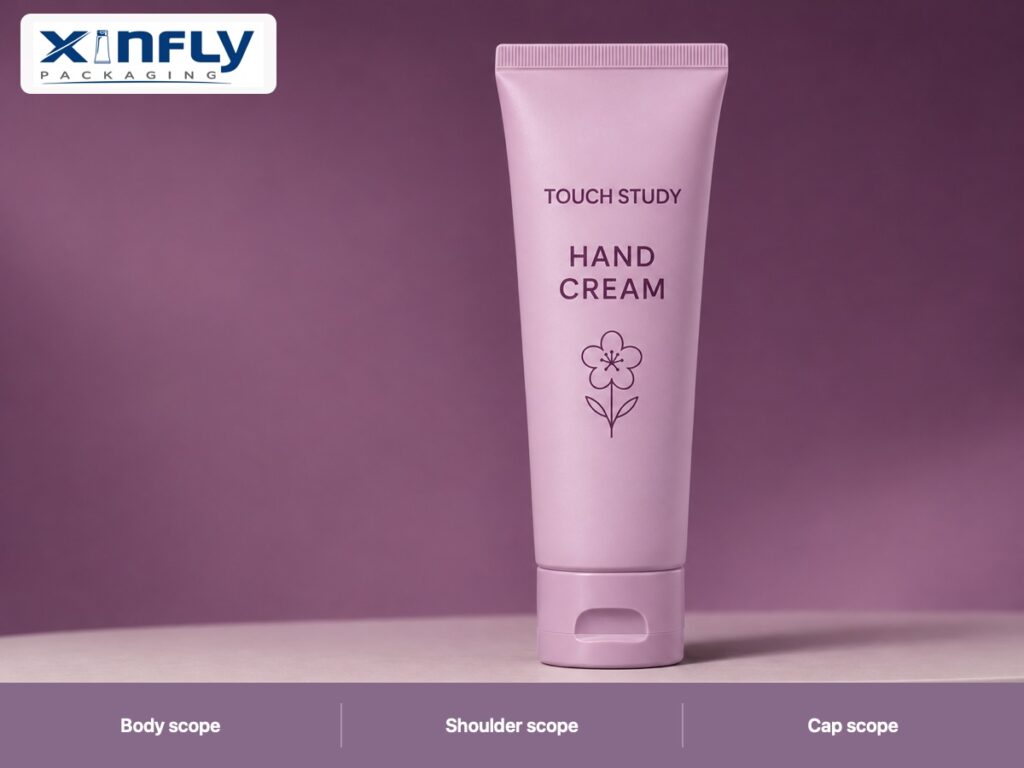
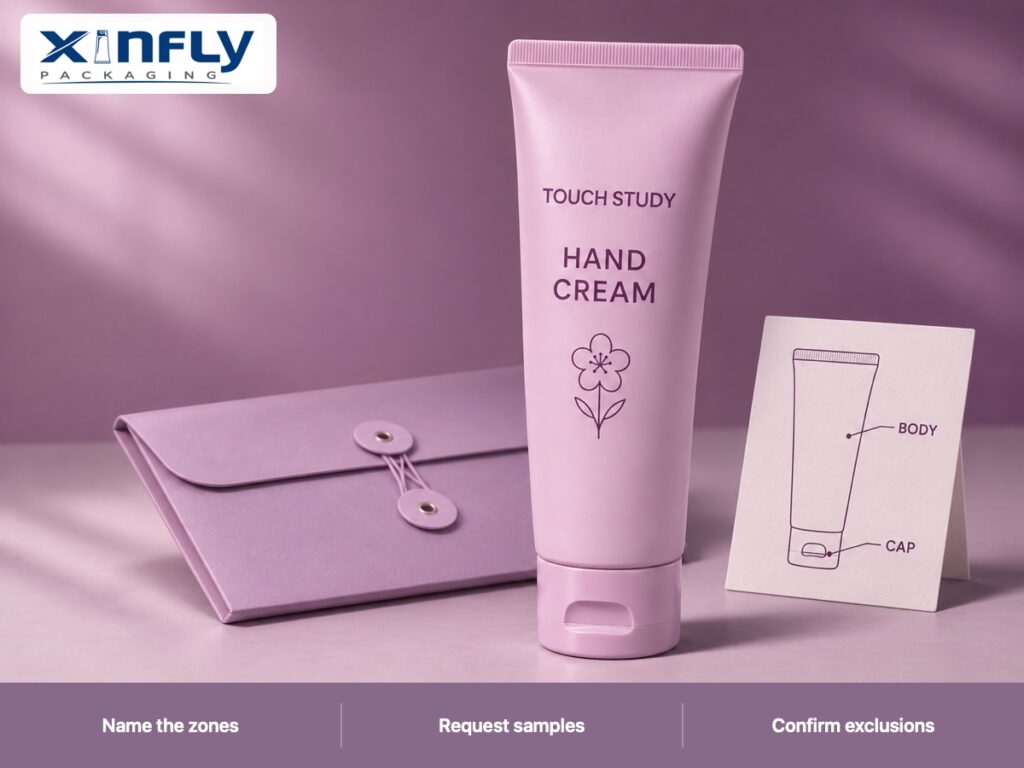
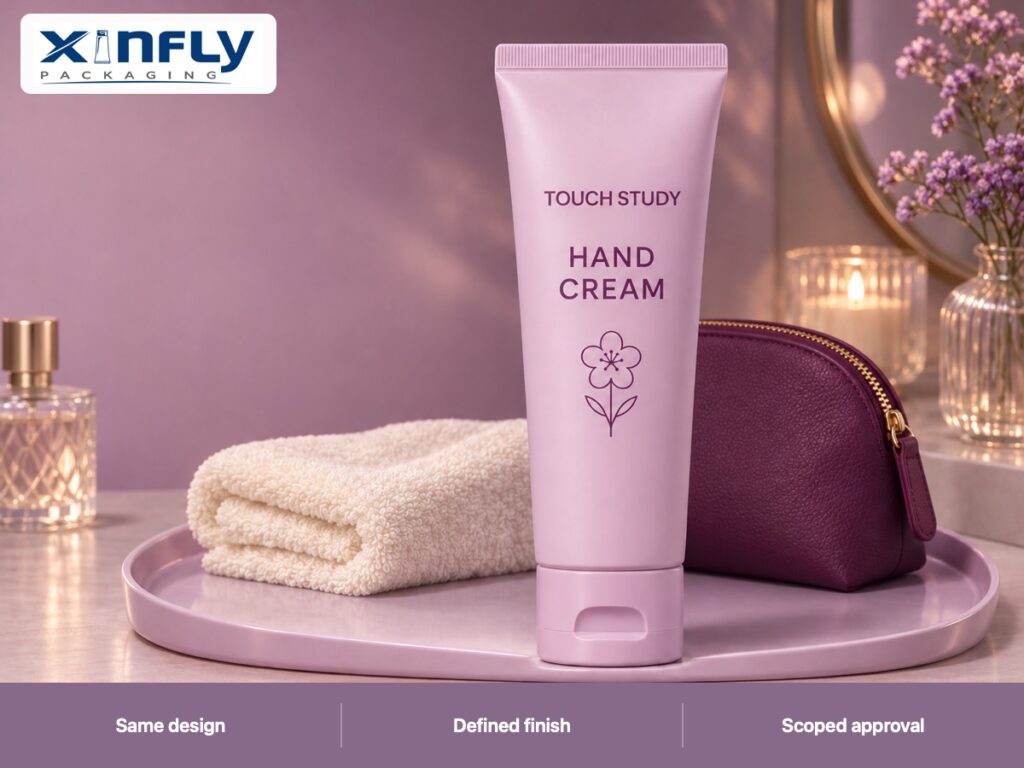
The illustrations use a lilac PE-style tube body, moulded shoulder, straight sealed tail, matching closed flip cap and plum single-colour screen-print-style flower artwork. A matte-looking body and a different cap highlight communicate the coverage question. They do not demonstrate coating chemistry, a measured gloss value, tactile feel, adhesion or wear performance.
The body-and-cap reference card is a discussion prop, not an approved manufacturing drawing. The personal-care scene preserves the same product design. Use these visuals to explain the enquiry, then rely on the supplier-confirmed map and actual physical reference for the project decision.
Send Xinfly Packaging a Defined Finish Brief
Include your hand-care or other cosmetic application, capacity request, material and component preferences, drawings, artwork revision, destination and proposed coverage map. Mark requested alternatives and exclusions clearly. Ask Xinfly Packaging to confirm which scope can be quoted and represented in samples.
State the next decision you need: clarifying a body-only offer, reviewing a cap treatment option or approving a defined component scope. That focused question is easier to answer than “make the whole pack premium,” and it creates a clear record of what remains open before ordering.
Frequently Asked Questions
Does Soft Touch Automatically Include the Cap?
Do not assume that it does. Ask for the exact component coverage in the proposal and retain the confirmed cap treatment separately. Similar colour or appearance does not define the quoted scope.
Can a Product Photograph Prove Which Areas Are Coated?
No. Use a supplier-confirmed coverage description and identified physical references. A photograph can locate a discussion point but cannot establish chemistry, tactile properties or hidden surface treatment.
Should I Specify a Coating Boundary Dimension Myself?
Provide the design requirement and ask the supplier and responsible technical team to confirm a feasible specification. This worksheet offers no universal boundary dimension, process tolerance or coating recipe.
Does Body Sample Approval Approve a New Closure?
Only the actual recorded scope is approved. Identify the new closure and ask which sample work or review is needed. Do not transfer approval from one component to another without an authorised decision.
Can We Compare Quotes before Coverage Is Confirmed?
You can list the open options, but keep the differences visible. Obtain a matched description of included surfaces, exclusions and sample work before drawing a like-for-like commercial conclusion.
Conclusion
Define soft-touch coating coverage by component and boundary before approving a finish description. Keep requested areas, supplier-confirmed scope and exclusions distinct, then connect the agreement to identified physical samples. The two worksheets help Xinfly Packaging and your project team resolve the actual coverage decision without inventing feasibility, tactile results or performance evidence.