Published: .
Technical review: pending. The brand's formulation team and each packaging supplier must confirm the proposed contact materials, filling conditions and approval criteria. This guide provides a purchasing worksheet, not a formula or compatibility approval.
A hair colour kit may look like one retail item, yet its packaging order can contain several independent components. The colourant tube, developer container, closures, instructions and outer carton need their own identities. If the quotation only says “complete kit,” you still need to know which supplier is responsible for which part and which specification the price actually covers.
A hair colour tube kit component brief makes those boundaries visible before samples or quotations are compared. Start with the packaging used for each formula component. Then connect those records to the finished kit. A shared graphic design is useful, but matching colours on a tube and bottle cannot establish that their contact materials or manufacturing requirements are interchangeable.
Identify Each Formula Component Separately
Give the Colourant Its Own Packaging Record
Describe the proposed colourant package using a drawing revision, material proposal, neck arrangement, closure and supply state. For hair dye tube packaging, ask whether the quote concerns an empty tube component, a capped assembly or another agreed configuration. State which operations remain with the filler. Do not let the word “kit” hide an unresolved tube specification.
Use a stable item reference even when several shades share a tube design. Record the shade or artwork version separately from the physical tube reference. This helps the purchaser see whether a change affects the printed text, the tube assembly, or both. An approval for one shade's text should not silently approve a different contact-material proposal.
Identify the Developer Pack Independently
Request a separate packaging reference for the developer component. Its proposed container, closure, filling arrangement and contact materials need review by the responsible formulation and packaging teams. Do not copy the colourant tube specification into this row simply because both components will be sold together. Keep the developer formula reference under the brand's controlled technical process rather than circulating unnecessary confidential formulation detail in a general RFQ.
The same discipline applies when the developer packaging is sourced elsewhere. The tube supplier can quote an identified tube without becoming responsible for an unknown container supplied by another business. Name the party that will consolidate the components and confirm what information that party needs before accepting the kit for assembly.
Build a Component-by-Component Brief
Separate Common Design from Physical Construction
Use the first worksheet as a list of questions to resolve, not as a completed bill of materials. For example, aluminum cosmetic tubes are a candidate structural discussion for a colourant package; the category name alone does not approve an inner coating, a formula or a developer container. Ask for the exact proposal and the evidence that the technical reviewer requires for that component.
| Component | Record to request | Responsibility to name | Decision still required |
|---|---|---|---|
| Colourant tube | Tube drawing, material proposal and revision | Tube supplier and brand packaging lead | Which assembly is being quoted? |
| Colourant closure | Closure reference and neck interface | Component supplier and filler | Fitted or supplied separately? |
| Developer pack | Independent container and closure references | Developer-pack supplier and brand | Which contact materials need assessment? |
| Inner contact surfaces | Component-specific material or coating identification | Relevant supplier and technical reviewer | Which evidence matches the proposal? |
| Printed artwork | Item, shade, language and file revision | Brand artwork owner and printer | Which version is approved for each part? |
| Instructions | Controlled content and language reference | Brand's responsible content owner | Who approves the final text? |
| Outer carton or tray | Drawing and component placement reference | Carton supplier and kit assembler | Has the proposed fit been checked? |
| Kit assembly | Component list and assembly responsibility | Named assembler | Which parts and operations are included? |
| Final release | Required approvals and open-item list | Brand's release owner | What prevents kit release today? |
Keep Unknowns Visible in the Quote
If a developer container has not been selected, mark it unresolved and request a tube-only quote with clearly stated exclusions. If the supplier offers a consolidated kit proposal, request the component schedule that sits behind it. The comparison should show whether the supplier is manufacturing, buying in, filling or merely packing each element. These are different commercial scopes.
Avoid turning placeholders into specifications. A nominal size, an unconfirmed material abbreviation or a screenshot from another project is a discussion starting point. It becomes an order requirement only through the project's approval process. Preserve the distinction in the RFQ so an assumption does not become an unnoticed purchase commitment.
Keep Component Quantities and Kit Quantities Apart
Define the Counting Unit on Every Line
A request for a quantity of kits does not automatically define the purchase quantity for each component. State how many of each identified item belongs in one kit, then list the required component quantities separately. Include any separately agreed samples, retains or additional units in their own lines. Do not add a supplier's proposed allowance to a kit quantity without identifying what it covers and who approves it.
Collapsible tubes for hair color cream might be ordered by tube item and artwork version while a shared developer pack is ordered under another reference. Keep those lines distinct. If the kit mix changes, revise the component schedule and ask each affected supplier to confirm the new basis. A correct total across all components does not prove that the required shade mix can be assembled.
Record the Assembly Constraint
The assembler needs more than purchase totals. Identify whether components will arrive together or separately, how each item will be recognised and which records accompany it. A delivery of cartons cannot compensate for a shortage of a required closure. Equally, a tube count cannot show whether the matching instructions are available in the correct language. Ask the assembler to report shortages against individual item references.
This is a planning check, not an assurance that a particular production quantity will be achieved. Define how substitutions, damaged components or unapproved items are segregated in the record. The purchaser should be able to identify the missing input without asking the assembler to reconstruct several unrelated email discussions.
Request Samples with a Clear Review Purpose
Allocate Reviews by Component
Ask for a sample plan that connects each specimen to the component reference and revision. A colourant tube may be sent for a drawing check, decoration review or a project-specific filler assessment. The developer pack needs its own applicable review. The responsible technical team should define any formula-contact work, exposure conditions and acceptance criteria. Do not infer those decisions from a general catalogue description.
Use the sample development process to clarify what can actually be supplied for the current proposal. A decorated appearance sample, an unprinted structural sample and a filled trial pack serve different purposes. Record the type requested and any limitations on what that sample can answer before paying for or distributing it.
Connect the Result to the Reviewed Revision
When a review produces comments, identify the item, specimen, drawing or artwork version and the person who made the decision. Avoid a single “samples approved” entry that could be read as approval of the whole kit. If the tube's print changes while its physical construction remains the same, identify which earlier findings the technical reviewer considers still applicable. Do not make that carry-over decision on the reviewer's behalf.
Retain the supplier's response when a proposed part is unavailable or needs revision. A replacement that looks similar still needs its own identity. Keep the superseded proposal in the project history and remove it from the current release list. This prevents an old sample photograph from becoming the accidental manufacturing instruction.
Check the Kit in Its Intended Setting
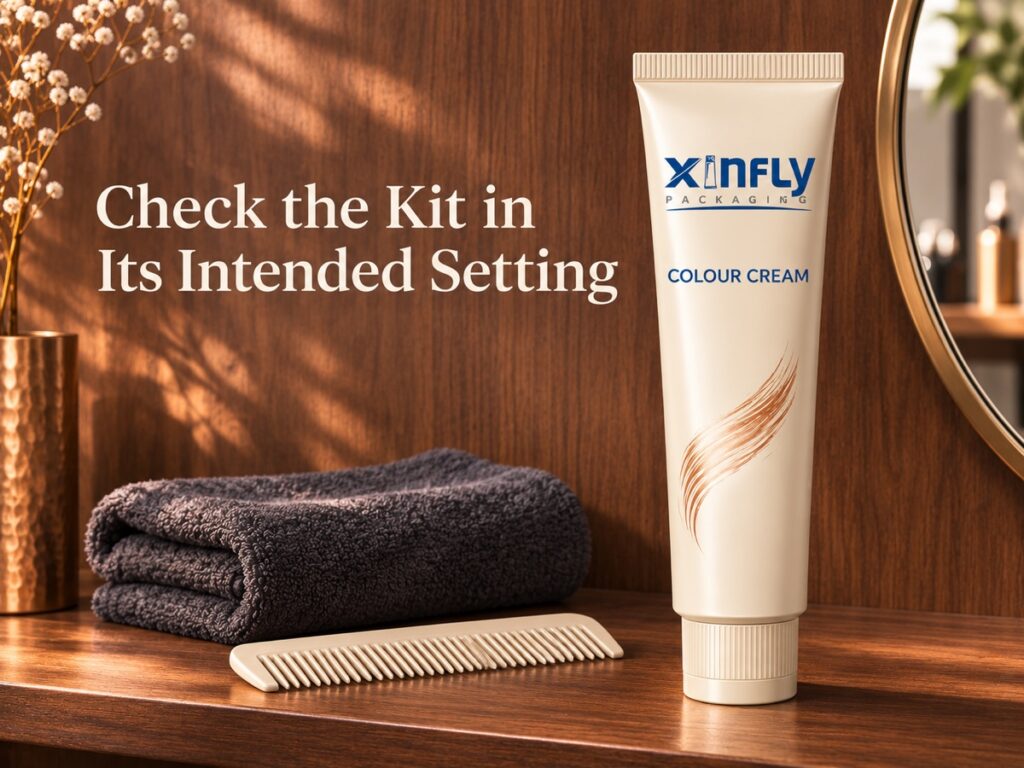
Review Identification and Assembly Together
Set out the proposed components in their intended arrangement using the current drawings and artwork. Check whether an assembler can identify the colourant tube, developer pack and other required items without relying on memory. The exercise may use clearly identified mock-ups, but record which pieces are representative and which are the actual proposed components. A neat arrangement does not establish formula suitability or product safety.
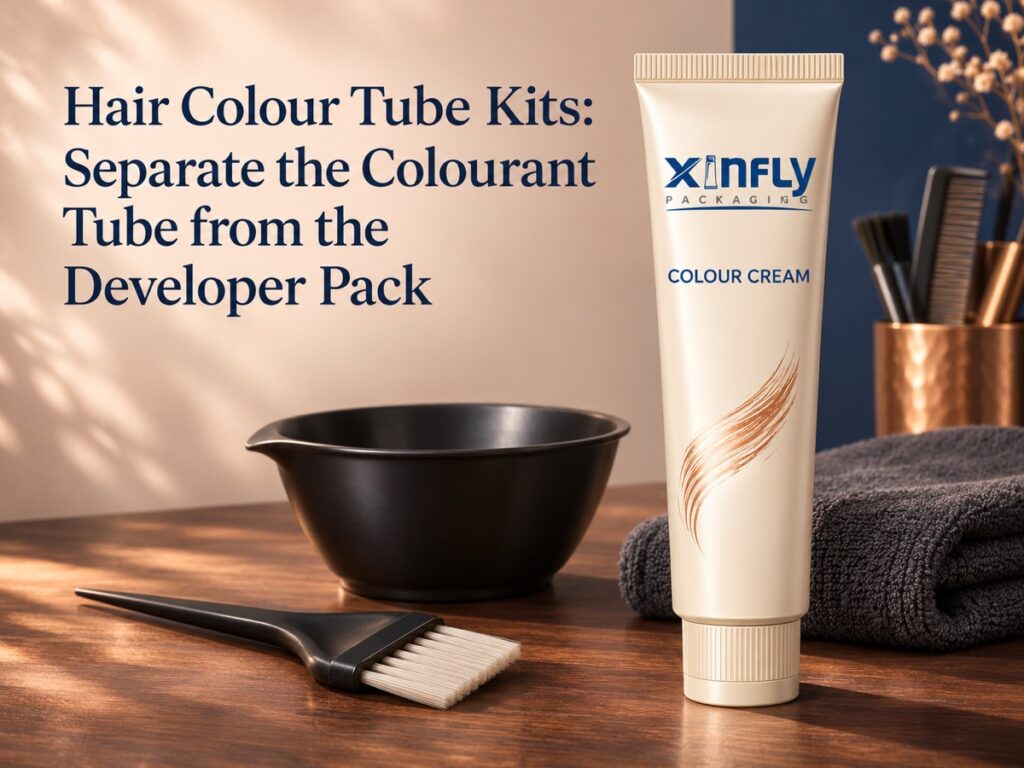
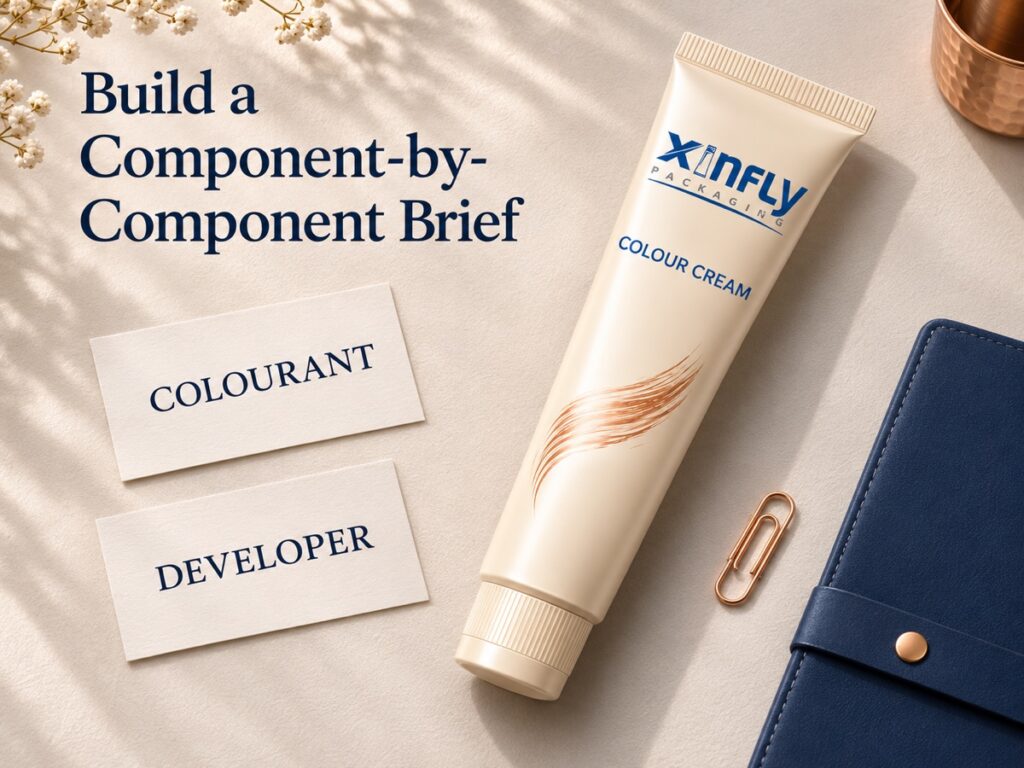
The packaging illustrations use a proposed laminate-style colourant tube with a moulded shoulder, straight sealed tail, ribbed screw cap and original blue-and-copper offset-style printing. This is a visual brief, not a confirmed layer stack or an approved order configuration. The developer pack is deliberately left for its own component assessment.
For a salon-oriented pack, consider the information the professional user needs to distinguish the components before following the brand's approved instructions. Procurement should route content questions to the responsible brand team. Do not add mixing directions, processing times or chemical-strength claims to a packaging sample simply to make it look finished.
Use a Practical Handoff Record
The second worksheet turns the kit discussion into a release conversation. Ask each owner to complete the relevant evidence reference and unresolved action. The point is to identify who must act next, rather than collecting a row of initials beside an incomplete specification.
| Checkpoint | Evidence to identify | Owner to confirm | Hold or follow-up to record |
|---|---|---|---|
| Tube scope | Current tube assembly and quote revision | Purchaser and tube supplier | Unconfirmed included operations |
| Developer scope | Current independent pack proposal | Brand and relevant supplier | Missing contact-material review |
| Quantity mapping | Components per kit and item quantities | Purchaser and assembler | Missing item or artwork quantity |
| Artwork | Approved file references for every printed part | Brand artwork owner | Superseded or unresolved text |
| Physical arrangement | Identified sample set or fit-review record | Packaging lead and assembler | Unchecked component or carton fit |
| Technical decisions | Actual component-specific review records | Responsible technical team | Pending compatibility or filling work |
| Commercial release | Agreed exclusions and delivery responsibilities | Purchaser | Open items preventing the order |
Prepare a Quote Request That Can Be Answered
Send a Small, Controlled Document Set
Include the component schedule, current tube drawing, artwork references, requested quantities and delivery destination. For aluminum tubes for hair dye cream, request the specific material and inner-surface proposal rather than a generic claim of chemical resistance. If another structure is proposed, ask the supplier to identify it explicitly and explain which technical questions remain for the brand's reviewer.
Tell Xinfly Packaging whether you need a colourant-tube proposal or coordination of a wider packaging set. Ask the supplier to list excluded components and operations. Keep the reply alongside the quote revision so commercial assumptions remain visible when purchasing, artwork and the filler work from the same order.
Frequently Asked Questions
Can One Packaging Approval Cover the Whole Hair Colour Kit?
Only if the responsible project owners explicitly define that scope and have the required evidence for every included component. A tube appearance approval should not be treated as approval of an independently sourced developer pack, instructions or kit assembly. Record the boundaries of each actual approval.
Does a Matching Tube and Bottle Design Mean the Materials Are Interchangeable?
No. Graphic consistency is a design relationship. Each package needs its own material and construction identity, followed by the technical assessment required for the formula and intended use. Keep a common visual brief alongside separate component specifications.
What If the Developer Pack Has Not Been Selected Yet?
Mark it unresolved and request a clearly scoped tube quotation if that work can proceed independently. Ask the purchaser and assembler which later decisions depend on the developer pack. Do not fill the missing specification with the colourant tube's details or an unrelated catalogue item.
Should Sample Quantities Be Included in the Kit Quantity?
List their purpose and quantity separately, then agree how they affect the commercial order. Samples for review, retained references and components intended for finished kits should remain distinguishable. Otherwise a total component count can conceal a shortage in the kit assembly schedule.
What Should We Send Xinfly Packaging First?
Send the colourant packaging purpose, current component list, proposed tube construction, closure reference, artwork versions, quantities and intended delivery point. Identify the developer pack as a separate component and state who supplies it. List technical questions that still require project-specific review.
Conclusion
Treat the kit as a coordinated set of identified components. Separate the colourant tube from the developer package, map quantities by item, and connect each sample decision to its actual revision. Bring the kit back together only after its component responsibilities and unresolved questions are visible. That gives Xinfly Packaging a more useful tube enquiry and gives your purchasing team a quote it can compare without hidden assumptions.