Published: .
“Please add a foil seal” sounds like a small change to a sunscreen tube order. It can leave several expensive questions unanswered. Is the quotation for a loose liner, an inserted liner or an already bonded membrane? Who applies it? Can the user reach the tab through the chosen closure? And which sample did your team actually approve?
A sunscreen tube foil seal purchase brief turns that short request into a reviewable assembly and process decision. Begin with the proposed sunscreen tube packaging, then identify the sealing option separately. This guide provides a supplier comparison sheet and a peel-trial record. It does not establish that a particular seal is available, qualified or legally required for your product.
Define Which Seal You Mean
Separate the Mouth Membrane from the Tube Tail
The membrane across the dispensing opening and the seal at the filling end serve different positions in the pack. Use a marked drawing to show the feature you are discussing. “Tube sealing” without that reference can send the conversation toward tail-sealing machinery when purchasing intended a membrane beneath the closure.
Decorative foil is another separate subject. A metallic logo printed on the body tells you nothing about an opening membrane. Put decoration and sealing components on different lines in the RFQ. That gives each supplier an opportunity to explain its proposed construction and avoids treating a similar-looking sample as a complete technical match.
Ask How the Proposed Membrane Is Applied
Do not infer the application method from the word “foil.” Ask the supplier to identify the proposed liner or membrane and how it is bonded to the identified opening. Xinfly Packaging’s induction foil seal guide explains one sealing approach. Confirm whether that approach actually matches your tube, closure and filling route before using its name in an order.
Make the Supplied State Explicit
Distinguish a Component from a Completed Operation
A loose sealing component, a liner held inside a cap and a bonded membrane are different delivery states. Ask each bidder to state which one is included and which operations remain for another party. If the tubes are supplied empty for tail filling, identify the proposed sequence with the filler instead of assuming it follows a bottle-filling process.
Have the supplier describe how the supplied assembly is protected and identified. Then ask the filler to confirm what it can receive, handle and process. This is particularly useful when empty sunscreen tubes and caps come from different sources. A component can fit a purchasing description while still arriving in a state that the receiving operation did not plan to handle.
Use One Responsibility Line for Every Operation
List component sourcing, insertion or positioning, bonding, filling, tail sealing and inspection. Assign the responsible party for the operations relevant to the proposal. Some may sit with the tube supplier and others with the filler. The important point is that both parties agree on the same sequence and handoff, rather than leaving an unquoted operation between them.
| RFQ field | Supplier response required | Why it changes the comparison |
|---|---|---|
| Tube and closure identity | Drawing references and revisions for the complete assembly | A generic tube size does not identify the sealing interface |
| Membrane identity | Proposed component reference and relevant specification | Makes samples and later orders traceable |
| Application route | Proposed bonding method and process owner | Identifies which operation is included |
| Supplied state | Loose, positioned, inserted or bonded as applicable | Prevents a component price being compared with a completed operation |
| Opening design | Peel, puncture or other intended first-opening action | Defines the user action the sample must demonstrate |
| Inspection scope | Agreed observations and any separately defined integrity checks | Distinguishes appearance approval from technical qualification |
| Sample and quote scope | Preparation, trial responsibilities and commercial assumptions | Makes development work visible before ordering |
Review the Opening Geometry Before a Peel Trial
Match the Membrane to the Actual Assembly
Request the drawing or technical description of the neck, opening, sealing surface and closure. Ask which materials and dimensions are relevant to the proposed bond. A nominal 50 mL body does not identify those features. For 50ml sunscreen tubes with flip-top caps, confirm the complete cap-and-neck arrangement rather than selecting a membrane from capacity alone.
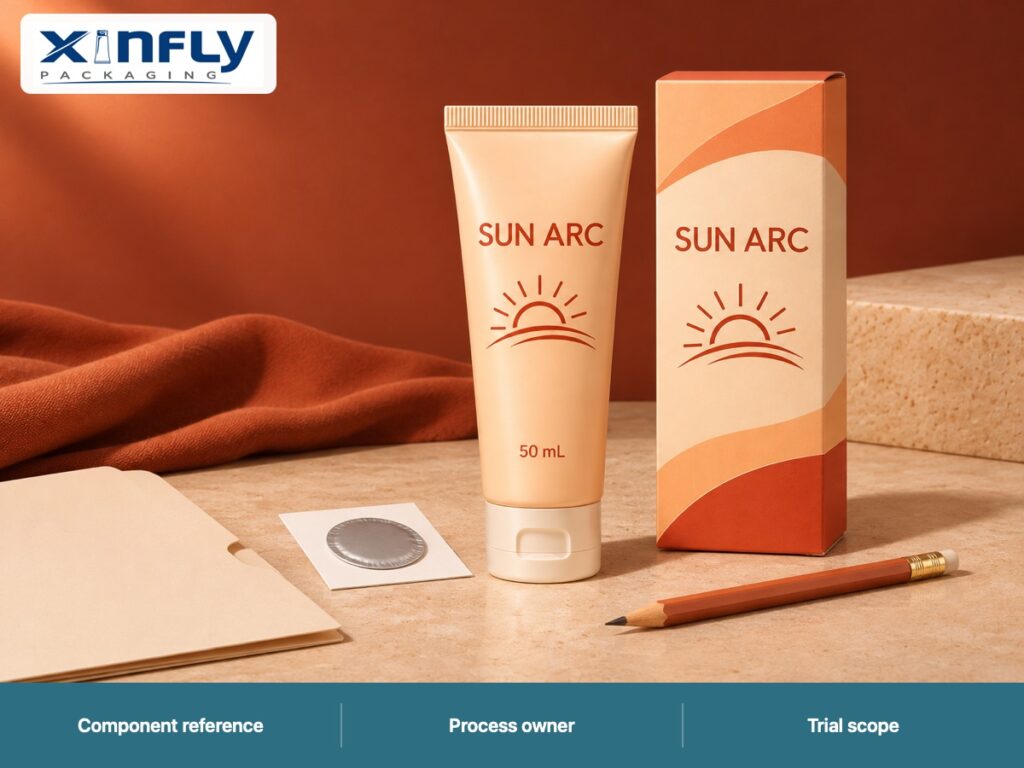
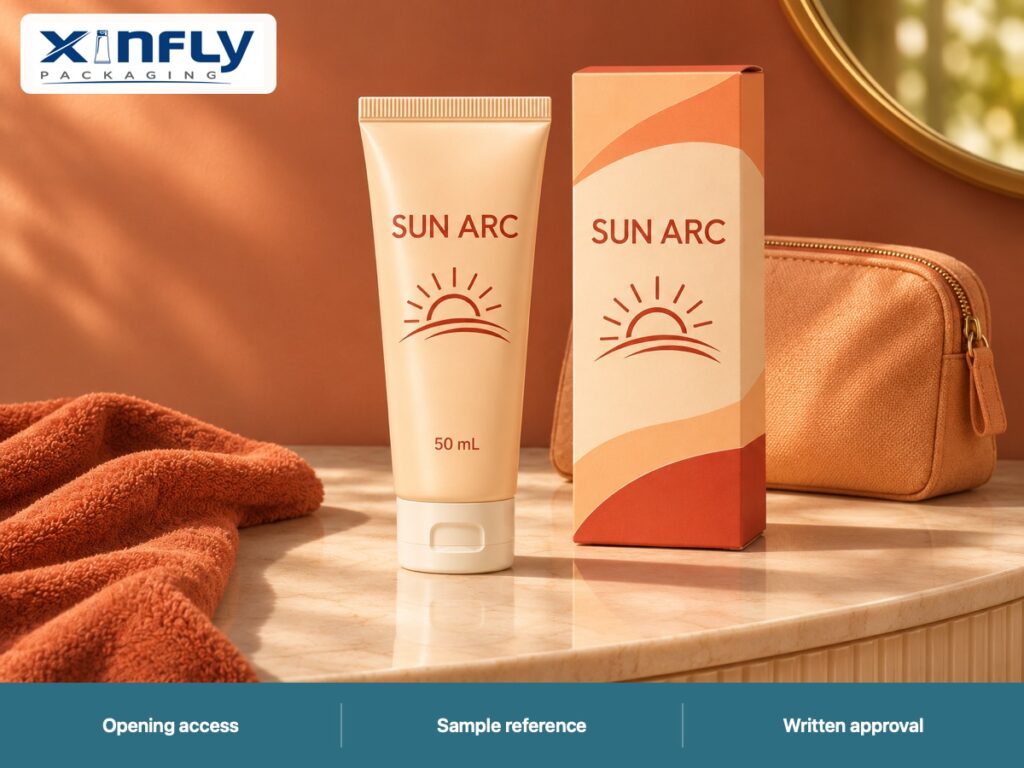
The SUN ARC illustrations show an apricot nominal 50 mL PE tube, molded shoulder, straight display tail, ivory flip-top and rust-red one-color screen printing. Its carton repeats the original sun-arc design. A separate foil disc in the detail image is a component illustration. It does not show a validated membrane size, bonding method or an approved seal fitted to that pictured assembly.
Check How the User Will Reach the Opening
Ask for a representative assembly that demonstrates the intended first-opening action. Does the closure need to be removed, does a tab remain accessible, or does the design use a different opening method? Have the supplier identify the intended action before evaluating ease of use. An accessible tab in a loose component photograph may not remain accessible in the finished pack.
Avoid choosing the tube, cap and membrane independently from unrelated samples. If one component changes, ask whether the opening review needs to be repeated. Keep the sample identity attached to the assembly, including any overcap, insert or other part relevant to access. That is more useful than approving the appearance of a foil circle alone.
Design a Peel Trial That Answers the Buying Question
Agree the Sample State and Observation Conditions
Identify whether the trial uses empty components or filled packs, the formula revision if relevant, the time after preparation and any agreed conditioning. Record how the sample was sealed and handled. The responsible technical teams should define the conditions and any required acceptance limits. This guide does not supply universal peel-force limits or machine settings.
Do not compare a fresh sample with another that has been stored differently and conclude that the membrane specification caused every difference. The sample record should make meaningful differences visible. If a condition is unknown, note that gap and decide whether another sample is needed before the buying decision can be closed.
Describe the Opening Observation Precisely
Record the action taken and what happened: whether a tab could be grasped, whether the membrane lifted as intended, whether material remained across the outlet and whether the user needed another tool. Keep observations separate from their causes. A difficult opening does not, by itself, identify whether the issue lies in the component, application conditions or assembly geometry.
Photographs can document the before-and-after state when the sample identity and viewing angle are consistent. Retain the physical reference where practical. If the project calls for instrumented testing, use a separately agreed method and record. A short user-opening exercise should not be relabeled as a laboratory integrity test after the fact.
| Record item | Observation or evidence to capture | Decision owner to identify |
|---|---|---|
| Assembly revision | Tube, closure and membrane references | Packaging owner |
| Preparation state | Empty or filled, preparation date and process reference | Supplier and filler as applicable |
| Opening access | Intended action and whether the access feature can be reached | Packaging and brand owners |
| Removal behavior | What detached, remained or obstructed the outlet | Packaging and quality owners |
| Separate integrity work | Required method, conditions and acceptance record | Responsible technical or quality owner |
| Approval scope | Accepted features, unresolved points and affected order | Authorized release owner |
Keep Opening Ease Separate from Other Claims
Do Not Turn a Successful Peel into a Broad Performance Claim
A membrane that opens as intended has answered one question. It has not established the finished sunscreen’s shelf life, SPF performance, compatibility, shipping behavior or every market requirement. Ask the product and quality teams which additional evidence is needed for the actual formula and assembly. Keep those decisions in their own qualification records.
Likewise, a visible membrane is not a reason to describe the package as sterile or to promise that every form of interference would be detected. Describe the feature and the evidence you have. Claims about protection or first-opening indication should stay within the demonstrated scope and receive the appropriate market review before they appear on artwork or sales pages.
Preserve the Evidence Scope When Components Change
If the supplier proposes a new membrane reference, cap or neck specification, compare it with the approved baseline. Ask the relevant teams which checks must be reopened. An unchanged tube color or capacity does not resolve a changed sealing interface. Record the first affected order or lot so receiving can match delivered goods to the correct release.
Request Samples and Commercial Terms on the Same Basis
Send Xinfly Packaging a Complete Purchase Brief
For custom sunscreen squeeze tubes, provide the intended assembly drawing, formula information needed for review, target market, quantity, decoration files and filling partner’s details. Add the proposed supplied state and opening objective. Use Xinfly Packaging’s sample development process to discuss what preparation and review work the project requires.
Ask the quotation to identify the membrane component and any application work separately where appropriate. Confirm sample availability, quantities, costs and timing for the actual proposal. A previous tube-only quotation should not silently become a commitment covering an extra component, another operation and a new approval round.
Release the Assembly with a Traceable Record
Connect the drawing, component references, opening observations and applicable qualification decisions to one release record. Ask how production and receiving checks will identify the approved assembly; Xinfly’s quality assurance information provides a starting point for that discussion. Use the project’s agreed criteria rather than treating this article as an inspection standard.
When requesting a proposal, send Xinfly Packaging your tube and sealing requirements together with the supplier/filler responsibility split. That turns “add foil” into a concrete conversation about the component, process and delivered state you actually need. It also gives competing quotations a consistent basis before price becomes the deciding factor.
Frequently Asked Questions
Does every sunscreen tube need a foil membrane?
This guide does not establish a universal requirement. Discuss the product, assembly, distribution plan and target market with the responsible teams. Identify the purpose of the proposed membrane and the evidence required before adding it to the specification.
Is an inserted liner the same as an already bonded seal?
No. Those descriptions identify different states. Ask the supplier what has been completed, what remains to be done and who performs the remaining operation. Record that state in the quotation, sample request and purchase order.
Can a flip-top tube use any easy-peel membrane?
Do not assume so. The neck, opening, cap arrangement, membrane and application route need to be reviewed together. Ask for an identified assembly demonstrating the intended opening action, and confirm that the proposed option is feasible for the project.
Does a good peel result prove the pack will not leak?
An opening observation alone does not establish that conclusion. Any required integrity or distribution checks need their own methods, conditions and acceptance records. Keep a successful opening trial within the scope of what was actually observed.
What should be referenced on a repeat order?
Reference the approved tube, closure and membrane specifications, artwork and relevant process or release records. Identify any proposed change before supply. Do not use only a product name and capacity when the sealing assembly was an important part of the original approval.
Conclusion
A useful foil-seal purchase brief identifies the assembly, supplied state, application owner and intended opening action. Review representative samples, record observations precisely and keep technical claims within the evidence available. With those decisions documented, Xinfly Packaging and your filling partner can quote and prepare the same project instead of filling in different assumptions around two words: “foil seal.”