Published: .
A lotion buyer opens a delivery carton and notices an unfamiliar odor. It is tempting to blame the recycled-content tube immediately. Yet the carton, protective bag, cap, printing and storage history are all present in that first impression. A useful supplier discussion needs a more specific record than the package smells different.
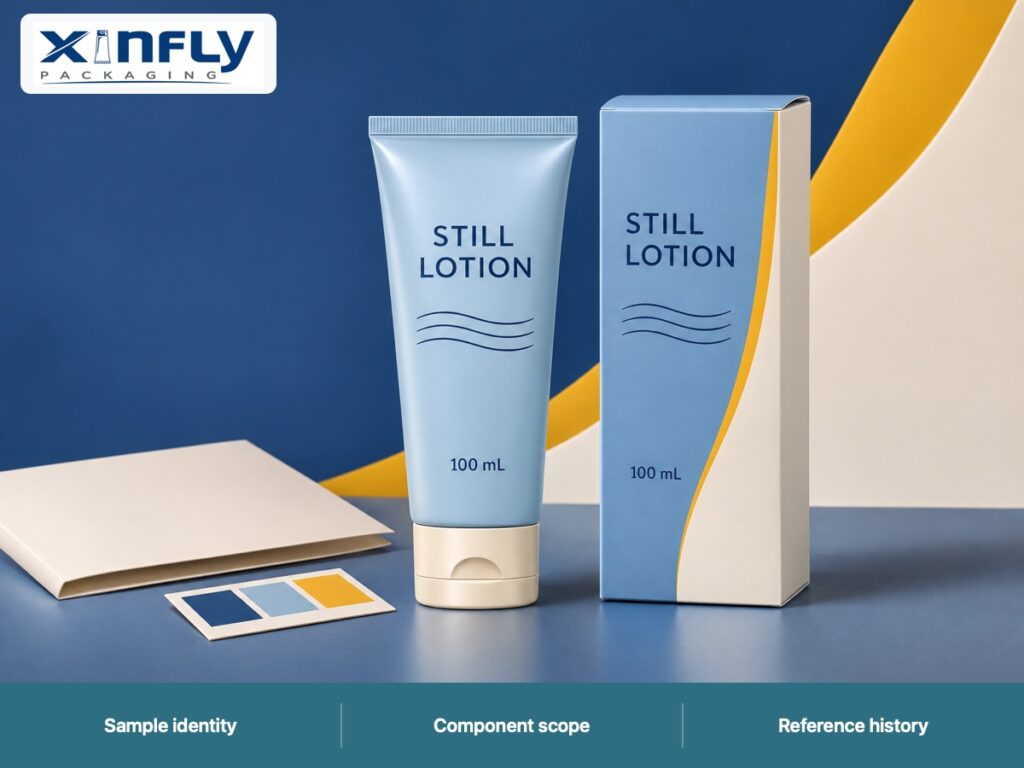
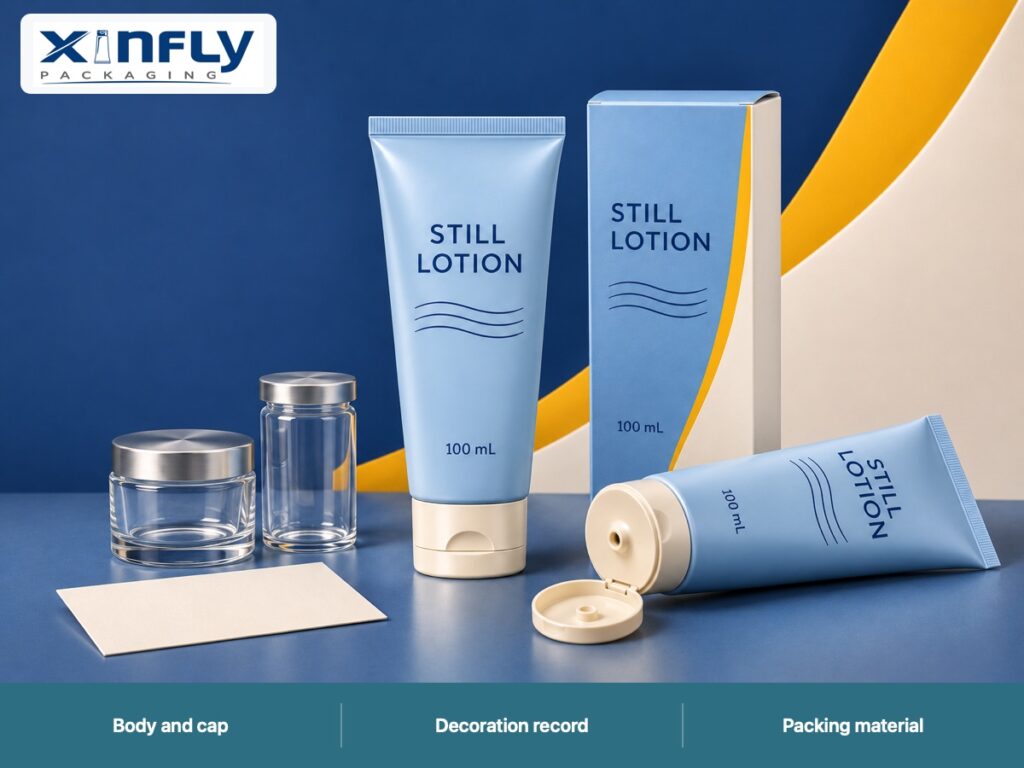
A PCR lotion tube odor comparison helps organize that record without turning a sensory observation into a chemical or compliance conclusion. The illustrated STILL LOTION concept has a muted-blue 100 mL PE body proposed for a PCR-material project, molded shoulder, straight heat-sealed tail, ivory flip-top and navy one-color screen print. Its designed carton repeats the name and wave motif. No PCR percentage, fragrance or odor-performance claim is printed on it. The illustration does not establish material content or a test result. Begin with the PCR cosmetic tubes material brief, then ask the quality team to define the sample comparison needed for the actual lotion project.
State the Decision Before Assessing Samples
Decide What the Brand Needs to Learn
Are you reviewing an empty component at receiving, investigating a changed shipment, or comparing the filled product after storage? Those are different questions. Write the question first and identify the stage at which the observation occurred. An odor noticed when opening an outer shipping bag is not automatically an observation about the lotion inside a finished tube.
Ask the brand's product and quality teams to define the relevant sensory expectations and the appropriate assessment method. An unscented product brief, for example, can make an unfamiliar packaging note commercially important, but the packaging team should not invent a fragrance claim or a universal sensory limit. Keep the actual formula and intended product positioning in the discussion.
Separate Sensory Review From Other Evidence
An odor comparison can document a perceived difference under defined conditions. It does not identify the substances responsible or replace material, compatibility or market-compliance work. Keep those evidence requests separate. If further investigation is needed, have the responsible specialists choose it from the actual observation and material information.
Do not label a sample chemically acceptable or unacceptable from the sensory note alone. The purchasing record should state what was observed, what decision it supports and which questions remain open. That distinction helps a supplier respond with relevant information instead of debating an unsupported conclusion.
Record the Sample's History
Identify when the parts were made, packed, received, opened and assessed where that information is available. Record storage and shipping conditions that the supplier can document. If one sample has been open on a desk for weeks and another is freshly unpacked, the difference in history needs to be visible in the comparison.
| Sample group | What to identify | Question it can help organize |
|---|---|---|
| Outer packaging | Carton, bag or protective material | At which packaging level was the first difference noticed? |
| Empty body | Material, color, structure and lot | Does the observation remain with the identified body sample? |
| Cap and assembly | Cap source and assembly revision | Are separate components being confused in the discussion? |
| Decorated pack | Ink, finish and production reference | Does the compared sample represent the final decoration? |
| Filled pack | Formula, fill and storage record | Is this a product-package question requiring further review? |
Build Comparisons That Answer One Question
Keep the Assembly References Clear
Ask the supplier to identify the proposed body construction, PCR grade or blend description, shoulder, cap, color and decoration. Keep the actual recycled-content evidence in the material file. A sensory observation cannot establish the percentage or location of PCR in a multilayer structure. Nor does a visible fleck establish the source of an odor.
For custom PCR cosmetic tubes, request samples representing the quoted construction. If the first sample uses a stock body, another cap or temporary decoration, record those differences. Decide which comparisons remain meaningful before using the result to select the production assembly.
Use a Suitable Reference Sample
An earlier accepted lot can be a useful reference if it has a documented identity and relevant storage history. A proposed alternative can also be compared, but keep differences in resin, colorant, cap, print and packaging visible. Do not call it a material-only comparison if several components changed together.
Ask quality to define how references are retained and prepared. The same handling and assessment conditions should apply to comparable groups. A reference sample that has been repeatedly opened may be less useful than the buyer expects. Label its purpose and limitations rather than treating its age as proof of stability.
Include Packaging Materials Where Relevant
If the first observation occurred in a shipping carton or bag, retain those materials with the identified tube sample. Ask whether the supplier can provide corresponding unused materials or production records for comparison. Do not discard the outer pack and then ask the tube factory to explain an impression that can no longer be reproduced.
The empty glass vessels in the STILL LOTION illustration are planning props, not evidence of a completed assessment. In a project, ask the quality team to specify appropriate sample containers, preparation and conditions for the chosen method. Arbitrary containers and inconsistent preparation can add another variable to an already unclear question.
Make the Assessment Record Consistent
Agree the Method With Qualified Reviewers
Define who will assess the samples, how they will be identified and what conditions apply. Follow the quality team's appropriate handling and assessment procedure for the materials involved. Purchasing can organize sample identity and supplier questions without improvising exposure conditions or a laboratory method.
If several reviewers are involved, use a consistent questionnaire and keep their observations separate initially. A group conversation can be useful later, but an early confident description may influence the rest of the discussion. Record the method's limited purpose and avoid describing a small internal exercise as a representative consumer study.
Use Neutral Sample Identification
Where the agreed method allows, code comparable samples so the reviewer is not told which is the preferred supplier or earlier accepted lot. Keep the code key with the coordinator. This can help the team discuss the observation itself rather than the story attached to a PCR label. Record any circumstance that prevents a coded comparison, such as an obvious color difference.
Ask reviewers to describe location and character in plain words rather than diagnose the source. An observation such as a difference noticed on first opening the protective bag is more actionable than a statement that all recycled material has the same problem. The latter generalizes beyond the actual sample and evidence.
Keep Conditions and Timing Visible
Record preparation, assessment time, container and storage conditions according to the agreed method. Do not compare one group immediately after unpacking with another after deliberate airing unless that difference is the question being studied. If a follow-up stage is planned, keep it distinct in the results.
Investigate a Difference Without Guessing Its Cause
Ask for a Component and Process Review
Send the supplier the sample map and actual observations. Ask which material, color, printing, packing or storage changes occurred between the identified lots. A clear request for the change history is more useful than asking for a general promise of odor-free packaging. It also gives purchasing a way to distinguish known changes from speculation.
For PCR cosmetic packaging, confirm whether the material evidence and sensory samples refer to the same structure and lot. A general recycled-content declaration does not explain every processing observation, while a sensory comparison does not replace that declaration. Keep both records connected through the assembly reference.
Review Decoration as Its Own Variable
If decorated and undecorated samples are compared, identify the ink, finish, timing and handling of each. Confirm the tube printing process proposed for the final body. Do not conclude that decoration is the cause merely because the printed sample differs; ask what else changed and which follow-up would isolate the question.
If the supplier proposes a different coating or printing route, request an identified sample and updated specification. Review appearance, handling and the relevant product-package work alongside the sensory question. An attractive color match does not establish equivalence in every other respect.
Keep Formula Compatibility in the Correct Program
A filled lotion pack introduces the formula and filling process. Have the product and quality teams define the appropriate compatibility and storage work. Record the actual formula, fill, body, cap and conditions. A difference in a filled product should not be attributed to PCR content without an investigation that supports that conclusion.
Likewise, an empty-tube observation does not establish how a finished product will behave over its shelf life. Retain the stage-specific result and use it to decide the next evidence request. This prevents a small receiving check from becoming an unsupported long-term performance statement.
| Record | Detail to keep | Procurement question |
|---|---|---|
| Observation | Sample ID, stage, location and method | Can the supplier understand the reported difference? |
| Comparison | Reference and controlled variables | What does the comparison actually isolate? |
| Change history | Material, decoration, cap and packing revisions | Which changes deserve further review? |
| Follow-up | Proposed method, owner and sample identity | What evidence will resolve the open question? |
| Release decision | Accepted scope and remaining conditions | What is approved for the next order? |
Put the Outcome Into the Purchasing Record
Define the Agreed Release Basis
Ask quality to state which observations and other evidence support the release decision. Retain the sample references, method and supplier response. If additional work remains, identify it and its owner. A purchasing approval should not hide an unresolved product-package question behind a general note saying the tubes look fine.
Use the supplier's quality assurance process as a discussion route for the records relevant to the actual assembly. Do not assume every batch has undergone a particular sensory or analytical test unless that work is documented. Ask which checks form part of the quoted scope and which require a separate agreement.
Preserve Meaningful References for Reorders
Retain accepted sample sets according to the quality team's procedure, with the material, cap, decoration and packing revisions identified. Agree what information the supplier will provide when any of those elements changes. A repeat order can then refer to a specific accepted configuration rather than a vague instruction to match the old sample.
When receiving a later shipment, use the same defined question and appropriate method. If a difference is reported, record it before mixing lots or discarding the relevant outer packaging. That makes the next supplier conversation more precise and reduces the chance of attributing the issue to the wrong component.
Send Xinfly Packaging a Structured Brief
Share the lotion type, intended fill, proposed material construction, cap, decoration, markets and the exact stage at which an observation occurred. Ask for identified alternatives through Xinfly Packaging's sample development process. Send the packaging team your PCR lotion brief with the sample map and the evidence your quality team needs. Request itemized sampling or investigation scope rather than a blanket marketing promise.
Frequently Asked Questions
Does an unfamiliar odor identify the tube resin as the source?
No. Record where and when it was noticed, retain relevant components and packaging, and ask for a comparison and change review that can address the actual observation.
Can a sensory check verify recycled-content percentage?
No. Keep material-content evidence tied to the specified components. A sensory observation does not establish how much PCR is present or which layer contains it.
Should an accepted older sample always be the reference?
Use it only with a known identity, history and defined purpose. Ask quality to decide whether its storage and handling make it suitable for the proposed comparison.
Can a small comparison establish compliance or shelf life?
It does not replace those programs. Define the separate material, product-package and destination-market evidence required for the actual order.
What should accompany a supplier investigation request?
Provide sample IDs, lot and assembly references, packaging history, assessment method, observations and a suitable retained sample. Identify the decision the next investigation needs to support.
Conclusion
A PCR lotion tube odor comparison is most useful when it narrows a purchasing question. Identify the sample stage, keep component and packaging histories visible, use a quality-defined method and separate sensory observations from other evidence. Xinfly Packaging can discuss the proposed structure and sample route when the brief explains the actual lotion pack and the open question your team needs to resolve.