Hotel buyers rarely purchase a shampoo tube in isolation. It sits on a vanity, inside a paper tray or amenity kit, beside soap and lotion, and often under a housekeeping schedule that leaves little time for fiddly packaging. A tube that photographs well but topples in the tray, opens during restocking or hides the product name is the wrong size for the job. How do you catch that before ordering thousands of matching units?
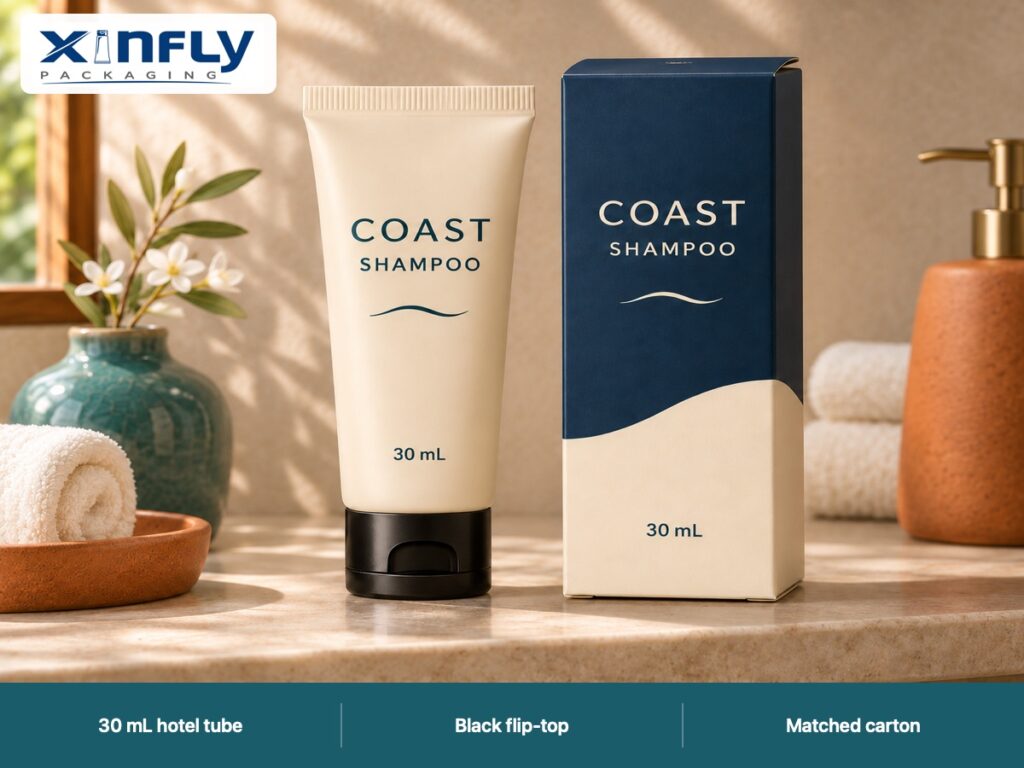
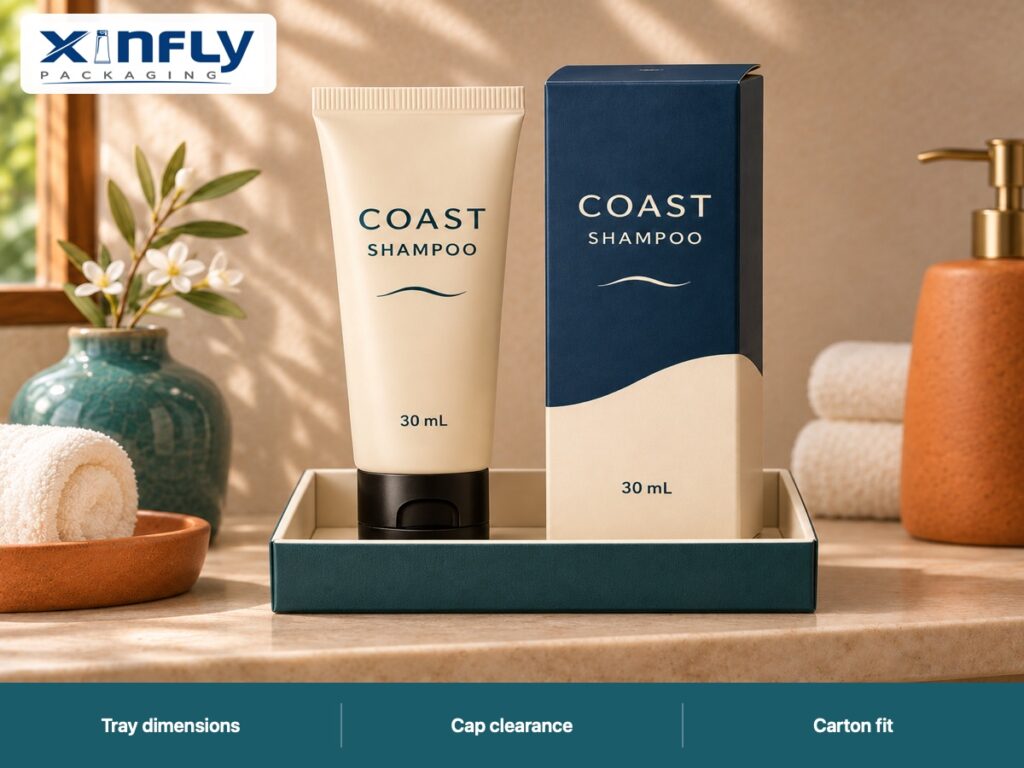
Use this 30 mL hotel shampoo tube amenity tray fit check to approve the assembled pack in its real room setting. For buyers comparing 30 mL squeeze tubes for hotel amenities, the tray is part of the specification. The pictured example is an extruded PE tube with a molded shoulder, straight heat-sealed tail, black hinged flip-top, dark teal one-color screen print and a navy-ivory printed carton. The image is an illustration, not an existing hotel order. See Xinfly Packaging's hotel amenities tubes page for the commercial range.
Map the Guest-Room Presentation
Decide Which Items Share the Space
Write down the entire amenity set: shampoo, conditioner, body wash, lotion, soap, dental kit and any carton or sleeve. The tray opening and shelf depth have to work for the set, not just one tube. Put real samples side by side and identify what the guest should see first. If every item shares a shape, make the product name readable through color and printing. A dark cap on an ivory shampoo tube can help distinguish it, but the final room set should be evaluated together.
Measure the Finished Tube, Not the Blank
A 30 mL nominal fill does not fix the external dimensions. Request body diameter or width, finished length after filling and sealing, cap footprint and tail width. Check a sealed sample rather than a flat unfilled tube. Ask the filler for its intended fill and seal method; both affect the final length and how a tube stands. If the tray uses die-cut openings, measure the actual folded tray too. Printed board thickness and creases change the opening.
Include the Carton in the Dimension Stack
If the shampoo is individually boxed, note the box's outside dimensions after folding. The carton can make a compact tube taller and wider, and it may change how the item is removed from a tray. Use the carton artwork revision that belongs with the tube. The COAST SHAMPOO illustration repeats the product name and wave line on both components; a blank box would not test guest recognition or print alignment.
| Item | Measure on the finished sample | Why it matters |
|---|---|---|
| Tube | Overall length, body width, cap footprint, tail width | Tray opening and cap clearance |
| Carton | Outside width, depth and height after folding | Shelf and tray fit |
| Tray | Slot opening, wall height, spacing between items | Avoids forced insertion and hidden labels |
| Shelf or vanity | Usable depth and height under any fixture | Confirms the guest can see and reach the tube |
| Amenity kit | Insert and outer-pack dimensions | Checks transport and housekeeping handling |
Test Housekeeping Handling
Watch Insertion and Removal
Ask the hotel or brand team to load the tray the way staff will do it. Do they push the tube down by its cap? Does the tail catch the board? Can they remove one tube without dragging the neighbor along? Repeat with the real mix of items, not an empty tray. Count damaged cartons and note cap movement during a short, agreed handling trial. If a design requires staff to rotate every tube to show the print, that requirement belongs in the operating brief.
Check the Flip-Top in a Tight Slot
A black flip-top may look neat against a pale tube, but a snug slot can press against the thumb recess. Confirm the lid can stay closed as the tube enters and leaves the tray. If a carton sits around it, check both the board flap and tray wall. Test the flip-top cap with wet hands if the brand expects use in a shower. Record whether the lid is easy to locate and whether it closes cleanly after dispensing the actual shampoo formula.
Inspect What the Guest Sees
View the assembled tray from standing height and from the bathroom mirror. Can you read SHAMPOO without lifting the tube? Is the print facing the room, or the wall? Do the product names distinguish shampoo from conditioner if colors are similar? Use the actual printed samples. A digital artwork file cannot show the way curvature and reflections affect legibility. The printing design guide gives the technical starting points for placing text on the tube's printable area.
Keep the Seal and Code Visible for Quality Checks
The tail seal and batch code are needed for inspection even if they face away from guests. Ask the filler where it will code the tube and check whether a carton or tray rubs that area. A wrinkled seal may be cosmetic or may call for a quality review; inspect the actual filled tube rather than inferring strength from a photograph. Define what the supplier must report for seal defects and how the hotel or distributor will isolate affected stock.
Check the Bathroom Conditions
Try the Tube on a Wet Surface
Place the filled sample on the actual or representative vanity material. A cap-down tube may stand differently when water is present or a guest opens the lid. Check whether it slides, tips or leaves the printed face against a damp surface. Repeat with the proposed carton only if the carton is intended to remain in the room during use. The goal is not to claim universal waterproof performance; it is to understand this room design.
Give the Guest a Practical Dispensing Trial
The hotel selects a shampoo viscosity and fragrance with its formulation supplier. Use that actual formula, fill and outlet in a guest-style trial. Ask someone to open the cap, dispense a normal amount and close it without instructions. Notice whether a thick shampoo demands squeezing that bends the tube against the tray, or whether product pools beneath the lid. Keep observations about formula flow separate from observations about package fit.

| Check | Evidence to record | Action if it fails |
|---|---|---|
| Loading | Staff insertion and removal, tray contact points | Revise slot size or package orientation |
| Guest recognition | Readable product names from normal room position | Adjust artwork contrast or facing direction |
| Bathroom use | Wet-hand opening, dispensing and closure | Review outlet, cap and tube handling |
| Packing and storage | Carton scuff, cap movement, seal condition | Change secondary pack or handling method |
| Reorder control | Tube, cap, carton, tray and artwork revisions | Repeat affected checks after a component change |
Make the Supplier Quote Comparable
Quote the Complete Amenity Configuration
Send the same list of five components to every supplier: tube body, shoulder, cap, print and carton or tray. Specify which items the supplier quotes and which the hotel provides. Ask whether the sample uses the intended cap mold and printed board. A quote for empty shampoo tubes is not comparable with one that includes printed folding cartons and assembled tray checking. The broader hotel shampoo tubes and bottles guide helps decide the overall format; this check handles the 30 mL tube's physical room fit.
Control Visual Consistency Across Products
For shampoo and conditioner, agree on the same label hierarchy, color standards and position of the product name. If the hotel wants different tube colors, ask for actual colored samples rather than approving a screen rendering. Print process, substrate and lighting can change how a color appears. Keep one approved set under normal room light and one in the purchasing file. When the next shipment arrives, compare the whole set, not a lone shampoo tube.
Share the Room Drawing With Xinfly Packaging
Send tray dimensions, shelf photographs, intended fill, formula type, preferred cap, artwork and carton dieline. State the product mix and who will fill and assemble it. Ask for the differences between early samples and production parts in writing. For a fit sample and quotation, send the hotel amenity brief to Xinfly Packaging. The supplier can then discuss the actual configuration rather than guessing from a generic “30 mL hotel tube” request.
Test a Full Carton of Amenities, Not a Single Display
The room tray is only one stage. A hotel shipment may contain individual cartons inside a larger case, or tubes loose inside an amenity kit. Ask the logistics and housekeeping teams how units arrive and how many times they are handled before they reach a room. Pack a full representative case, then inspect cartons from the top, middle and bottom after the agreed handling trial. Note crushed corners, shifted caps and unreadable product names. A flawless one-item display can give false confidence if the transport pack is wrong.
Make Replenishment Easy to Audit
Hotel buyers reorder by product name, scent or formula, and packaging revision. If shampoo and conditioner use nearly identical print, a busy stockroom can mix them. Place the product name where it can be read on the tube and any carton in a packed case. Confirm how the lot code appears and where receiving staff will find it. The code should stay readable after tray loading and normal bathroom handling. This is a practical traceability decision, separate from the guest-facing design.
Agree on a Room Trial Before Rollout
Choose a small set of representative rooms or a full-scale mock room. Place the approved filled set in each intended position and view it under the actual lighting. Have staff replenish it in their normal sequence, then ask a few users to identify and open the shampoo without coaching. Record specific friction points, such as a hidden name, hard-to-reach cap or carton that catches the tray wall. A room trial can change the tray or art placement before a large order, while the physical tube specification remains stable.
Frequently Asked Questions
Is 30 mL the outside capacity of the tube?
It is a nominal fill target in this example. Outside dimensions vary by tube diameter, shoulder, cap and finished seal. Request the drawing and measure the filled assembly.
Should shampoo and conditioner use identical caps?
They can if the formulas, outlets and user experience support it. Test each actual formula and name the component revision in the set specification.
Can I approve a tray using empty samples?
Use them for an early layout only. Approve the tray with finished filled, sealed and printed samples, because dimensions and handling can change.
Do I need individual cartons in every room?
No. The hotel may choose a tray, sleeve, carton or unboxed presentation. Test the selected format in the actual room and supply chain.
What if the product name is hidden by the tray wall?
Change artwork placement, tube orientation or tray geometry and make a new physical sample. Do not rely on an instruction telling staff to position every tube perfectly.
Conclusion
The right 30 mL hotel shampoo tube fits a room workflow as well as a drawing. Measure the finished set, watch staff load it, make the product name visible and test the filled tube in bathroom use. Keep the accepted tube, carton and tray revisions together so a future reorder reproduces the result.