A hand cream flip-top can pass a visual inspection and still frustrate the first person who opens it. Perhaps the thumb recess is hard to find, the hinge feels too stiff after a cold commute, or the lid clicks shut only when someone presses it twice. Those are small details on a drawing and large details in a user's day. A buyer ordering a pocket-size hand cream needs a test that captures the difference.
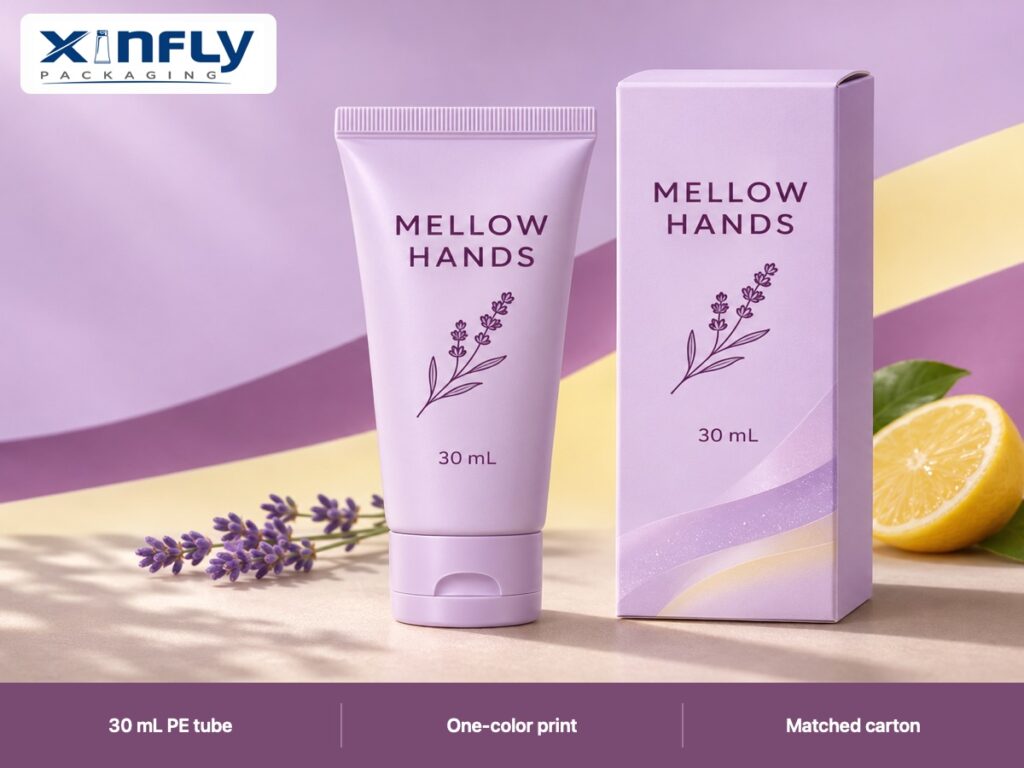
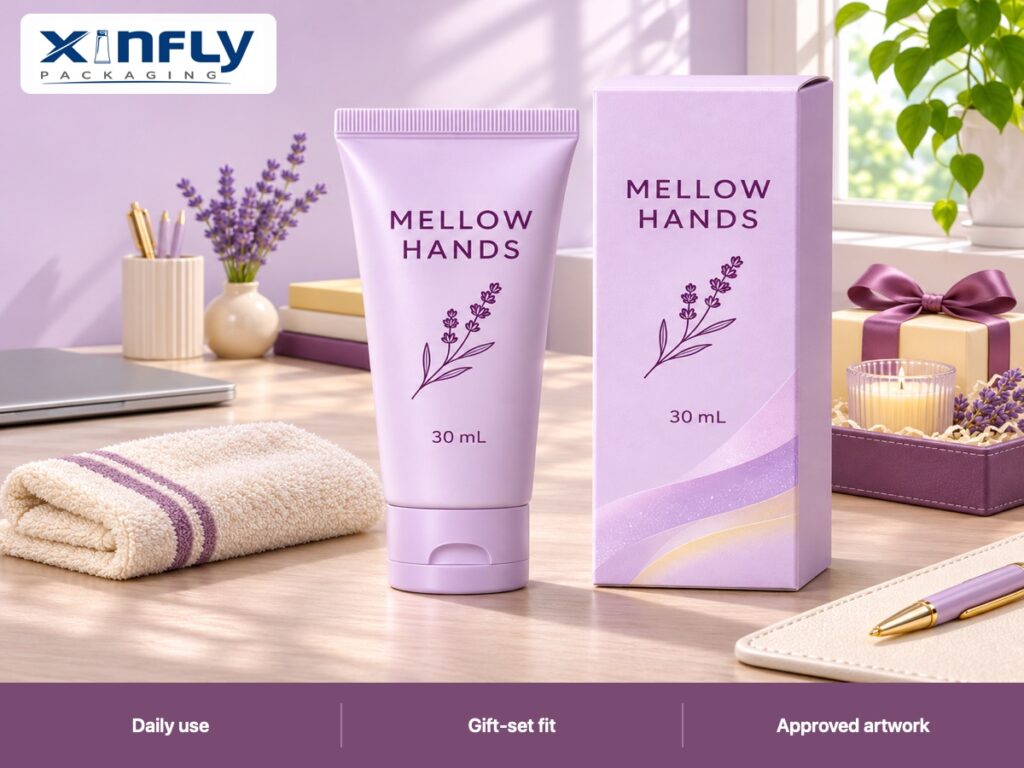
This 30 mL hand cream flip-top opening check covers the cap, shoulder and printed tube as one assembly. Buyers comparing 30 mL hand cream tubes should treat closure feel as part of the hand cream tube packaging specification. The illustrated configuration is an extruded PE tube with a molded shoulder, straight heat-sealed tail, lavender hinged cap, plum one-color screen print and a matching printed carton. It is a design illustration, not a stock item or test record. Explore the wider range of hand cream tubes before selecting the configuration for your formula.
Start With the User's Opening Motion
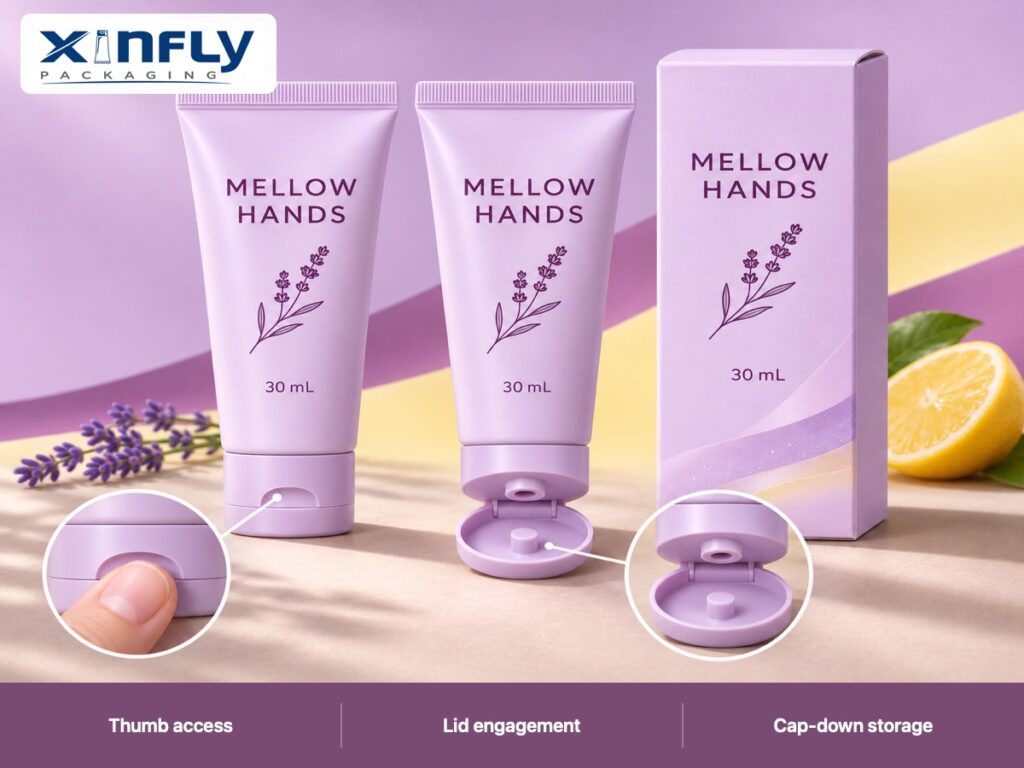
Observe Where the Thumb Naturally Lands
Hand the filled, closed sample to several intended users without pointing at the opening tab. Ask them to open it as they would at a desk, in a restroom or while traveling. Note whether they rotate the tube, pry at the hinge or squeeze the body while opening. These actions can reveal an orientation problem that a side-view drawing misses. Photograph the printed front and the thumb tab together. If a brand expects front-facing display, the tab position has to make sense in that orientation.
Compare Dry and Damp Hands
Dry-hand opening is the easy condition. Cream residue, a damp palm or a freshly washed hand may change grip. Define which condition reflects the product's actual use and test it on separate identified samples. Do not wet every sample and then claim a clean, as-delivered result. Keep the cap externally clean at the start of each trial and record any deliberate use of product around the outlet.
Define an Opening-Force Target for Your Project
There is no useful universal number for every flip-top design. Ask quality and the target user group to agree on a force or usability acceptance method before comparing alternatives. If a force gauge is used, specify the contact point, direction and speed of the push. A fingertip trial captures usability; a gauge captures a repeatable physical measure. Both can be useful, but they answer different questions.
| Observation | How to make it repeatable | Buyer decision |
|---|---|---|
| First thumb placement | Same front-facing orientation and new sample | Is the recess easy to find? |
| Opening motion | Same contact point and hand condition | Does the lid open without prying at the hinge? |
| Closing engagement | Press once at the agreed point | Does the lid visibly and audibly seat? |
| Residue at outlet | Distinguish first opening from later use | Does normal use interfere with closure? |
| Cap alignment | Compare tab to approved front print | Does the visual and functional orientation match? |
Check the Closure After Repeated Use
Set a Cycle That Resembles a Real Routine
A hand cream used twice a day and one used repeatedly at a workplace are different use cases. Choose a cycle count and pause pattern with the brand's quality team, then record it. Inspect the hinge and latch at intervals. Look for whitening, a changed hinge position, a lid that begins to sit proud or a plug that no longer contacts the outlet as before. If the cap is changed, repeat the relevant checks with the new revision instead of assuming equivalence.
Separate Lid Feel From Dispensing Feel
It is easy to blame the cap for a hard squeeze. Test the opening action on an empty assembled tube, then dispense the intended formula from a filled one. A narrow outlet and a viscous formula can require more body pressure even when the lid opens normally. Record the formula, fill mass and temperature. If the sample spurts after a squeeze, check the outlet and air space as well as the cap. The flip cap tubes range shows available closure formats, but the exact outlet and part drawing still need approval.
Look for Closure Problems After Storage
Store identified filled samples cap down, cap up and sideways if those positions match distribution or daily use. Photograph any residue before wiping it. Residue beneath the lid may be product left after dispensing; residue at the cap base may implicate the shoulder connection. Repeat a suspicious result with a clean sample in the same orientation. A closed lid is only one path in the assembly, so describe the location rather than calling every mark a “cap leak.”
Check the Tail as a Separate Interface
The straight heat-sealed tail should be assessed independently of the lid. If the filled tube is squeezed during a gift-box trial, inspect the tail for product or a distorted seal. Ask the filler to record its seal settings and any contamination on the seal area. A good cap cannot compensate for a weak tail seal. This is why acceptance criteria belong to the complete filled package.
Bring the Carton Into the Test
Check the Cap Against the Carton Flaps
The illustrated lilac carton has MELLOW HANDS and the same sprig motif as the printed tube. In a real project, fold a carton made from the proposed board and put the sealed tube inside. If the cap presses against a tuck flap, see whether the lid moves during insertion or removal. Check how the box opens: a customer may grasp the cap to pull out the tube, creating a different load from a bench opening trial.
Keep Artwork and Handling Consistent
Ask for a printed sample with the final lavender cap and one-color plum artwork. Check that a gripping thumb does not cover important instructions or abrade the ink in normal use. Confirm the chosen tube printing method on the actual PE body and finish. The artwork proof, cap color approval and physical opening test are three separate records. Combining them in a single “looks good” message leaves too much open to interpretation.
| Stage | Evidence to retain | Question before release |
|---|---|---|
| Assembled sample | Body, shoulder and cap revisions; front-view photo | Is this the quoted configuration? |
| First opening | User observations and optional gauge method | Is the tab accessible without unusual force? |
| Repeated use | Cycle log, hinge and latch photos | Does closing action remain acceptable? |
| Filled storage | Formula, fill, orientation and residue location | Is the observed result within agreed limits? |
| Printed carton | Folded sample, insertion and removal observations | Does the board avoid pressure on the lid? |
Write an RFQ That Preserves the Result
Name the Parts, Not Just the Capacity
An RFQ for “30 mL hand cream tube” omits the shoulder, neck, cap mold, outlet size and seal. Include drawings or reference photos and identify the desired resin construction, color, artwork, finish and carton. Ask who supplies the cap and whether it comes from the same tool as the approval sample. If a bidder suggests a substitute cap, ask for an identical filled-product trial. Compare like for like in the quotation.
Ask for Change Control on the Closure
Cap material, colorant, mold maintenance or hinge geometry can affect the opening feel. Agree on which changes require a new sample and who signs it. Keep an approved assembled tube and carton from the first production lot. When the next delivery arrives, compare tab orientation and latch action before relying on the earlier approval. The sample development process is a useful route for resolving a changed part before an order is committed.
Send a Clear Brief to Xinfly Packaging
Share the hand cream formula type, intended fill, proposed tube dimensions, cap preference, front-artwork orientation, carton design and the use conditions you want to test. Ask Xinfly Packaging to identify any stock components used in the first mockup and what will differ in production. For a quote and a matched sample, send the packaging team your project details. Do not treat the illustrated MELLOW HANDS design as an existing customer line.
Build a Small Comparison Panel
When two closures seem acceptable, run a paired comparison rather than asking people whether they “like” each one. Give each participant both coded samples in alternating order. Use the same fill and body stiffness, and ask them to open, dispense and close each pack. Record whether they found the tab, whether the lid seated on the first attempt and where they placed their fingers. Ask for one short comment about the reason for a preference. A handful of structured observations can reveal a recurring handling issue; it should not be presented as a statistically representative consumer study.
Check the Closure After a Packout Trial
If hand cream is sold in a gift set, pack the tube in the actual insert and shipper arrangement. Remove it and check the latch before asking a user to open it. A snug paper edge can press the lid during assembly or transport. Compare that result with a loose control tube. If the carton or insert caused the problem, adjust the secondary pack before changing the cap. The design decision should follow the observed contact point, not an assumption that the closure is weak.
Define What Purchasing Receives From Quality
At approval, purchasing should receive a short release document with the accepted cap drawing, opening method, sample identification, print version and list of tests performed. Include open issues and who will resolve them. If a supplier sends a revised cap sample, quality can point to the affected checks instead of restarting every discussion. This also helps a second buyer understand why a particular closure was chosen months later, when the original project team is unavailable.
Frequently Asked Questions
Is a louder click proof that a cap is more secure?
No. Sound can help a user notice engagement, but compare the actual seating, contact surfaces and filled-pack behavior. Set the acceptance method for the specific cap design.
Should I measure opening force on an empty or filled tube?
Use both for different purposes. An empty assembled tube isolates the lid action. A filled tube shows what happens when the body is handled and product is dispensed. Label the results separately.
Can the printed front determine cap orientation?
Yes, if front-facing opening matters to the brand. Specify the relationship between artwork and thumb tab, then confirm it on assembled production-representative samples.
What if the cap works before storage but feels different later?
Record the storage condition, duration and part revision. Repeat with a matched control, then ask the supplier and quality team to investigate material or assembly changes before approving the order.
Must every hand cream tube use a flip-top?
No. Screw caps and other closures may fit some formulas, channels and price points better. Compare actual user handling and filled-pack performance for the chosen configuration.
Conclusion
A useful 30 mL hand cream flip-top opening check begins with a real hand and ends with a controlled purchasing specification. Watch the first opening, inspect repeated use, separate lid behavior from dispensing and verify carton contact. Then retain the approved tube, cap and artwork versions so the next lot can be judged by the same standard.