A beautiful 30 mL sunscreen tube can look perfectly travel ready until the carton is closed or the tube is pressed against the zipper of a pouch. That is when the cap catches, the carton bulges, or the printed body rubs against an insert. The packaging buyer needs an answer before ordering tooling or approving a retail pack: will the **finished, filled tube** fit the way customers actually carry it?
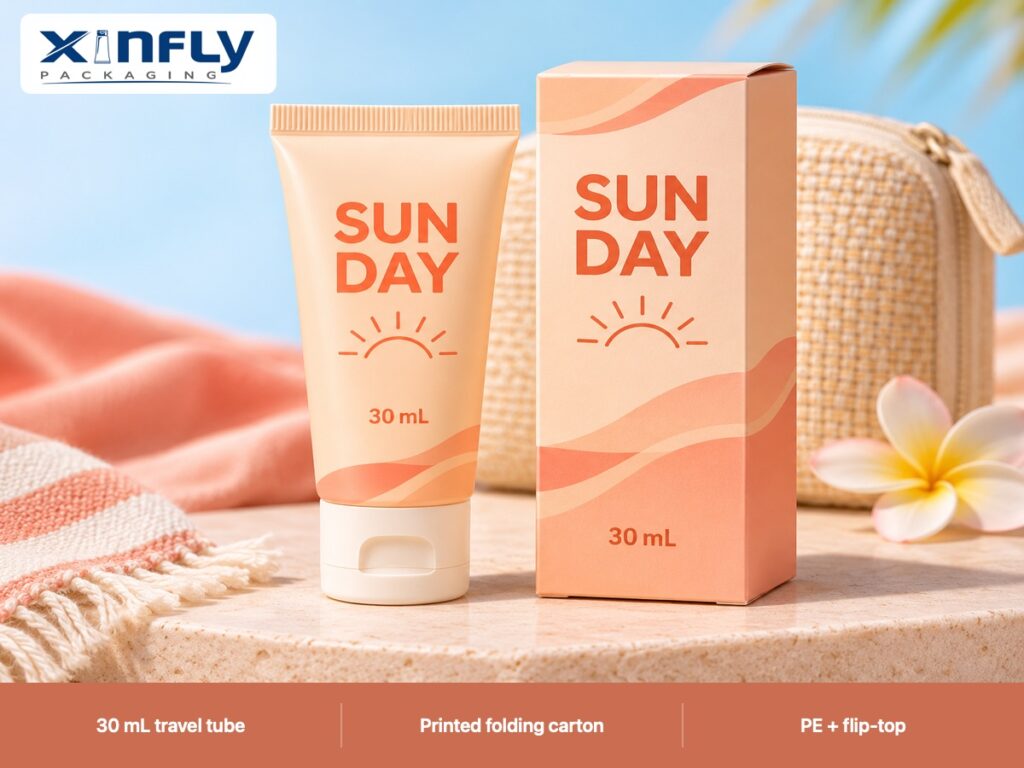
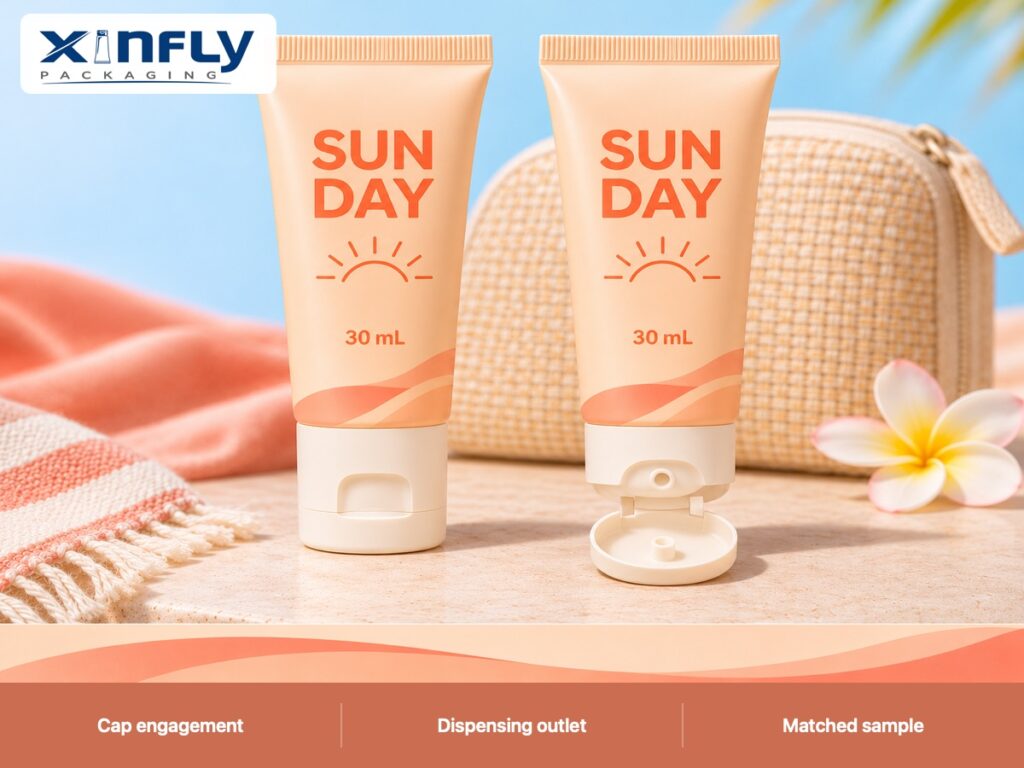
This guide turns a 30 mL sunscreen tube pouch and carton fit check into a repeatable purchasing decision for brands ordering 30 mL travel size sunscreen tubes. The illustrated example is an extruded PE tube with a molded shoulder, straight heat-sealed tail, hinged flip-top, coral one-color screen print and a matching printed carton. It is a format illustration, not a stock SKU or test result. For available structures and specifications, use Xinfly Packaging's travel size sunscreen tubes page as the commercial starting point.
Define the Exact Pack That Must Fit
Separate Nominal Capacity From Finished Dimensions
“30 mL” describes the intended fill, not the outside size. Two tubes with the same nominal volume can differ in diameter, body length, shoulder profile and cap height. Ask the filler which fill mass and headspace it plans to use, then request a drawing with the tube's **finished sealed length**. Measure after the tail has been sealed and trimmed. An unsealed tube blank is the wrong reference for a carton dieline.
Record Every Component Revision
Identify the body resin and wall construction, shoulder and neck, cap cavity, print proof, seal style and carton dieline by revision. The exact flip cap tube configuration matters because a hinged lid may project beyond the cap skirt when opened. A lid that sits flush in a photograph may also have a different thumb recess from the production part. Keep a sample of the assembled configuration beside the drawing.
Ask for a Production-Representative Sample
If an early tube uses a temporary white cap or a digital print, mark it as a geometry sample. It can help set the broad carton size, but it cannot approve cap color, latch feel, print durability or registration. Request production-representative samples before locking the printed folding carton and pouch insert. Put the status of each sample on the approval sheet so nobody later mistakes a mockup for the signed production reference.
| Measurement | Take it from | Why the buyer needs it |
|---|---|---|
| Finished overall length | Filled and sealed tube with cap fitted | Determines carton height and pouch clearance |
| Maximum body width | Printed tube at the widest point | Sets carton side panels and insert opening |
| Cap footprint | Closure at its widest and tallest point | Reveals lid interference and stand-up behavior |
| Tail width and trim | Finished heat seal, including code area | Determines corner clearance and rub points |
| Carton inside dimensions | Approved folded carton, not a flat dieline | Shows actual free space around cap and seal |
Test the Carton Before Judging the Artwork
Put the Tube in Its Intended Orientation
Decide whether the tube sits cap down, tail down or sideways in the carton. Then pack it that way repeatedly. Look for a closure pressing into a tuck flap or a seal catching on the bottom fold. Close the carton without forcing it; force can hide a sizing problem by bowing a panel. Photograph each side of a packed carton and note where the tube contacts the board. Those marks tell a supplier which dimension needs changing.
Check the Carton as a Printed Object
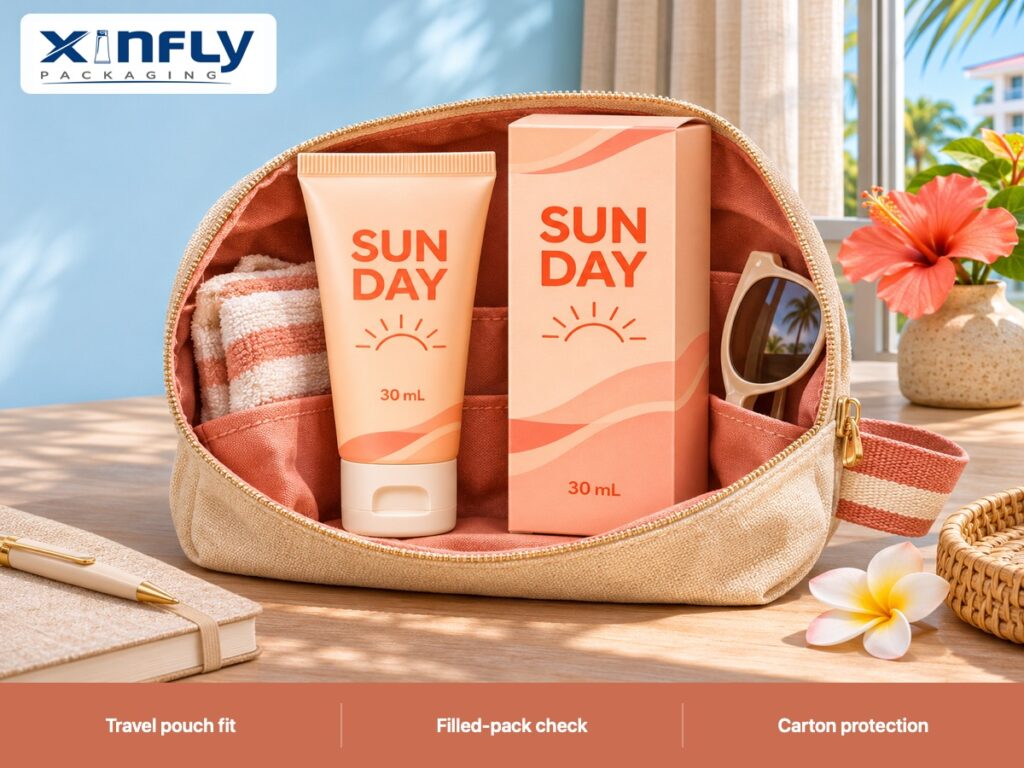
A plain white carton may fold cleanly while a finished board with coating and print cracks at a tight crease. Ask the carton supplier for the actual board, surface finish and printed dieline. Compare front-panel orientation with the tube's printed front. The illustration pairs a coral SUN DAY tube with a carton that carries the same name, sun motif and color. That matching design is a visual target; the **approved artwork version** and the physical fit still need separate sign-off.
Inspect the Cap Where the Carton Touches It
Pull the tube out after packing it several times. Check whether the carton scuffs the thumb tab, presses the lid open or leaves a line around the cap skirt. Open and close the lid after the fit trial, then compare its seating with an unhandled control. If the carton has an insert, inspect its cut edge as well. A hard edge against a small cap can create a problem that never appeared in a loose tube sample.
Keep Leakage Evidence Separate
If product appears inside the carton, first locate the source. Residue at the outlet, around the shoulder or at the tail seal points to different follow-up checks. A squeeze mark on the tube may show that the carton held the body under pressure. Record the tube's orientation and the first wet location before wiping anything. Use the intended sunscreen formula for final approval; water-only trials do not establish how that formula behaves in this pack.
Try the Actual Travel Pouch
Measure Against Real Neighboring Items
A travel pouch is not an empty rectangular box. Put the filled tube and printed carton beside the toothbrush case, small bottle or other items the set will contain. Zip it without bending the tube or pushing directly on the flip-top. Turn the pouch to the positions a traveler may use. The question is practical: can a person close it comfortably, and where does pressure land when the pouch is full?
Choose a Handling Trial Before Seeing a Result
Ask the brand and quality teams to define a handling sequence appropriate to the sales channel. It may include repeated packing, opening, storage in several orientations and a parcel handling exercise. Record the sample count, fill, temperature, duration and acceptance observations in advance. Avoid declaring a universal “leak proof” outcome from a single desk squeeze. The relevant evidence belongs to the exact tube, cap, formula and pack arrangement.
| Check | Record on each sample | Approval question |
|---|---|---|
| Carton closure | Panel bowing, tuck engagement, scuff location | Does the production board close without pressure on the lid? |
| Pouch loading | Other items, orientation, zipper pressure | Can the packed set close without squeezing the tube? |
| Closure after handling | Latch engagement and any new residue | Is the approved cap still seated as intended? |
| Tail and print | Seal rub marks, code legibility, artwork scuff | Is the delivered appearance acceptable after normal handling? |
| Configuration control | Body, shoulder, cap, carton and artwork revisions | Does the quotation match the tested set? |
Turn the Fit Result Into a Clear RFQ
Quote the Same Configuration to Every Supplier
Send the same 30 mL fill brief, tube drawing, closure revision, printed artwork, carton dieline and packout to each bidder. Ask which parts are made by the tube supplier and which are sourced separately. Compare the responsibility for fitted samples and secondary-pack checks, not only the empty tube unit price. If a supplier proposes a shorter cap or different shoulder, request a paired sample and repeat the carton and pouch checks. A cheaper quotation with an untested cap is a different offer.
Specify the Print and Material Without Guessing Performance
The visual example uses an extruded PE body and coral one-color screen print, which is a sensible starting brief for simple artwork. Confirm the decoration process against the actual tube finish and artwork with the factory. Ask for print adhesion and rub checks under the conditions your pack will see. The printing design guide helps frame the proof, but it does not replace approval of a printed and filled sample. If the formulation team needs a barrier structure, compare actual material specifications and compatibility evidence through the sunscreen tube packaging product page.
Keep the Accepted Sample in the Purchase Record
Label one filled tube, one carton and one packed pouch with the approved revision and date. Attach photos of contact points and any agreed exceptions. Ask the supplier to flag changes to resin, cap mold, ink, carton board or seal style before shipment. When the second lot arrives, compare it with that reference rather than relying on memory of the first sample. Send Xinfly Packaging your fit brief and drawings when requesting a matched tube-and-carton sample.
Plan the First-Lot Incoming Check
The first delivery is where an elegant approval plan either becomes useful or disappears into an email chain. Ask the supplier to mark each shipping carton with the part number and lot, then set a receiving sample plan with your quality team. Measure finished length and cap footprint against the signed drawing, inspect the print on multiple tubes, and compare a folded carton from the shipment with the retained approval carton. Record whether the cap thumb tab faces the intended artwork direction. If dimensions vary, isolate the lot before the filler consumes it. A later complaint is harder to investigate once tubes from two component lots have been mixed.
Decide Who Owns a Pouch Failure
A travel set may involve three companies: tube maker, carton converter and pouch assembler. Put responsibility for each interface in the purchase brief. If the zipper presses the cap, the pack assembler may need to change the insert; if the finished tube exceeds the signed drawing, the tube supplier needs to investigate; if a carton flap catches the lid, the converter may need a revised dieline. Photograph contact points and label the components before discussing blame. That evidence makes a corrective action faster and keeps a cosmetic mark from being treated as a leak.
Leave Room for a Formula Change
Brands often adjust a sunscreen formula after the first packaging mockup. A new formula may flow differently, interact differently with the package or change the intended fill mass. Ask the formulation and quality teams whether the change affects compatibility, dispensing, seal conditions or storage checks. If it does, repeat those checks on filled units. The fit measurements may still be valid, but a previous leakage observation cannot automatically cover a different product. Tie each approval to the formula revision as carefully as to the cap revision.
Frequently Asked Questions
Is a 30 mL sunscreen tube automatically suitable for air travel?
Capacity alone does not decide every travel rule or airline policy. Confirm the current rules for the route and whether the filled product and outer pack meet them. The buyer's packaging check here concerns actual dimensions and handling, not a regulatory travel claim.
Should the carton be sized from an empty tube?
Use the assembled, filled and sealed tube for final sizing. Filling, the cap and the tail seal define the real outside shape. Empty blanks are helpful only during early layout work.
Can I approve a stock cap before testing the custom color?
You can use it to screen geometry if the supplier confirms it is the same mold and resin. Recheck the production-representative cap when colorant, finish or source changes, and keep the final cap revision in the approval record.
What if the tube fits the carton but not the travel pouch?
Revisit the pouch insert and how items are arranged before changing the tube. If a different cap or tube length is proposed, compare it as a new configuration in both carton and pouch.
Do I need a folding carton for every travel-size tube?
No. Choose a carton when it serves the retail, information or protection requirements of the project. If the pack ships without one, test the tube directly in the intended pouch or mailer and document the contact points.
Conclusion
A 30 mL sunscreen tube pouch and carton fit check is won or lost in the details: finished length, cap projection, printed board, seal position and the objects packed beside the tube. Measure the filled assembly, agree on a handling trial and hold the approved configuration in the order. That gives the brand, filler and tube supplier one reference they can all use.